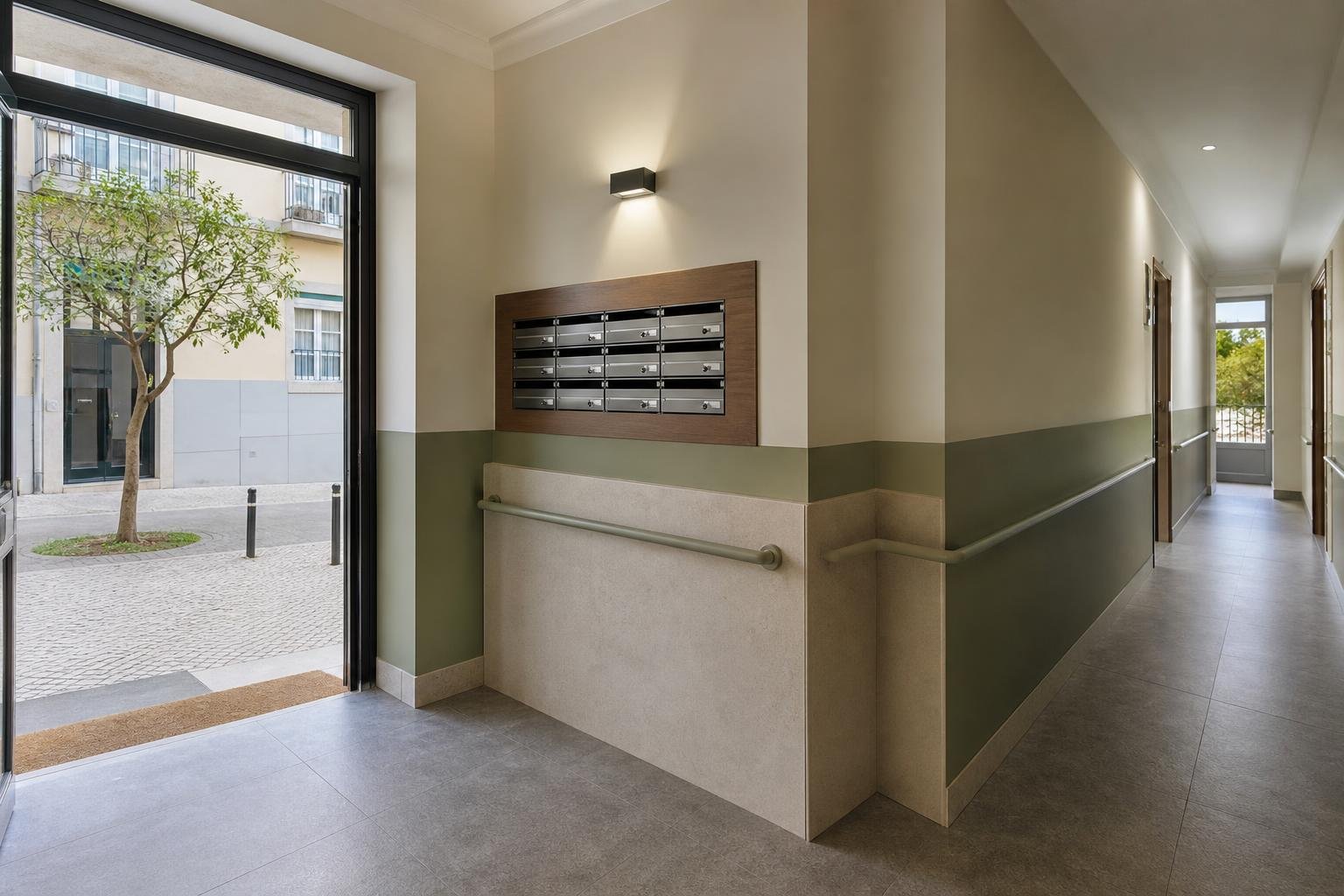

An entrance mat may look like a minor purchase, yet it can solve—or create—several problems at the front door. In a Lisbon apartment, where halls are often narrow and have to cope with wet shoes, shopping bags, prams and deliveries, an overly thick or badly sized mat quickly becomes an obstruction.
The right choice does not begin with colour. It begins with the route: how the door opens, where people land when they step inside, what dirt is brought in from the street and how much clear floor space must remain. Portugal’s Directorate-General of Health advises avoiding loose rugs as part of fall prevention, a point that matters especially in homes used by children, older people or anyone with reduced mobility. DGS guidance on preventing accidents at home.
This guide focuses on proportionate decisions: a mat that captures dust and moisture, stays flat at the edges, does not interfere with the door and does not turn the entrance into a cramped holding area.
Start with the door, not the mat
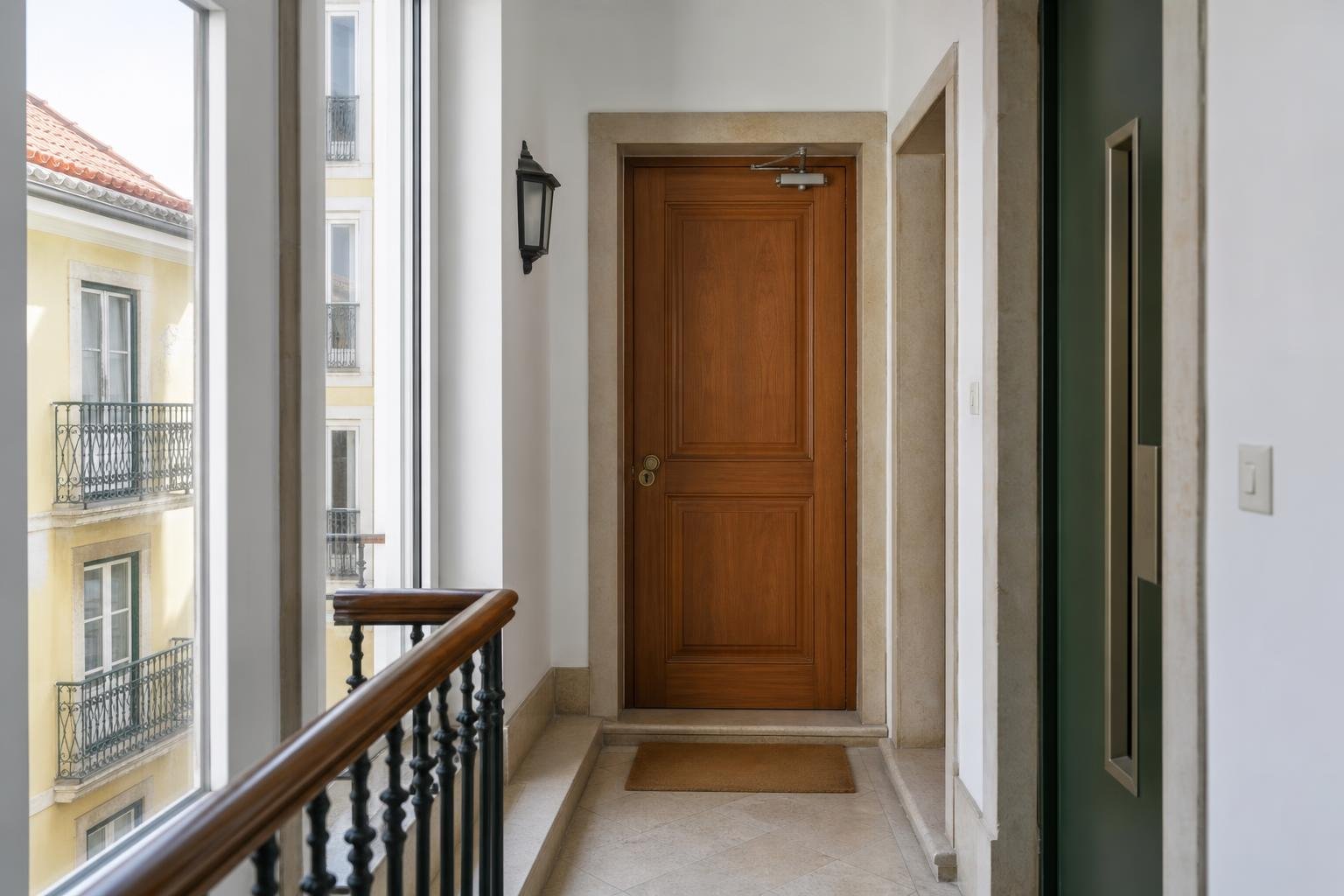
Before ordering or cutting anything, open the door in every direction it can move and check the true clearance above the floor. A tall mat may catch on the leaf, buckle when pushed or need to be lifted every day. If the door opens inwards, measure the clearance at its lowest point; if it opens outwards, make sure the mat does not extend into a shared landing, stair or common route.
Use masking tape to mark the proposed footprint on the floor. Then walk the normal route with your hands full: come in with groceries, leave with rubbish, pass someone putting on shoes. This quick test shows whether a wide rectangular mat improves daily use or whether a shorter one, aligned to the door opening, preserves a clearer route.
Do not treat the mat as a decorative island. It should support circulation. Portuguese accessibility standards emphasise continuous, safe and comfortable routes for people with restricted mobility; at home, the same principle argues against raised edges, lifting corners and unnecessary changes in level. Decree-Law No. 163/2006 and technical accessibility standards.
Match the material to the dirt you actually bring in
For an entrance exposed to dust, fine sand or rainwater from the street, choose a textured surface that holds particles without shedding. Dense synthetic fibres often dry quickly and make regular cleaning easier. Natural fibres can bring warmth, but deserve more care when repeatedly exposed to water: if they stay damp, they may smell, stain the floor beneath or deteriorate sooner.
In an apartment where the entrance opens directly into a timber, vinyl or natural-stone floor, look for a backing that will not migrate, stain or bond to the finish. Check the manufacturer’s compatibility advice and test it first in an inconspicuous spot. Avoid highly adhesive backings on varnished floors or sensitive finishes.
There is also an important difference between an outdoor dirt-catching mat and an indoor finishing mat. The first takes heavier abrasion; the second completes shoe drying and should feel comfortable underfoot. Where a building door or covered porch comes before the apartment door, two light, secure barriers usually work better than one deep mat in the hall.
Thickness and edges determine whether it is safe
A heavy edge, a curled corner or an unfinished border is where a foot can catch and where a walking stick, vacuum cleaner or trolley wheel can snag. Choose a low, flat, stable profile. If the mat has a border, it should taper gently to the floor rather than create a small unstable ramp.
The DGS identifies slippery rugs as a domestic fall risk and advises correcting this type of hazard, particularly for older people. DGS information on falls and safety at home. Buying a product labelled non-slip is not enough: check it on your actual floor with dry and damp footwear, then test it again after the first wash.
If the mat slides, the best response is normally to change the backing or choose a different compatible product—not to layer on improvised tape. Tape that comes loose makes an even more uneven edge, traps dirt and can leave residue behind.

Size it for two steps without filling the hall
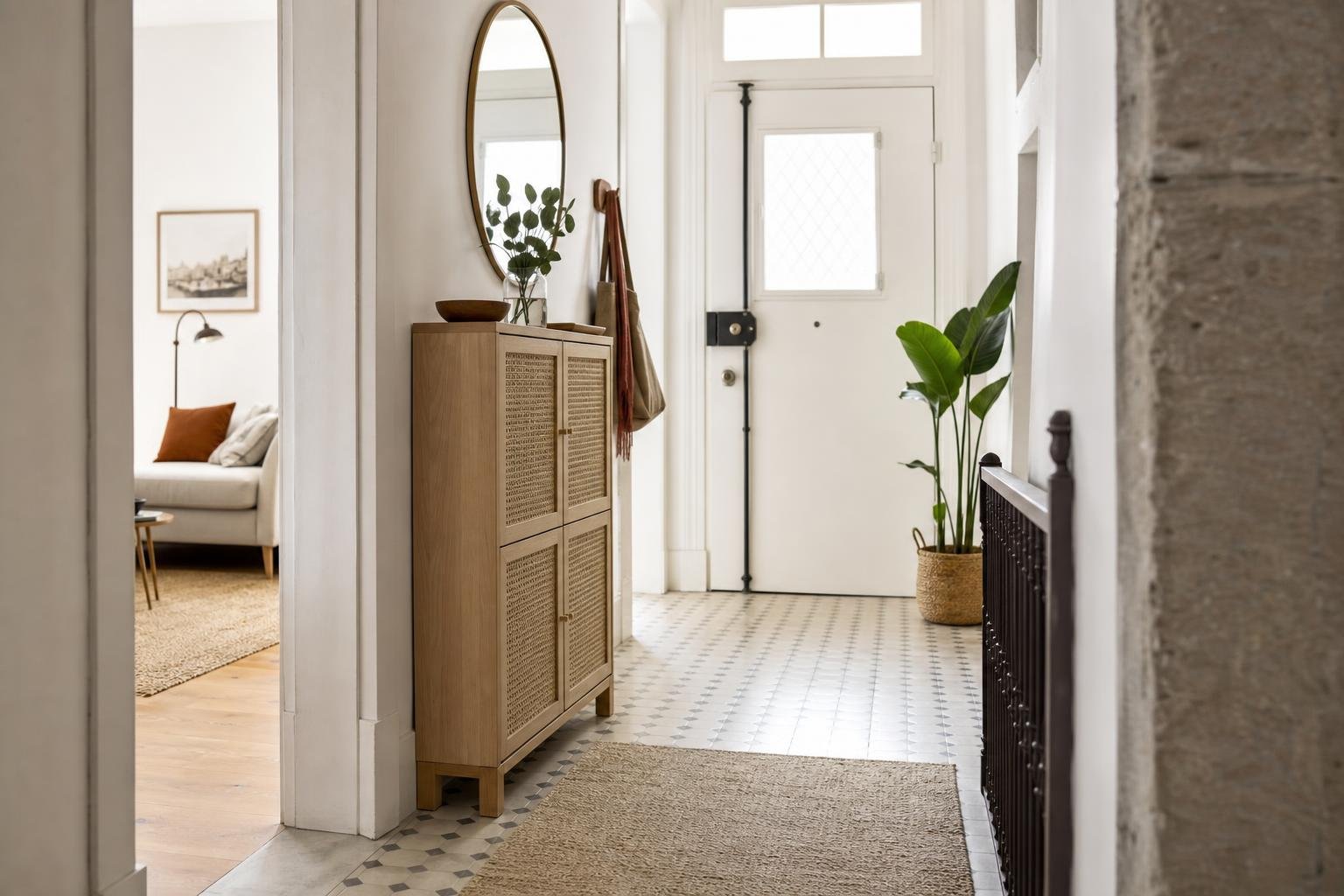
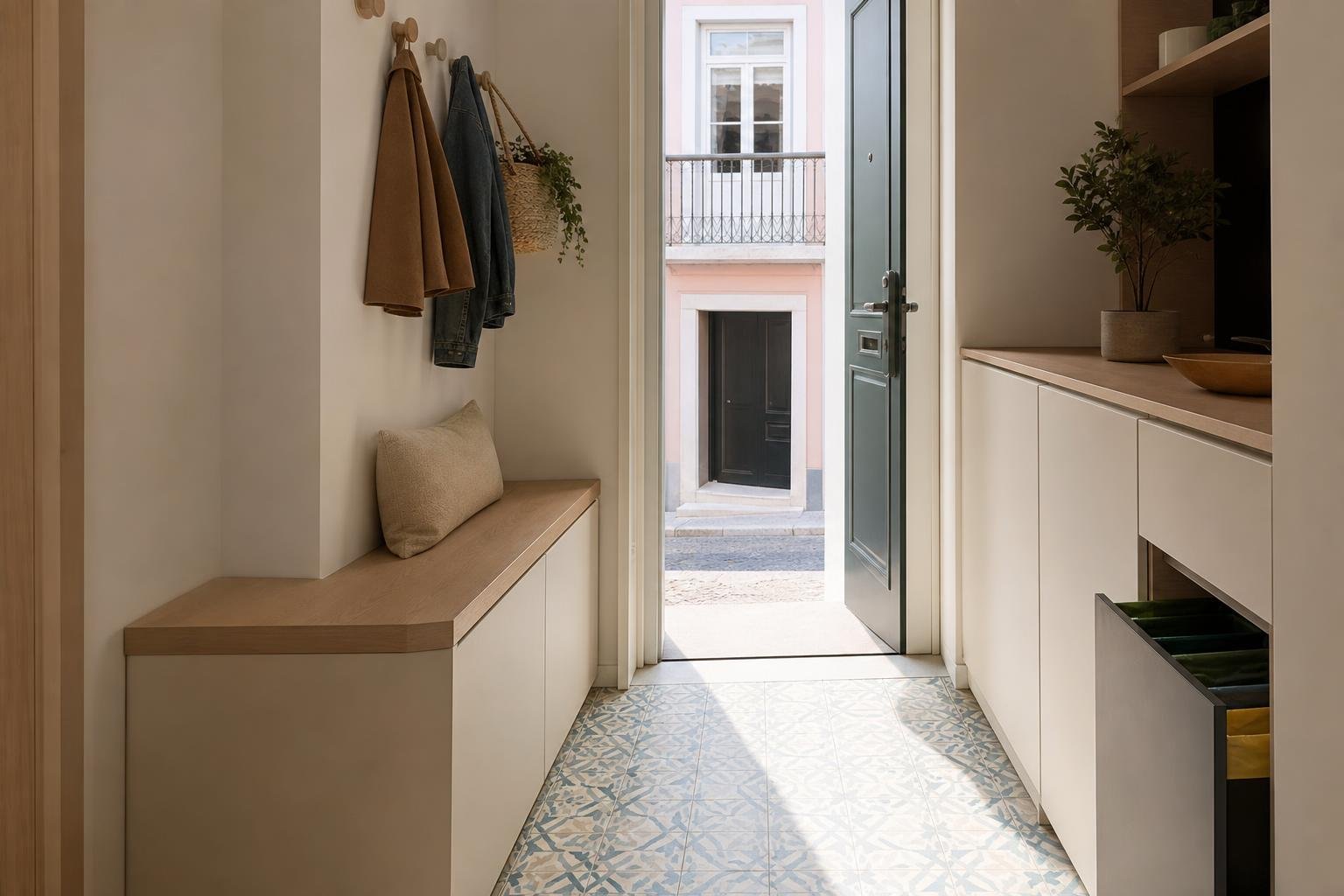
A useful practical rule is to allow a person at least two short steps on a surface that cleans their soles before they reach the main floor. In a compact hall, however, covering the full width is not automatically the answer. Keep a clear walking strip, especially when there is an entrance cupboard, coat storage or a bathroom door nearby.
Instead of copying dimensions from a catalogue photograph, measure four things: the usable door width, the depth before the first turn, the door swing and the room needed for a shoe mat or shoe storage. If the entrance also acts as a delivery zone, separate the functions. A mat should not disappear under parcels or footwear, because it will no longer dry and becomes an uneven surface.
For ways to organise this area without obstructing arrival and departure, see how to plan an apartment delivery zone. In very small spaces, a narrow washable mat paired with ventilated shoe storage is usually more useful than an oversized decorative piece.
Cleaning and drying: routine prevents odours and marks
Shake out or vacuum the mat regularly, before grit turns into an abrasive layer underfoot. On rainy days, lift it and check for trapped water underneath; hidden moisture is particularly unwelcome on timber, laminate and floor joints.
Bathroom mats need a stricter routine: damp mats should be washed and dried regularly. The DGS recommends washing and disinfecting bathroom mats, airing the home every day and dealing with moisture problems early. DGS recommendations for indoor air quality. Do not automatically repurpose a bath mat as an entrance mat: its function, exposure to moisture and grip requirements are different.
Set a routine you can actually maintain: vacuum once or twice a week according to use, wash when the manufacturer allows it and dry fully before putting it back. If the mat still smells, sheds fibres, curls at the corners or leaves marks, maintenance is no longer the answer; it is time to replace it.
When the entrance needs an integrated solution
A renovation is a good opportunity to address the entrance as a whole: durable floor finishes near the door, adequate lighting, enclosed shoe storage and a low-profile cleaning surface. There is no need to crowd the hall with features. In fact, fewer loose items make the route easier to read and the space quicker to clean.
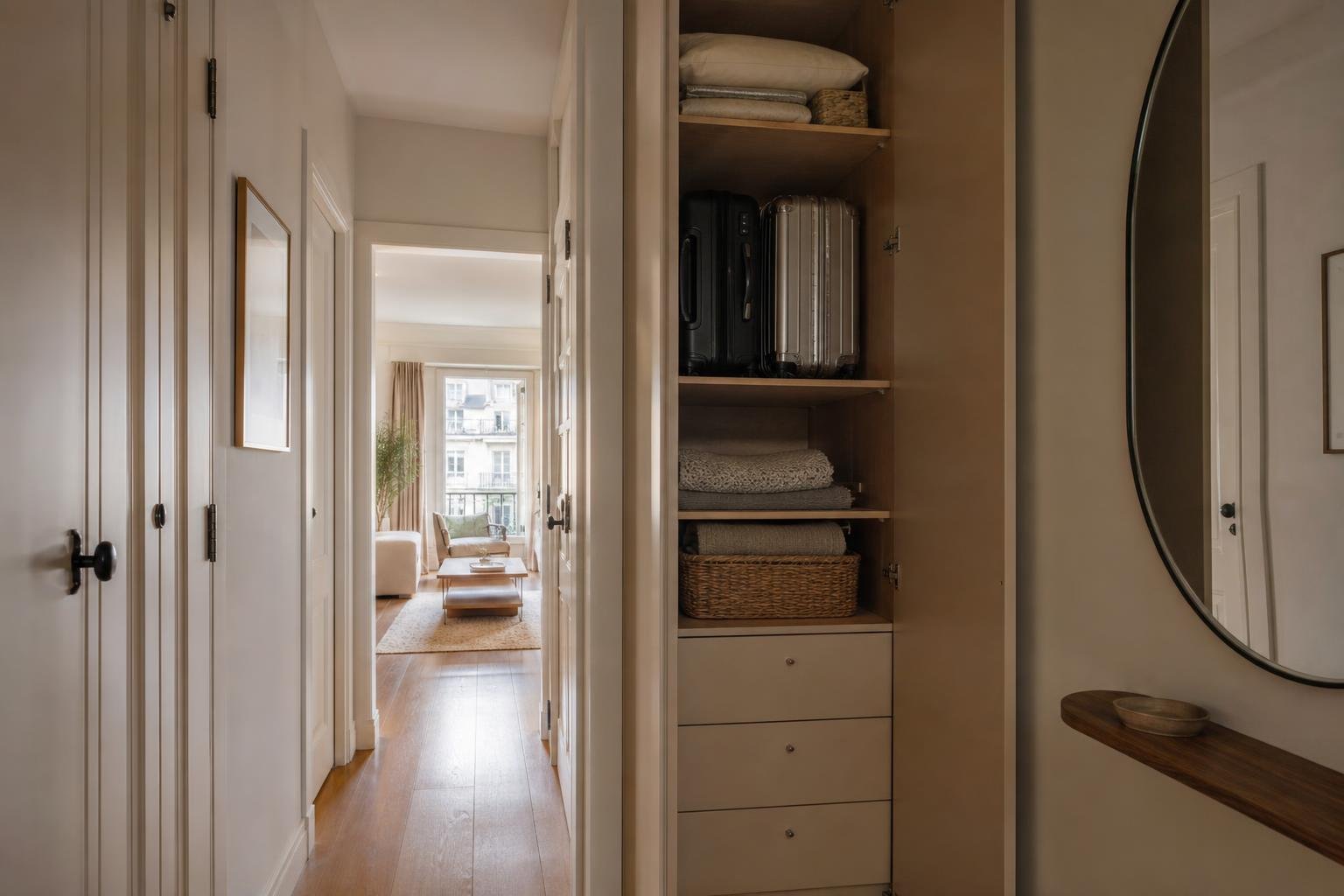
If you are reworking the arrival area, combine the mat with storage and maintenance choices. A properly sized cupboard can prevent coats and bags ending up on the floor; see guidance on functional apartment entry wardrobes. For households planning to remain comfortable over time, it is also worth considering renovation decisions that support independence.
The best entrance mat is quiet in daily use: it lies flat, holds dirt, dries quickly and lets the door and the route do their job.
Renovating an entrance or reorganising an apartment in Lisbon? Obra Lisboa can help coordinate flooring, storage, lighting and circulation so that small details work as one coherent whole.
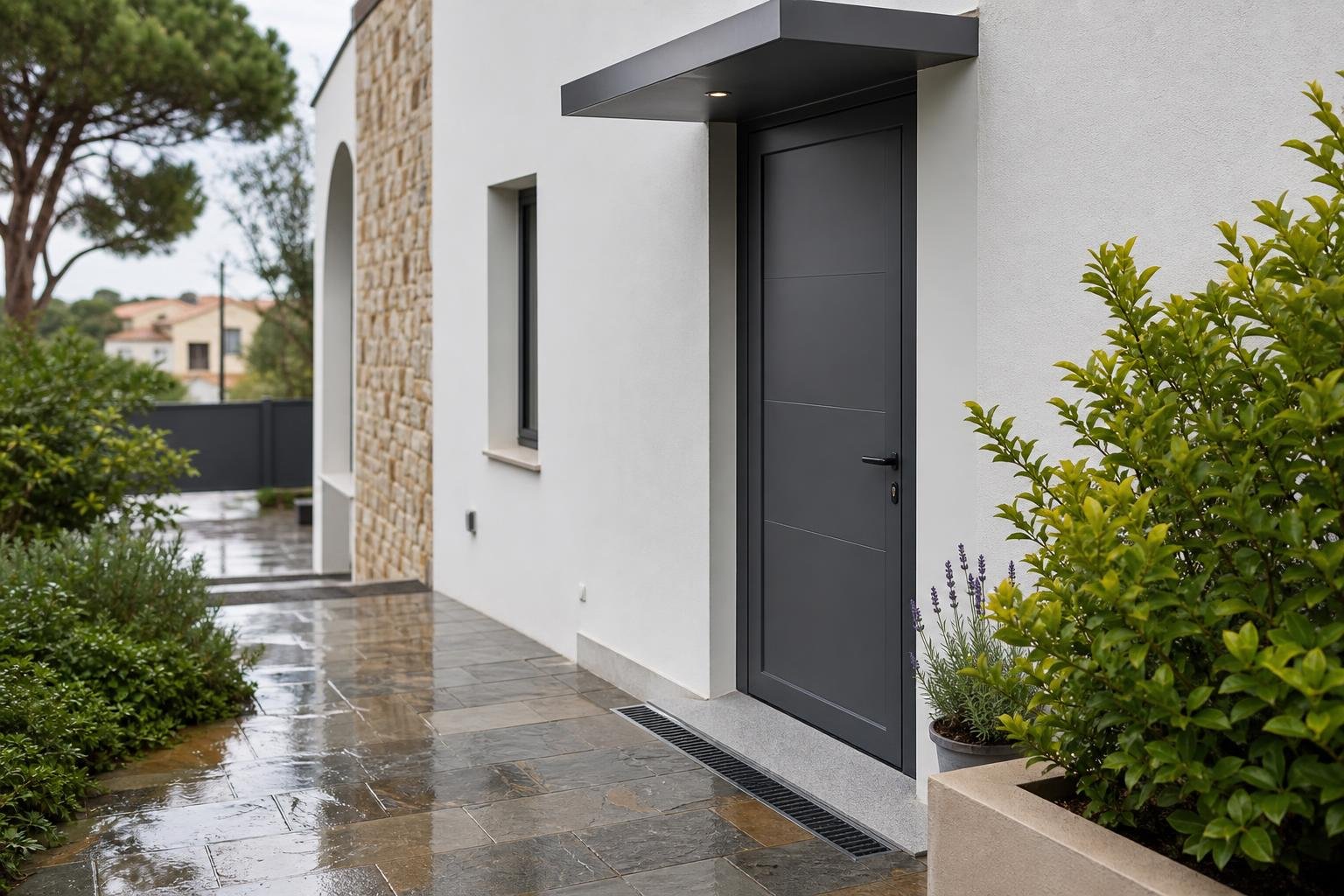
AI-generated editorial image; it does not depict an Obra Lisboa project.

Obra Lisboa