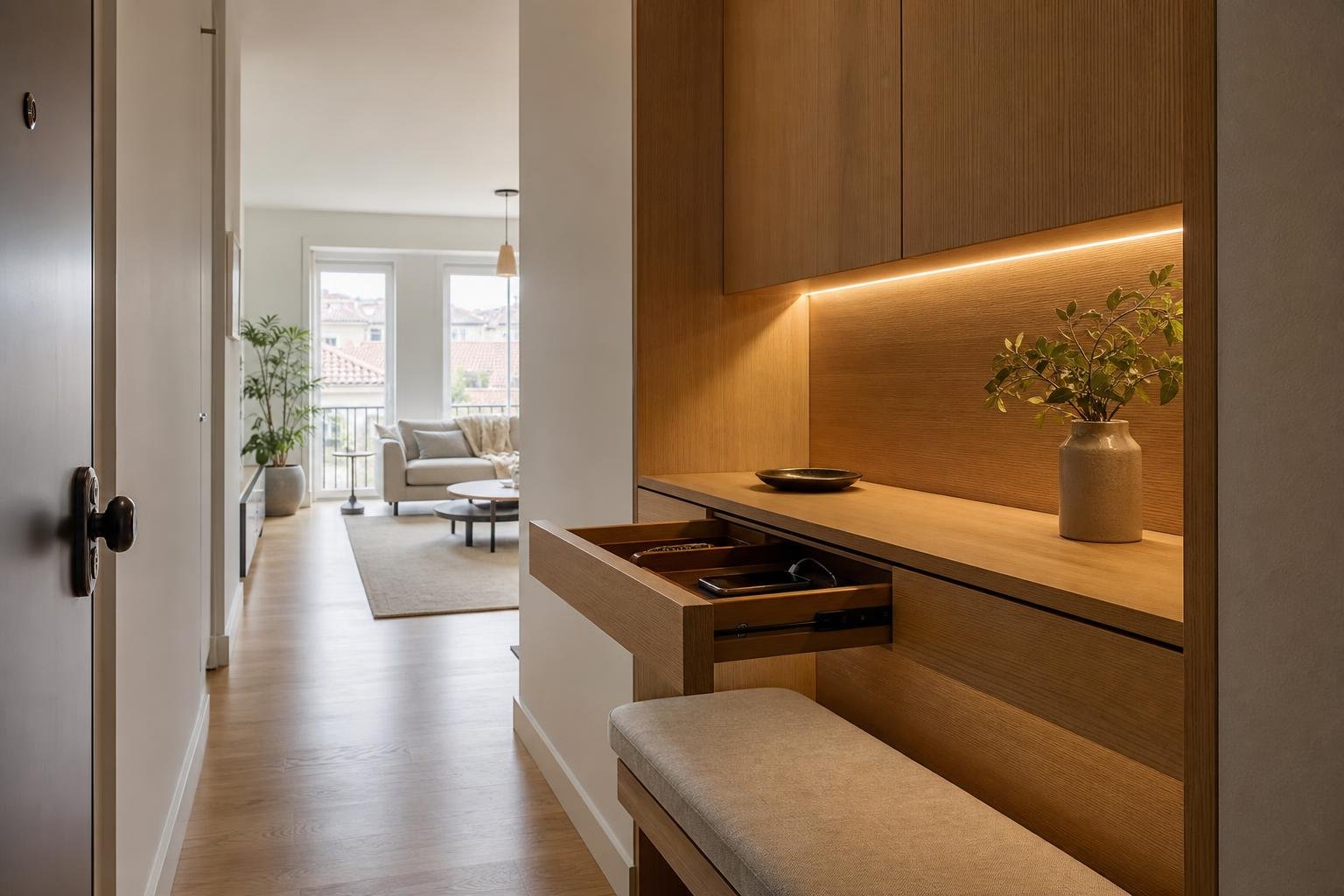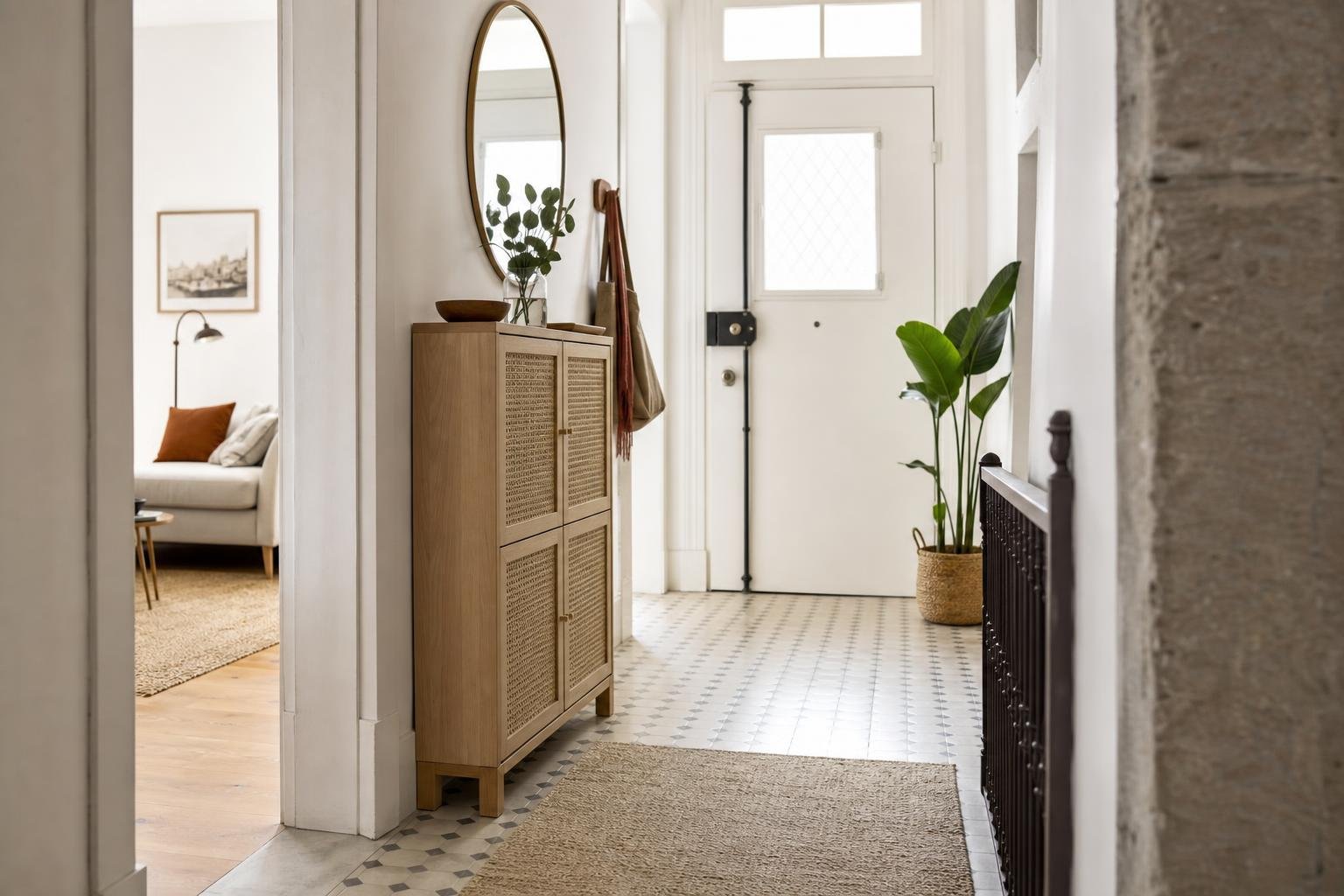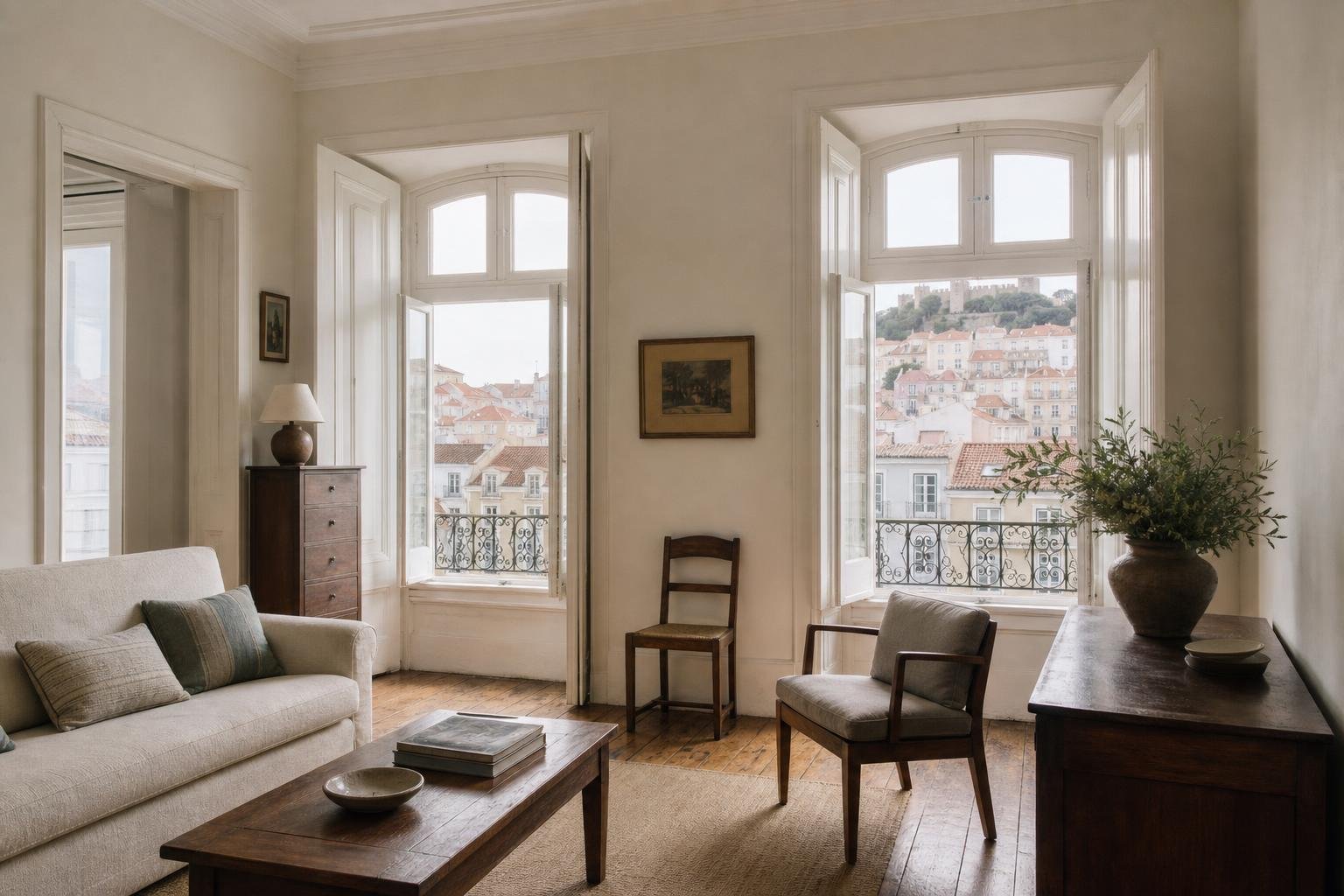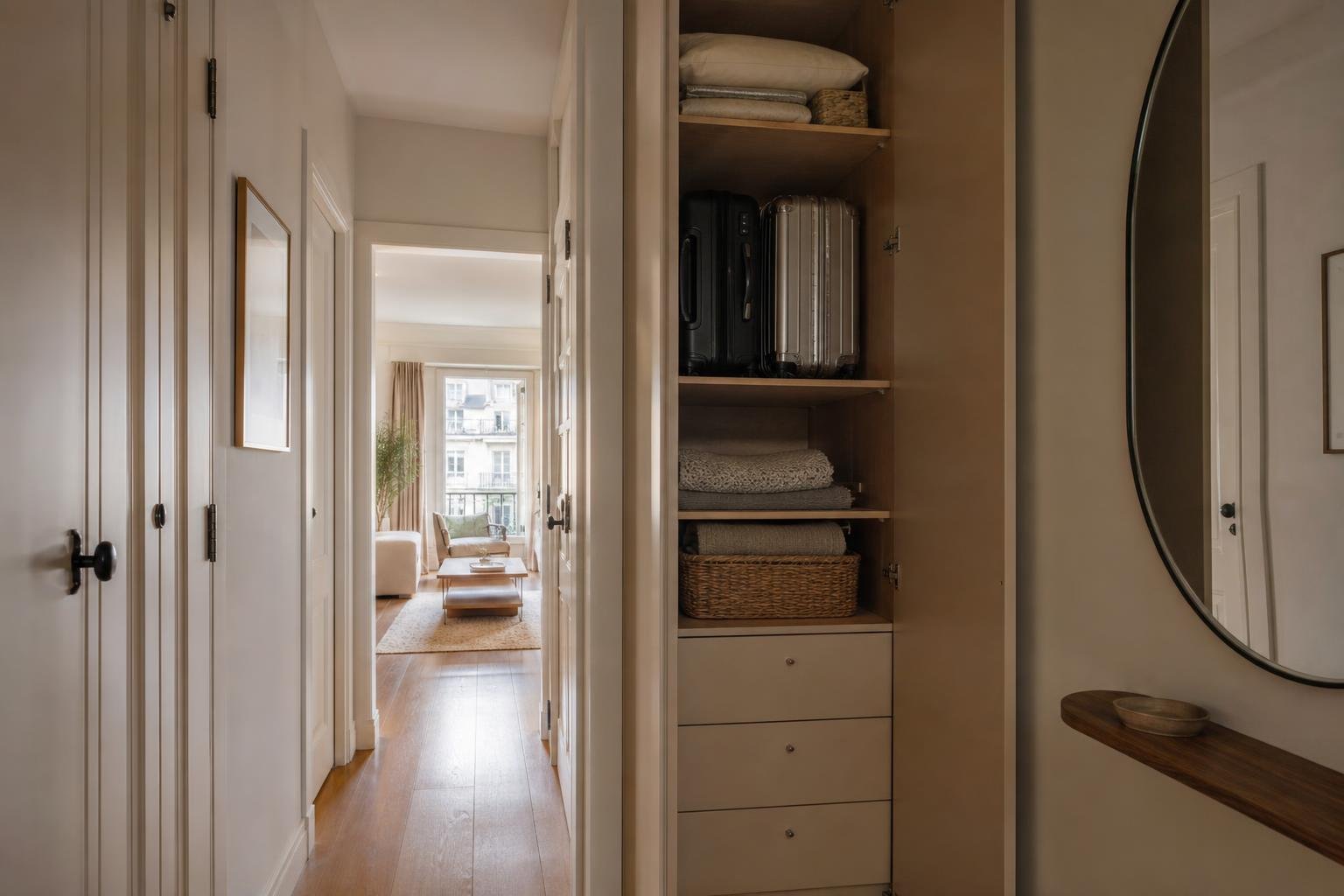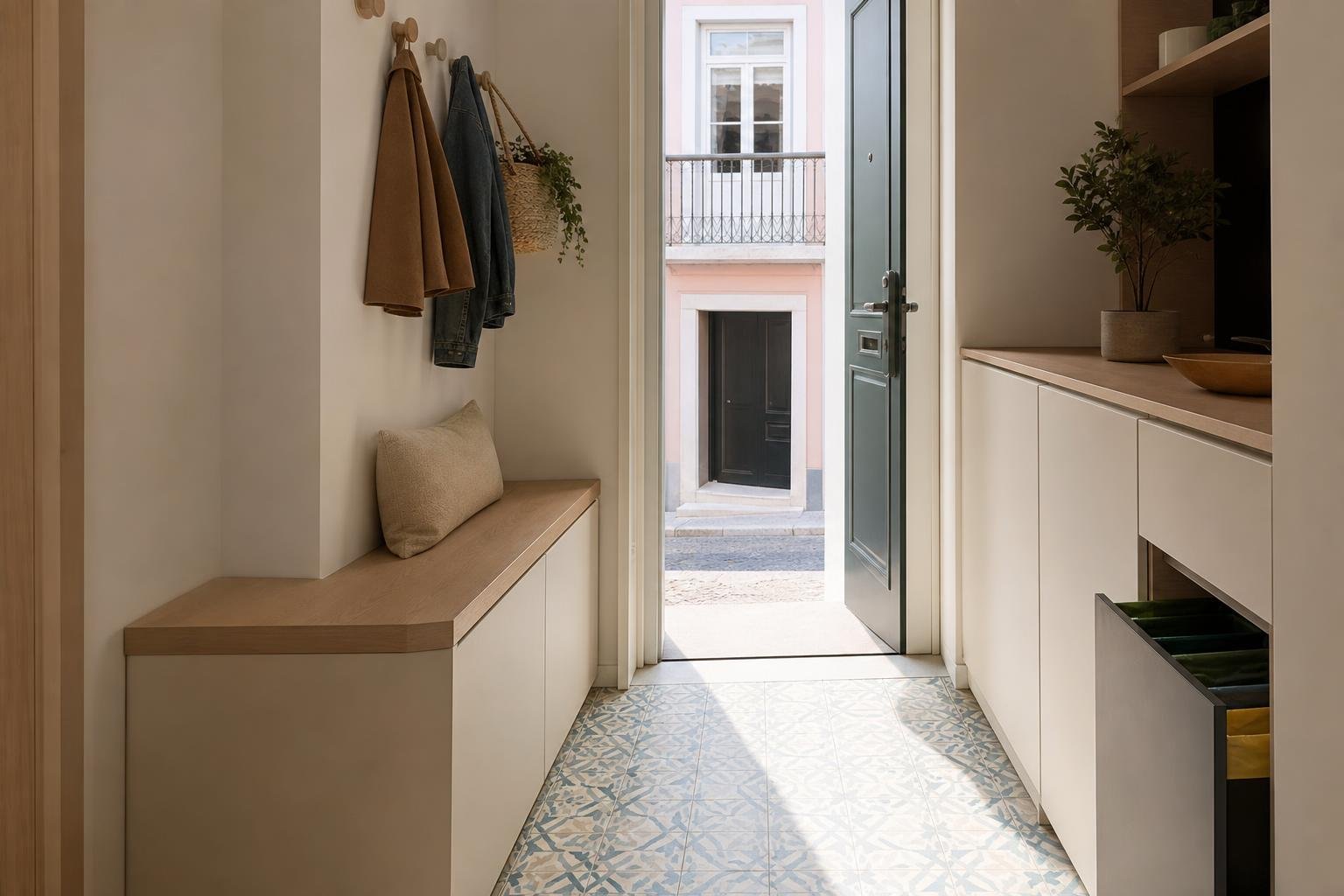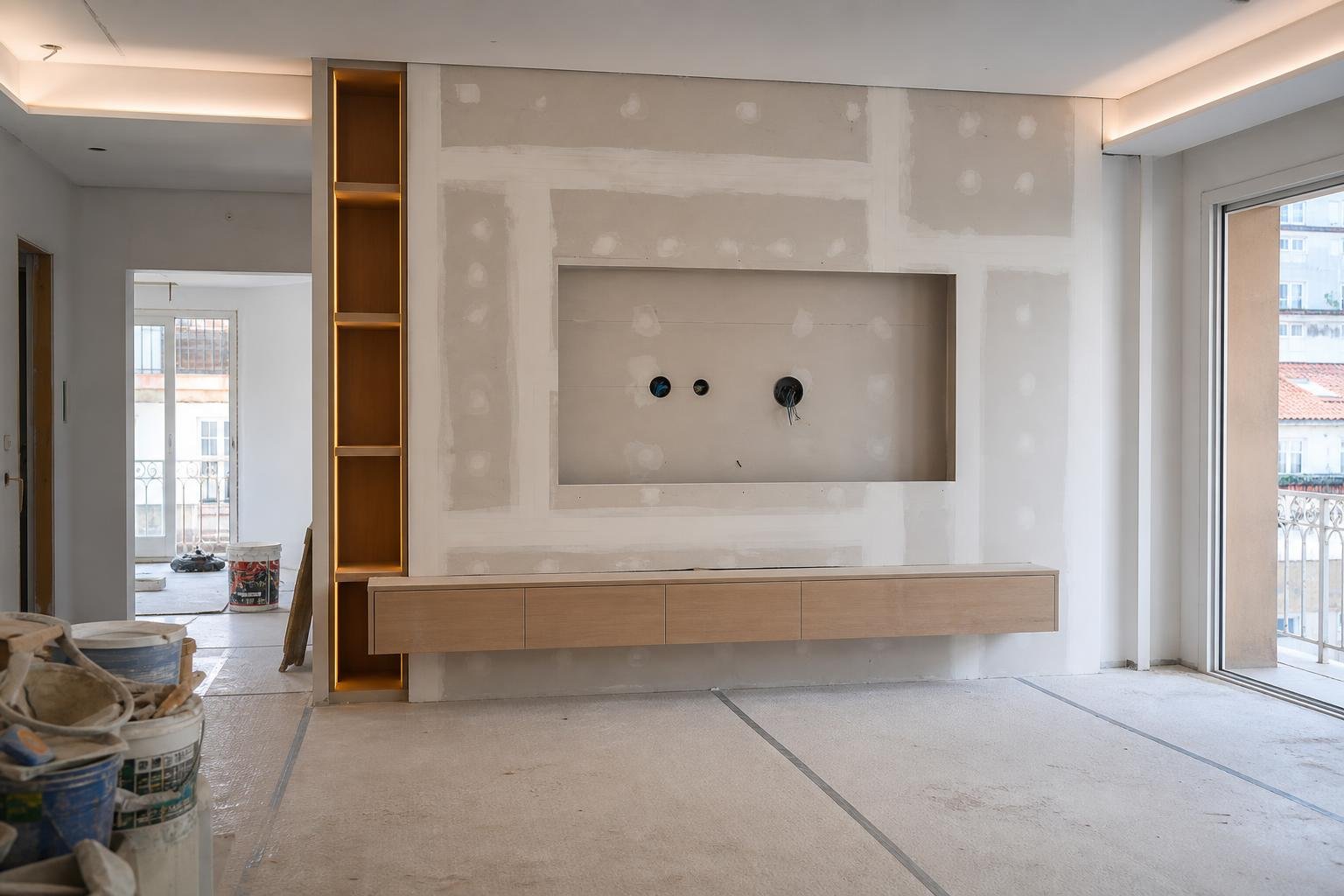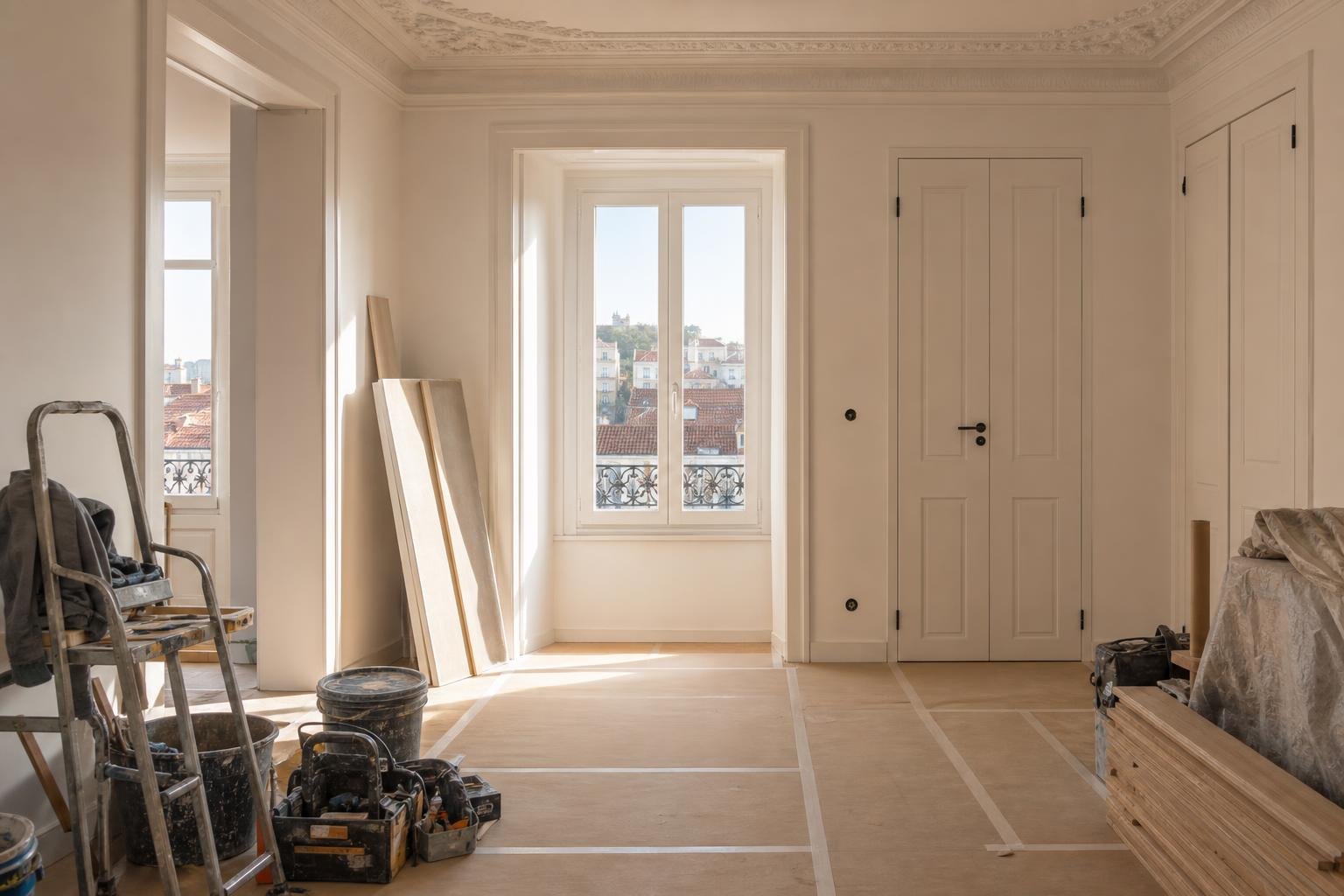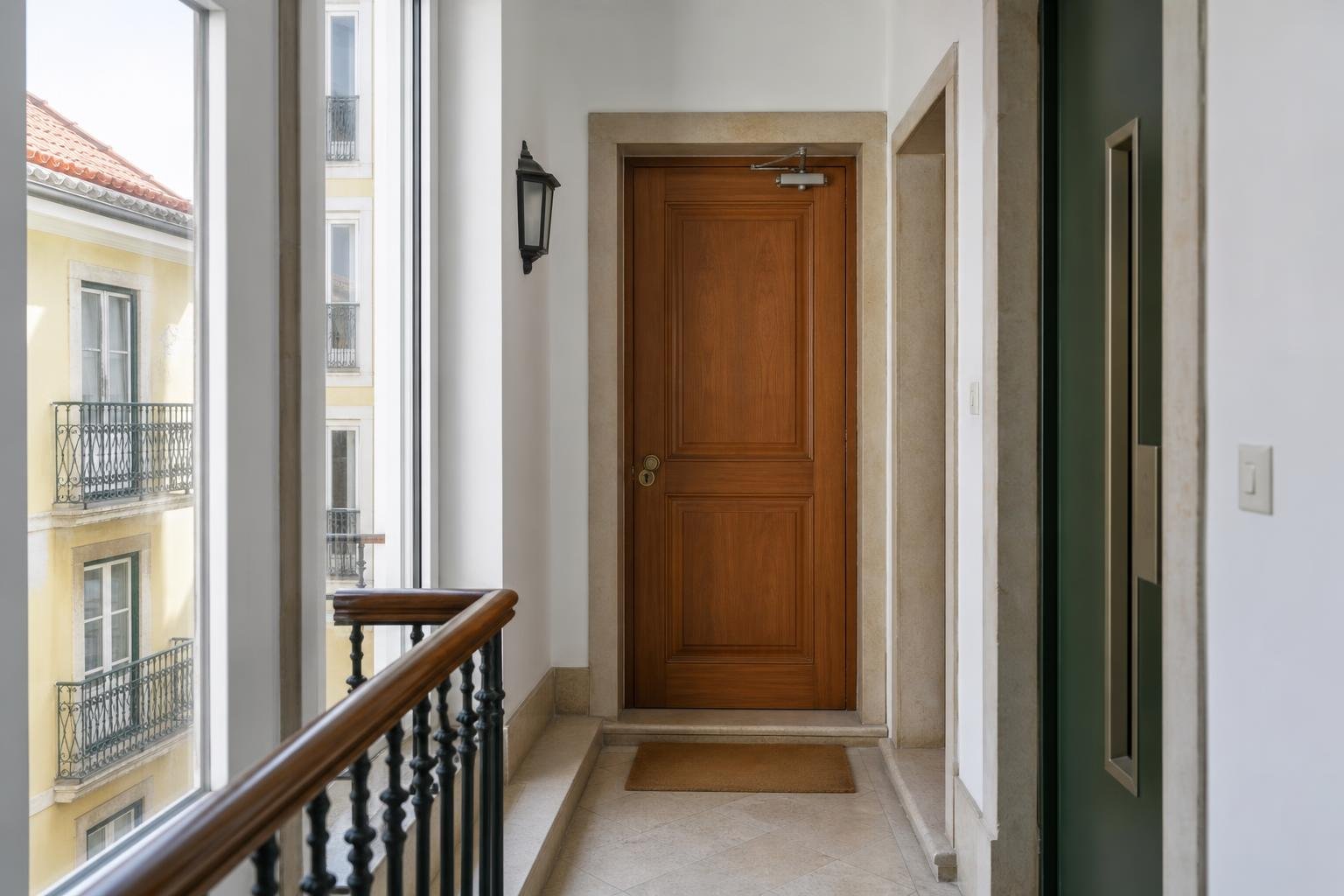
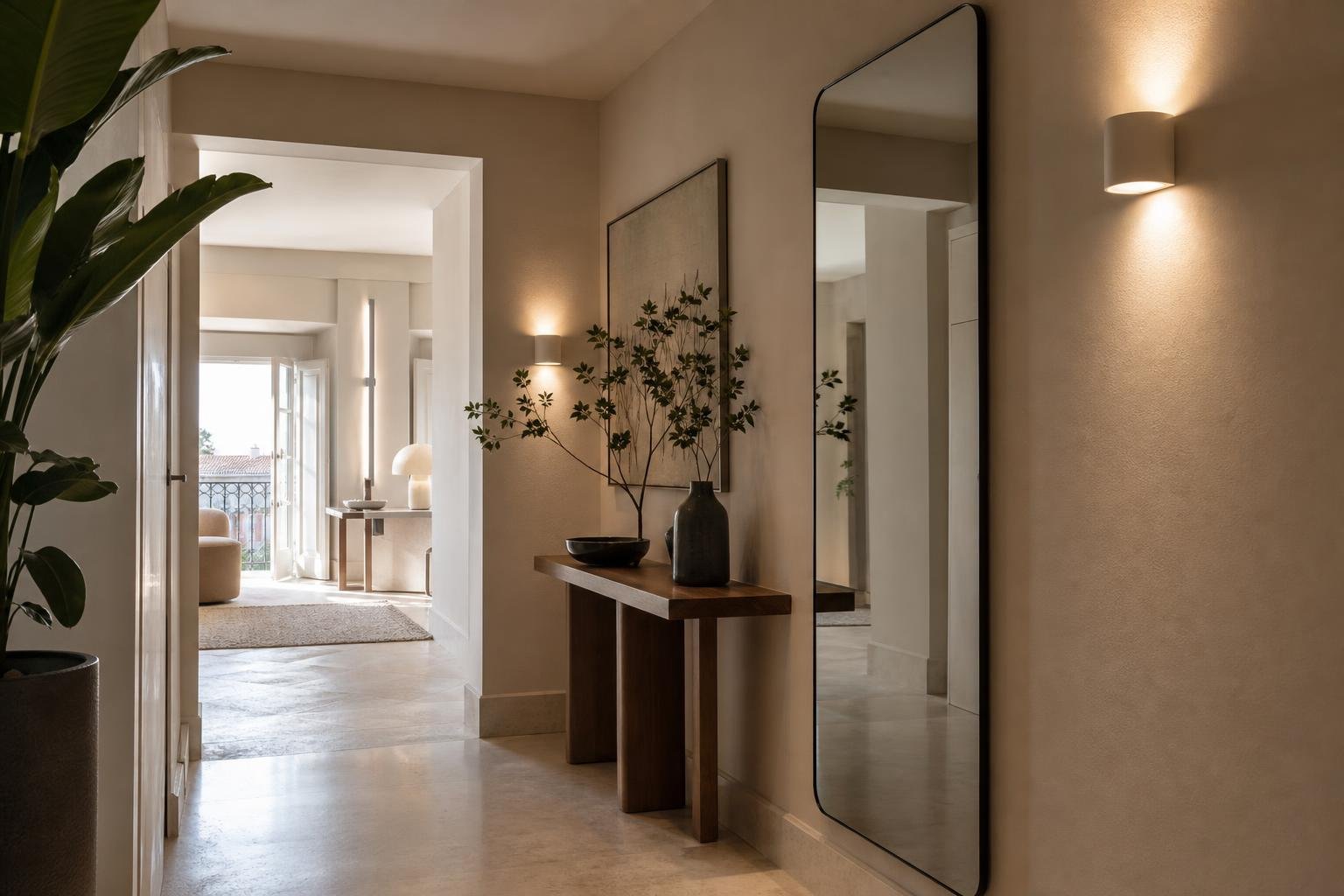
A full-length mirror by the entrance can make leaving home easier: it gives you one last check of shoes, coat and overall appearance. In many Lisbon flats, however, the entrance is also a corridor, a place for bags and deliveries, and the route to the rest of the home. The right choice is not simply the first empty wall; it is the wall that keeps the route clear, receives useful light and can hold the mirror securely.
This guide answers a practical question: where should a full-length mirror go in an entrance hall? In most cases, the best location is on a wall beside the route of travel, with light falling evenly on the person rather than glare bouncing from the glass. Before choosing the mirror, measure the door swing, walking clearance, switches and wall construction.
Plan the route before choosing the mirror
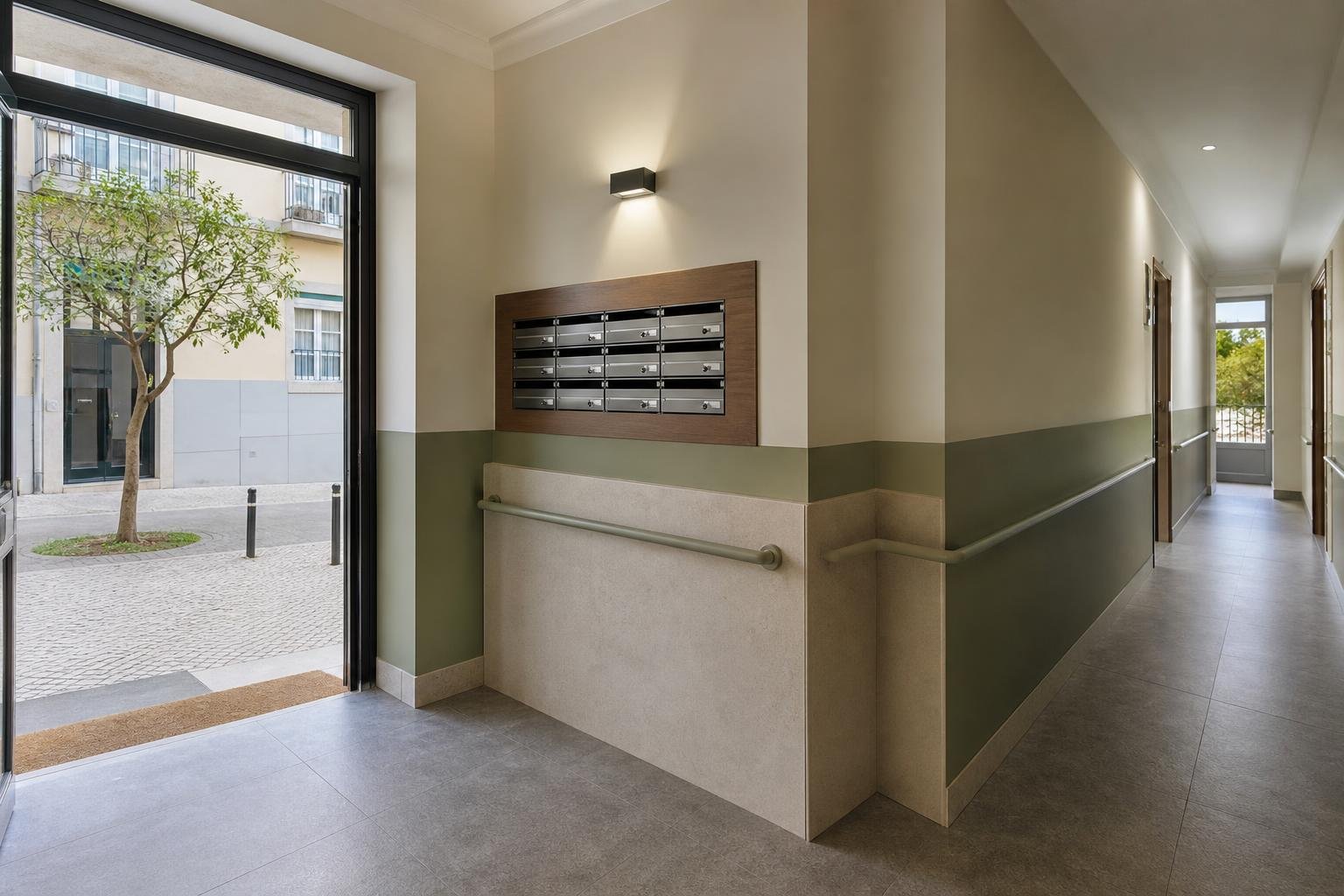
First, trace the everyday route from the front door to the living room, kitchen or inner corridor. That line should remain easy to use when two people pass each other, when someone is carrying shopping bags or when a child is putting on shoes. A projecting mirror, deep console or poorly placed bench can turn a useful entrance into a daily pinch point.
Start with a side wall rather than the wall directly opposite the door. This reduces the risk of the door leaf hitting the mirror and avoids immediately reflecting the clutter of the arrival area. In a narrow hall, a mirror without a heavy frame, or with a very slim one, reduces both visual and physical bulk. If the wall contains a radiator, electrical panel or cupboard door, keep technical access and full opening movement clear.
Clear circulation is a safety matter as well as a design choice. The Portuguese Directorate-General of Health guidance on accident prevention highlights good lighting, no loose cables on the floor and attention to domestic obstacles—particularly relevant in an entrance used repeatedly throughout the day.
If keys, post and small devices need a home here, use a restrained support surface and see our guide to an entrance drop zone. The mirror should make departure easier, not create another place where clutter gathers.
Choose the wall carefully and check what sits behind it
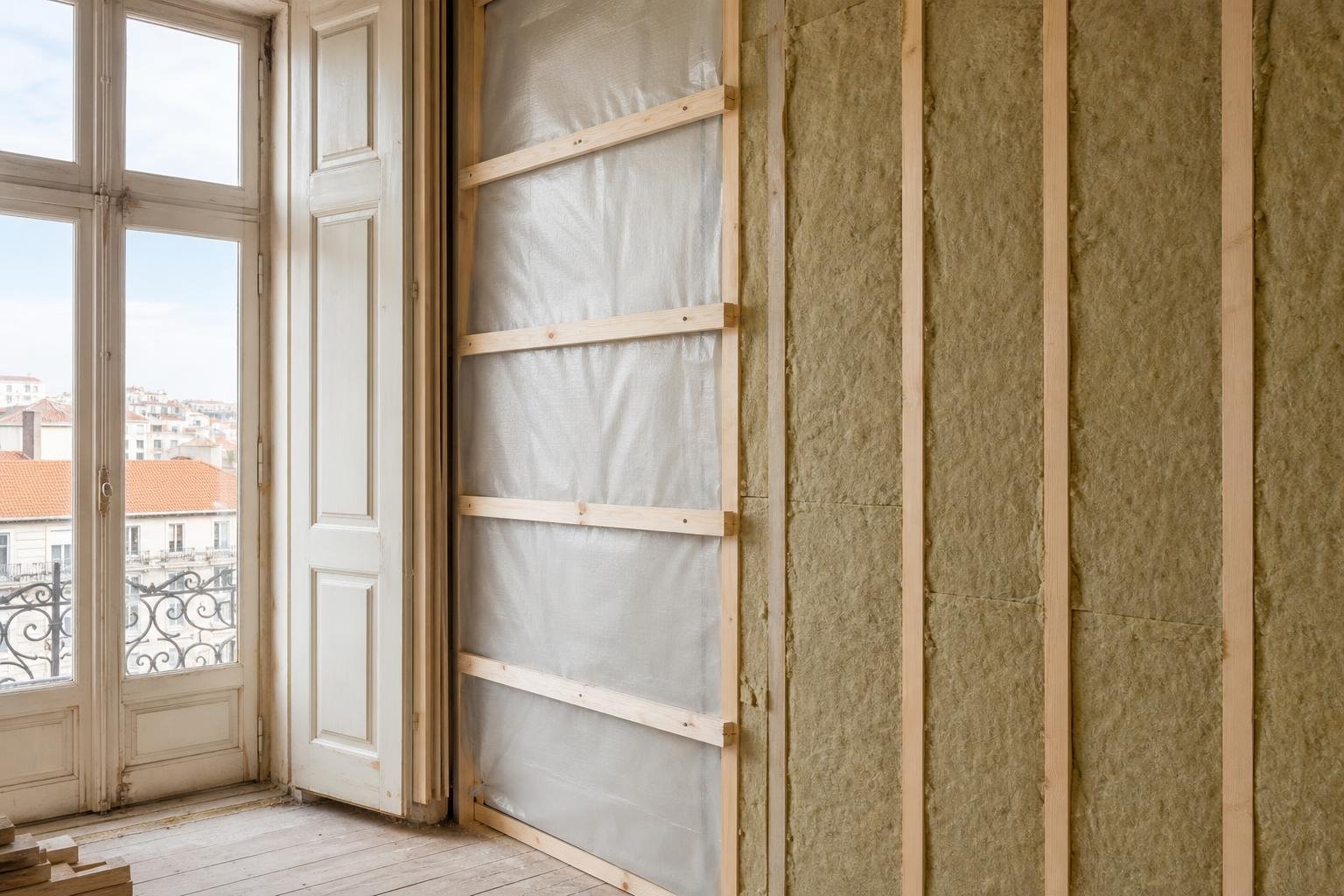
An apparently empty wall may conceal plumbing, electrical wiring, service boxes or a construction type that differs from the rest of the flat. In older Lisbon buildings, irregular masonry, fragile stucco and lightweight partitions added in previous refurbishments are all common. The correct fixing depends on the wall, the mirror weight and the manufacturer’s specified system.
Do not treat a tall mirror as a lightweight framed print. It needs to be supported and fixed with load-appropriate points, kept level and protected from local stress in the glass. On plasterboard, the solution may require internal reinforcement, a structural timber or metal support, or purpose-made anchors; on solid masonry, drilling needs care to avoid hidden services. Simply leaning a mirror on the floor is not a sound answer in a busy route, especially with children or pets.
If fitting the mirror involves opening a wall, moving switches or changing part of the flat, check the scope before work starts. Lisbon City Council’s information on building-work licensing explains when alteration works may be subject to prior control. Hanging a mirror normally is not such a case, but the associated work can become more substantial when wiring, walls or the façade are involved.
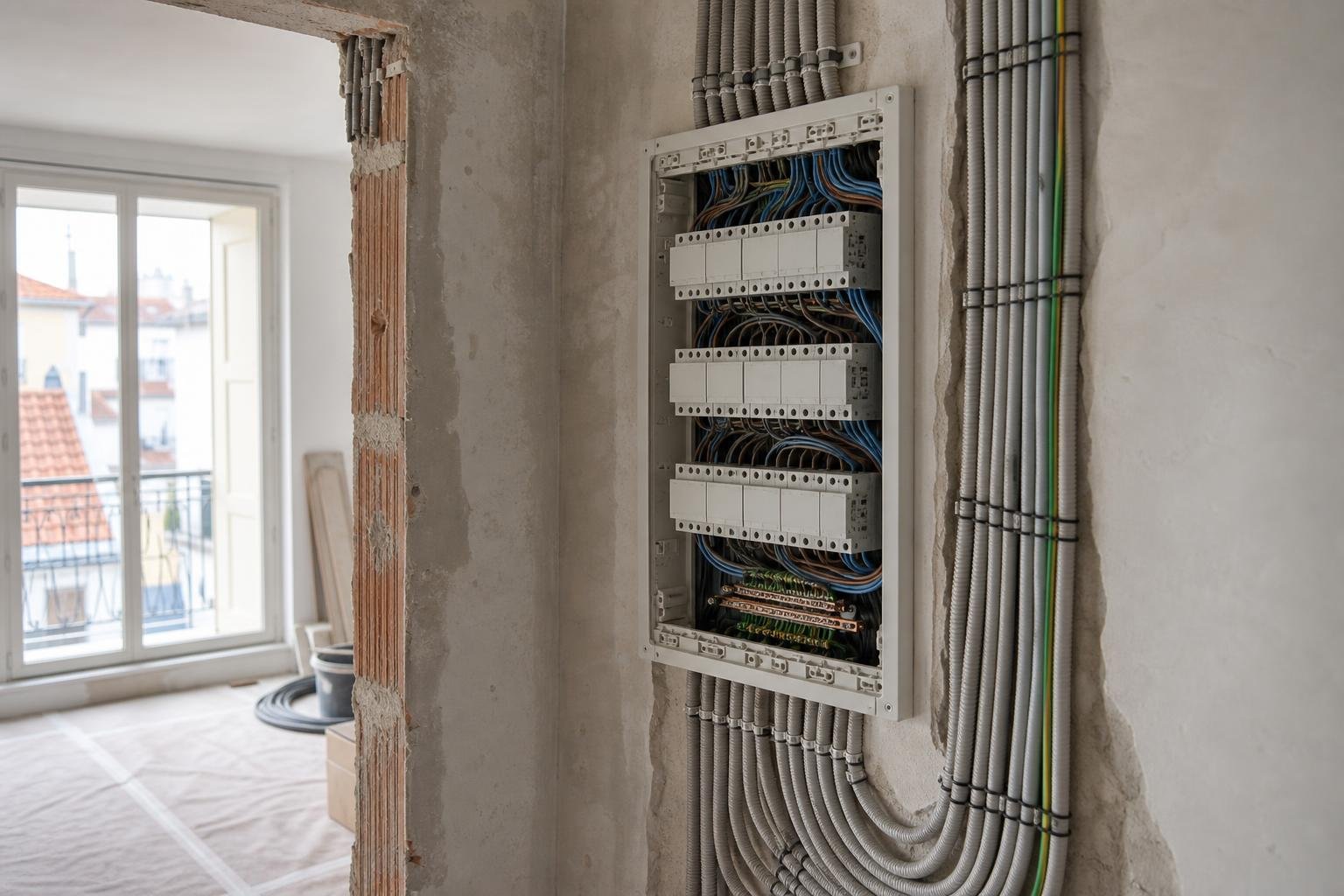
Where the mirror occupies a circulation wall, review sockets and controls at the same time. Early planning avoids visible extension leads, outlets hidden behind the frame and switches that become awkward to reach.
Get the height and scale right without overwhelming the hall
A full-length mirror does not need to start at skirting level or run all the way to the ceiling. Its useful height should let you see shoes to head without having to step back into someone else’s route. A practical approach is to mark the proposed outline in masking tape and test it in real conditions: door open, mat in place, bags in hand.
A vertical mirror usually works best in narrow entrances because it follows the wall’s proportion while taking up less width. A horizontal mirror can visually widen a room, but it seldom answers the need to check a full outfit before leaving. Where the ceiling is low, leave a visible margin above the mirror; a piece pushed too close to the ceiling can look improvised and makes cleaning harder.
Do not place the bottom edge where it is likely to be kicked, struck by a vacuum cleaner or blocked by a wardrobe door. A slight floor gap makes cleaning easier, but the mirror must not become vulnerable to impact. If the hall already contains storage, review dimensions and access in our article on apartment entry wardrobes. Furniture depth affects circulation just as much as mirror size.
Use soft front light instead of one harsh ceiling spot
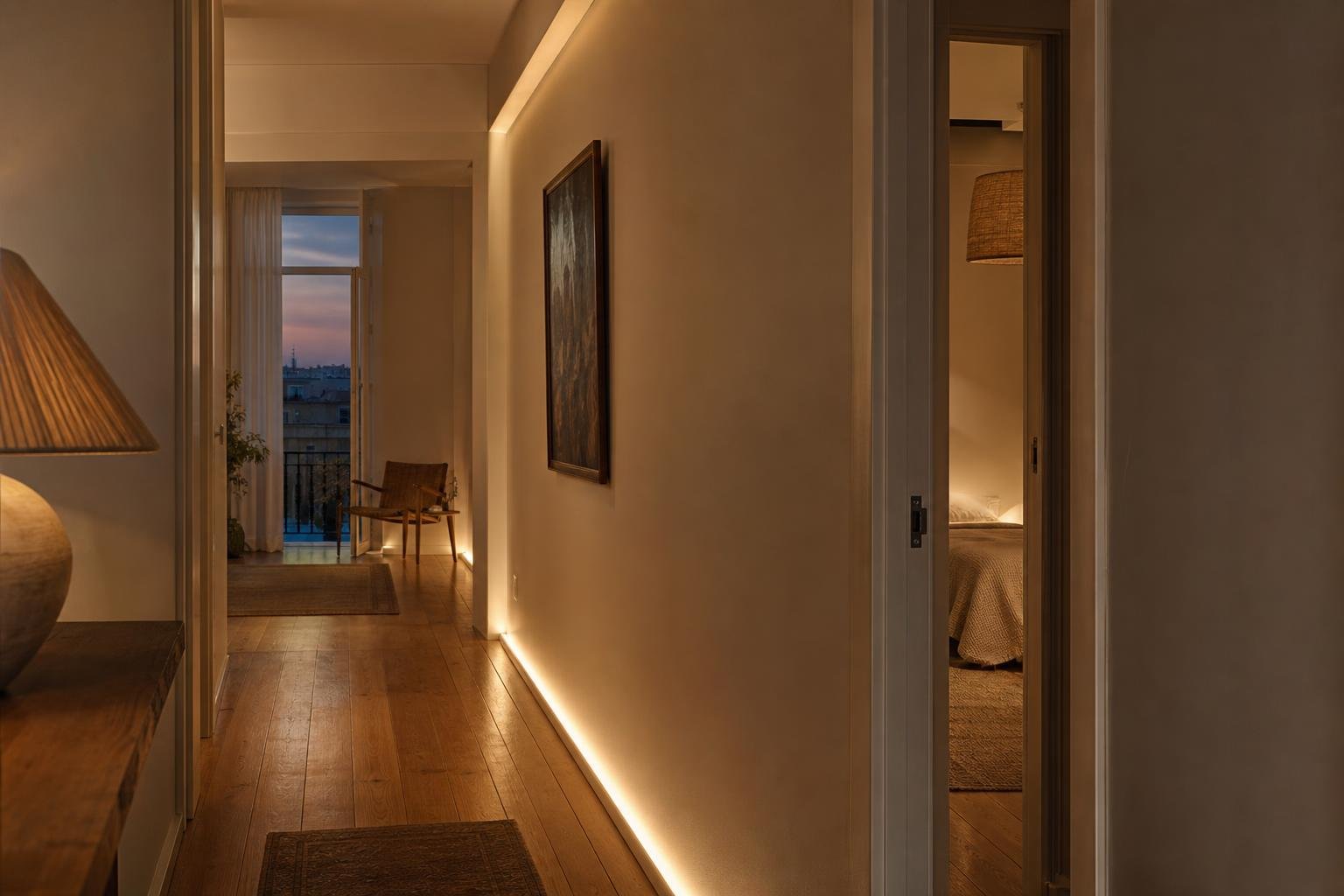
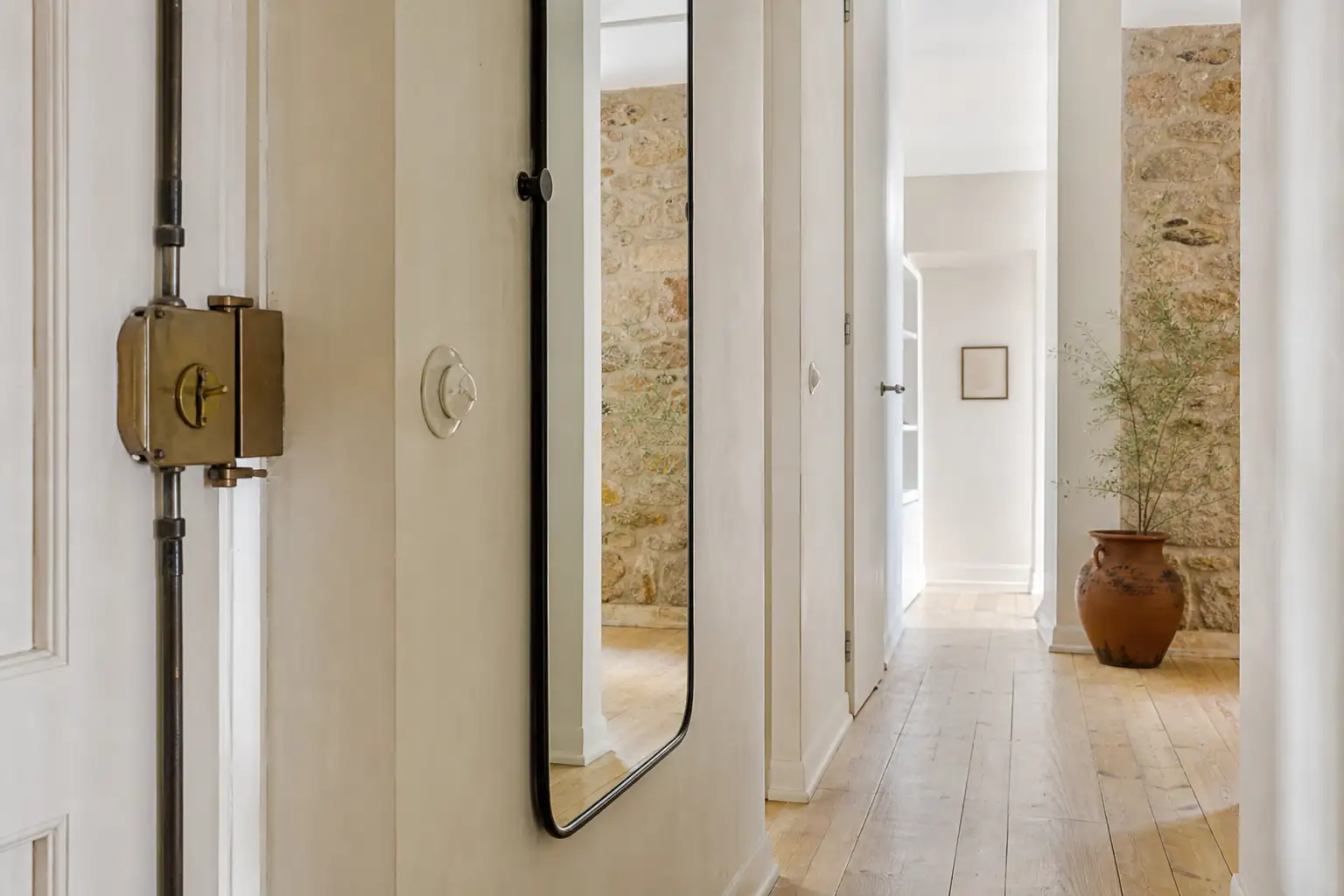
A mirror can only return the light it receives. A single ceiling downlight behind the person looking in the mirror puts the face into shadow and makes it difficult to judge colour, hair or clothing details. For an entrance that works well, use soft side lighting or two balanced sources that illuminate the person rather than only the glass.
Small wall lights, a vertical light detail or a well-positioned ceiling fitting can all work, provided that the bare lamp is not reflected directly at eye level. Colour temperature should also relate to the rest of the home: overly cool light can make a welcoming entrance feel clinical, while excessively warm light distorts colour perception. Test the arrangement at night, when daylight cannot disguise poor placement.
Efficiency does not require sacrificing comfort. In its CasA+ lighting information, ADENE identifies LED lighting as an efficient option for homes. In a hall, a good-quality LED source with diffusion and straightforward control usually works better than several decorative fittings added without a lighting plan.
If the entrance leads to a windowless corridor, a sensor can prevent people crossing the area in darkness. Set its sensitivity and delay carefully, though, so the light does not switch off while someone is finding keys or putting on shoes.
Manage reflections, privacy and what the mirror will reveal
Before fixing anything, check what the mirror will show when the door is open and when it is closed. A mirror that reflects a bright wall, a plant or artwork can add depth. One that constantly doubles a messy kitchen, a bathroom door or a wall full of cables adds visual noise every day.
Avoid setting it directly opposite a very exposed window without testing glare. In Lisbon, late-afternoon sun can strike the glass and create uncomfortable reflections, especially on west-facing façades. A slightly angled position, suitable window covering or a shift of a few centimetres may solve the problem before holes are drilled.
Privacy matters too. If the entrance door opens directly onto a shared landing, do not position the mirror so it returns views deep into the home to anyone passing outside. In small entrance areas, visual discretion is a genuine part of comfort.
For homes where clear routes are a long-term priority, the accessibility references gathered in the Portuguese accessibility legislation published in the Diário da República are a useful reminder of the importance of usable, unobstructed movement. They do not replace a project-specific assessment, but they make one point clear: free space is not wasted space.
Make one complete decision before buying
Bring a short checklist to the shop or to the conversation with your contractor: available width and height, door swing, wall type, sockets and switches, daylight during the day, and artificial lighting after dark. Add the selected mirror’s weight and the proposed fixing method. This preparation prevents improvisation late in the refurbishment.
A balanced solution can be very simple: a fixed vertical mirror, side or overhead light without glare, fully concealed cables and a stable mat that does not intrude into the walking line. If you want a console, choose a depth that respects the route and give it a specific purpose. The fewer objects left on the floor, the easier the space is to clean, move through and use when arriving home.
Do not bundle this choice into larger alteration work without coordinating the relevant trades. A new wall, relocated outlet or built-in lighting should be planned before finishes, as explained in our guide to sockets and switches before closing the walls. The most convincing result is usually the one where the mirror feels as though it always belonged in the home.
Reworking your entrance as part of a renovation? Obra Lisboa can help coordinate circulation, lighting, fixings and finishes so that small details work properly in everyday use.
AI-generated editorial image; it does not depict an Obra Lisboa project.

Obra Lisboa