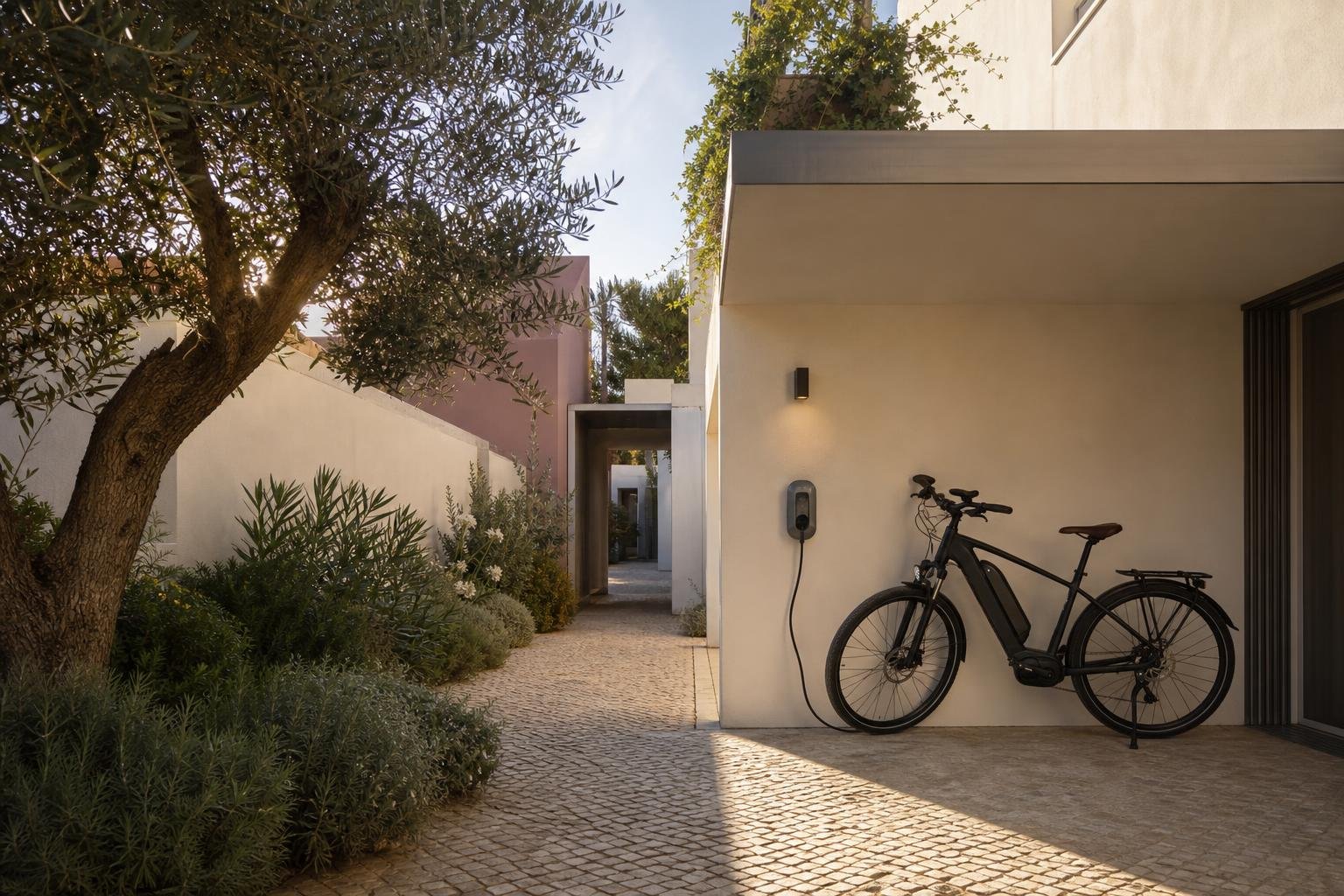
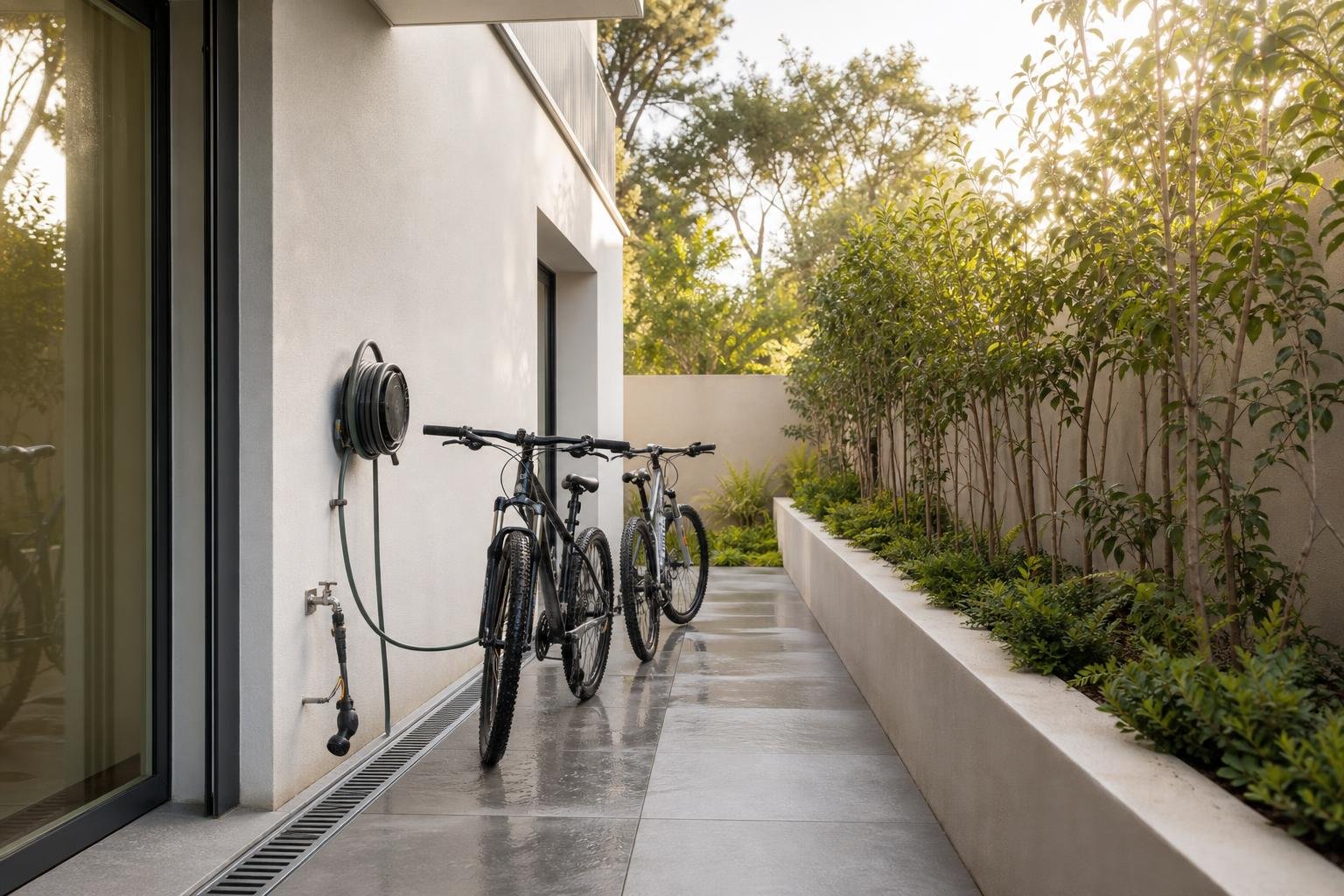
Washing a bicycle beside the front door can look harmless until the first wet week: mud reaches the hallway, the hose crosses the route in and out, puddles sit against the façade and equipment spreads across the garden. At a Lisbon house, a compact, well-planned washing point can handle this everyday routine without turning the outdoor area into a permanently damp corner.
The right decision does not start with the tap. It starts with the route: where the bicycle arrives, where it is set down, how dirt is removed and where the water ends up. The aim is an area that copes with wet tyres, occasional bicycle and shoe cleaning, and daily storage—without sending soil, oil or detergent where they do not belong.
Choose the location from the route, not from leftover space
Place the washing point between the gate or usual arrival route and the place where the bicycle is stored. That way, dirty wheels do not cross the entrance, garage or utility room. A side passage can work very well if there is enough room to manoeuvre without handlebars, pedals or bags scraping the wall.
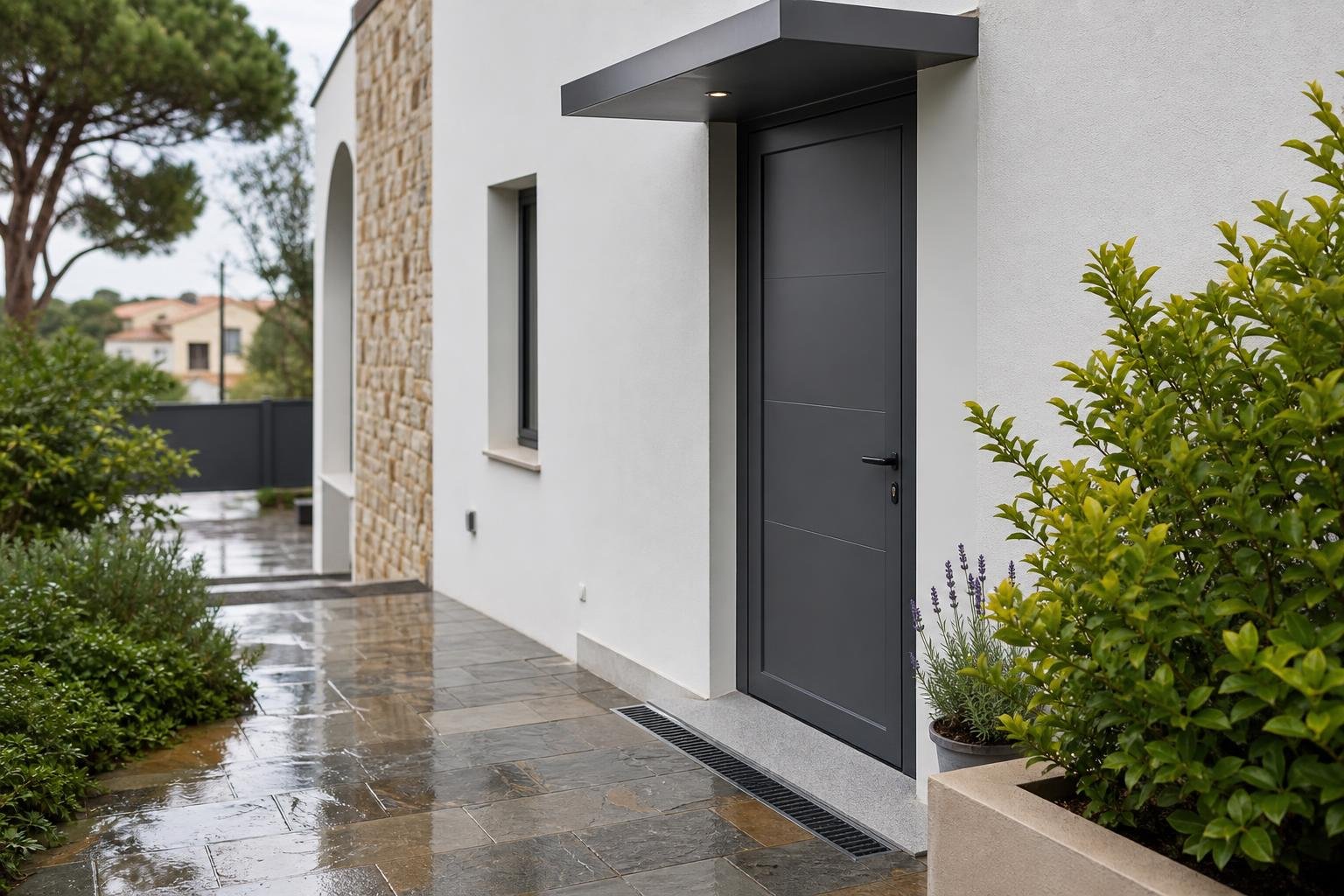
Avoid putting it directly beside the main door, a low window, an unprotected wall or any spot where water may run back towards the house. It is also wise not to place it under a balcony that already concentrates drips: constant moisture makes the surface harder to maintain and can hide drainage faults.
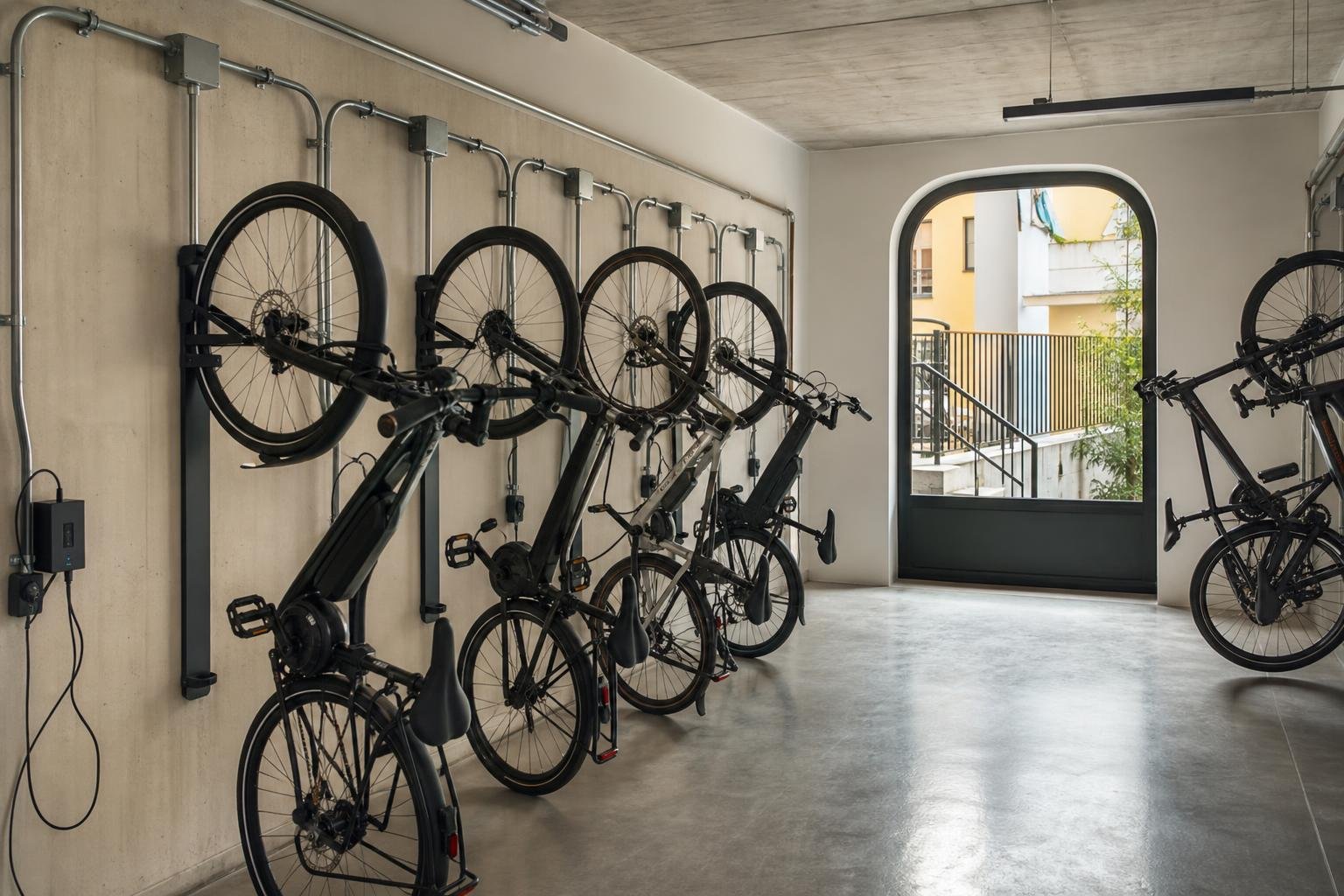
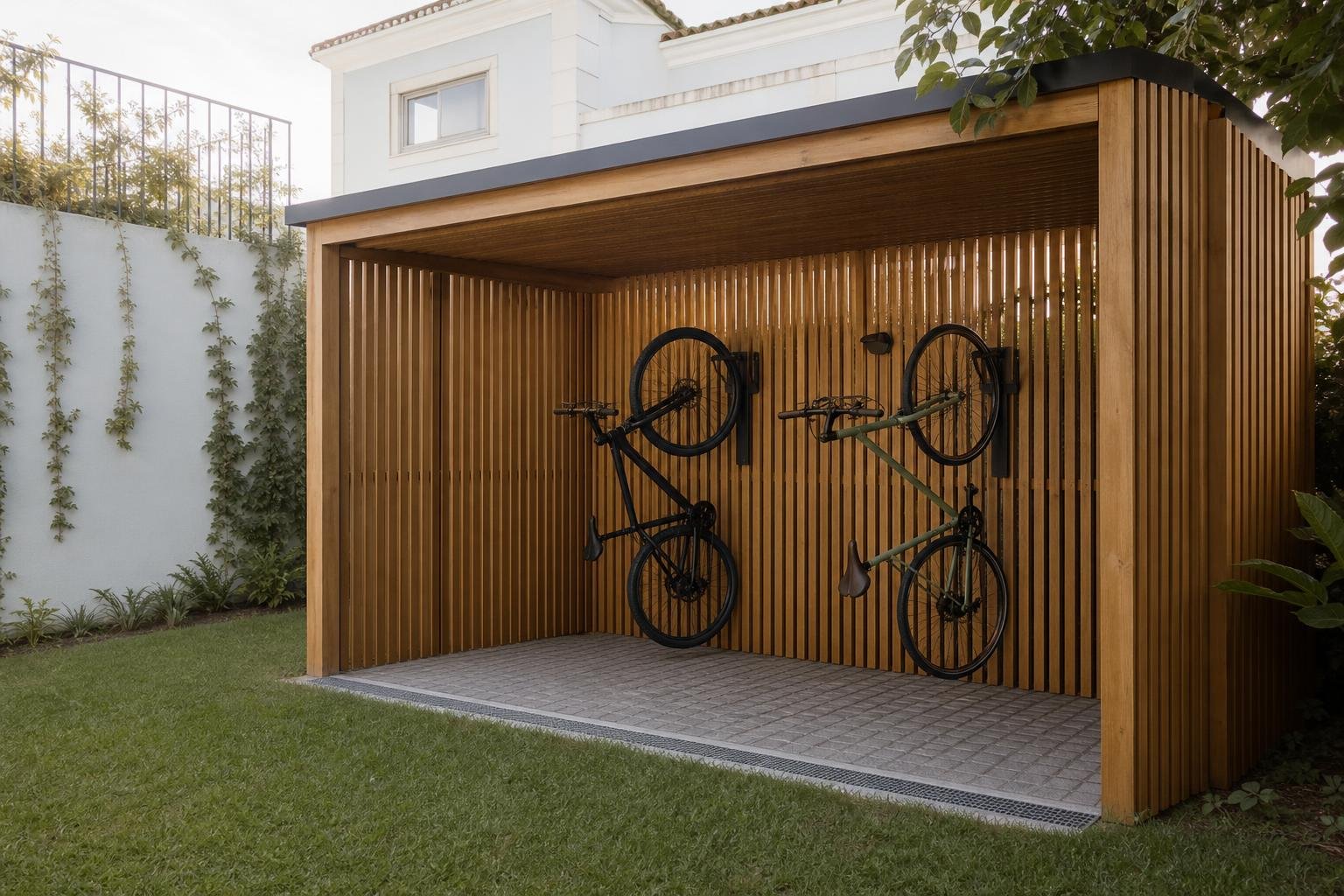
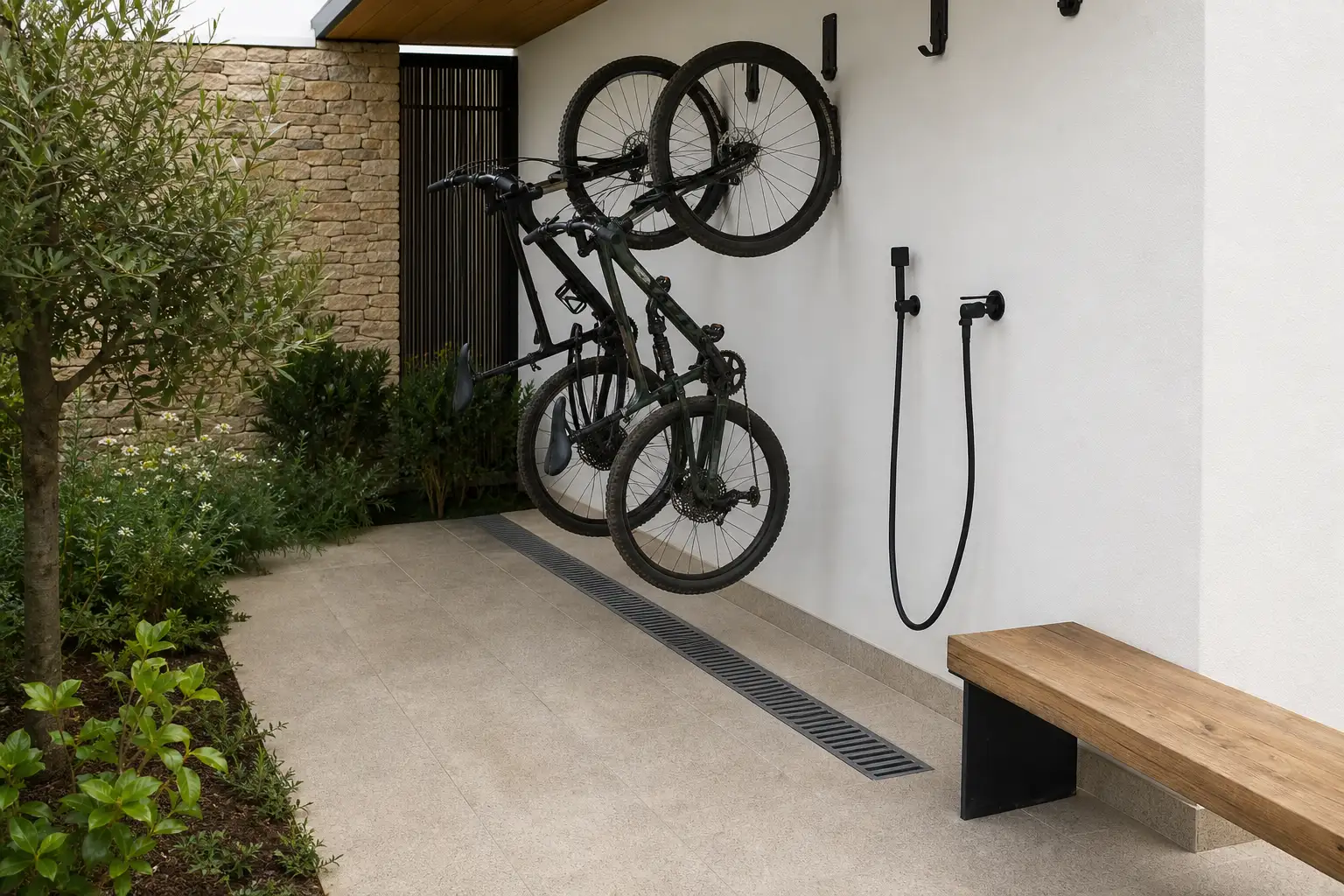
If the bicycle is kept in an outdoor shelter, treat washing and parking as close but separate functions. The cleaning area should come before storage, so sand and water are not carried inside. See our guide to a bicycle shelter for a house for the storage side of the decision.
Decide where the water goes before choosing fittings
A hose without planned drainage only moves the problem elsewhere. The paving should direct water to a collection point—not to the threshold, a neighbouring plot, the street or the foot of a boundary wall. In Lisbon, before altering exterior drainage, it is useful to check the available information in the Lisbon City Council public sewer network record.
For more substantial work, separating domestic wastewater from rainwater is a technical issue, not a decorative detail. The regulation published in the Diário da República requires separation upstream of connection chambers and prohibits materials that may block or damage pipework. In practical terms, do not sweep mud, sand, leaves, lubricants or cement residue into a drain.
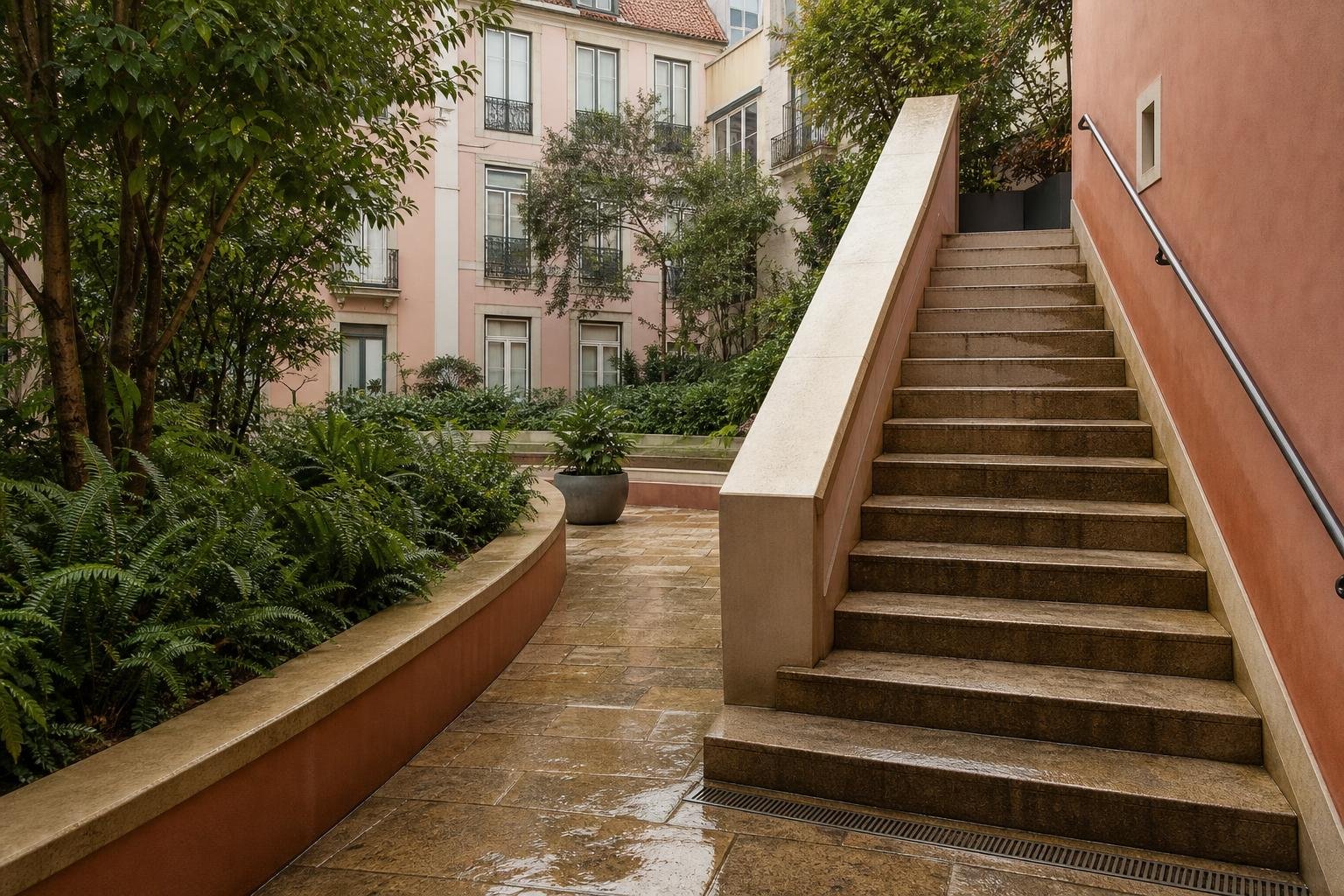
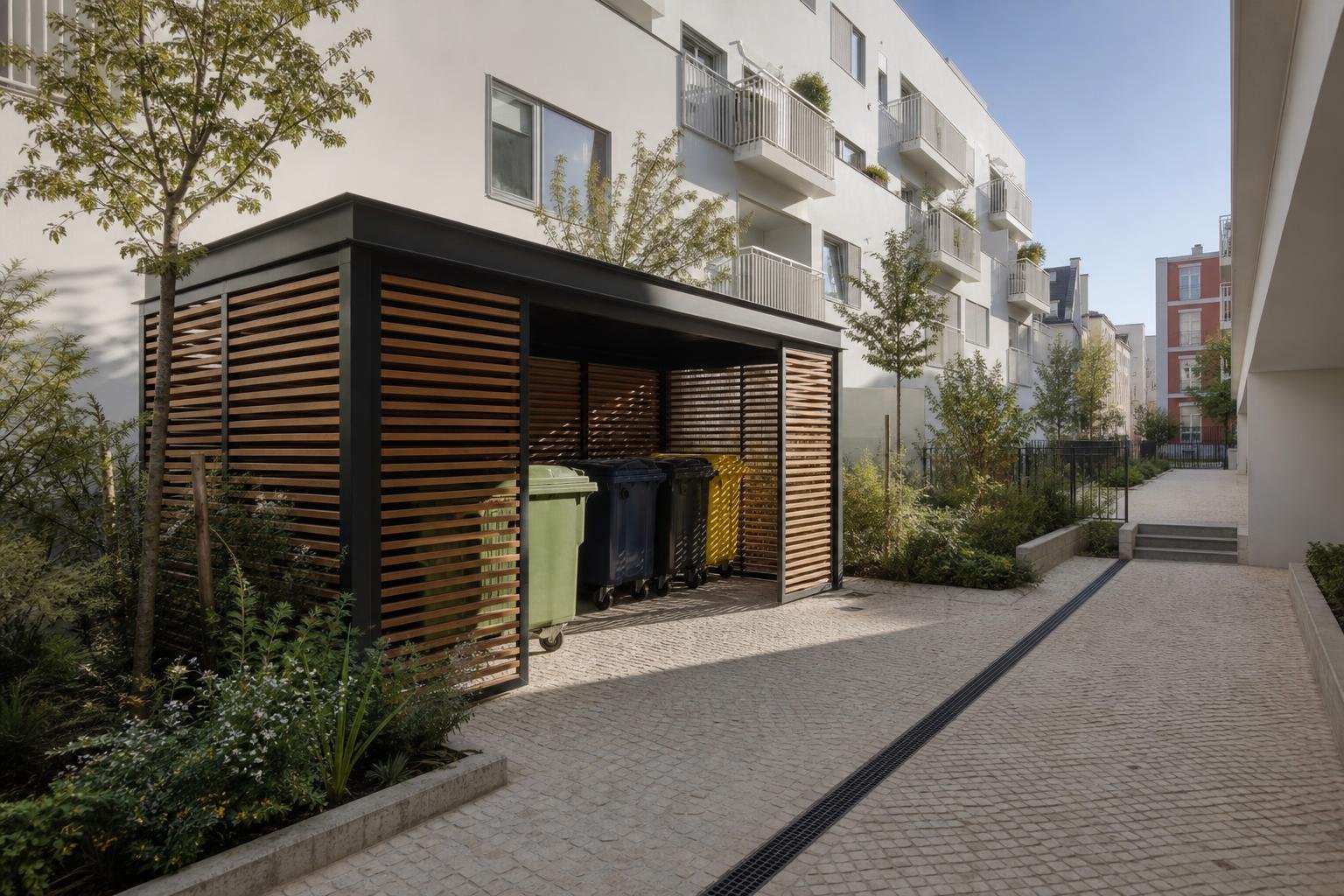
A linear channel drain with a removable grate makes cleaning straightforward; a point drain needs carefully formed falls. Either way, provide access to remove sand, hair and leaves before they enter the pipework.
Use paving that can handle water, tyres and regular cleaning
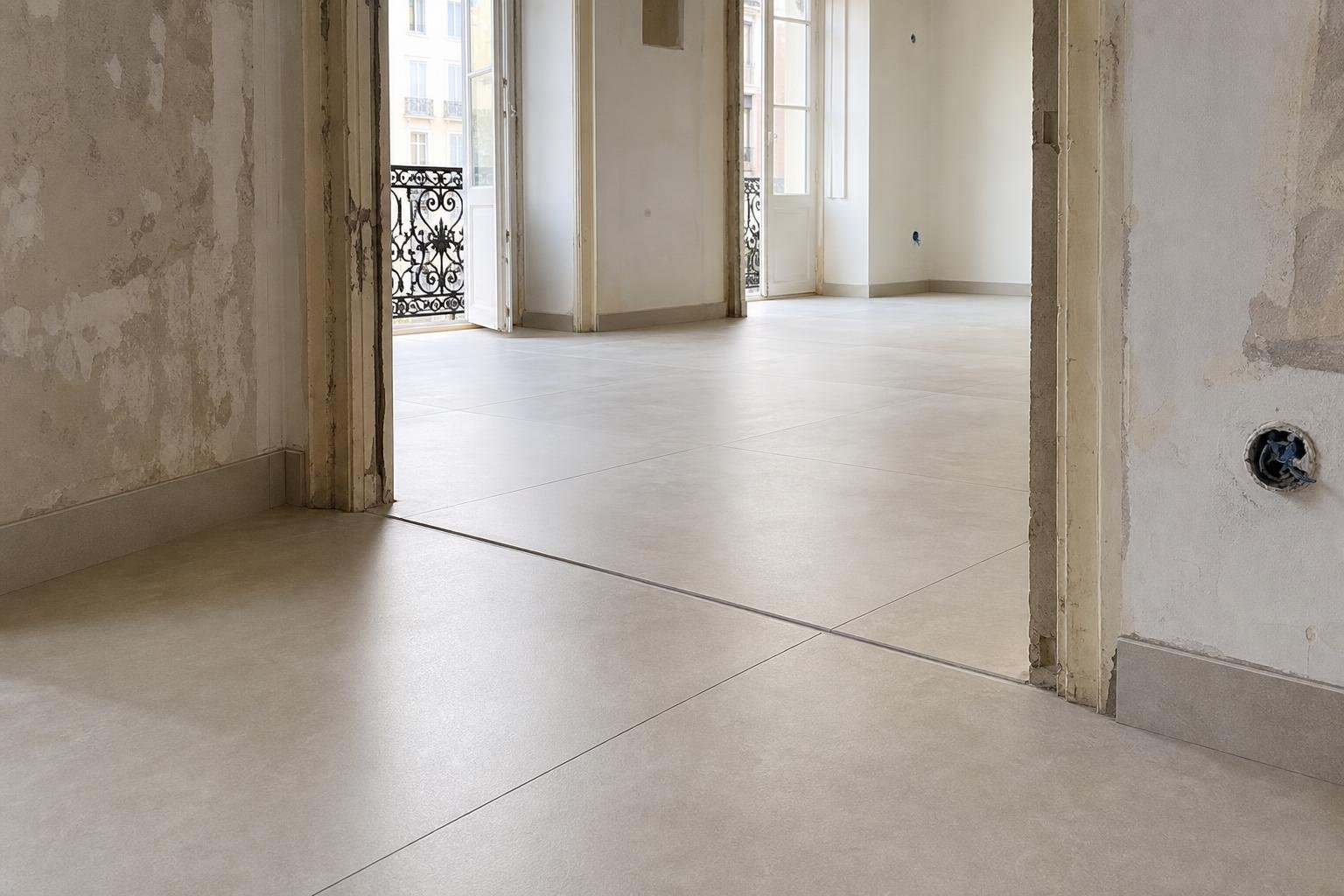
The best finish is not automatically the roughest one. Look for grip when wet, straightforward cleaning and stable joints. Suitable outdoor ceramic or porcelain tile, properly finished concrete or correctly installed stone can all work. Highly porous surfaces hold dirt and product marks; overly smooth ones become slippery with water and soap.
Avoid loose gravel where you will rest a kickstand, clean a drivetrain or roll the bicycle by hand. Stones migrate, become trapped in tyres and eventually find their way into drains. If you are retaining existing paving, check cracks, low spots and open joints before adding a tap: water quickly reveals every depression and weak point.
A washing strip wide enough to stand the bicycle and move around it is more useful than a tight square. Keep a dry margin near the wall for a bucket, brush or pump, without interrupting drainage.
Provide water without creating vulnerable details
An outdoor tap should be durable, easy to reach and placed so the hose does not cross the main route. Add a hose holder, quick connector and, if electrical equipment is nearby, keep it outside the splash zone. A small overhead cover can reduce direct sun and rain exposure, but it should not trap moisture against the wall or prevent ventilation.
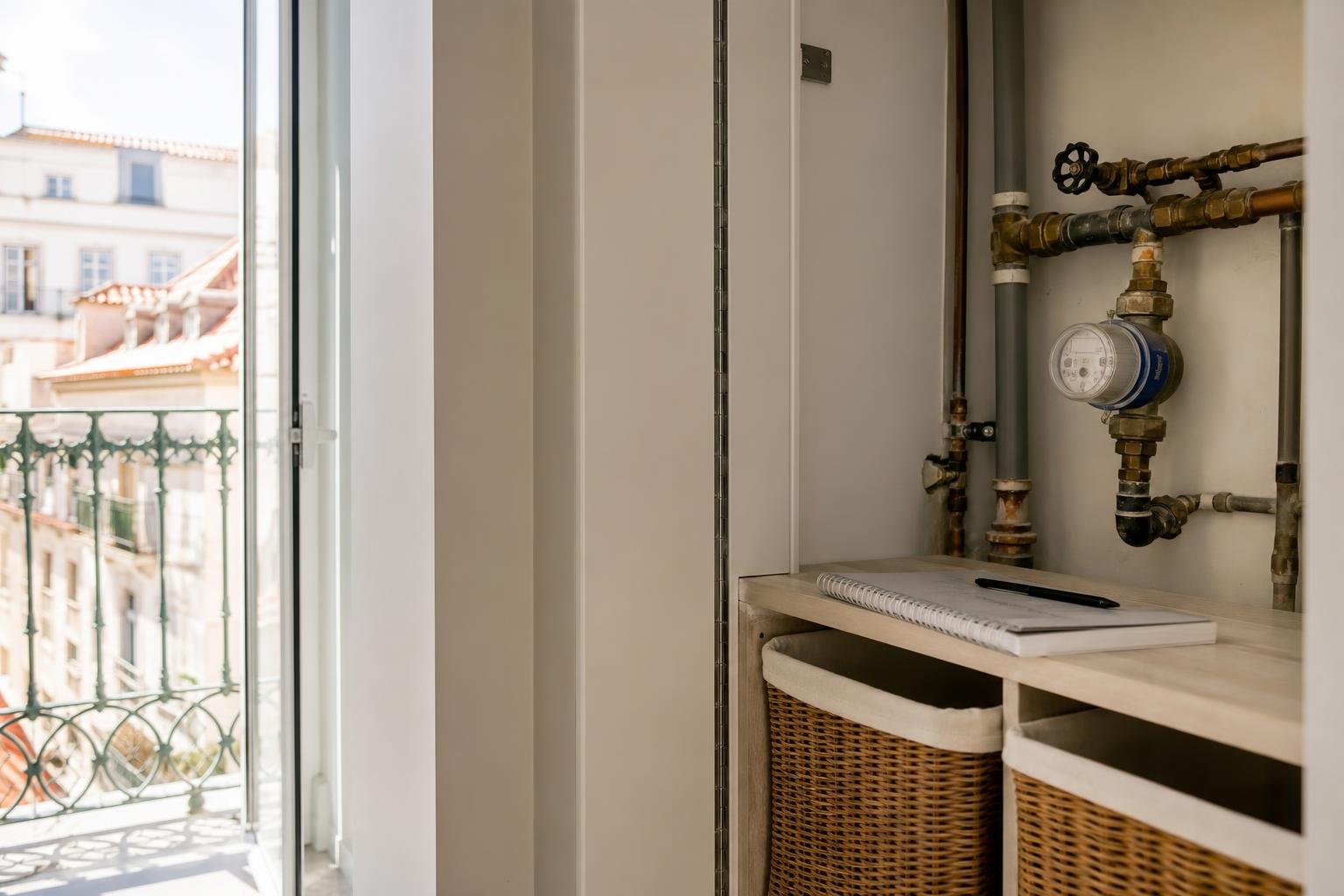
It is sensible to include an accessible shut-off valve indoors or in a service box, especially if the house is empty for extended periods. Do not conceal every connection behind fixed panels: a slow leak discovered late can damage finishes, walls and stored items.
Efficiency matters in outdoor use too. ADENE notes that building water efficiency includes outdoor uses and installed water devices. For a bicycle with little mud, a trigger nozzle and a brush with a bucket can prevent water running continuously while the chain is cleaned.
Keep routine washing separate from bicycle maintenance
Water and soil are one thing; degreasers, lubricants, sprays and drivetrain residues are another. Keep a tray or maintenance mat for messier jobs, and collect used cloths, packaging and product residues. A drain is not an appropriate destination for chemicals simply because it is nearby.
Store products in a closed, dry and ventilated cupboard, away from direct sunlight and out of children’s reach. The Portuguese Directorate-General of Health advises keeping cleaning products secured and avoiding mixtures; the same principle applies to outdoor detergents and bicycle degreasers.
A simple order keeps the area cleaner: remove heavy mud into a container, rinse tyres and frame, clean the drivetrain with a small amount of product, collect residues, then store the bicycle. The washing point stays usable, and the drainage system is under less strain.
Finish with storage that supports the routine
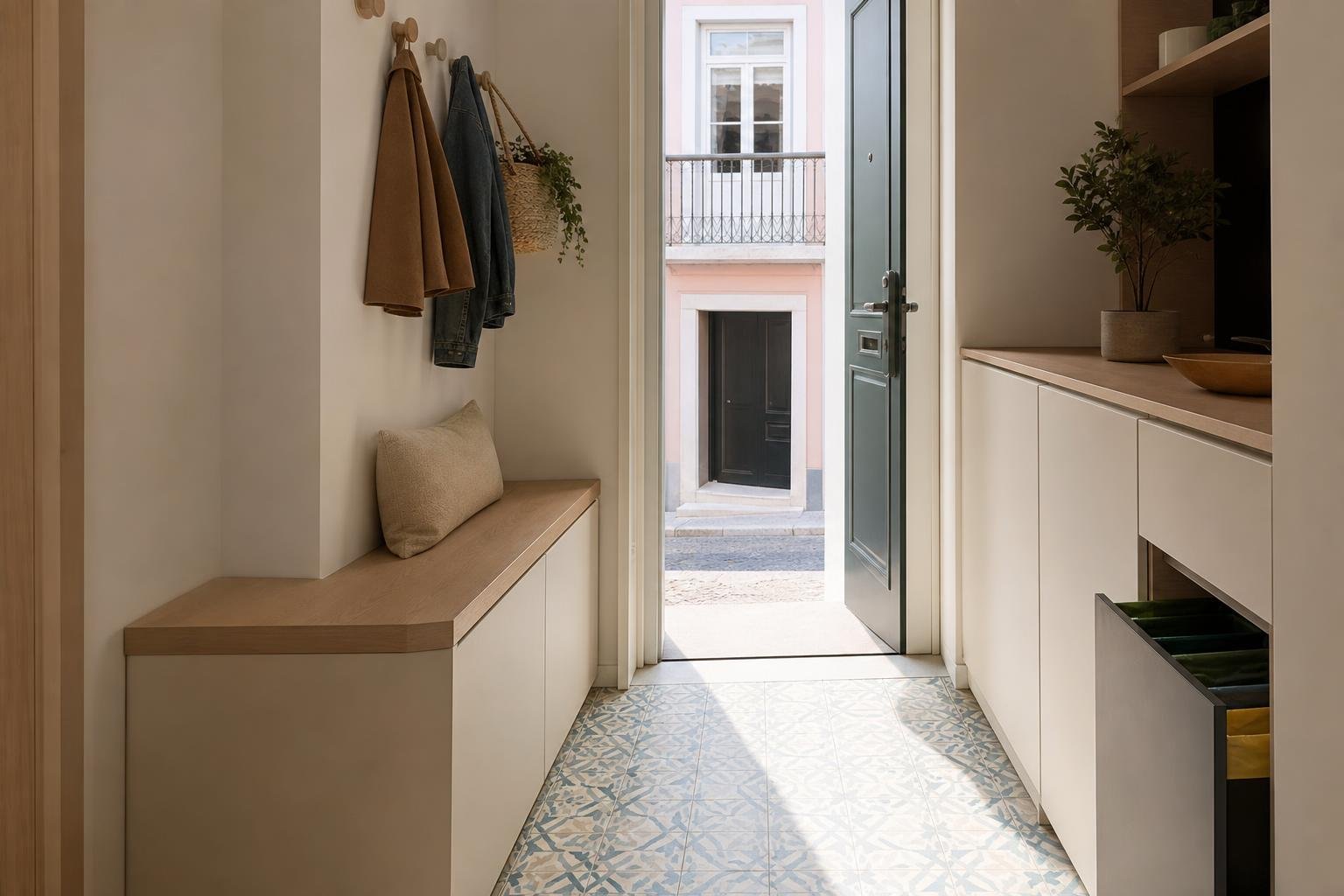
Two hooks for helmets, a narrow shelf for lights and gloves, and a vertical holder for brushes often achieve more than a large cupboard in the wrong place. Keep them outside the direct splash zone and leave the lower area clear for sweeping and washing the floor.
If there is a hose, bucket and pump, give each item a fixed home. Storage should allow every piece to be taken out and put away without moving the bicycle. In a house where boots, pushchairs or beach equipment are also washed, separate containers and cloths: mixed uses are a quick route for sand to reach the interior.
Where external space is limited, combine the washing point with a properly planned water outlet rather than improvising against the façade. Our article on an outdoor tap at a house helps assess location, leak prevention and a practical washing area.
A bicycle washing point may be small, but it needs coordinated choices about paving, falls, water supply and storage. If you are reorganising the outdoor area of a Lisbon house, Obra Lisboa can help integrate these details into a practical renovation plan.
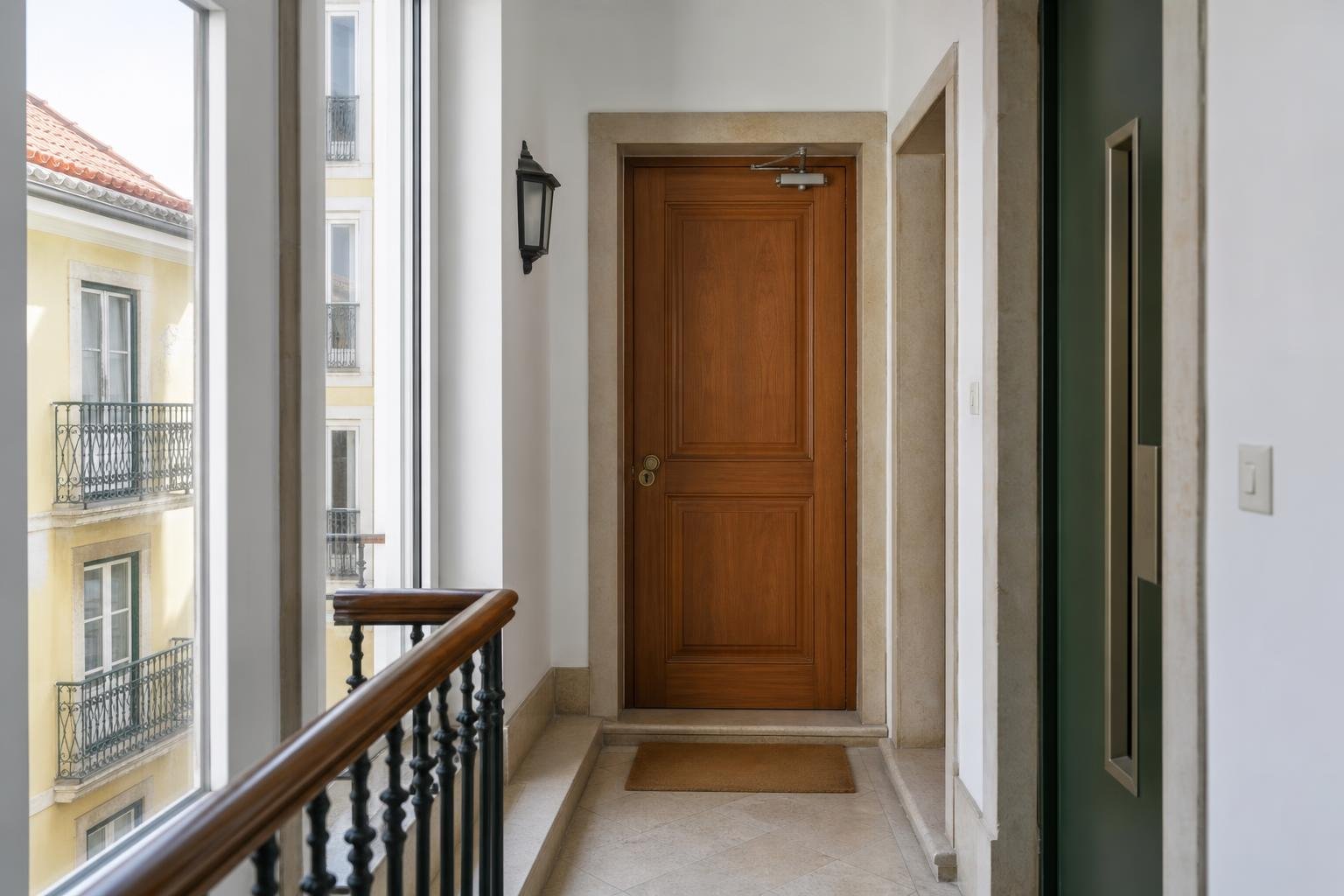
AI-generated editorial image; it does not depict an Obra Lisboa project.

Obra Lisboa