
An outdoor tap can look like a minor item until you need to wash a patio, fill a bucket, water pots, clean bicycle wheels or deal with a muddy bin area. Then, a poorly placed outlet means long hoses, splashing against the house and an everyday job that is unnecessarily awkward.
For a house in Lisbon, the decision brings together three practical matters: the water route, drainage for washing and exposure to outdoor conditions. The tap is not a stand-alone fitting. It belongs to a small working area with paving, drainage, clear access and an easy-to-reach isolation valve. The aim is not to add equipment everywhere, but to provide a durable water point where water will actually be used.
Before work begins, separate the private plumbing installation from the public supply network. The applicable rules describe the building water-distribution system as running from the shut-off valve to the points of use. Review the Diário da República rules on building water systems and have the outdoor outlet planned as part of the house plumbing rather than as a late addition.
Start with use: one tap for each important routine
The best location is not always the least visible one. It is the location that shortens journeys and keeps water away from indoor routes and walking paths. Make a brief list of real tasks: watering, washing paving, cleaning bins, filling a tank, washing tools or supporting an outdoor kitchen. Then mark those tasks on a simple site plan.
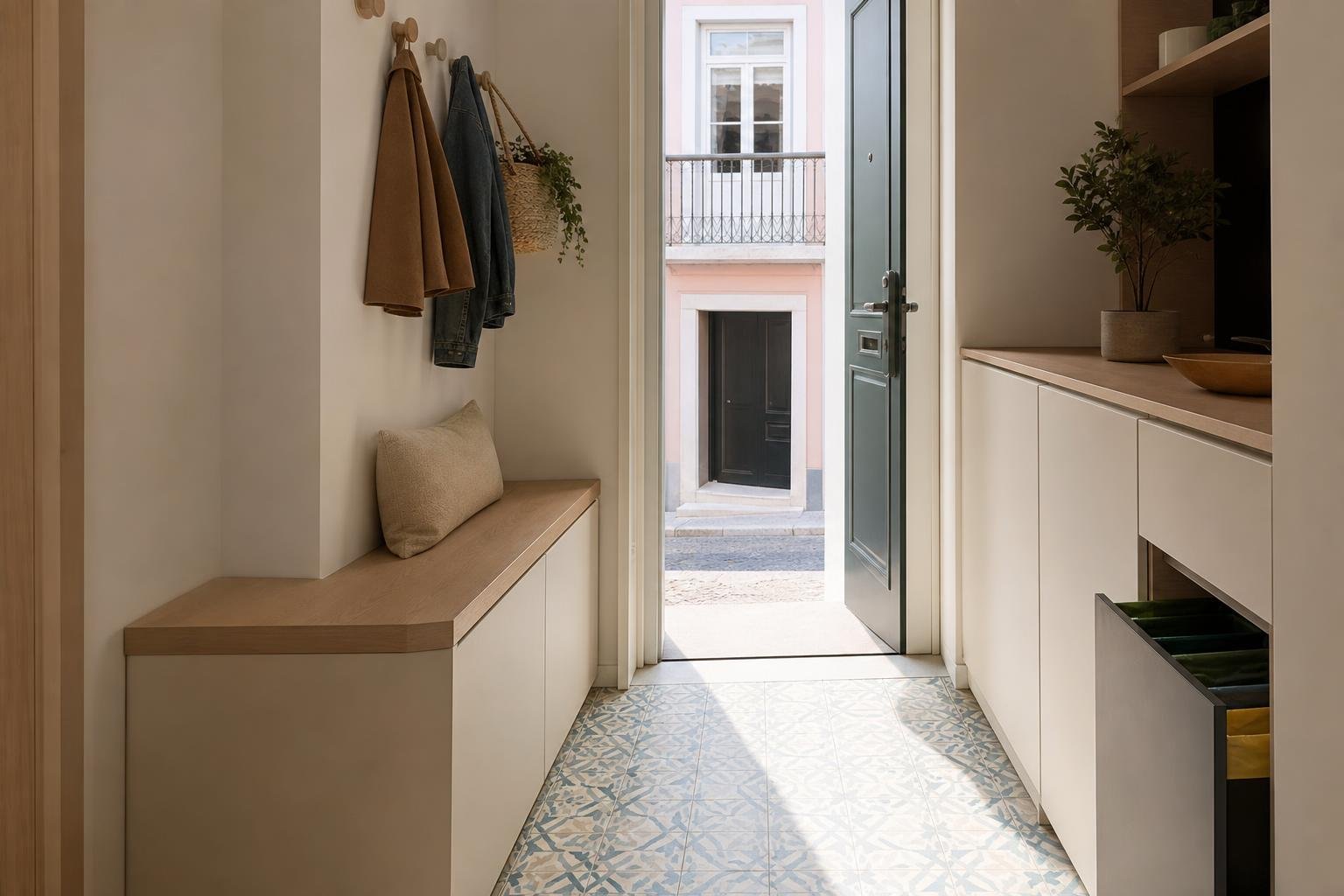
In a narrow house plot, two well-positioned taps often work better than one tap at the rear trying to serve everything. One may sit near the main entrance for occasional cleaning; another may belong at the back, close to planting, an outdoor laundry area or a dining terrace. Do not choose an outlet simply because a wall is available. Check that a hose can reach its destination without crossing steps, doors or everyday circulation routes.
If the project includes external improvements, coordinate this choice with courtyard and patio drainage in Lisbon. Available water without a controlled route for used water is likely to create puddles, staining and damp around the bottom of the façade.
Keep water away from the façade and protect the wall base
A tap installed above bare soil or a paving slab that falls towards the house is an invitation to trouble. Even a short wash throws water downwards and sideways. If the area stays wet, the wall is exposed to more splashing, dirt and repeated wetting cycles.
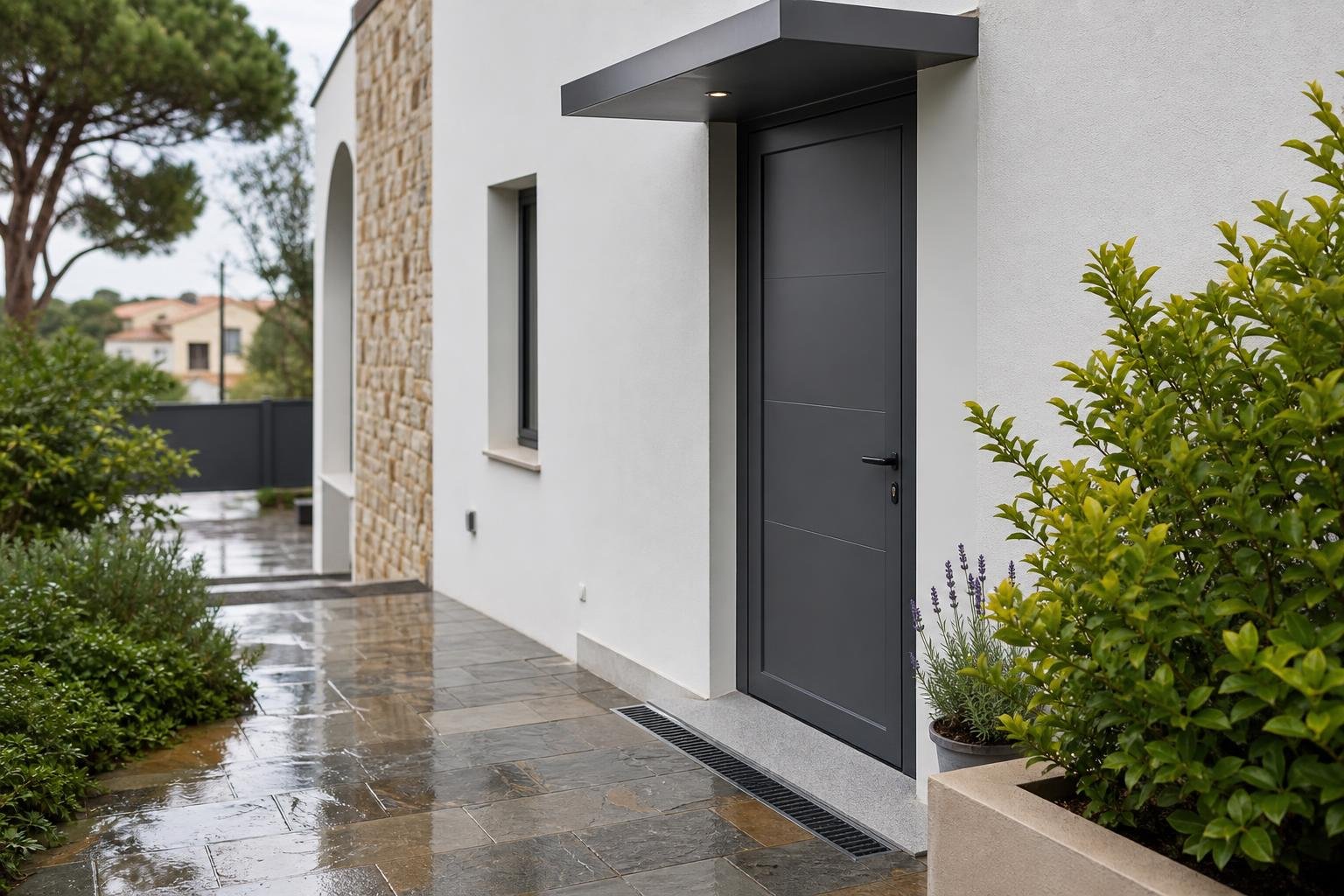
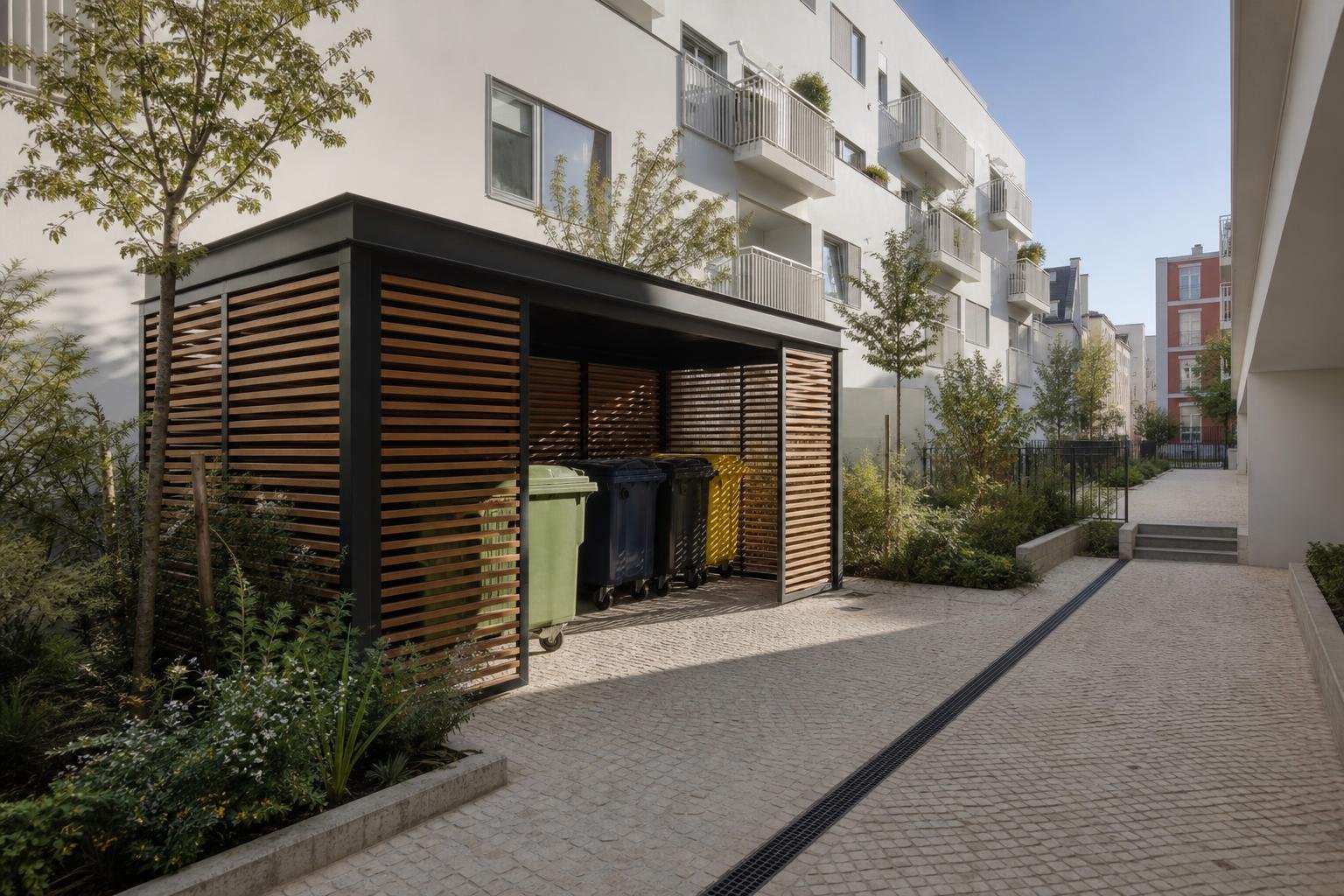
Allow for a small washable strip at the water point, with a durable finish and a fall that leads water away from the building. The answer can be modest: a paved area, a linear drain or a correctly connected gully, depending on the layout and existing conditions. What matters is avoiding discharge against the façade, into a closed planter or into a corner with nowhere for water to go.
Where a patio has large impermeable areas, consider whether a permeable solution is appropriate away from the direct washing zone. Our guide to permeable paving for residential patios helps distinguish what can infiltrate, what should be drained and what needs ongoing care. Never assume that an open joint alone can deal with the flow from a hose.
Plan isolation, mechanical protection and maintenance access
An outdoor tap should be capable of being isolated without turning off water to the whole house. Ask for an accessible, labelled and protected isolation valve, especially if the outlet is far from the technical cupboard. This makes it easier to replace the tap, repair a leak or close the branch while the house is empty.
Avoid exposed pipework where it can be hit by bicycles, trolleys, tools or gates. Where a route near a service area cannot be avoided, a properly designed technical box or robust guard is better than hiding pipework behind plants. Maintenance needs access; an attractive detail that cannot be inspected quickly is not practical.
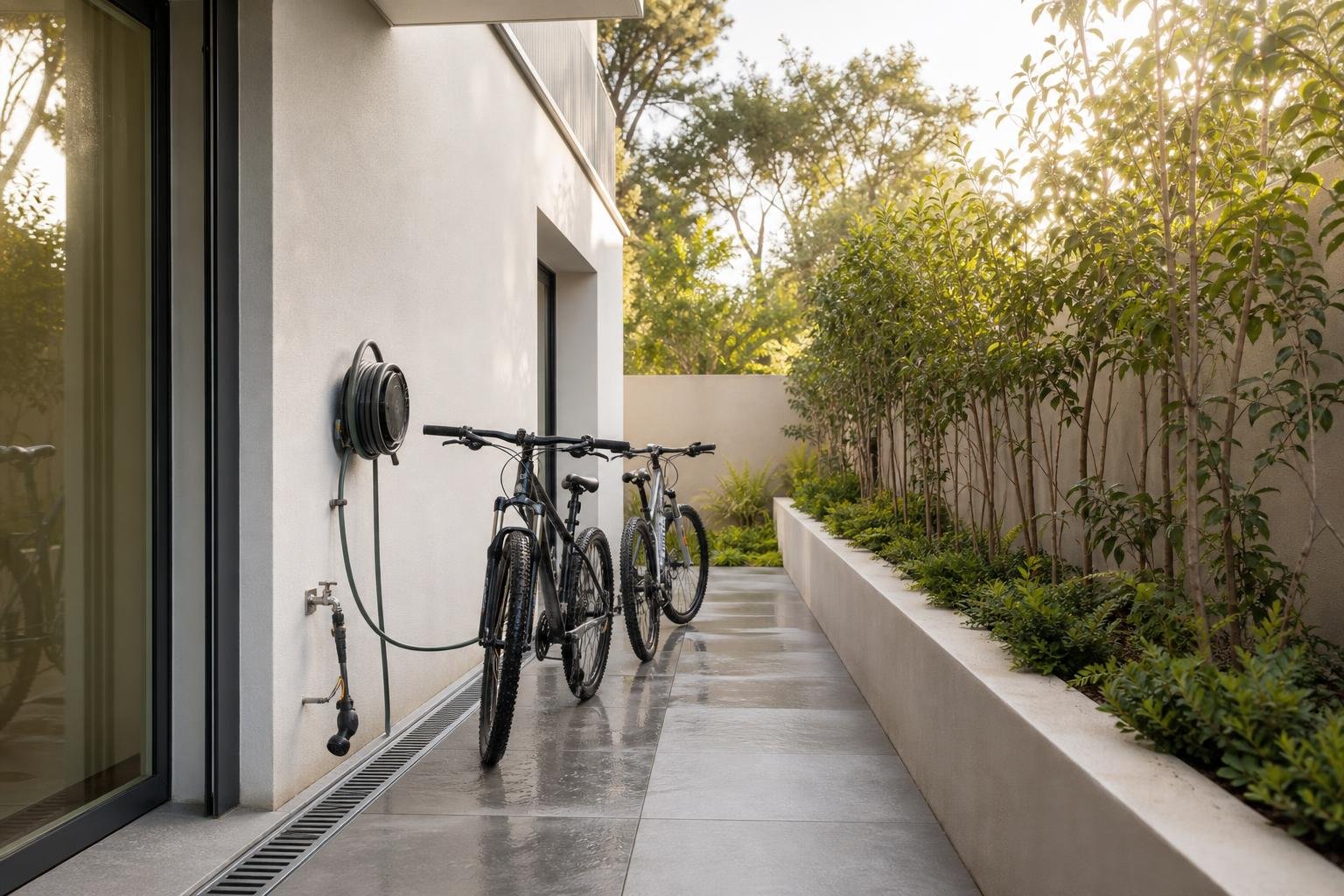
The hose connection also deserves attention. Choose a tap suitable for outdoor use, with a secure connector and room to turn the hose without stressing the wall fitting. A hook or reel mounted beside it reduces constant pull on the tap and keeps the hose off the ground, away from pooled water and soil.
For a wider view of why pipework and final connections must be planned together, read what to check in drainage and plumbing before renovation.

Create a washing area that does not obstruct the house
A tap becomes much more useful when it belongs to a defined work area. Think about a platform large enough for a bucket, a hose and the person doing the washing, without blocking the entrance, garage access or route to the garden. By a gate, for instance, a hose often cuts across circulation at exactly the time someone arrives home.
A good washing area has four parts: slip-resistant flooring, a water point, planned drainage and nearby storage. It may include a small hook for the hose and a washable shelf for outdoor cleaning products. Add an electrical outlet only where there is a clear need and it is designed and installed by a qualified professional. Extension leads laid across outdoor spaces are not a permanent answer.
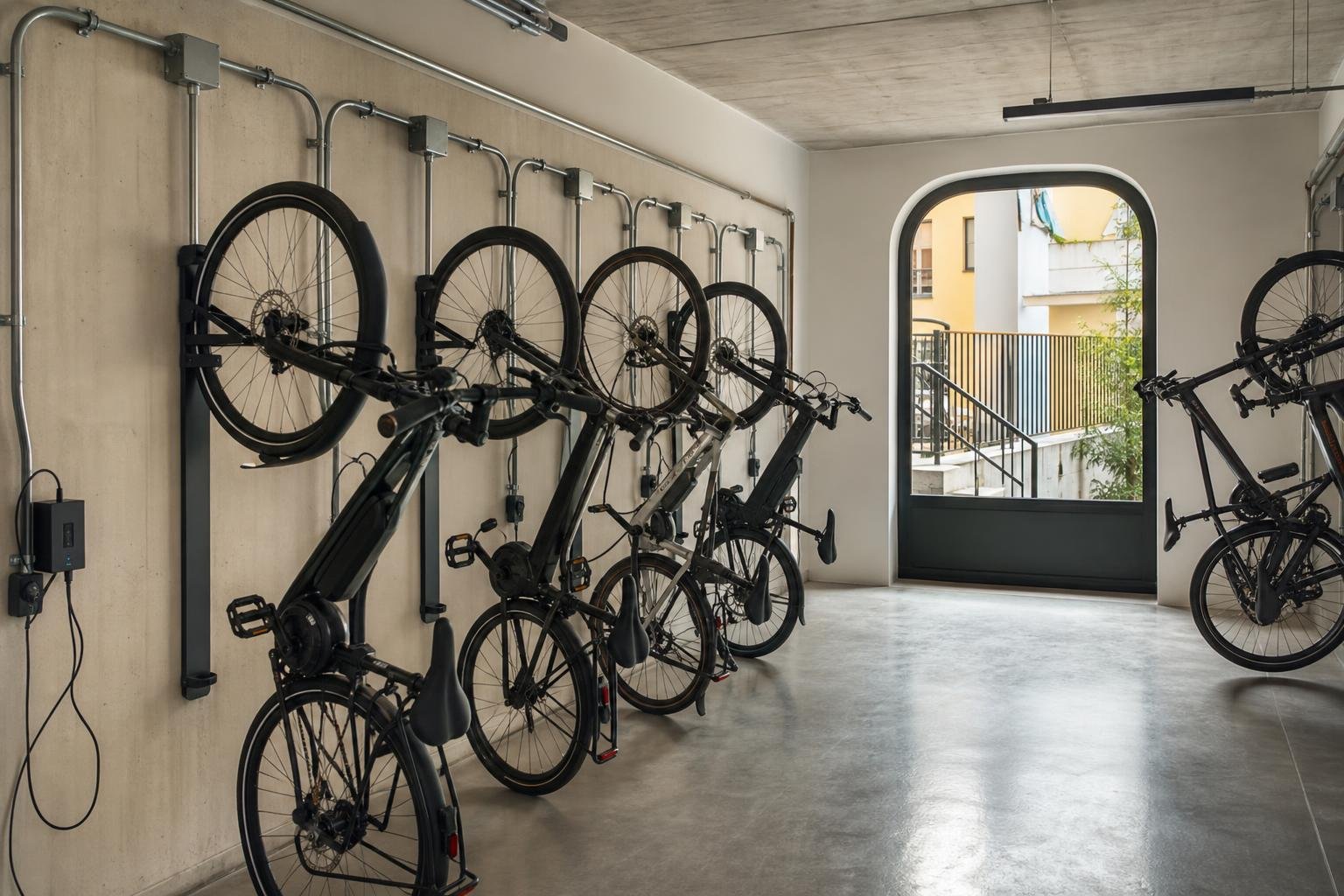
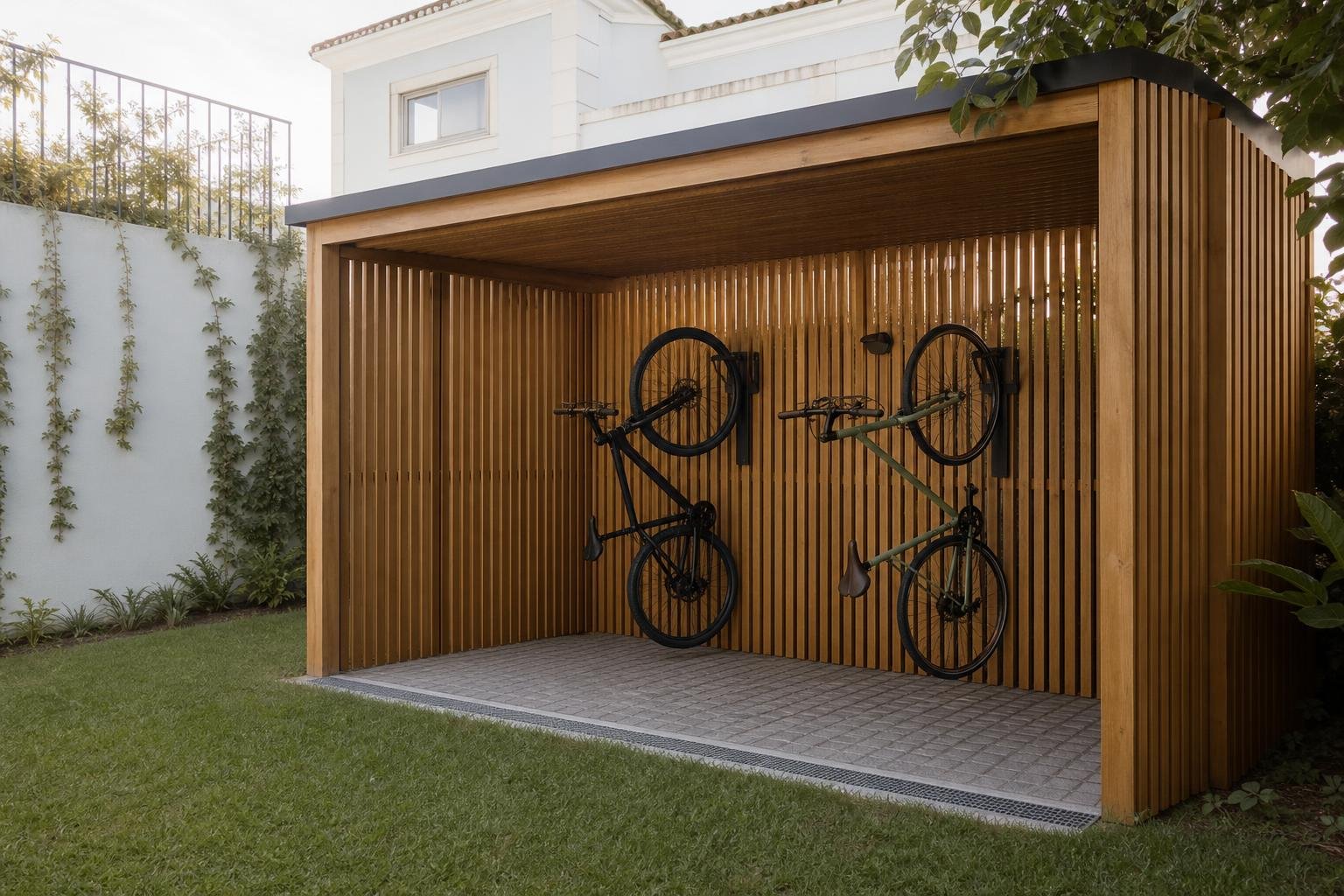
If bicycles, vehicles or tools are nearby, do not let the area become a store room. Keep a clear route to the door and protect cleaning products from direct sun and children. Water should make the house easier to maintain, not create another disorganised corner.
Reduce waste without reducing usefulness
An outdoor tap needs enough flow for its intended tasks, but that does not mean water should run unchecked. ADENE includes outdoor uses and device efficiency in its assessment of building water performance; see its overview of water efficiency and external water uses in buildings. In daily use, start with the basics: fix leaks, use a hose nozzle with a shut-off control and replace damaged hoses.
For irrigation, consider keeping an automatic irrigation circuit separate from the washing point where the project warrants it. A fault or later alteration in one function will then not affect the other. If you plan to use harvested rainwater, do not improvise connections between systems. Define storage, filtration, identification and compatible uses from the start.
Sub-metering or sector monitoring can also be worthwhile where there is substantial irrigation, a pool or regular external consumption. Its purpose is not to monitor every litre. It is to reveal a changed pattern quickly after a leak, a stuck valve or a shift in household use.
Cleaning, long periods without use and health care
A tap that has been unused for months needs more than a visual check. Before using it to wash or fill containers, inspect the hose, clean the outlet and run water for a while, while avoiding unnecessary aerosols close to the face. Portugal’s Directorate-General of Health notes that taps and showers can generate aerosols, and that low or no water flow, dirt and biofilm in pipework are relevant conditions for Legionella multiplication; see the DGS questions and answers on Legionnaires’ disease.
This does not mean treating a domestic outdoor tap like a complex facility. It means avoiding neglect: do not leave hoses full of standing water in the sun, replace deteriorated seals, keep the area clean and repair drips as soon as they appear. Where a tap supplies a rarely used branch, add opening and inspection to the house’s seasonal maintenance routine.
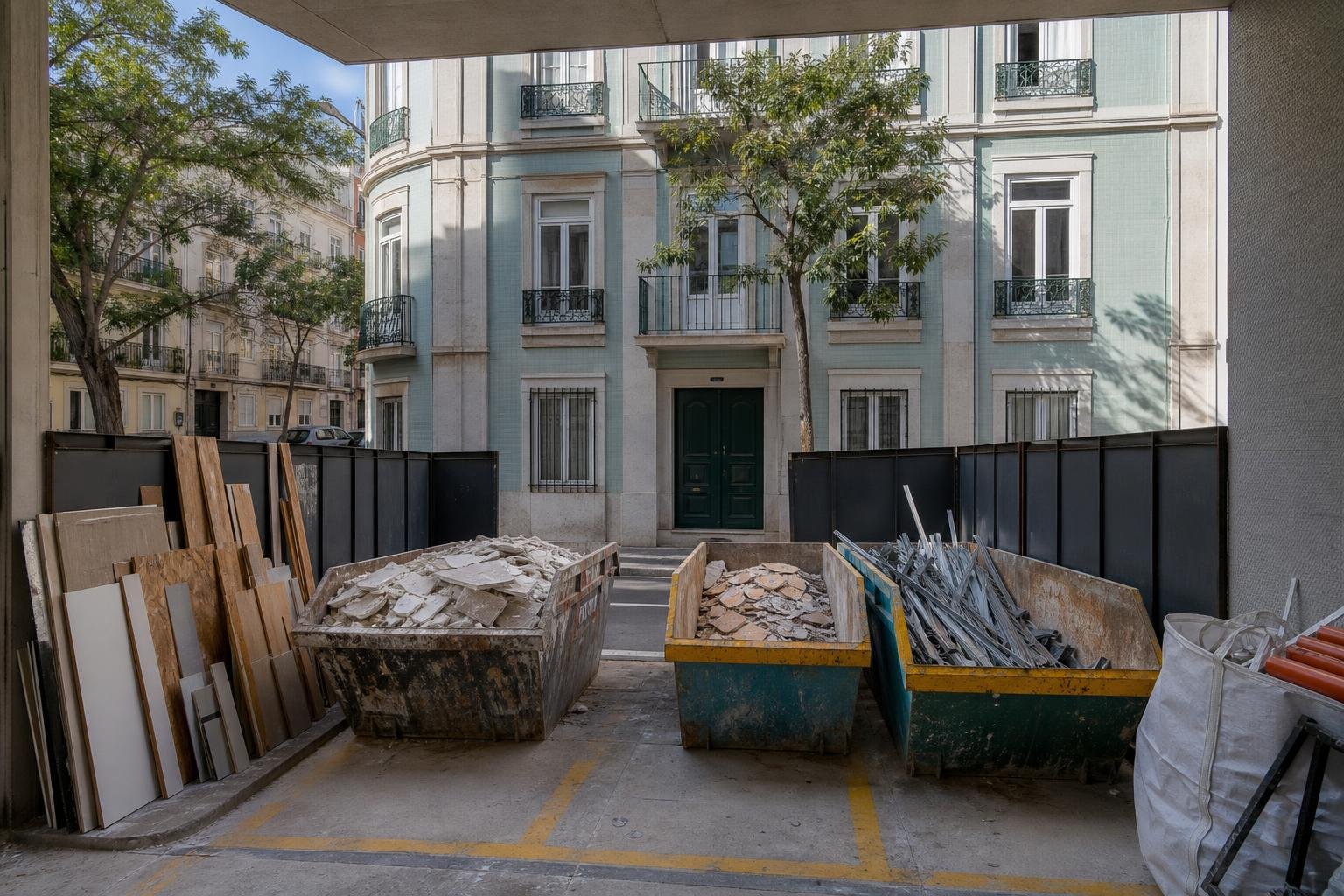
Finally, if work requires opening the pavement, placing materials outside or using public space, check municipal requirements before the work is arranged. In Lisbon, projects subject to prior control may require an approved plan and licence for public-space occupation, as set out by the municipal service on public-space occupation during construction work.
An outdoor tap works best when it is decided before paving, drainage and planting are finalised. If you are renovating a house in Lisbon, Obra Lisboa can help coordinate these small service details with the wider project, so the outdoor space remains straightforward to use and maintain.
AI-generated editorial image; it does not depict an Obra Lisboa project.

Obra Lisboa