
Finding hydraulic tiles beneath a newer floor is one of the most rewarding discoveries in a Lisbon apartment renovation. It can also lead to rushed decisions: lifting everything to “see what is there”, polishing away the patina, filling gaps with incompatible replacements, or covering a floor that could have been repaired because it looks uneven at first glance.
The starting point is not grout colour. It is understanding what survives, what condition it is in, and how the room will be used after the renovation. A heavily used hallway, a kitchen exposed to regular water and a low-traffic living room need different answers. This guide sets out a workable sequence before materials are ordered or the budget is fixed.
In Lisbon, it is also important to distinguish an interior intervention from work affecting a façade, structure or shared building element. The municipality explains that certain internal works may be exempt from prior control when they do not affect structural stability, façades, roofs or façade tiles; the specific building, condominium rules and scope still need checking. Read the municipal guidance on exempt works and public-space occupation before arranging skips, hoarding or deliveries.
Identify the floor before you disturb it
Hydraulic tile is not the same as modern ceramic tile. It is generally a pigmented, pressed tile with the pattern built into its upper layer. That usable decorative layer is limited, so aggressive grinding can erase contrasts and turn a crisp pattern into a dull, blurred surface.
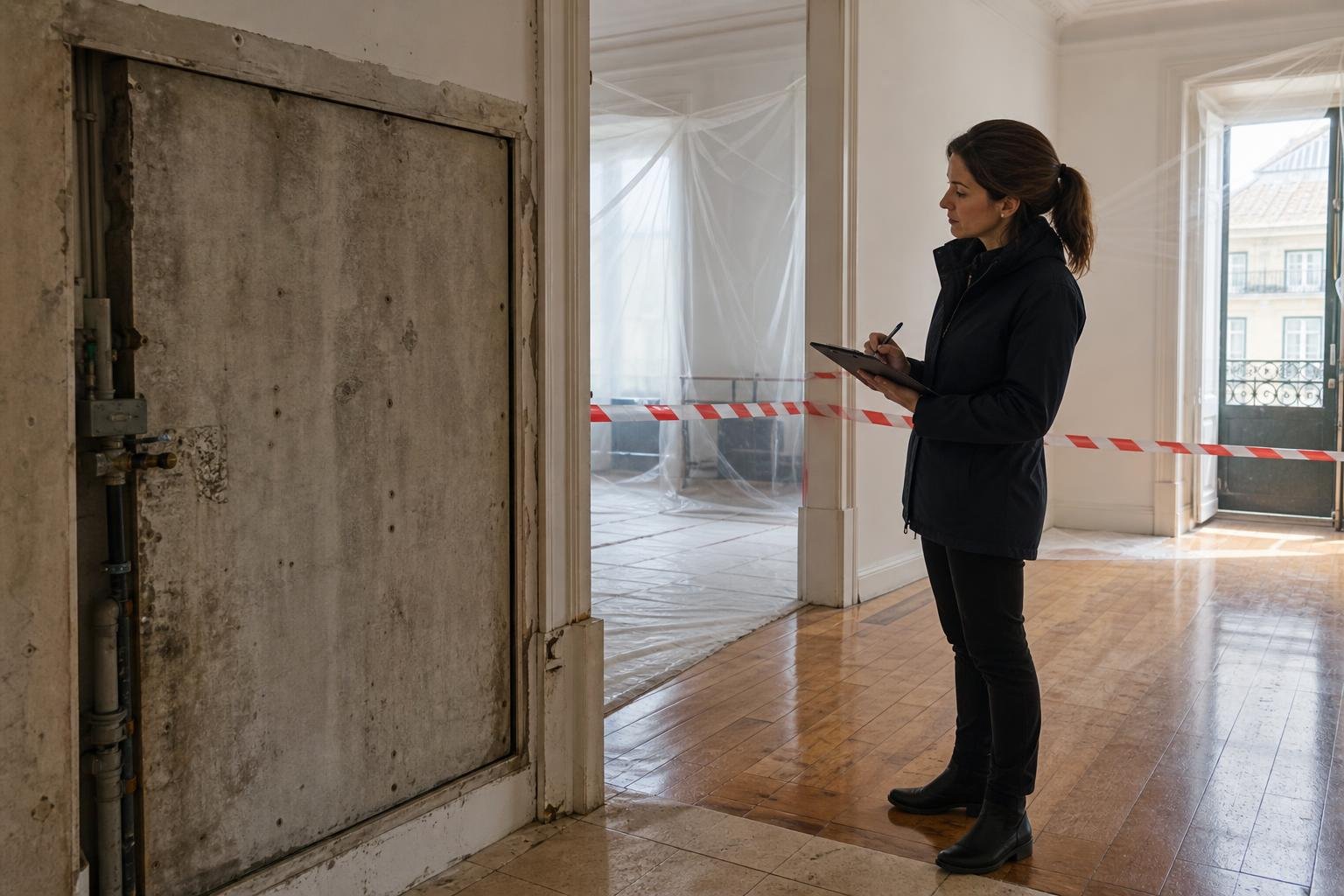
Before removing skirting boards, fitted furniture or later coverings, make a straightforward record:
- photograph every room and the junctions with doors, thresholds and walls;
- note the direction of the pattern, especially at borders, corners and transitions;
- mark loose, cracked, stained, uneven or previously replaced tiles;
- listen for hollow areas with a light touch, without hammering or pulling tiles up;
- check whether moisture comes from below, a wall, a leak or repeated wet cleaning.
A floor with even wear, modest tonal variation and aged grout may have far more character and serviceable life than one that looks pristine but has detached from its base. If the renovation includes demolition, also read Obra Lisboa’s guide to removing apartment walls in Lisbon: vibration, partition removal and new service routes can all affect old flooring.
Choose between preservation, local repair and replacement
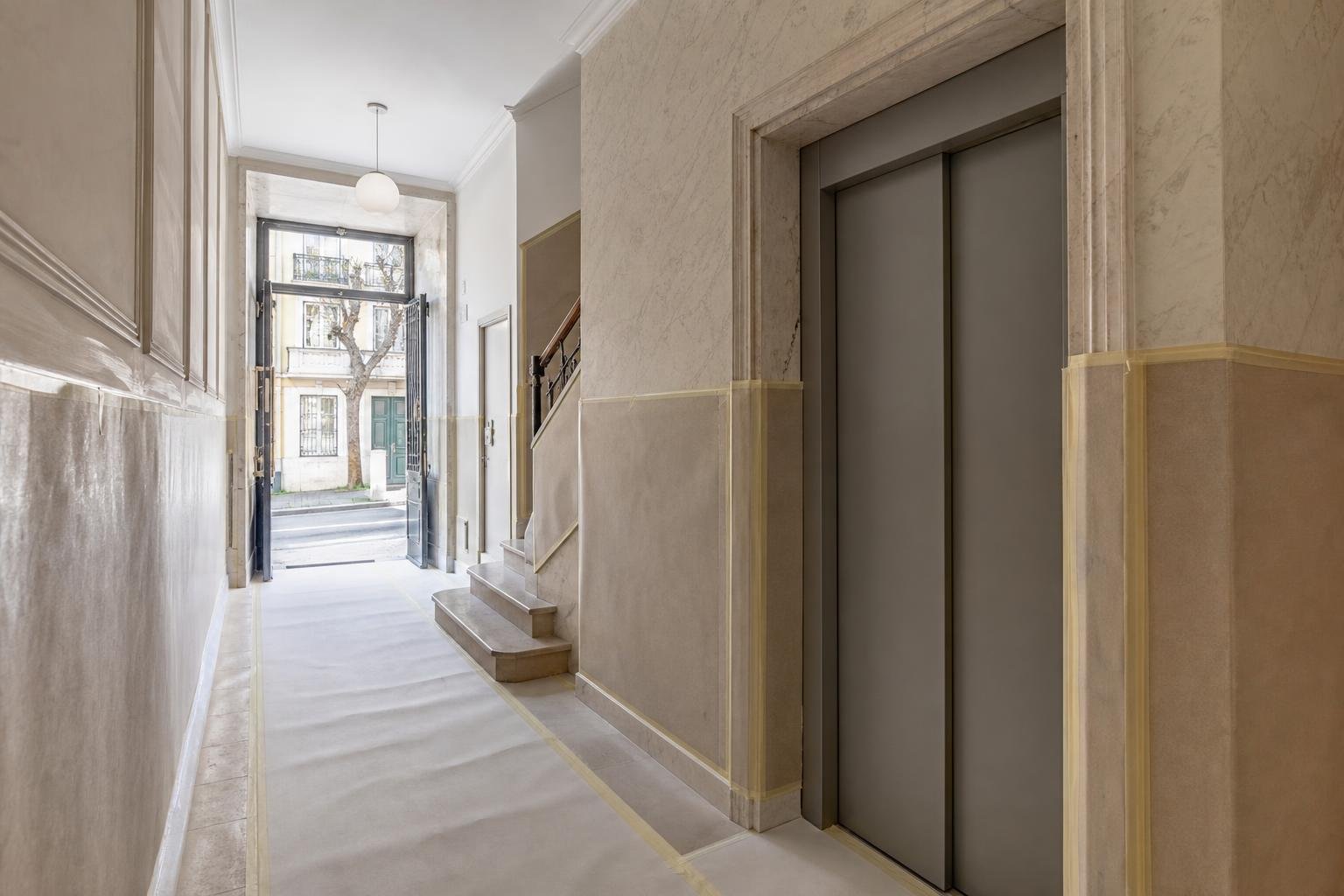
Preservation is usually the strongest option when the pattern remains legible, most tiles are firmly bonded and there is no active moisture damaging the assembly. In that case, protect the floor from day one: use rigid boards on traffic routes, breathable protection where residual moisture may be present, and do not drag ladders, boxes or appliances across it.
Local repair suits isolated losses, individual cracks or poor earlier interventions. Removing a single tile only makes sense when the cause of the defect is understood. If a full row is loose, the issue may lie in the base; sticking a few replacement pieces over the symptom merely postpones failure and creates level differences.
Complete replacement deserves caution. It may be unavoidable where lifting is widespread, contamination persists, finished levels conflict with doors, or extensive technical work is needed below. Even then, retain samples, document the composition and consider reusing sound pieces in a less demanding area. Do not treat an old floor as waste before establishing whether it can be recovered.
Where the work requires a contractor, it is sensible to check the company’s credentials through the IMPIC register for licences, certificates and registrations. That check does not replace a clear specification of works, but it gives you verifiable information at the outset.
Fix moisture and movement before repairing the finish
Dark marks, white salts, powdery grout and lifting tiles are not simply finishing defects. They can stem from water ingress, a leaking pipe, repeated wet washing without adequate drying, rising damp or movement in the base. Applying a sealer to a floor that is still damp can temporarily close the surface and make drying more difficult.
In an older kitchen or bathroom, do not move to final cleaning until water supply lines, drainage and connection points have been checked. If the floor must be opened for pipework, plan the route to sacrifice as few tiles as possible and decide in advance how the opening will be finished. Obra Lisboa’s guide to drainage and plumbing before renovation is useful when planning this sequence.
Near a façade or in shared parts of a building, the source may not be inside the apartment. Lisbon’s municipal guidance notes that work affecting common elements, including façades, balconies and roofs, may require condominium authorisation documents. Do not assume a floor stain can be resolved only from the inside.
Use cleaning and finishes that respect the surface
The aim of cleaning is not to make the floor look newly manufactured. It is to remove dirt without erasing the pattern, texture and coherent signs of age. Start with the least aggressive method in an inconspicuous area. Vacuum loose dust, wash with minimal water and a product suited to the material, then allow complete drying before judging the result.
Avoid acids, strong bleach, abrasive pads and “miracle” products without a prior test. They can attack pigments, open the surface or leave halos that only appear once the floor dries. A professional cleaning proposal should include an approved sample area: compare before and after in daylight and artificial light, as a pattern may read very differently depending on light direction.
The same care applies to consolidants, waxes and water-repellent treatments. An overly glossy finish can change the character of hydraulic tiles and highlight scratches; an unsuitable product can darken areas unevenly. Ask for the product name, application method, curing time and maintenance plan to be included in the quotation.
Find replacement tiles without making an obvious patch
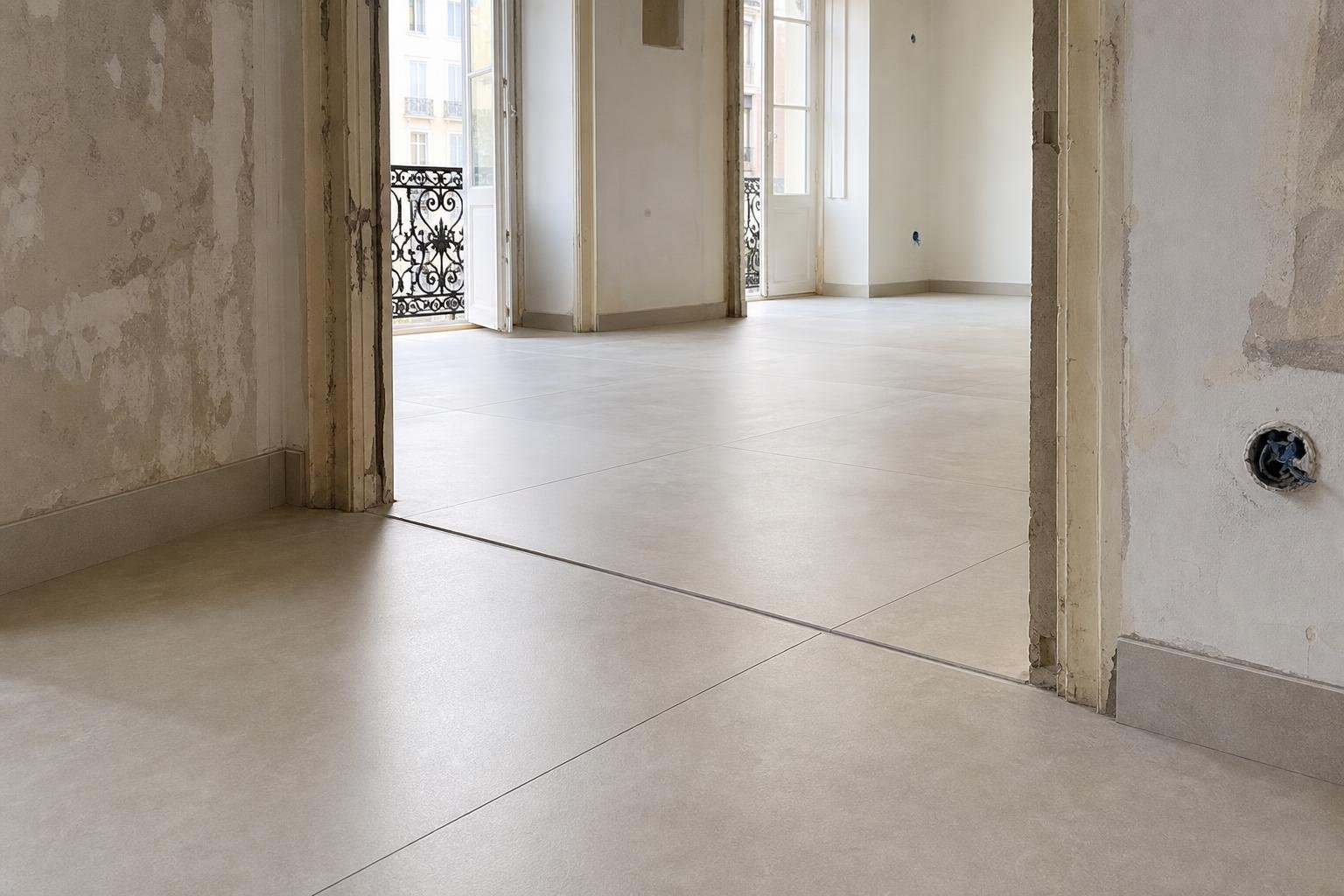
Finding an identical tile is unusual. The most convincing answer is not always a perfect reproduction; it may be a deliberate, well-framed repair. Along a line where a wall has been removed, for example, a simple border or stone transition can acknowledge the difference in age rather than pretending it never happened.
If loose tiles have been kept in storage or are hidden beneath old furniture, compare dimensions, thickness, pattern and the thickness of the decorative layer. Do not introduce a thicker replacement without studying the finished floor level: a small difference can become troublesome at a doorway, timber transition or kitchen unit run.
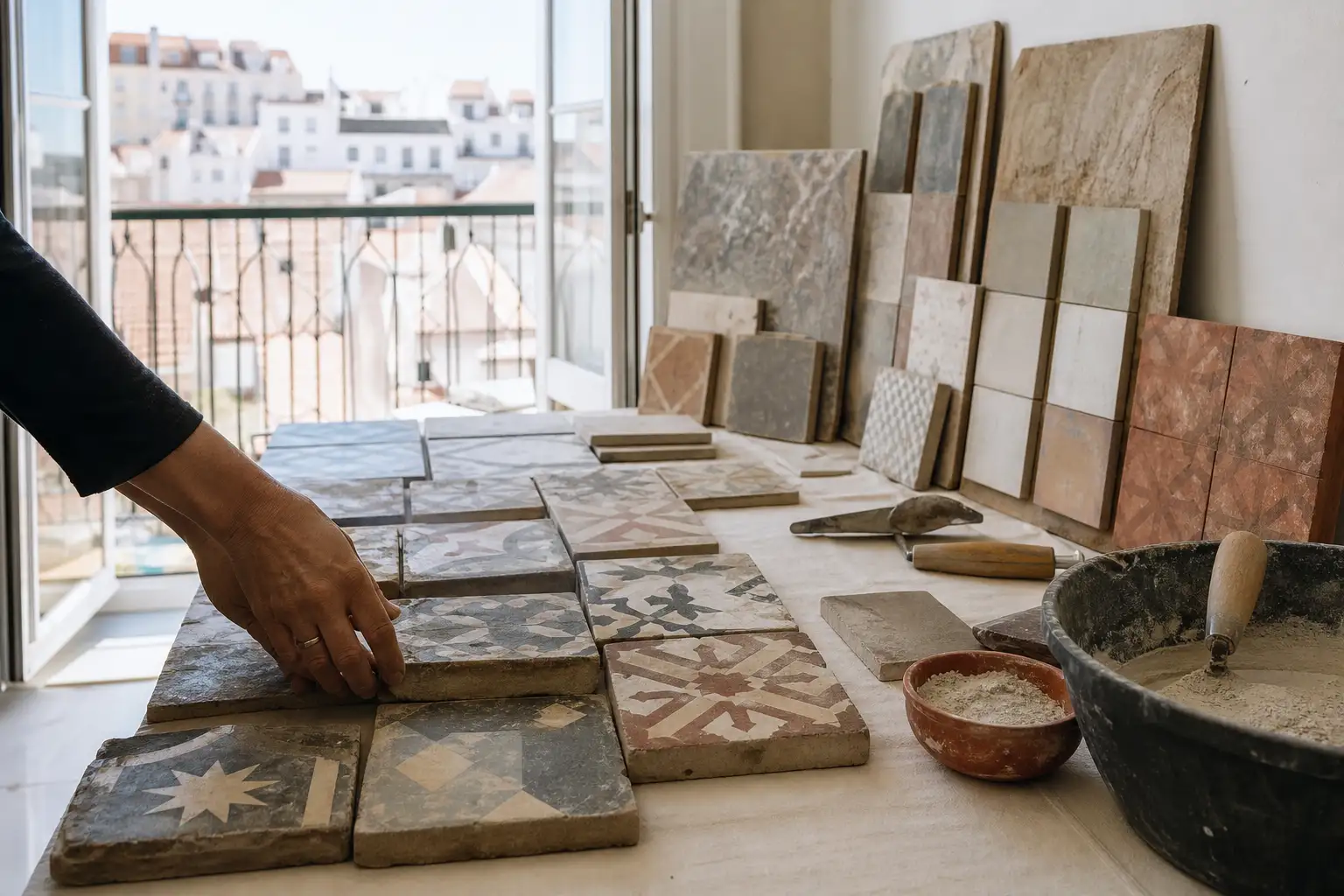
New reproductions should be viewed beside the original both dry and wet. Mortar tone, grout width and final finish influence the overall reading as much as the pattern itself. Keep a small number of spare tiles from the repair for future work; they are a more useful reserve than a catalogue photograph.
Coordinate the floor with the whole renovation
The tile floor needs to enter the project early, not at the end. Before demolition, decide where new partitions, cabinets, thresholds, heavy equipment and service routes will go. This makes it possible to choose whether to preserve the full floor, reveal only a central area or protect it beneath a reversible solution.
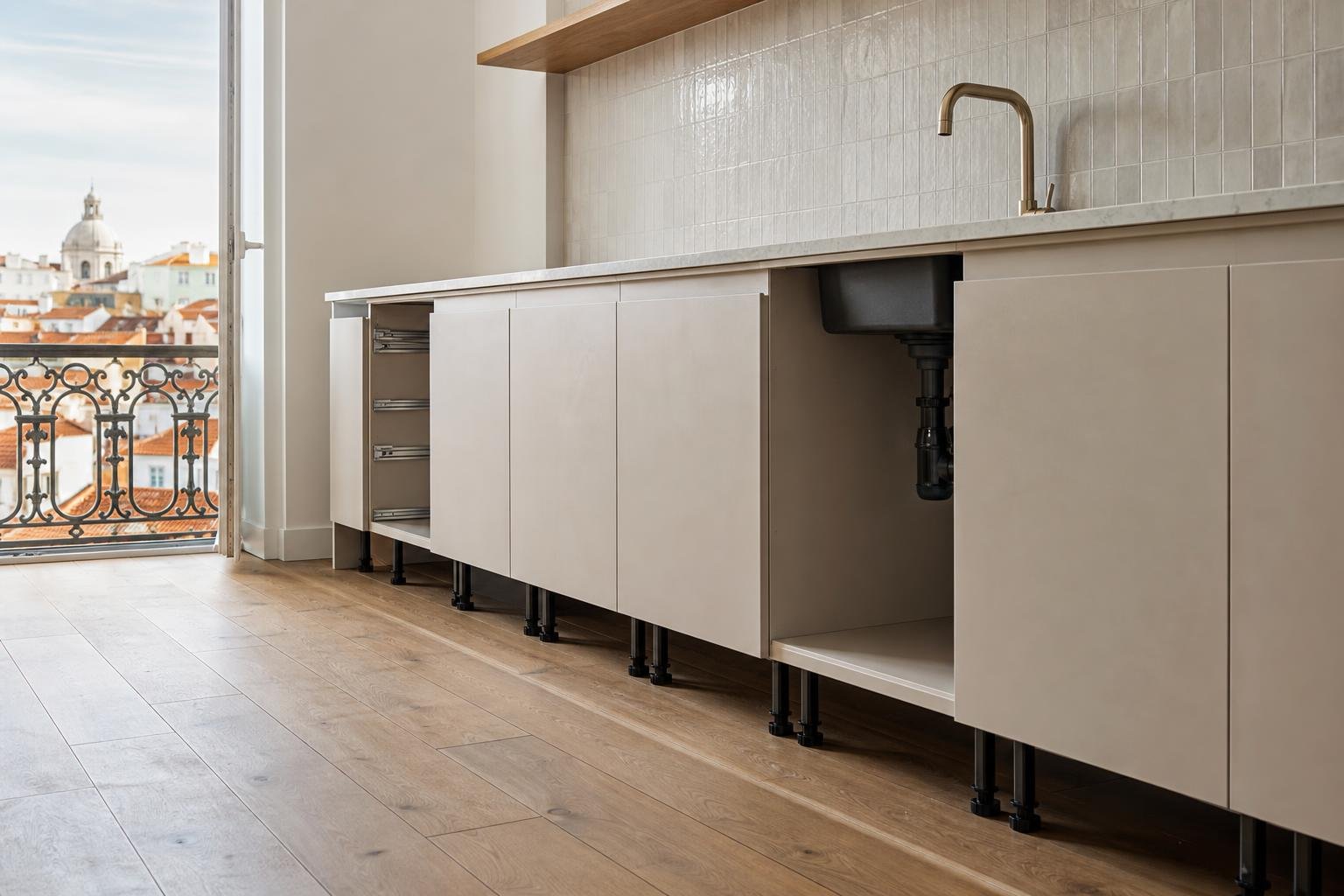
Consider comfort and maintenance too. An old tile floor can work very well with loose rugs in living areas, felt pads under furniture and waterproof trays below plant pots. In kitchens, a sound plinth detail, adjustable feet and access to leaks help prevent water pooling out of sight. For the construction phase, see Obra Lisboa’s advice on temporary floor protection during renovation.
If the intervention extends to a façade, removal of exterior tiles or other significant changes, the rules are different. The municipality states that works involving removal of façade tiles are subject to licensing; its page on building works requiring a licence is a useful reference. For demolition, Lisbon also sets out specific restrictions and enhanced protection for tiled façades in its guidance on demolition licences.
Renovating a Lisbon apartment with old floors? Obra Lisboa can help turn the building survey into a clear work sequence, aligning preservation decisions with services, repairs and new finishes.
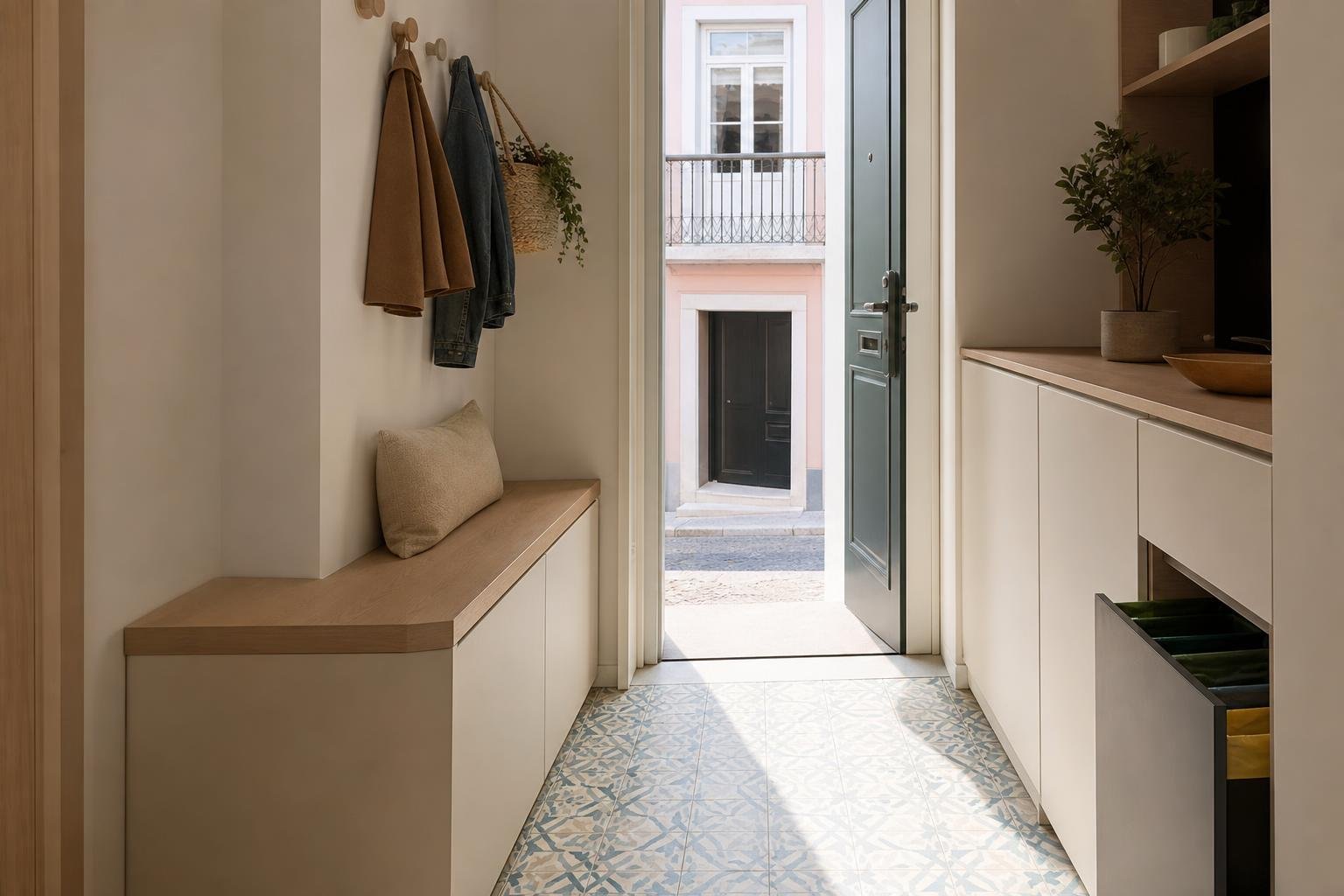
AI-generated editorial image; it does not depict an Obra Lisboa project.

Obra Lisboa