An outdoor clothesline can solve an everyday problem without taking over the living room or turning the bathroom into a permanent drying area. In a Lisbon apartment, however, it is more than a household accessory: its position can affect the appearance of the façade, its fixings may involve common building elements, and dripping water can reach the apartment below or the street. The right decision starts before you buy it.
This guide explains how to choose between wall-mounted, ceiling-mounted, railing-hung and freestanding models, how to place one without obstructing circulation or drainage, and when you need to speak to the condominium manager or check the municipal framework. The aim is not to make a domestic task complicated; it is to avoid needless holes, early corrosion, disputes with neighbours and a solution that becomes inconvenient in the first wet season.
First, distinguish the balcony, enclosed balcony and façade
The first mistake is to treat every outdoor area as though it performs in the same way. An open balcony receives wind, rain and direct sun; an enclosed balcony has different ventilation and condensation limits; a terrace may have sensitive waterproofing beneath its finish. Before choosing a clothesline, identify where the laundry will hang and, above all, where water will fall.
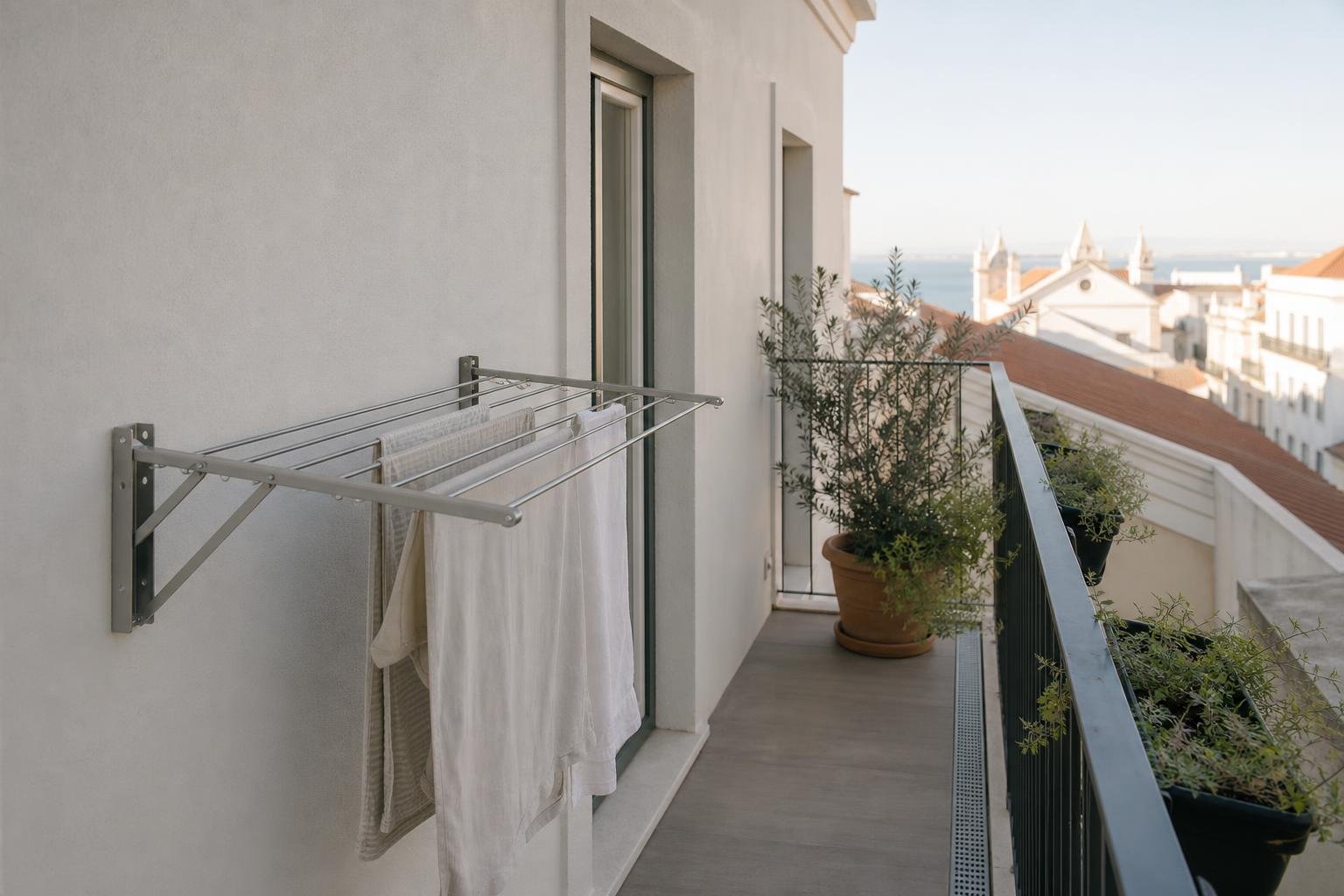
In a narrow apartment balcony, a folding wall-mounted clothesline can keep the floor clear when closed. It must still open without projecting into the walking route or interfering with sliding doors, shutters or awnings. On a balcony with a metal balustrade, a hanging model may avoid drilling, provided it does not stress the profiles, become unstable in wind or create a falling hazard for garments and components.
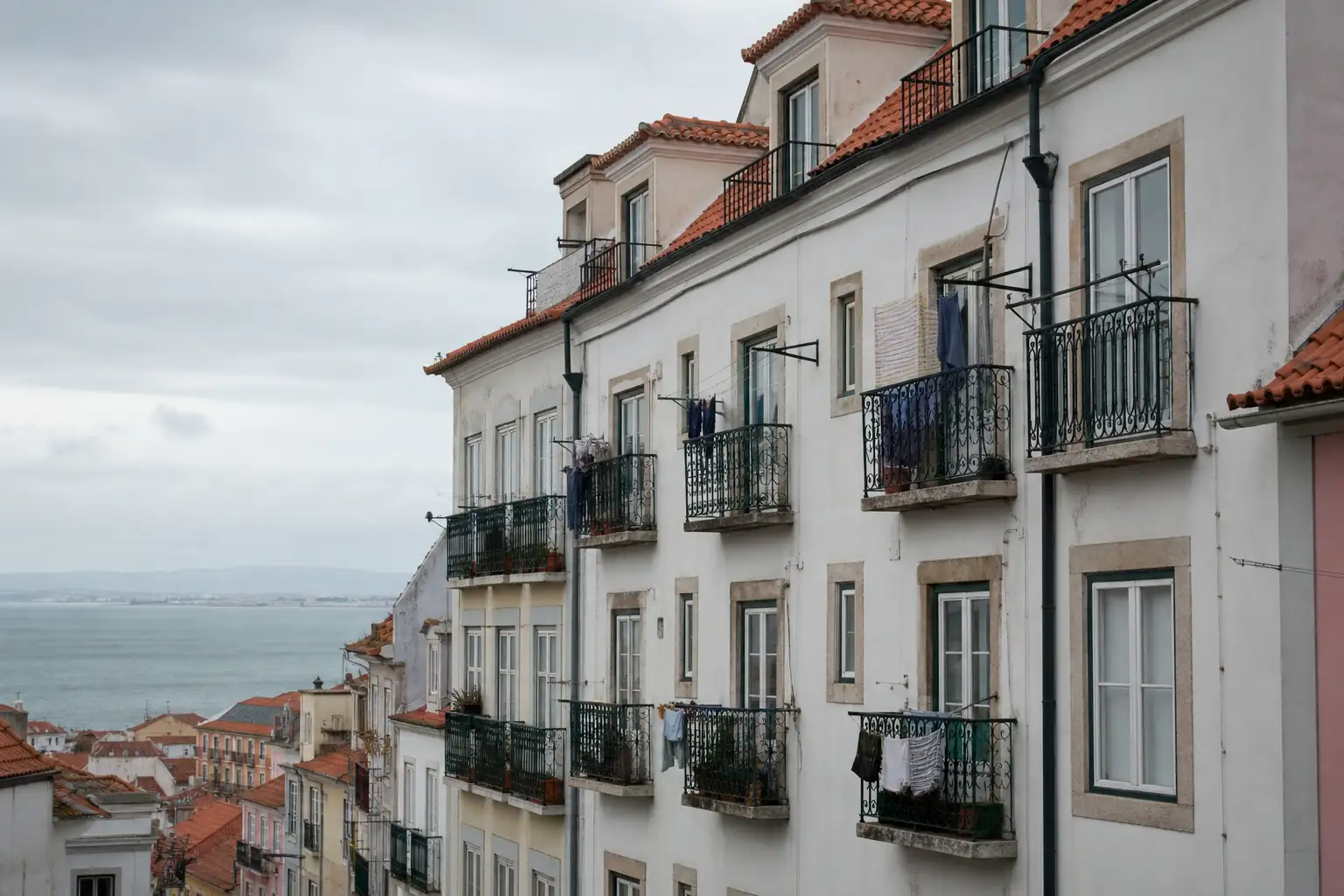
Avoid attaching accessories to the outer face of a railing, even where they appear lightweight. That location exposes the assembly more directly to wind, increases its projection over open space and may change the visible appearance of the building. If the only workable option requires an external support, treat it as a façade decision rather than a quick purchase of brackets.
Consider the relationship with neighbours as well. A unit opened above a lower window, lines crossing the edge of the balcony or laundry dripping onto another flat are foreseeable problems. Mark the clothesline’s open footprint on the floor with masking tape, then walk the route carrying a laundry basket. This simple exercise reveals usability conflicts before installation.
Condominium approval and external appearance: check before drilling
In a condominium building, façades, balconies and railings need additional care. Portugal’s Civil Code states that works changing the architectural line or aesthetic arrangement of the building require prior authorisation from the condominium assembly, approved by a majority representing two thirds of the building’s total value. Read the relevant wording in the Official Gazette publication on condominium property.
This does not mean that every portable drying rack requires a meeting of owners. It does mean that you should not assume a permanent, externally visible fixing is insignificant. Start with the deed of horizontal property, the condominium regulations and any previous resolutions. Some buildings allow consistent solutions; others prohibit items that alter the elevation or designate a specific drying area.
In Lisbon, municipal documentation for building alterations explicitly refers to façades and balconies as common parts and requests condominium authorisation minutes when works affect them. See the Lisbon municipal document checklist for building alterations. For a small installation, the practical rule is straightforward: obtain a written response from the building manager before drilling finishes, concrete, railings or window frames.
If the building is in a historic area, subject to specific development rules or if the proposal changes the façade more broadly, confirm the procedure with the municipal services. Lisbon City Council explains that some external alteration works may be subject to prior communication, depending on the case and planning context; consult its page on building works and prior communication. This is not a substitute for technical or legal assessment of your particular property.
Choose the system for the real load, not the product photo
An empty clothesline weighs very little. Once wet, with sheets, towels or bedding, it carries a very different load and can apply significant leverage to a wall. Compare the manufacturer’s stated capacity with how you will actually use it. A compact model intended for a few lightweight items is not automatically suitable for a household’s full wash.
Folding wall systems work well where there is a sound wall, enough opening space and distance from doors. Ceiling-mounted systems can suit covered balconies, but demand particular care: they should not be installed without confirming the substrate, the presence of services and compatibility with the existing ceiling. With delicate slab finishes or suspended ceilings, improvised anchoring creates unnecessary risk.
Freestanding clotheslines offer reversibility: they can be folded away, cleaned and replaced without permanent marks. In return, they need a level base, protection from gusts and consistent use so that they do not block the exit. On a small balcony, choose stable feet and dimensions that still allow the door to open fully. Do not solve instability with loose weights that can move or fall.
Select materials intended for outdoor exposure. Aluminium, good-quality stainless steel and UV-resistant plastics generally age better than thin painted steel. Even so, wash away salt deposits, dust and pollution regularly, particularly in wind-exposed areas. Hinges and lines are usually the first components that need inspection.
If a renovation is still at the design stage, include this decision in the balcony layout. As with planning water points on a balcony, deciding the position, access and drainage before finishes are completed avoids visible adaptations and fragile fixes later on.
Safe fixing: the substrate matters more than the wall plug
A good wall plug cannot correct an unsuitable wall. Before drilling, establish whether you are dealing with concrete, solid masonry, hollow blockwork, tiled insulation systems, stone, ceramic tile or a lightweight partition. Each situation needs its own fixing approach; drilling based only on the surface finish can cause cracking, detachment or water ingress.
On façades finished with tile or stone, the issue is not simply supporting the load. It is also preserving the finish and preventing the penetration from becoming a path for water. Do not use deteriorated joints as anchoring points and do not try to remedy a poorly executed structural hole with filler or sealant alone. When the façade is tiled, old or visibly deteriorated, obtain an assessment before intervening.
On railings, do not tighten clamps or supports until metal deforms, paint chips or aluminium profiles are damaged. A railing was designed for a safety function; it should not be treated as a generic base for eccentric loads. If you choose a hook-on system, regularly check that contact points are not wearing through the protective finish and that the assembly does not sway.
Avoid fixing to window frames, shutter boxes and moving components. Aside from affecting operation, any drilling or added load may reduce air and water tightness. A neat installation should leave enough clearance to open windows, clean tracks and carry out maintenance without dismantling the entire clothesline.
Where there is uncertainty about wall construction, existing cracks, loose finishes or the need for permanent fixing, call a competent professional. Confirming the substrate costs far less than repairing a façade, waterproof layer or tile that is difficult to match.
Plan for water: wet laundry, drips and the balcony floor
Drying laundry outdoors means dealing with water. It is not enough to assume that the balcony will cope because it has a drain. The drain may be partly blocked, too far from the dripping area or serving a floor with insufficient fall. Before installation, pour a small amount of water onto the floor and observe where it travels, without flooding the balcony or discharging water over the façade.
The clothesline should sit away from the access door and, where possible, from the most vulnerable wall. Do not place saturated laundry above outdoor sockets, lights, service boxes or window thresholds. If you wash very heavy items, allow them to spin properly in the machine or drain in a controlled area before taking them to the balcony.
Avoid improvised containers beneath laundry. Trays can overflow, make cleaning harder and retain moisture next to the floor. The proper response is to reduce excess water, place the clothesline where the floor directs water to drainage and keep the drain accessible for cleaning. This matters especially in older buildings, where waterproofing may have vulnerable transitions at walls, railings and doors.
IPMA climate normals for Lisbon/Geofísico record annual precipitation of 793.5 mm for 1991–2020, with higher monthly values from October through March. Consult the IPMA Lisbon climate normal. In wetter months, leave enough space to bring laundry in quickly and do not turn the clothesline into a permanent barrier to balcony drainage or cleaning.
A discreet installation lasts longer and causes fewer disputes
Once rules, substrate and drainage have been checked, select the least intrusive solution that meets your usual laundry volume. For one person or a couple, a well-sized folding rack may be enough. For a family, it may be better to combine a moderate outdoor area with ventilated indoor drying rather than overload a small balcony with oversized equipment.
Set a simple routine for use. Bring dry laundry in, fold articulated arms away and do not leave pegs, hangers or poles exposed on windy days. Check screws, lines and contact points at the start of autumn and after severe weather. Maintenance is brief, but it prevents a small amount of play from becoming an enlarged hole or a loose component.
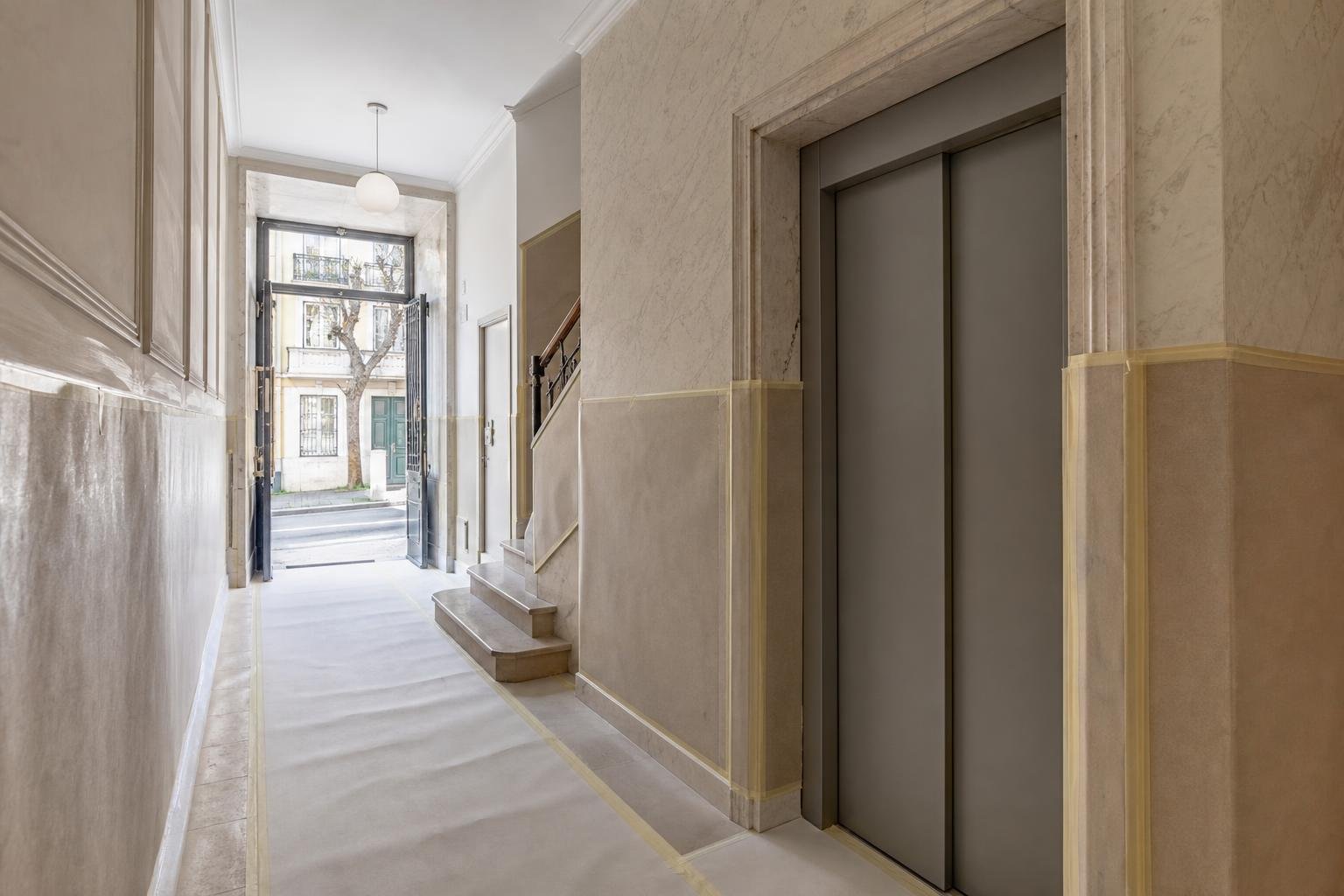
If the balcony needs broader work, coordinate the decisions: floor condition, drain, thresholds, solar control and railing safety. Looking at them together is more useful than solving each accessory in isolation. For work that affects shared areas or requires access planning, it is also worth reviewing how to approach protecting lifts and shared areas during a renovation.
A well-chosen clothesline does not need to dominate the balcony or create friction in the condominium. It should open easily, carry the expected load, dry laundry without dripping onto others and disappear visually when not in use. That combination of daily practicality, respect for the building and straightforward maintenance is what turns an ordinary household item into a sound home decision.
Planning a balcony renovation or resolving several exterior details at once? Obra Lisboa can help organise the construction decisions, from substrate and drainage to coordination with finishes and building rules.
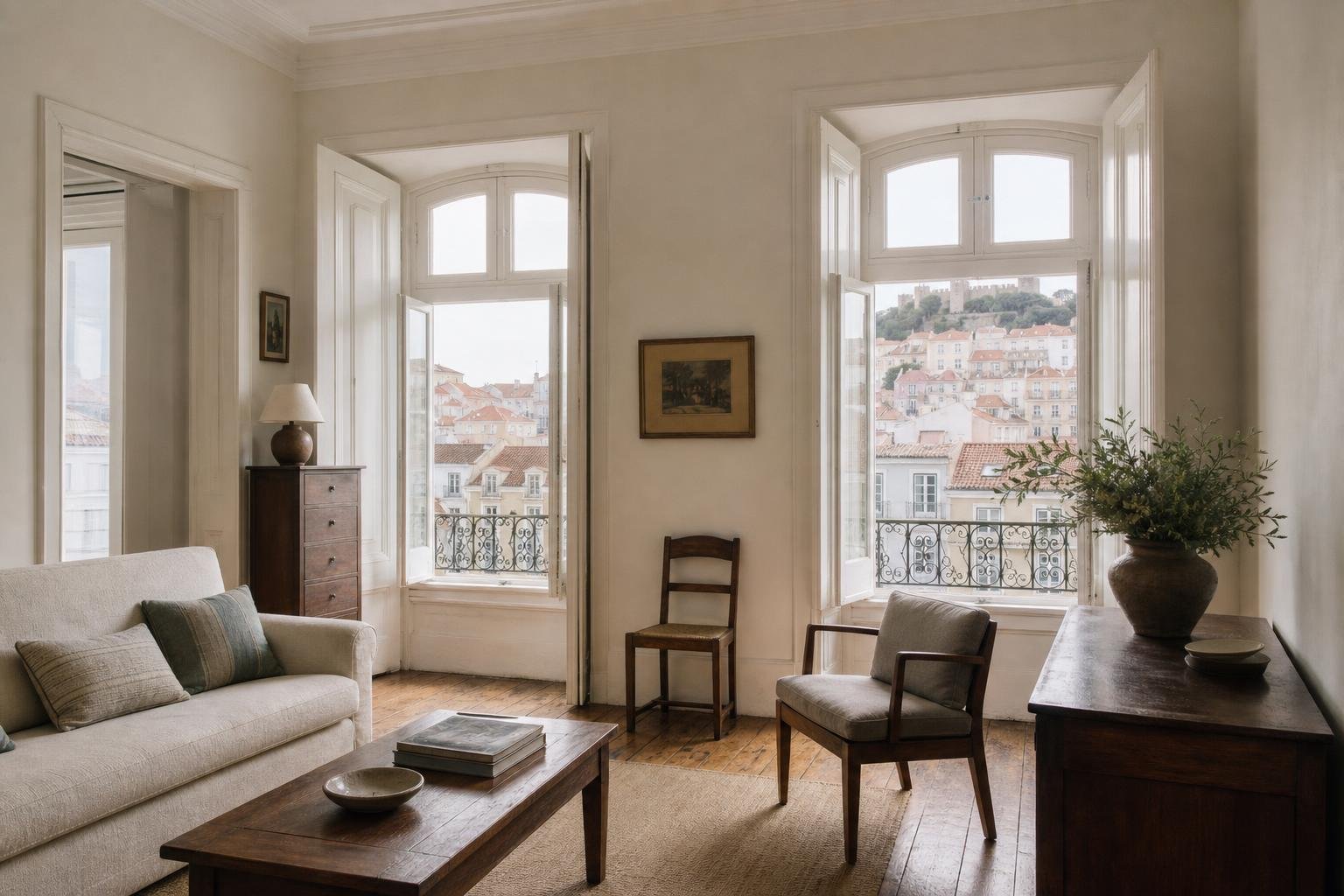
AI-generated editorial image; it does not depict an Obra Lisboa project.

Obra Lisboa