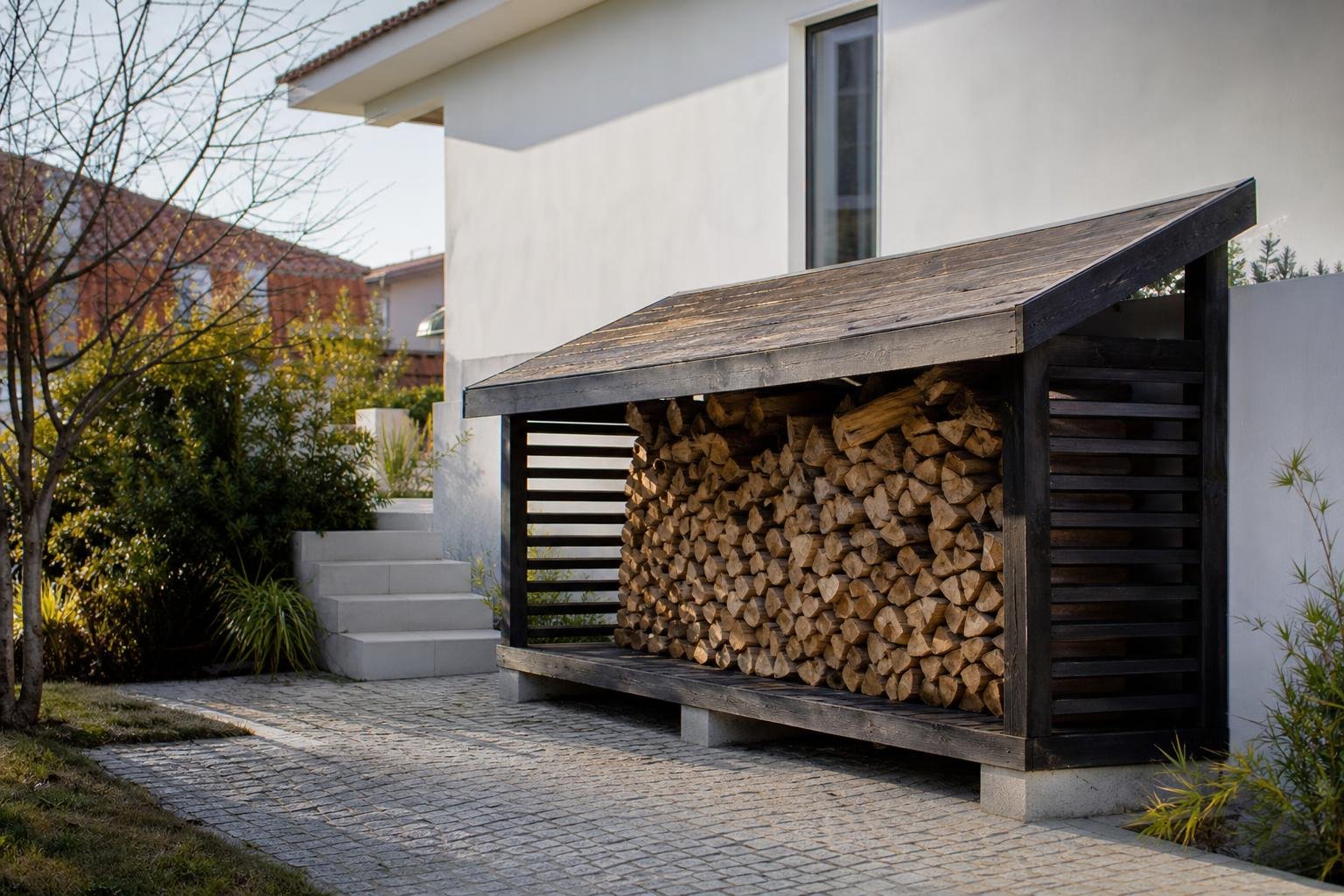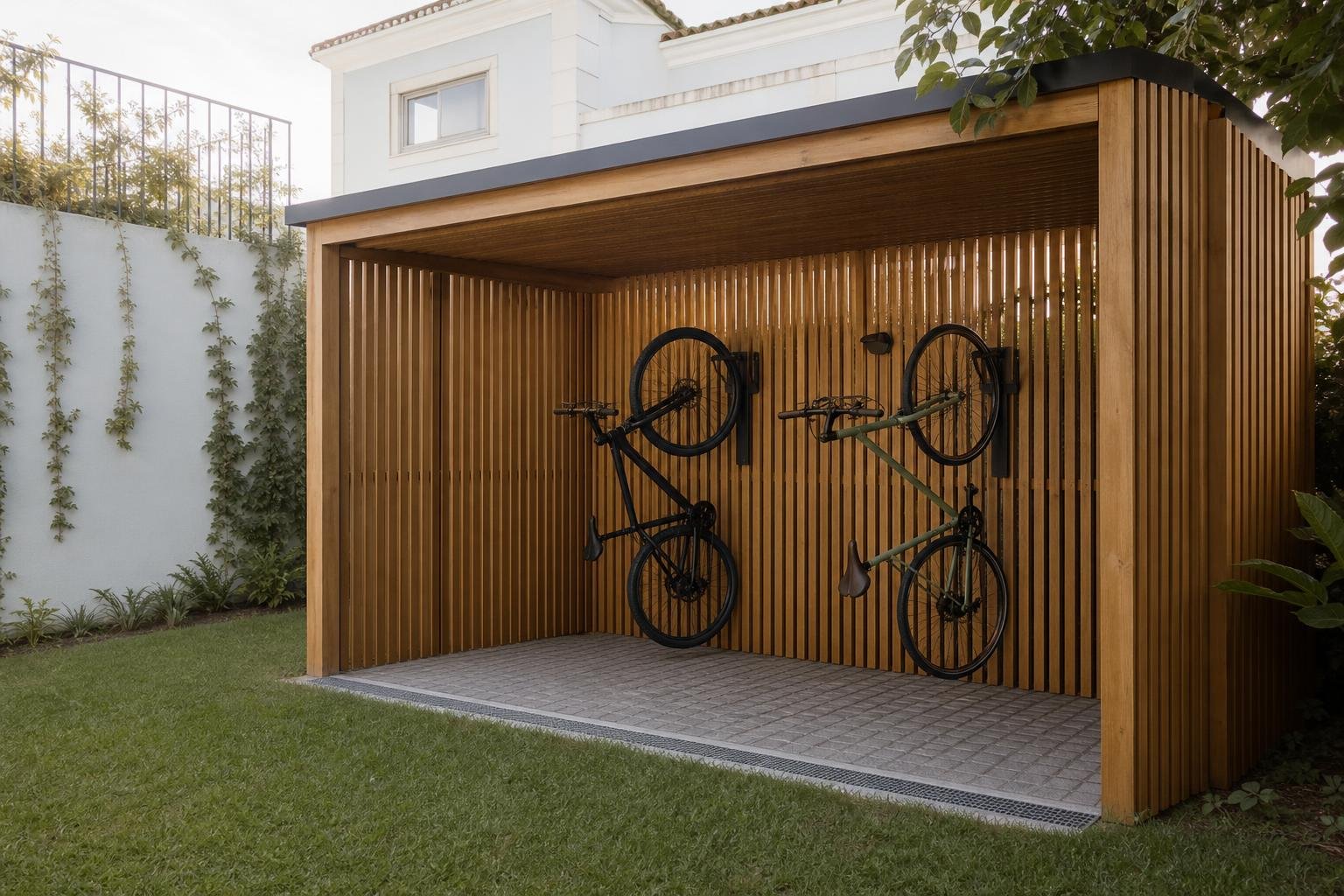
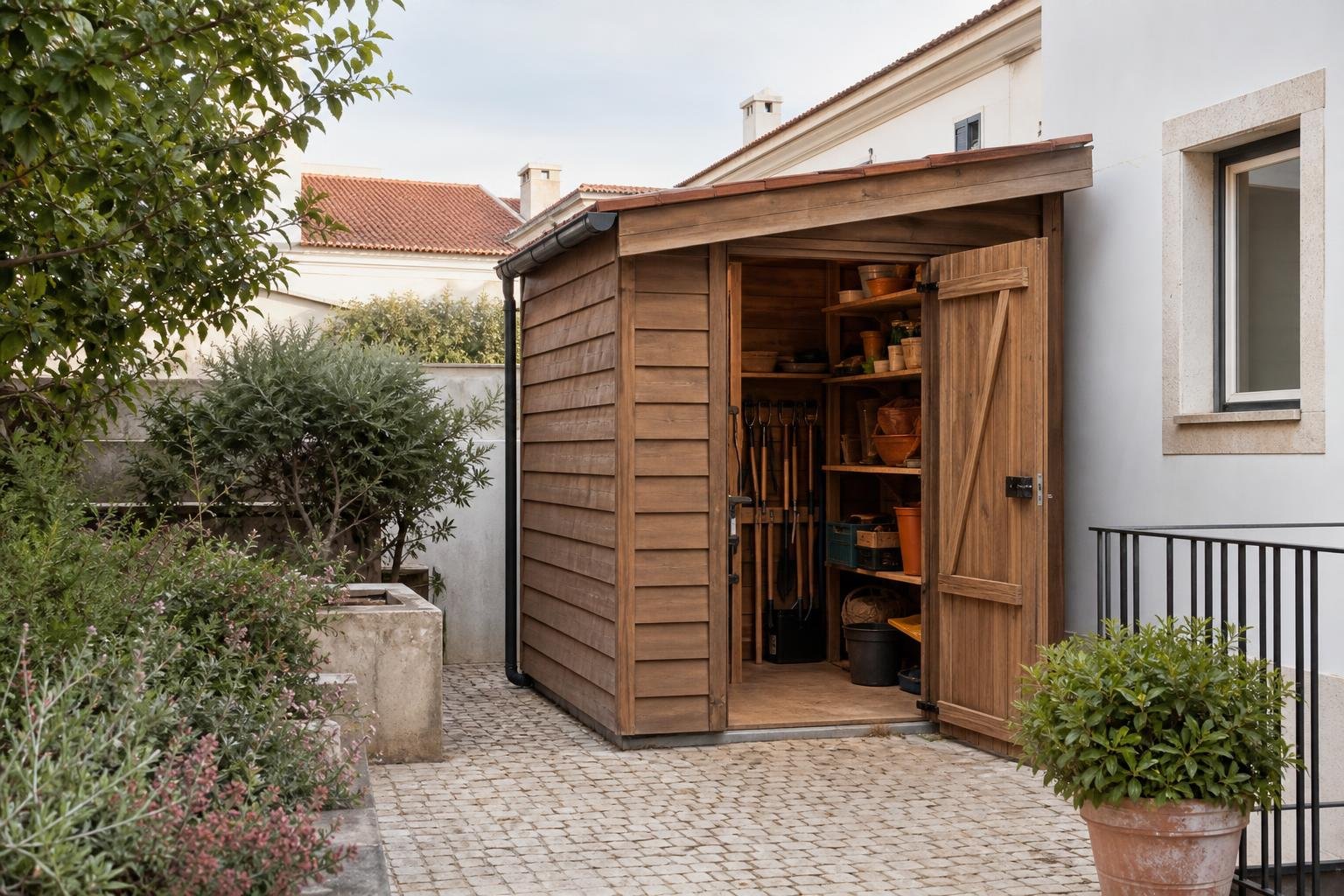
An outdoor tool shelter may look like a minor addition, yet it shapes everyday decisions: where to leave a wet lawnmower, how to open the door without taking over the path, where to keep paint and garden products, and how to stop roof water from reaching the house wall. On a Lisbon plot, space is often tight, so the shelter must not turn the garden into a narrow circulation route or a damp corner.
Do not start by choosing a prefabricated model. Start by defining its job: hand tools only, bicycles, battery-powered equipment, compost and soil bags, or a small worktop as well? The IPMA climate normal for Lisbon / Instituto Geofísico is a useful reminder that a shelter must deal with both hot dry spells and concentrated rainfall. This guide sets out the choices that prevent warped doors, permanently wet floors and extension leads left outdoors.
Begin with the real use and an honest storage list
First, list what you will store by group: long-handled tools, battery machines, hoses, pots, fertilisers, soil bags, ladders and consumables. Then allow enough room to take each item out without dismantling a pile. A shelter where the brushcutter blocks the doorway and the ladder lies over the pots may look tidy on day one, but it quickly becomes unsafe and hard to use.
Divide the interior into three simple zones. Near the door, keep frequently used items that may come in dirty: spade, rake, pruning shears and watering can. On one side wall, hang long tools on fixed supports, with cutting edges protected. At the back, place light or seasonal items on shelves. If you keep machines, leave a clear strip for moving them without scraping walls.
Avoid turning the shelter into a general household store. Paints, solvents, fuel, pool products and garden chemicals need their labels checked, sound packaging and storage separate from batteries and heat sources. The aim is to know where each category belongs, not to fill every available corner.
Choose a location that does not create water, shade or conflict
Choose a position with direct access from the garden or service entrance, without requiring you to cross dining areas, narrow steps or waterlogged grass. Imagine the route while carrying a heavy machine: the door should open without striking a fence, window or planting bed, and there should be a firm standing area before you go inside.
Do not automatically place the shelter tight against a boundary wall or façade. That can make drying harder, conceal cracks and prevent leaves from being cleared. Leave the clearance needed for inspection and maintenance unless the construction system has a clear solution for flashings, ventilation and drainage. Also observe where water runs in winter; putting the shelter at the lowest point of the garden invites persistent damp.
In Lisbon, siting and planning requirements can depend on the plot, planning conditions and the specific work proposed. The municipality’s guidance on prior communication for building works explains that some operations require a formal procedure and documentation. Confirm what applies before ordering materials, even where the shelter seems modest.
Build a dry, stable base slightly above ground level
The base has more influence on durability than decorative cladding. Timber, chipboard, cardboard boxes and metal tools all suffer when exposed to rising damp or water entering at the threshold. The solution must provide stable support, let surface water drain away and keep the internal floor above the finished ground level.
A slab, permeable paving or a raised structure can all work, provided levels, sub-base compaction and water discharge are considered first. Do not compensate for a poorly prepared base by spreading a thick layer of loose gravel inside: it makes movement difficult, holds dirt and does not replace planned drainage. If the door opens outwards, make sure the external surface will not rise over time and obstruct it.
It is sensible to include a washable area close to the entrance, particularly when storing pruning tools, boots or equipment carrying soil. For related planning principles, see Obra Lisboa’s guide to a bicycle washing point at a house; decisions about paving, drainage and cleaning also apply to a garden shelter.
Treat the roof, gutter and ventilation as one system
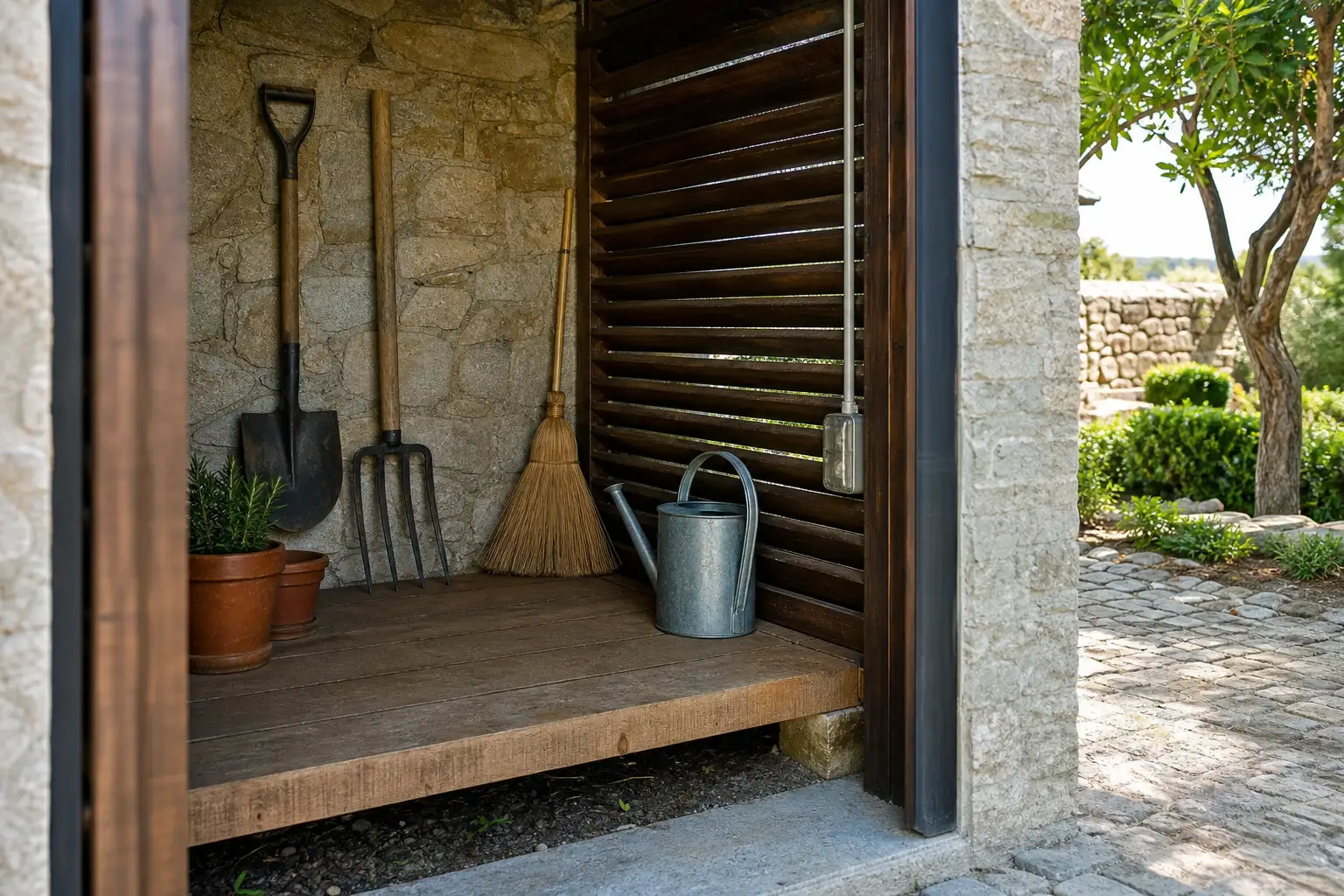
A roof does more than keep rain out. It must carry water away from walls, withstand wind and direct runoff somewhere that will not erode the ground or discharge beside foundations. A correctly oriented slope, suitable overhang and careful flashings matter more than a large roof with no destination for its water.
If there is a gutter, make sure it can be reached to remove leaves and check the route of the downpipe. Do not discharge water at the door threshold. The IPMA climate bulletin includes rainfall and rainy-day indicators for Lisbon; it is not a design calculation, but it is a good reason to treat drainage as a central part of the choice.
Ventilation does not mean random gaps. Plan protected air inlets and outlets that limit direct rain and insect entry, ideally on opposing sides or at different heights. Ventilation helps tools and materials dry, but it cannot solve a roof leak or a base receiving water from the garden.
Plan electrical power for intended use, not improvisation
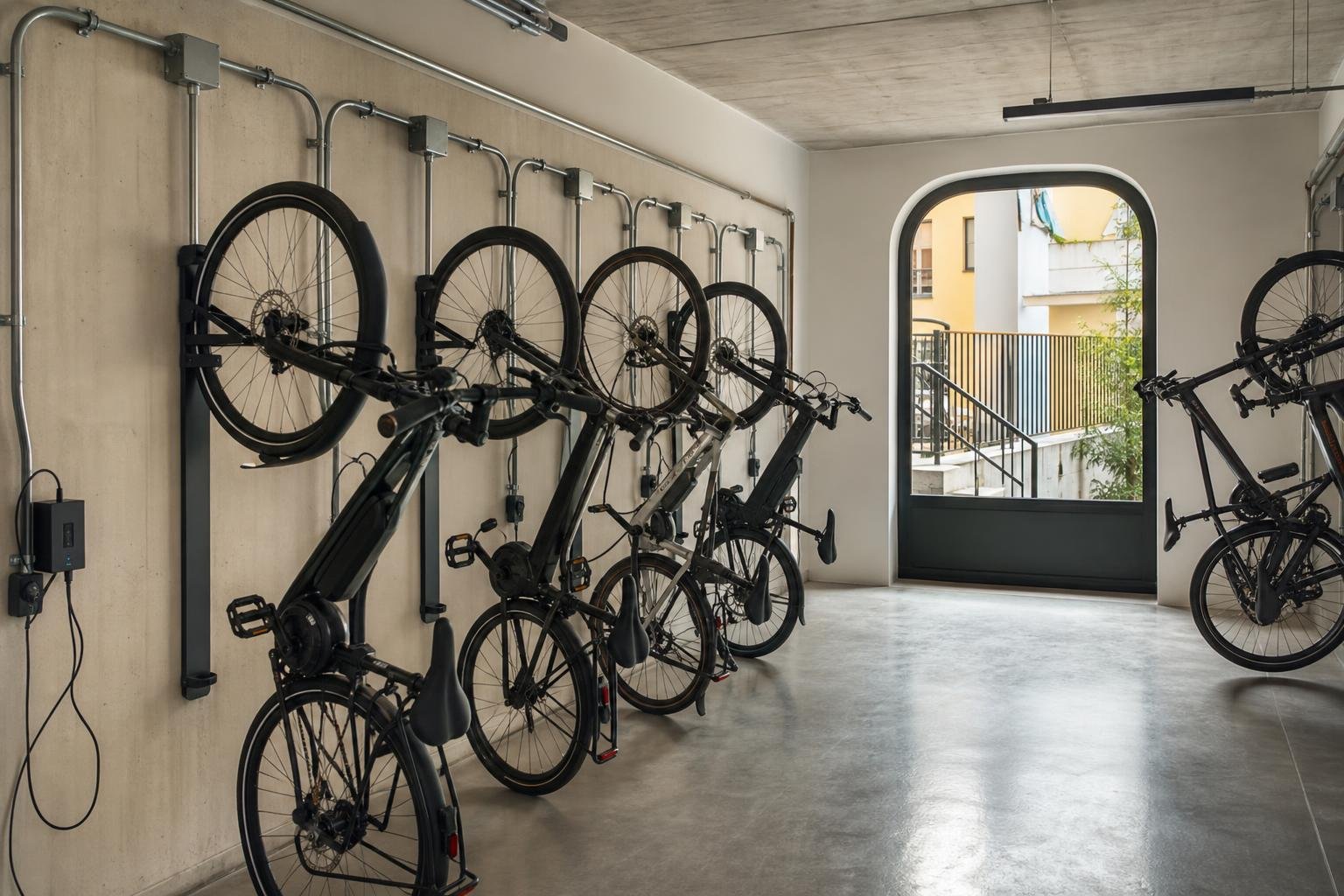
If you will charge batteries, run a pump, use lighting or plug in power tools, decide this before walls are closed. A properly located internal socket, ceiling light and accessible switch are safer than power strips, adaptors and extension leads running through the doorway. Circuits, protective devices and equipment must suit the location and be installed by a qualified professional.
Create a small dry charging zone away from fertilisers, liquids, oily cloths and objects that could fall. Do not charge batteries on unstable shelving or inside sealed boxes without following the manufacturer’s instructions. Exterior lighting directed at the access route is also worthwhile, so you are not searching for tools or steps in the dark.
For a practical approach to organising a work area and storage without multiplying risks, read Planning a Home Tool Area. Even in a small shelter, one clear wall, a short worktop and sufficient light make a meaningful difference.
Door, shelving and maintenance: details that keep the shelter useful
Measure the largest item that must pass through before selecting the door width. Consider the opening method too: a hinged door needs a clear external area, while a sliding door saves that area but needs a clean track and free side wall. A strong lock, protected hinges and a hard-wearing threshold cope better with frequent use and weather exposure.
Inside, choose shelves that can be washed and are raised off the floor. Do not press bags, boxes or timber boards against the wall if condensation is possible. Label small containers, keep blades and cutting tools out of children’s reach, and leave an empty manoeuvring space beside the entrance. A simple inventory fixed inside the door can prevent duplicate purchases and unnecessary searching.
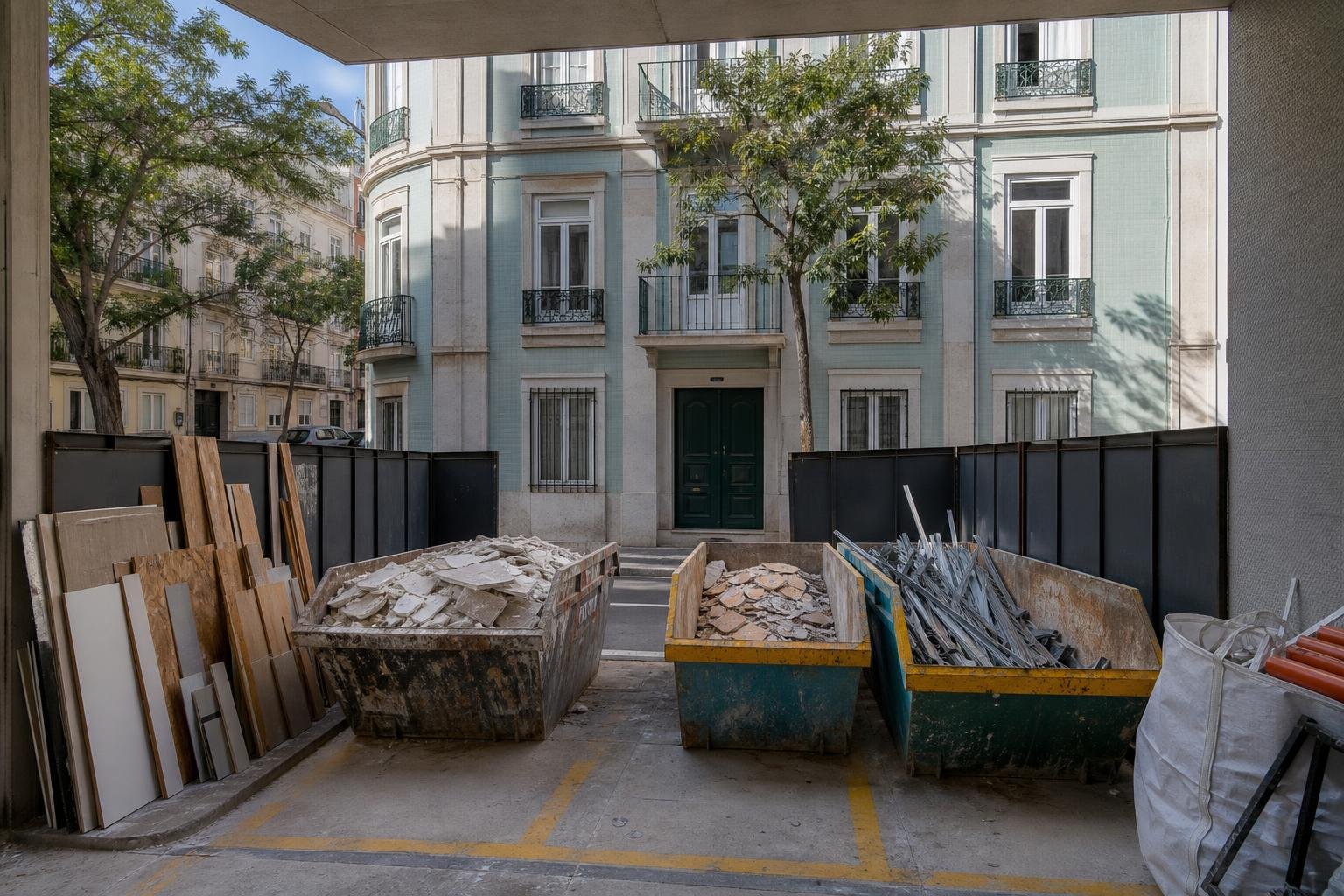
Set a seasonal routine: clear leaves from the roof and gutters, inspect fixings, clean the external drain, lubricate ironmongery, check flashings and review stored materials. If installation requires pavement or street occupation for deliveries, a skip or support equipment, check Lisbon City Council’s rules for public-space occupation for works exempt from prior control in advance.
An outdoor shelter works best when it is planned as part of the garden, drainage strategy and household routines. If you are preparing a renovation or exterior work in Lisbon, Obra Lisboa can help turn these decisions into a coherent execution plan.
AI-generated editorial image; it does not depict an Obra Lisboa project.

Obra Lisboa