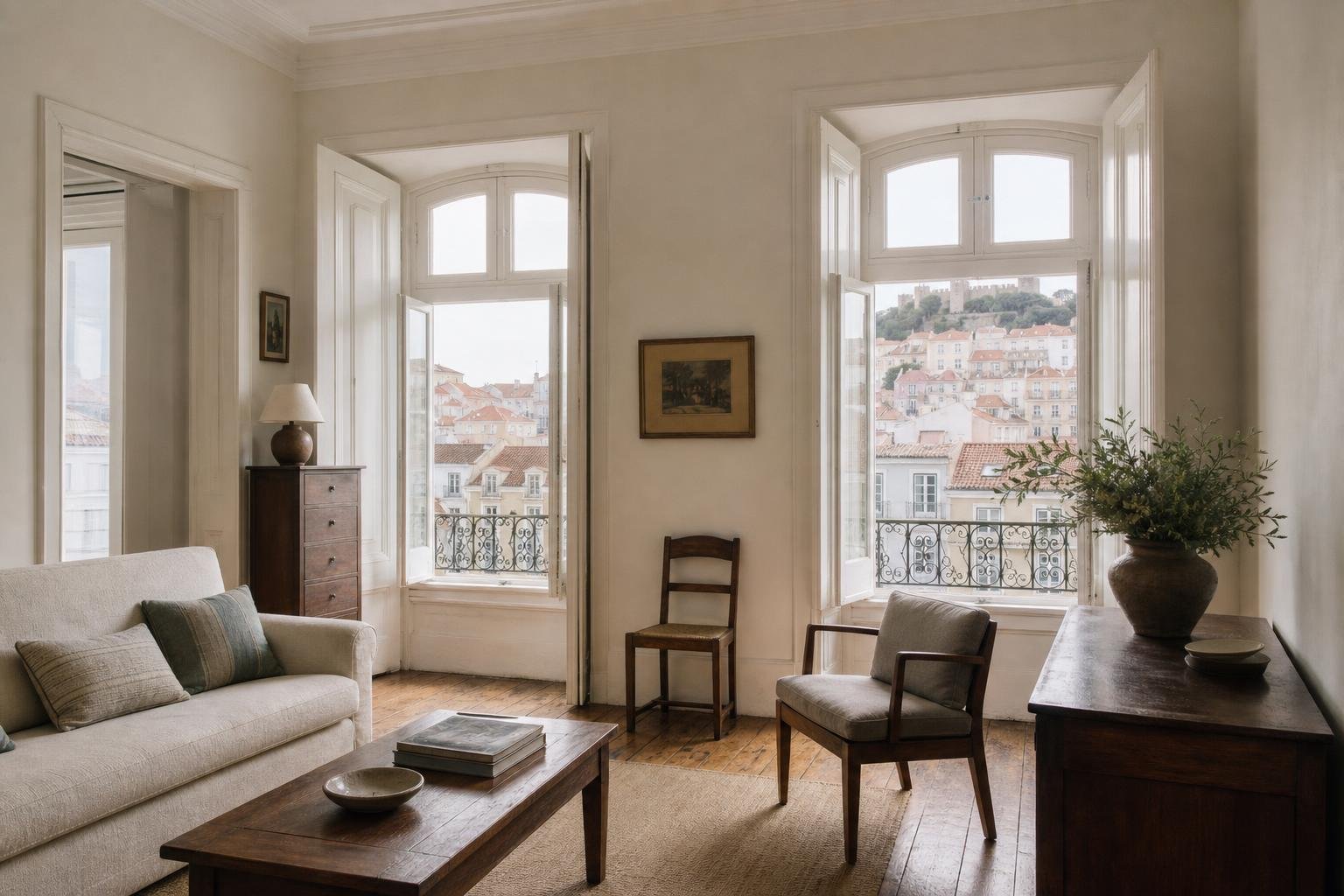

Putting a chair beside a window does not automatically create a useful reading nook. It may look appealing, yet require extension leads across the floor, catch harsh late-afternoon glare or narrow the route between the living room and the balcony. In a Lisbon home, where daylight is valuable but can be intense on many orientations, this small corner deserves to be planned as part of the room rather than treated as an empty space to fill.
The aim is straightforward: make a place that works for reading in the morning, at the end of the day and on a winter evening, without preventing the window from opening, interfering with curtains or disrupting everyday movement. This guide explains where to place the chair, how to add useful light, how to bring power to the area and when an apparently modest alteration should be checked before work begins.
Start with the window, not the chair
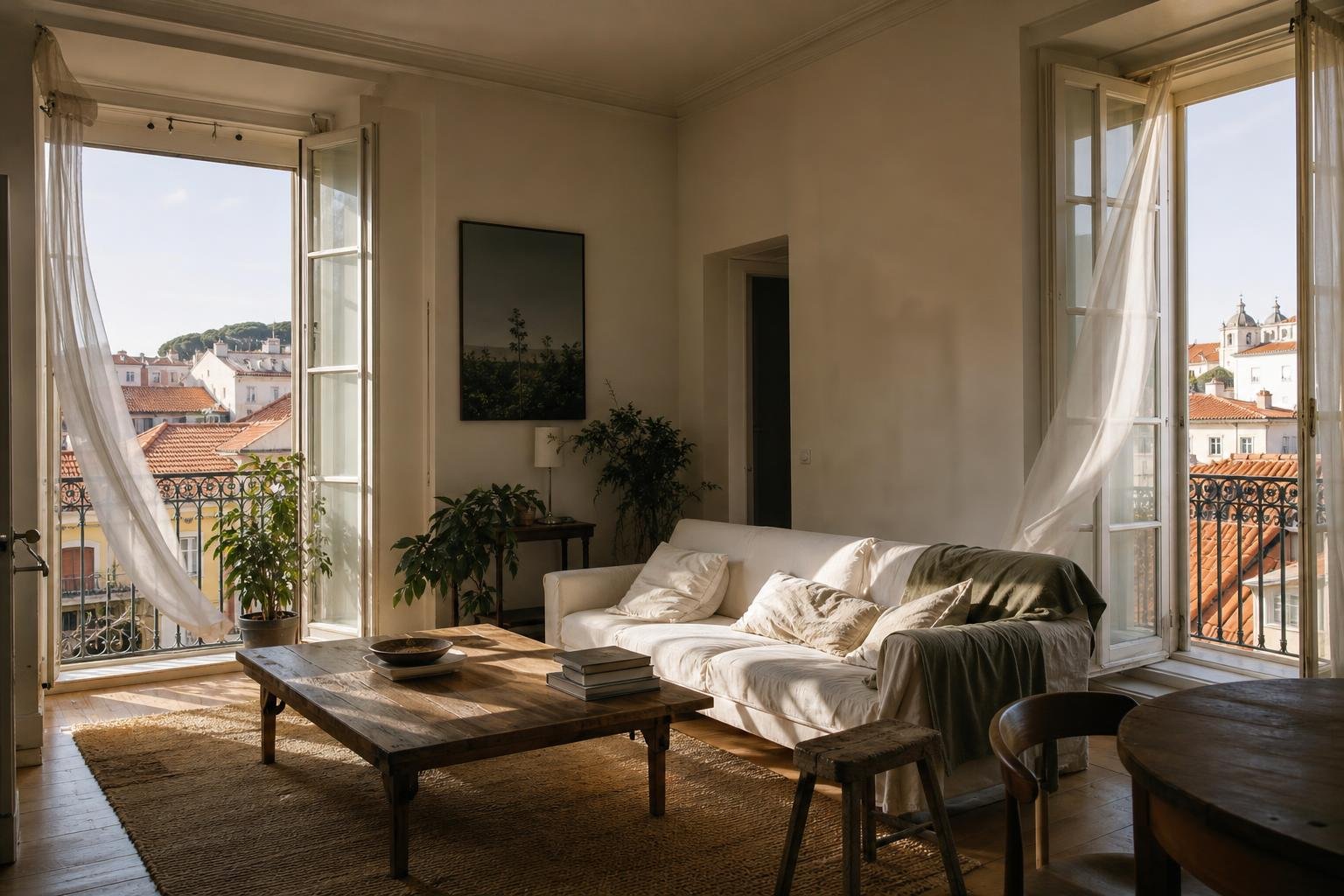
Watch the room and its orientation over several days. An east-facing window may provide excellent morning reading light; a west-facing one usually needs more careful glare and heat control later in the day. The IPMA climate record for Lisbon/Instituto Geofísico shows around 2,793 annual sunshine hours for the 1971–2000 reference period. It is not a forecast for one living room, but it helps explain why a layout that feels perfect in January may be uncomfortable in July.
Sit in the proposed location at the time you normally read. Notice where direct sun lands, how shadows move and whether the view outside is restful or distracting. The chair does not have to face the window. A slight sideways angle often reduces page glare, gives a floor lamp somewhere sensible to stand and prevents your head from resting against cold glass on winter evenings.
- Check that window leaves and balcony doors can open without striking furniture.
- Keep upholstered pieces away from radiators, convectors and supply grilles.
- If there is damp around the reveal or skirting, address its cause before adding rugs, books or closed storage.
Keep a route that works without thought
The usual mistake is measuring only the width of the chair. What matters is the whole arrangement: reclined chair, stretched legs, side table, open curtain and the route used by everyone crossing the room. Rather than arranging the corner at the absolute limit, preserve a continuous clear path without projecting furniture legs. In a compact living room, a shallower armchair, narrow-arm lounge chair or round side table can make a considerable difference.
Use masking tape on the floor as a quick test. Mark the footprint of the chair and table, then open the curtains, carry a laundry basket through the room or mimic arriving with shopping bags. This simple exercise exposes conflicts that a basic plan may miss. If the reading nook sits on the route to a balcony, a lighter chair that can occasionally be moved may be more practical than a large permanent piece.
When renovating limited floor areas, it is worth revisiting ways to make better use of a small home: the free area for movement matters as much as the furniture you add.
Control daylight with two layers
One curtain rarely handles every condition well. The most flexible arrangement combines a light fabric that softens daylight and provides daytime privacy with a denser second layer to cut direct glare, protect books and make late-evening reading more comfortable. This second layer is particularly valuable on west-facing windows; in living rooms with a television, it also helps separate reading, screen time and rest.
Set the pole or track so the curtains can clear the important part of the glazing when open. Check the relationship with handles, roller-shutter boxes and radiators too. Windows influence the entry of both light and air, with consequences for domestic comfort, as noted by ADENE’s guidance on efficient windows. Heavy curtains kept closed all day may solve glare, but they also remove useful daylight and can limit natural airing.
For a more detailed approach, see how to choose and use thermal curtains in Lisbon apartments. Select the fabric for its job first, then its colour and pattern.
A reading lamp does not replace general lighting
Natural light changes quickly, so a reading nook needs its own adjustable source aimed at the page. A floor lamp works well where opening walls is unnecessary; a wall-mounted fitting frees the side table but needs electrical planning and a fixing appropriate to the wall construction.
Place the light so it reaches the book without throwing the shadow of your hand over the text. For a right-handed reader, a lamp to the left and slightly behind often works well; for a left-handed reader, reverse the arrangement. Treat this as a starting point rather than a rigid rule: test it while seated. Choose a comfortable colour-rendering lamp and put the switch within reach of the chair. A dimmer can be helpful if it is compatible with both fitting and bulb.
Avoid a very narrow downlight directly overhead, which can create excessive contrast between the page and the rest of the room. Soft ambient light combined with task lighting makes the corner calmer and helps your eyes adapt when you look up.
Plan sockets before walls are closed
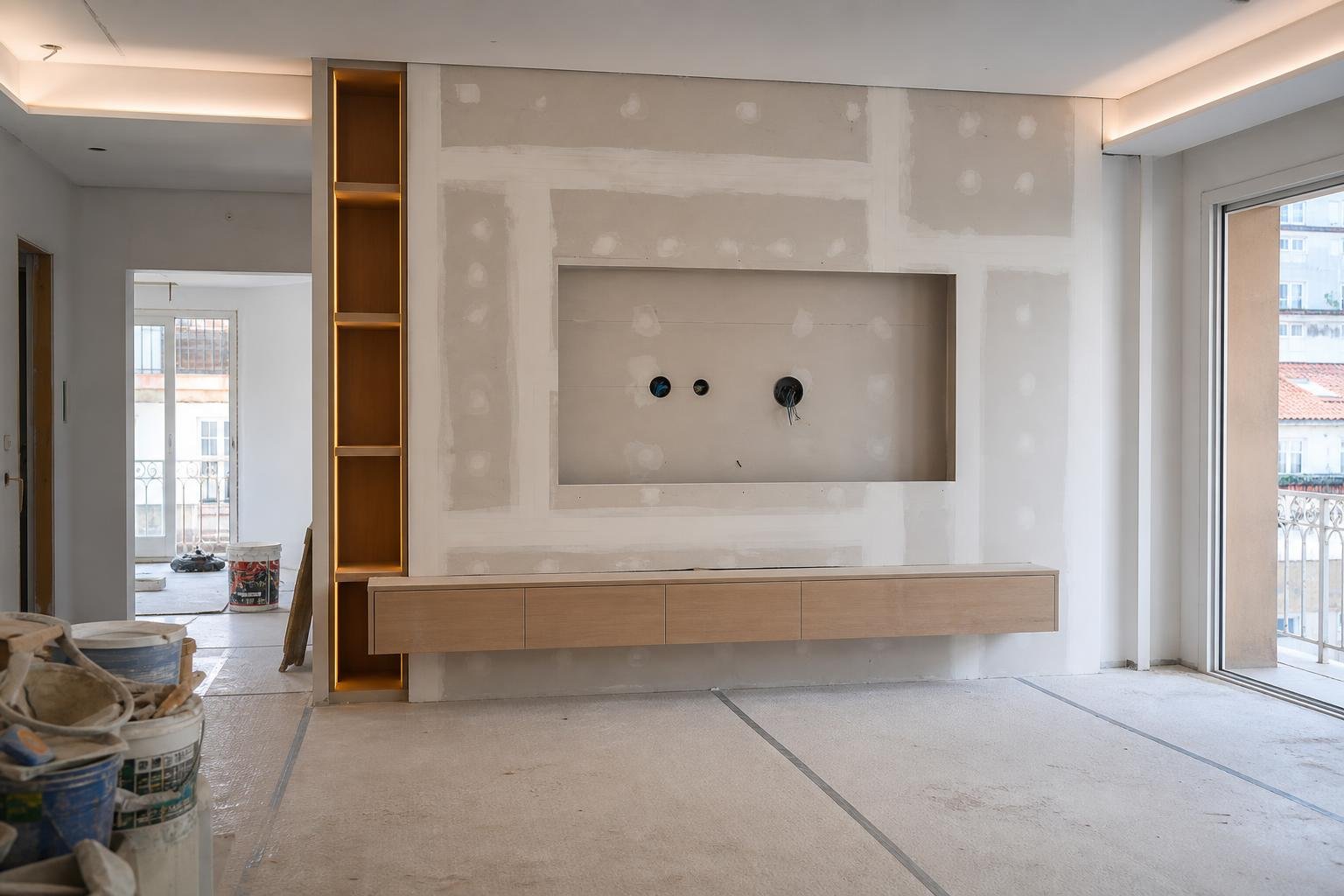
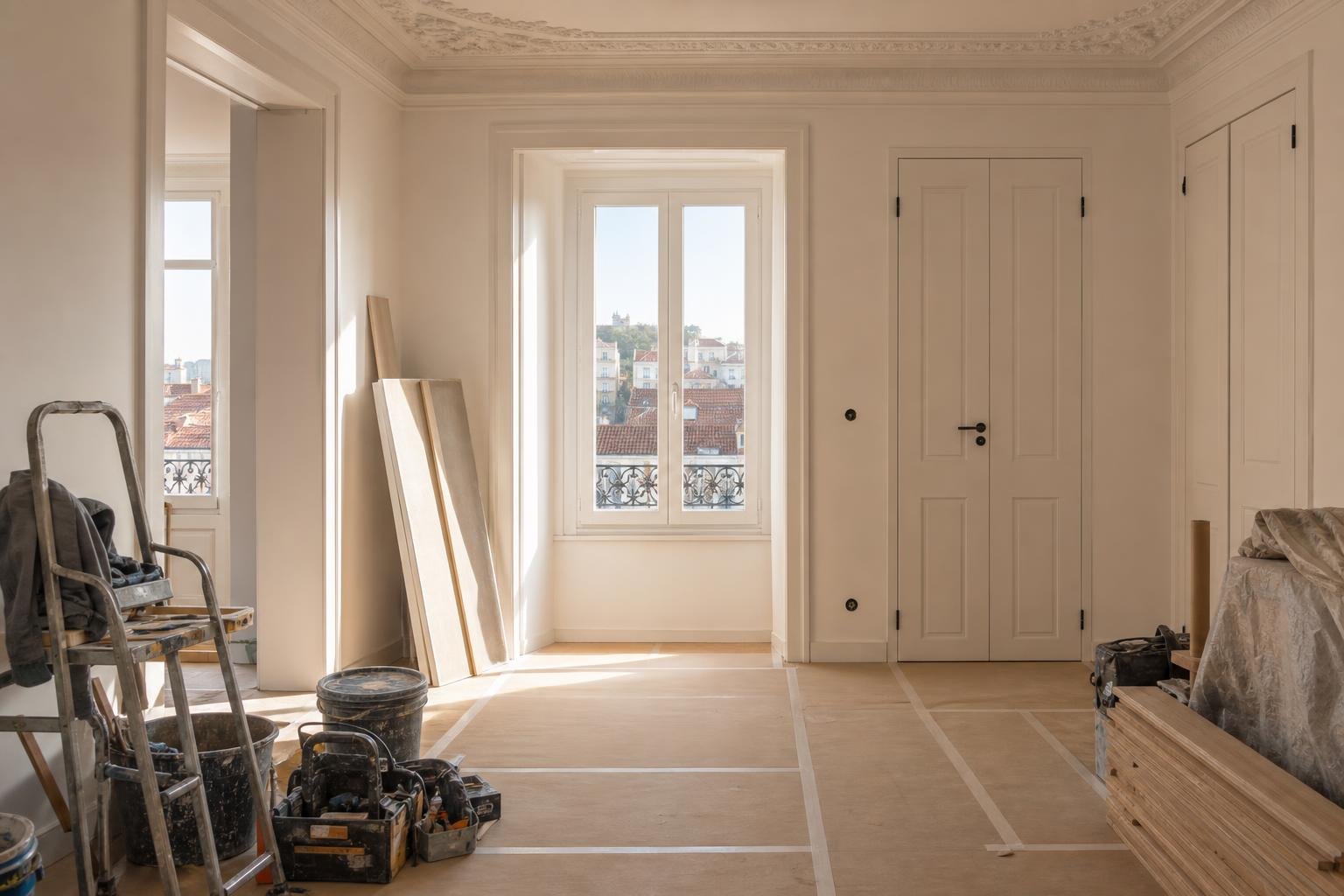
A socket beside the chair can serve a reading lamp, e-reader or phone charger and, at times, a small fan. It seems minor until an extension lead crosses the floor. During a renovation, show the seating position on the electrical layout and check the socket height against skirting boards, side tables and curtains.
Do not hide sockets behind a fixed bookcase without allowing for access. If the chair has a small table, a socket near the skirting may be enough; if a bespoke low unit is planned, a discreet cable route may make sense. This decision belongs within the broader plan for sockets and switches before the walls are closed, rather than being improvised at the end of the project.
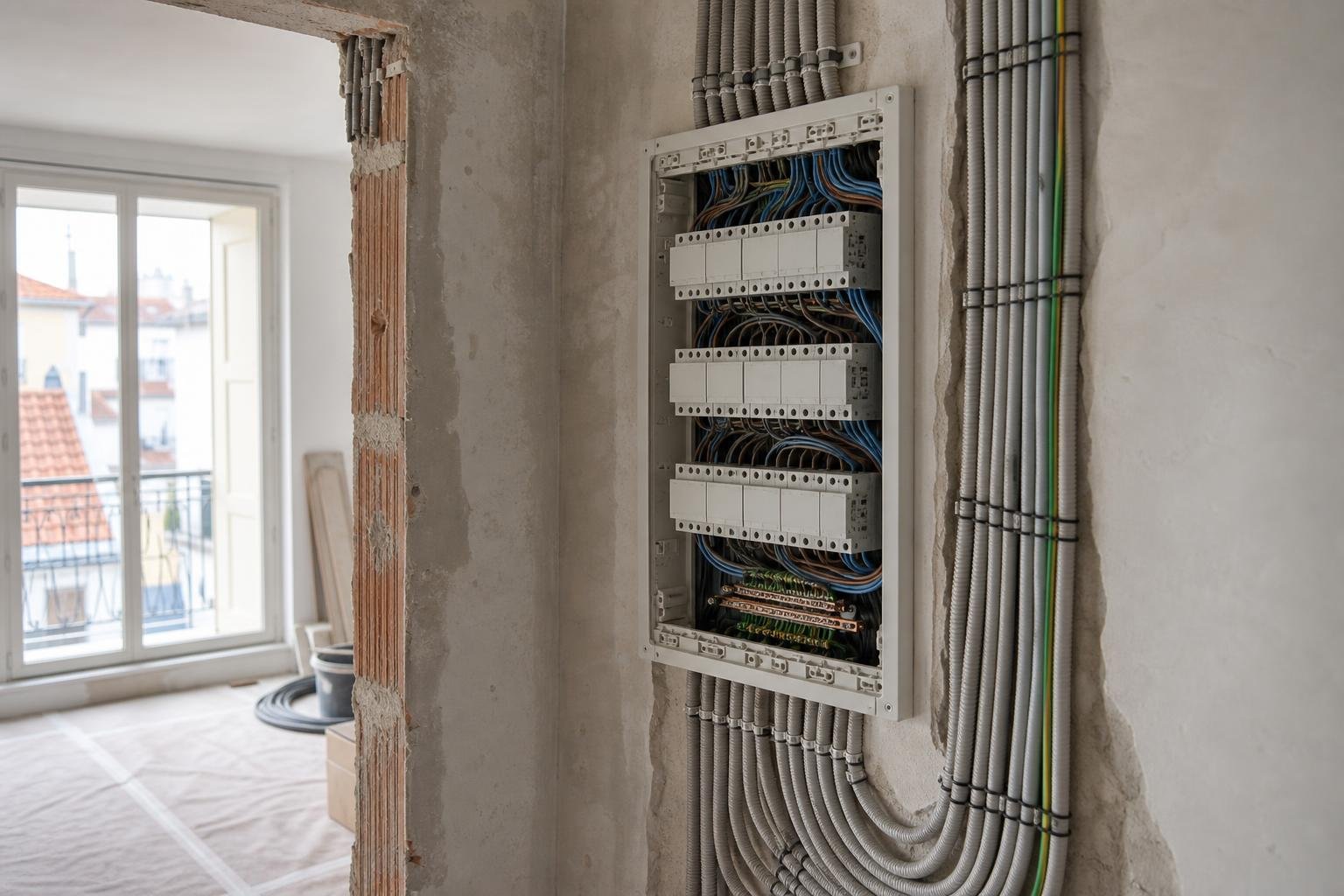
Changing circuits, cutting chases or modifying the electrical board is not a casual DIY task. Ask a qualified professional to assess the work, and keep required junctions and access points available for future maintenance.
Separate decoration from changes to the façade
A chair, lamp and internal curtains are generally furnishing choices. Replacing windows, fitting external shading, changing an opening or working on walls may involve building rules, condominium decisions and municipal requirements. Lisbon’s building-work licensing information explains that certain alteration, reconstruction, extension and works affecting listed buildings or their protection areas are subject to prior control.
Do not therefore select an exterior solution simply because it appears light or reversible. Check whether the façade is a common part of the building, whether the condominium has its own rules and whether the property sits in an area with heritage constraints. Confirming this before ordering avoids incompatible colours, unsuitable fixings and repeat costs.
If strong daylight comes with overheating, address the issue as a whole: glazing, seals, shading, ventilation and the way the room is used should work together rather than compete.
A successful reading nook comes from measurements, light and everyday use—not decoration alone. If you are renovating a room in Lisbon, Obra Lisboa can help coordinate comfort, electrical planning, windows and finishes from the outset.
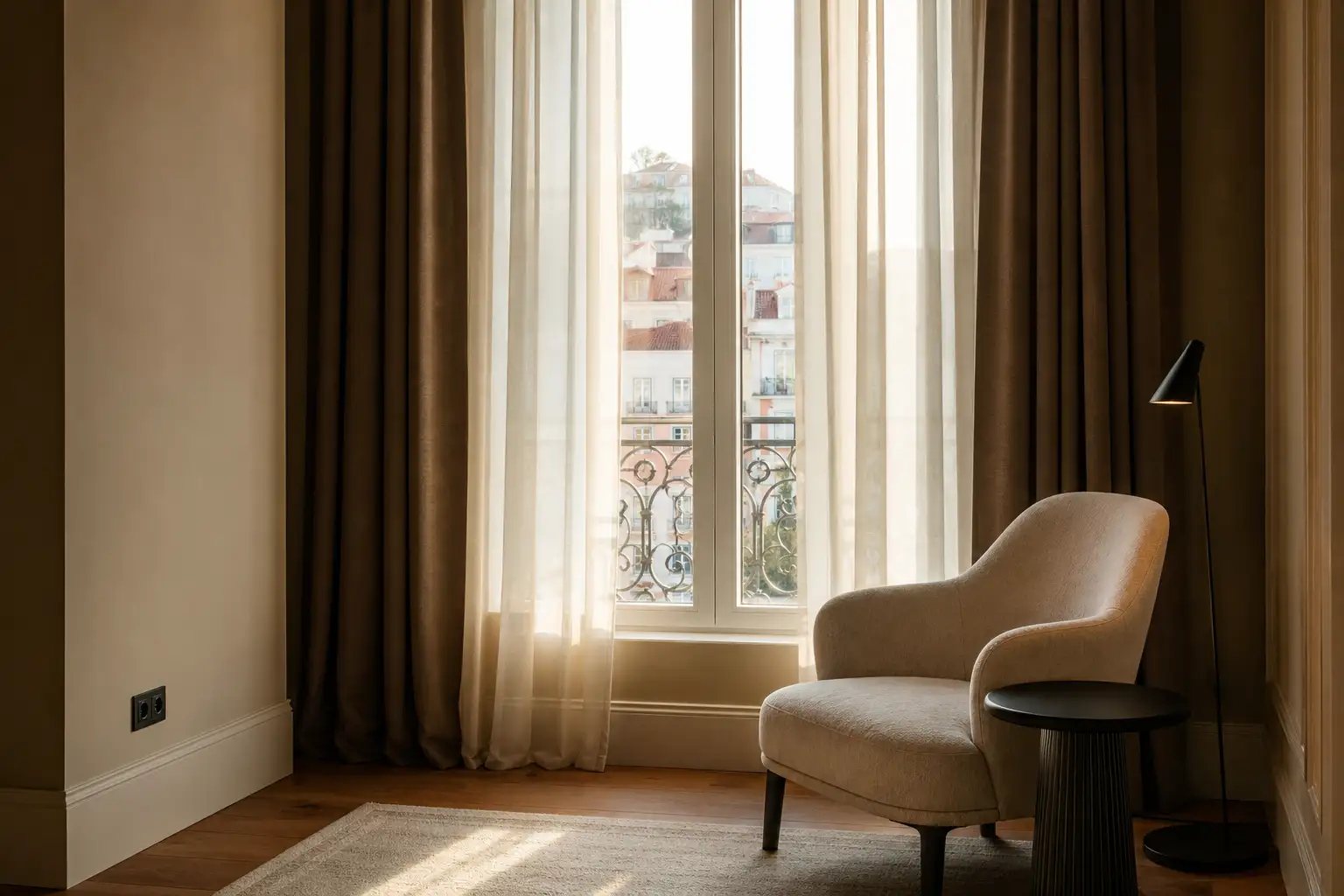
AI-generated editorial image; it does not depict an Obra Lisboa project.

Obra Lisboa