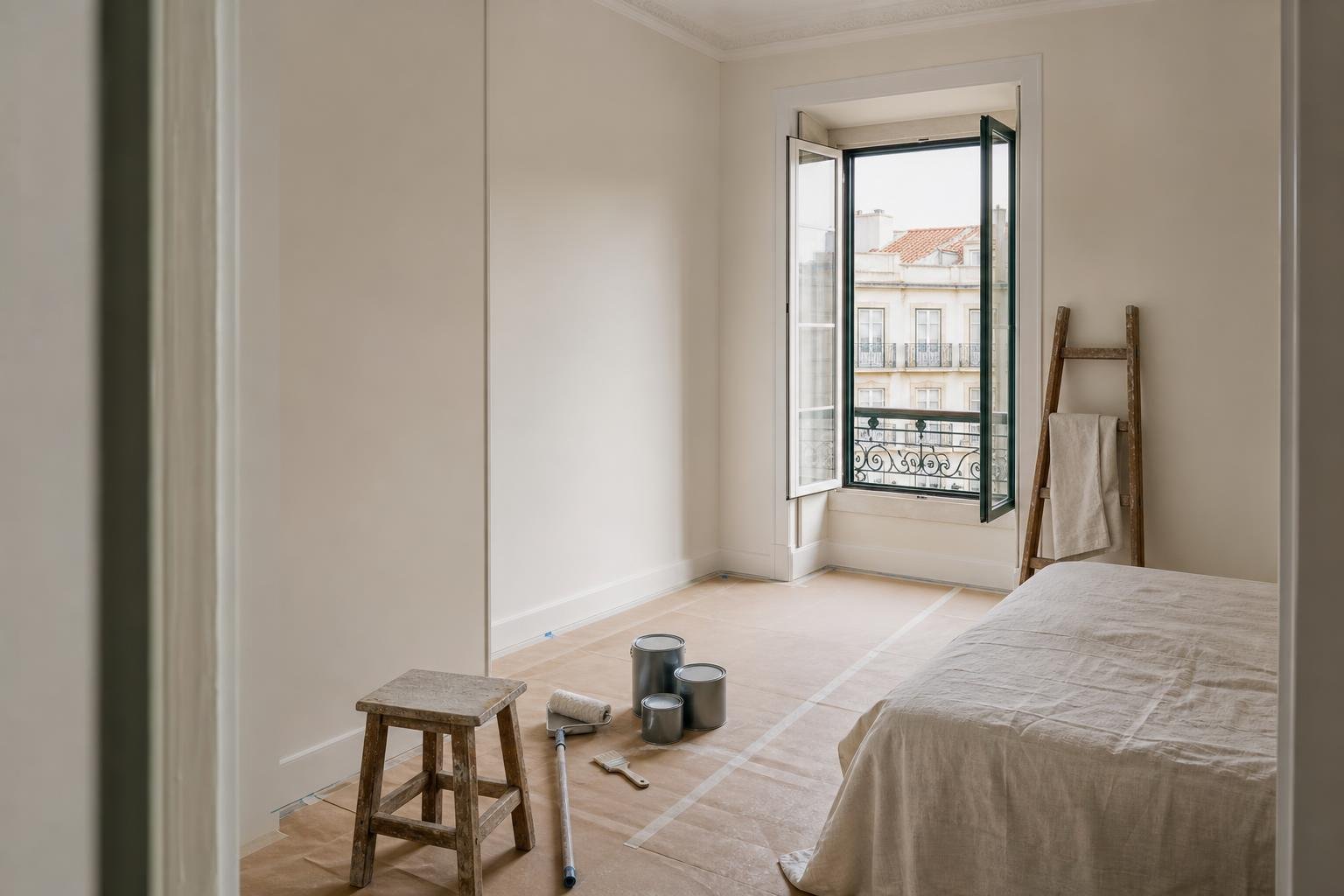

A window with single glazing, a poorly insulated shutter box or ageing frames can make the area beside the façade uncomfortable even when the rest of the room feels fine. Thermal curtains do not replace efficient windows, nor do they repair draughts, damp or defective seals. They can, however, be a practical reversible layer: reducing the feeling of cold near glass in winter, moderating glare and limiting part of the solar gain when used properly.
In Lisbon, the choice has to work in two seasons: strong daylight and overheating through much of summer, as well as cool mornings and evenings. Lisbon’s Instituto Geofísico climate normal records average maximum temperatures of 27.9 °C in July and 28.3 °C in August, with many hot days. See the IPMA climate normal for Lisbon for the wider context. The practical aim is simple: choose a system that is easy to open whenever daylight and fresh air are needed, rather than turning curtains into a permanent barrier.
First, identify the problem curtains can — and cannot — solve
Before buying fabric, watch the window for a week. Is there a draught around the frame? Does the glass become wet in the morning? Is the problem mainly late-afternoon sun on a west-facing façade, or discomfort throughout the night? A properly fitted curtain helps create a less exposed layer of air next to cold glass and can improve perceived comfort. It will not fix failed seals, water ingress through the wall, a serious thermal bridge or distorted frames.
If your priority is energy use and correcting the building element itself, connect this decision to our guide to replacing windows during a Lisbon renovation. ADENE notes that efficient windows contribute to thermal and acoustic comfort, energy conservation and wellbeing; see its guidance on efficient windows and home comfort. Treat curtains as a complement: a daily-use layer that improves an existing window while a larger intervention is assessed or planned.
Choose fabric for its job, not just its thickness
The word “thermal” is not enough on its own. Compare lining, density, opacity, handle and the way the fabric hangs. For a living room facing east or south, a two-layer arrangement is often the most flexible: a sheer curtain for privacy and softened daylight, plus a denser panel for night-time or direct sun. In a bedroom, blackout performance may justify higher opacity, but blocking light is not the same as guaranteed thermal improvement.
Avoid choosing only by a metallic backing or vague packaging claims. Ask for a sample, place it against the glass and look at the colour in daylight. Light-facing colours are often visually easier in a bright room; dark colours can add decorative weight but absorb more radiation when closed. In every case, the main summer strategy is to stop solar radiation before it heats the room. ADENE identifies shading and night-time natural ventilation as important passive comfort measures in its overview of ways to reduce excess heat indoors.
Measure for genuine coverage around the opening
A curtain that is too short or too narrow leaves the weakest areas exposed: the sides and lower edge of the window. Measure the whole assembly, including the frame, and allow enough extension at each side for panels to clear the glazed area when open. That brings in more daylight without removing the curtain. Set the track above the opening with enough clearance for windows, shutters and internal timber shutters to operate.
For length, choose between finishing slightly above the floor, just touching it in a controlled way, or stopping at sill level. In a dry bedroom with an even floor, a near-floor drop reduces air movement beneath the fabric and gives a more continuous appearance. In kitchens, around radiators or convectors, by balcony doors or where frequent cleaning is needed, a shorter and safer arrangement is usually wiser. Do not cover vents, air inlets, shutter controls or appliances. Before drilling, check for shutter boxes, lintels and concealed services in the upper wall zone.
Tracks, pleats and side returns matter more than expected
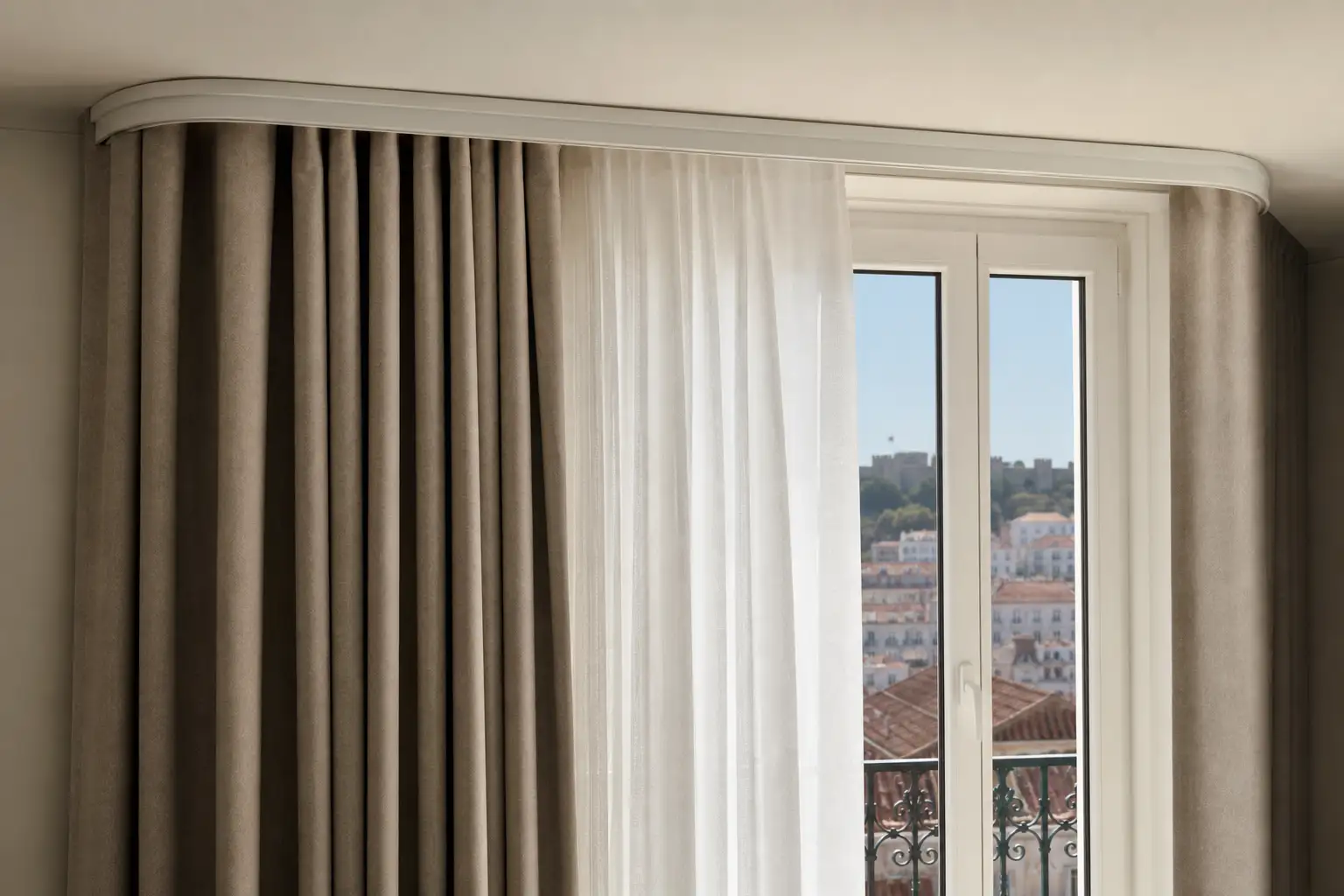
Real-life performance depends as much on installation as on fabric. A continuous track lets the curtain sit close to the wall and include side returns: short sections that turn back towards the façade and reduce side gaps. On exposed windows, that is generally more effective than a short pole placed exactly across the frame. It also stops panels pulling too far away when a balcony door is opened or someone walks past.
Do not overdo the bulk, though. Excessively full pleats can make curtains hard to draw, overload weak fixings and consume valuable space in a small bedroom. With sliding windows, test the full movement before fixing the system permanently. With casement windows, make sure an open curtain will not obstruct the handle. In older apartments, plaster or mixed masonry walls may require anchors suited to the actual substrate; a sagging track damages finishes as well as fabric. Where curtains visually divide a room, select a discreet, robust track instead of an improvised solution.
Use one routine for summer and another for winter
In winter, close the denser panels at dusk and open them when direct sun can help warm the room, provided glare remains manageable. Keep fabric away from heat sources and never cover radiators: it wastes heat and may affect both fabric and safety. If persistent condensation appears on glass, do not leave a heavy curtain trapping the area for days; investigate the cause and ventilate correctly.
In summer, close the shading layer before the strongest sun reaches the room, then reopen it when the façade is no longer exposed. At night, curtains should still allow secure window opening when outdoor conditions are cooler. Portuguese requirements state that, in housing, air should enter through main rooms and be extracted through service spaces; consult the ventilation requirements published in the Diário da República. A curtain must never become a reason to permanently block air inlets or ventilation grilles.
Pair curtains with improvements that last
Curtains work best as part of a coherent sequence: sound seals, clean glazing, working shutters and controlled ventilation. Where a façade receives strong sun, assess compatible external measures first, because they intercept radiation before it passes through the glass. Our guide to external shading for apartments helps place that choice alongside façade and condominium constraints.
For a small upgrade, check three things: the curtain fully clears the glass when open; air inlets remain free; and installation does not prevent window or shutter maintenance. In a wider renovation, include curtains in the survey of openings, insulation and ventilation before ordering furniture. The right curtain improves everyday comfort, but it should never conceal water marks, mould or frame defects that require diagnosis.
Renovating an apartment and want to coordinate windows, shading, ventilation and finishes rather than making isolated choices? Obra Lisboa can help turn those priorities into a clear renovation plan.
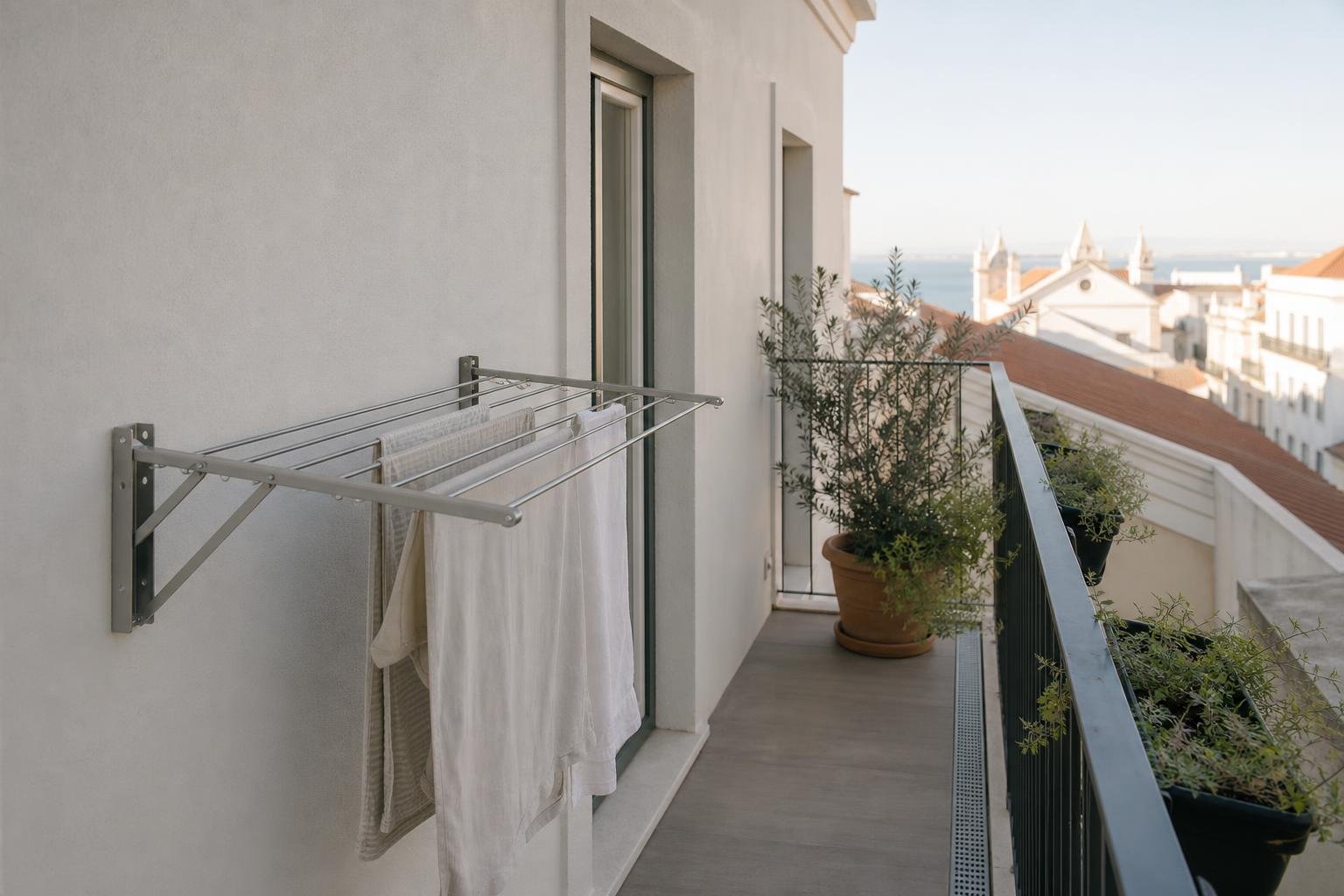
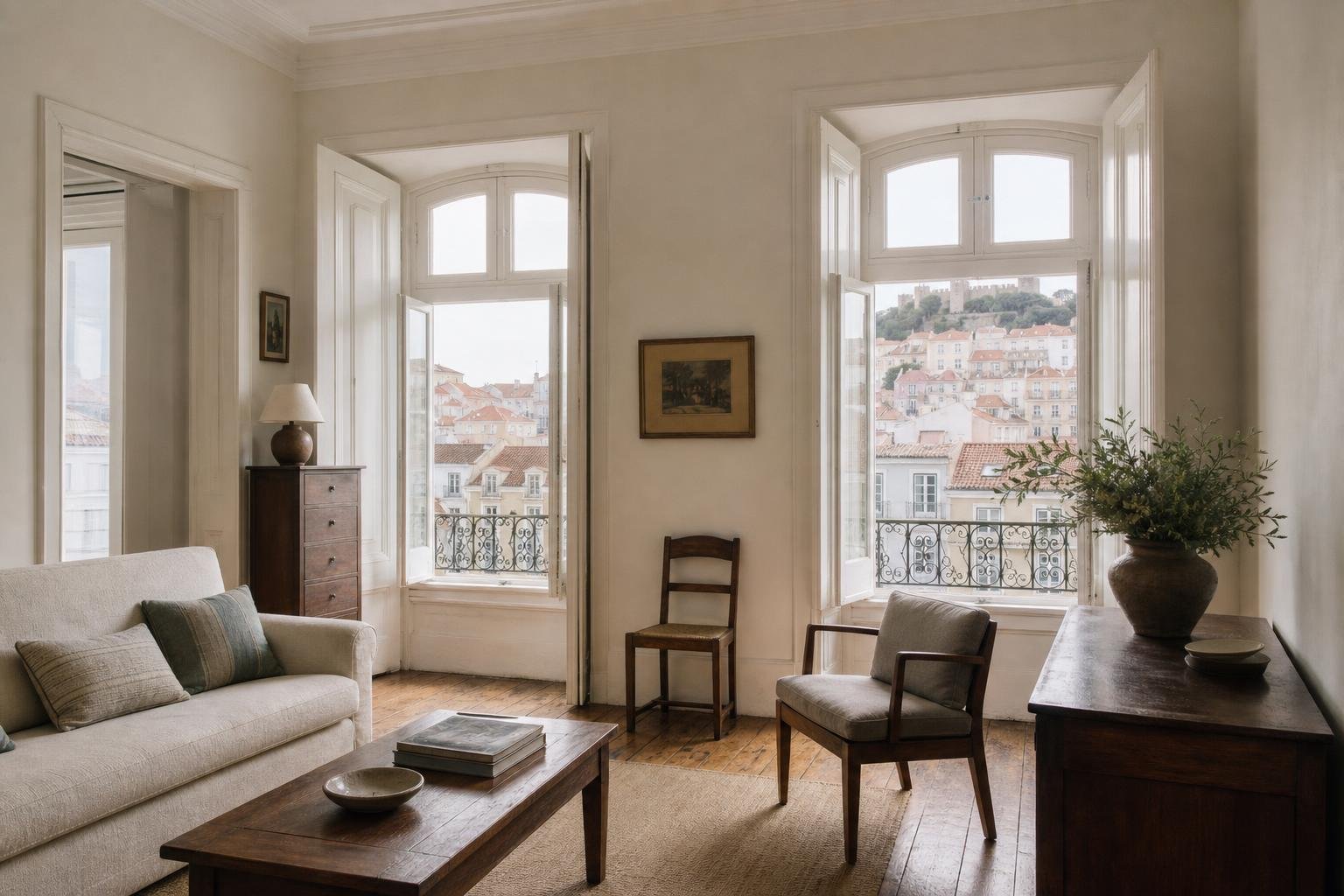
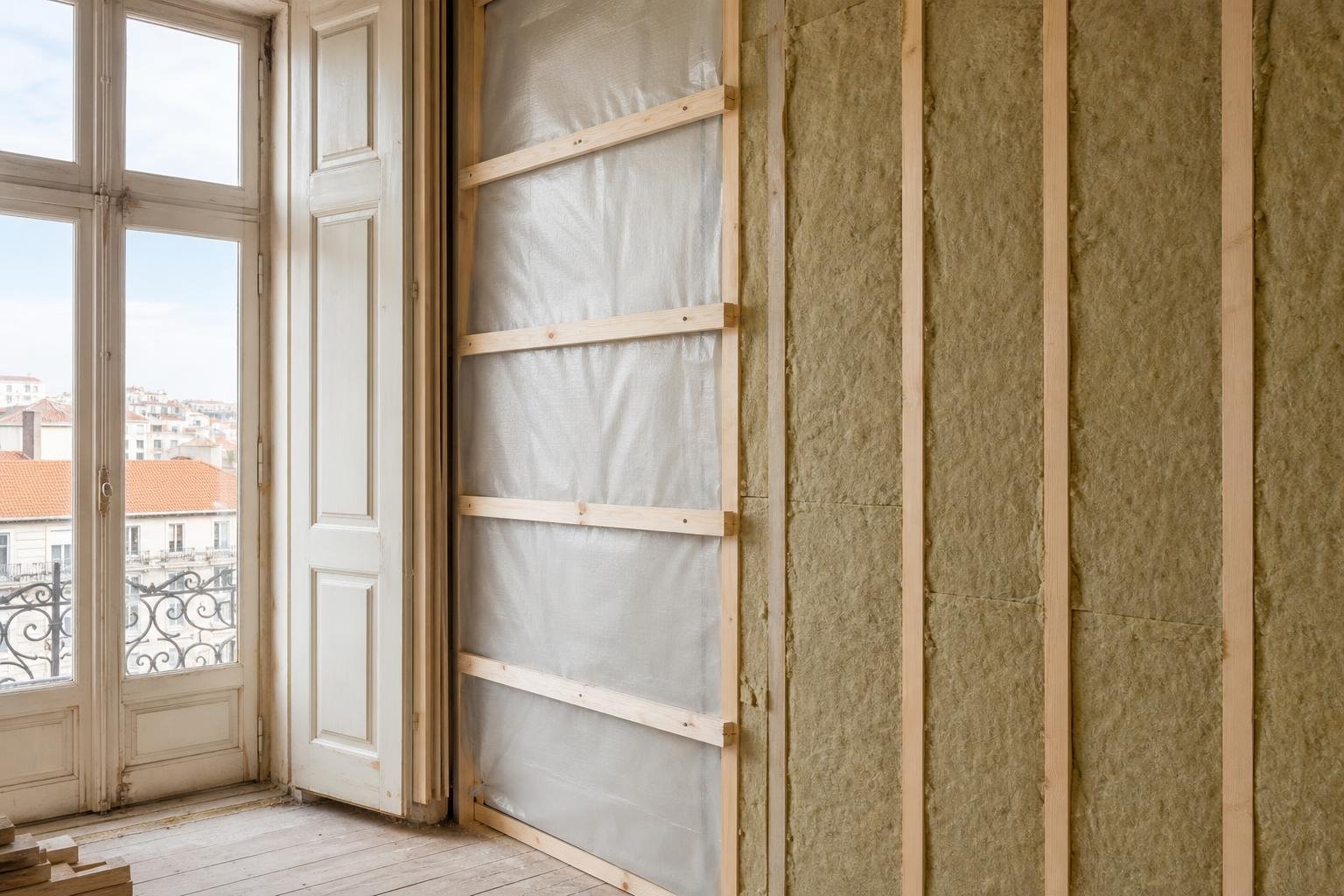
AI-generated editorial image; it does not depict an Obra Lisboa project.

Obra Lisboa