
A well-planned skylight can bring daylight into the centre of a home where a façade window cannot reach: a stairwell, internal bathroom, long hallway or converted attic. In a Lisbon renovation, however, opening a rooflight is not simply a matter of choosing an attractive frame. It changes an area exposed to direct sun, wind-driven rain, dust, leaves and thermal movement. If it is decided too late, the skylight may create overheating, condensation or a leak that is difficult to trace.
The useful question is not “can a skylight fit here?”, but “what kind of daylight is needed, at what time of day, and how will this opening work with the existing roof?” This guide puts those decisions in order before materials are ordered or tiles are cut.
Start with the room, not the product catalogue
First define the problem you are trying to solve. In a hallway with no façade, the priority may be wayfinding and even daylight; in a bedroom beneath the roof, heat control and blackout performance may matter more; in a bathroom, ventilation and privacy become central. Take simple notes over a few days: when the room is darkest, where sunlight falls, where furniture and circulation sit, and whether neighbouring roofs or walls cast shade.
A horizontal opening generally sees more sky than a vertical window, so it delivers stronger and more changeable daylight. That can give depth to a staircase, yet be excessive over a bed, desk or television area. Do not decide on glass area alone. One modest skylight, positioned on the circulation axis, can work better than two large openings that require blinds to remain closed for much of the day.
For Lisbon, the Portuguese Institute for Sea and Atmosphere records average maximum temperatures of 27.9°C in July and 28.3°C in August at its Lisboa/Instituto Geofísico station. These figures do not replace an assessment of a particular home, but they show why a sun-exposed roof deserves serious attention to shading and ventilation. Use the IPMA Lisbon climate normal as context for the decision.
Choose orientation and design shade from day one
Roof glazing captures daylight, but it also captures solar gains. A skylight facing south or west can be welcome in winter and hard to manage on a hot summer afternoon; a north-facing opening often gives steadier light, although it is not automatically right for every layout. Roof pitch, nearby buildings, chimneys and trees can substantially change the outcome.
That is why solar protection should be treated as part of the system, rather than an accessory to buy later. External blinds intercept radiation before it passes through the glass; internal blinds help manage glare, privacy and visual comfort, but receive heat that has already reached the glazing. In bedrooms, confirm that the chosen system can darken the room sufficiently. In living areas, favour gradual adjustment rather than a single all-open or all-closed setting.
Portugal’s energy-performance framework expressly addresses horizontal glazing and solar gains. The energy-performance requirements published in Diário da República include conditions relating to glazing and solar protection. Do not use a formula in isolation to select a product: ask the designer or qualified technician to assess glass, frame, orientation, shading and the room’s overall behaviour together.
If the budget forces a choice, it is usually wiser to reduce glazed area while retaining compatible external shading than to install a large opening with no solar-control strategy.
Weatherproofing depends on the whole roof assembly
Many issues blamed on a skylight actually begin at the junction between the frame and the roof. The installation must suit the roof type and pitch, existing finish, underlay, flashings and the route water takes above and alongside the opening. A flashing kit designed for profiled tiles may not suit a flat roof, standing-seam sheet or a tile with a different geometry.
Before work starts, identify rafters, purlins, insulation and services. Cutting an opening without this information can lead to improvised structural changes or an awkwardly oversized internal reveal. Where structural elements need to be altered, the decision should be coordinated with the appropriate professionals; it is not a finishing detail.
Ask for the quotation to state the window model, flashing system, waterproof membrane or underlay, insulation around the perimeter and internal finishing method. Photograph the layers before they are covered. At handover, check that tiles sit without stress, drainage channels remain clear, and the internal lining does not butt rigidly against the frame and prevent normal movement.
A skylight should not be judged only on the first rainy day. Observe it after rain combined with wind and look for water marks at side junctions and uphill from the opening. A stain near the frame may be caused by water entering higher up the roof and travelling within a layer before it reaches the ceiling.

Ventilate without making the skylight a source of discomfort
An opening skylight can release warm air that gathers at the highest point of a home. It works best where there is a lower air inlet and a clear path through the room; opening a rooflight in an otherwise sealed home may have limited effect. In bathrooms and kitchens, it does not automatically replace extraction designed for the room’s use.
Choose the control method for the actual height and daily routine. A manually operated window that is difficult to reach will often stay shut; an electric unit with a rain sensor may be useful, but it requires power, service access and a plan for power failures. Motorised options do not remove the need to clear gutters, inspect seals or use the opening sensibly on windy days.
Condensation also matters. Cold inner glass, thermal bridges around the frame, interrupted insulation or everyday moisture generation can all create droplets on the inside face. Do not hide the symptom with anti-mould paint. First check ventilation, use patterns, continuity of insulation and any possible water ingress. When broader comfort and envelope work is planned, it can help to use the energy certificate as a renovation plan rather than treating each component separately.
Permissions, condominium rules and heritage: check before ordering
A skylight may change the roof form, its external appearance or common parts of a building. In an apartment building, the roof is often a common element even where it directly serves the top-floor property. Check the building’s constitutive documents, condominium rules and any need for a formal resolution before proceeding.
In Lisbon, internal works exempt from prior control cannot involve changes to the form of roofs or roof coverings, according to municipal information on exempt works and public-space occupation. That does not mean every skylight automatically follows the same process; it means you should not assume an exemption simply because the intervention looks small from inside. Lisbon City Council also provides information on building-work licences. Confirm the procedure that applies to the specific property, particularly in areas with planning or heritage constraints.
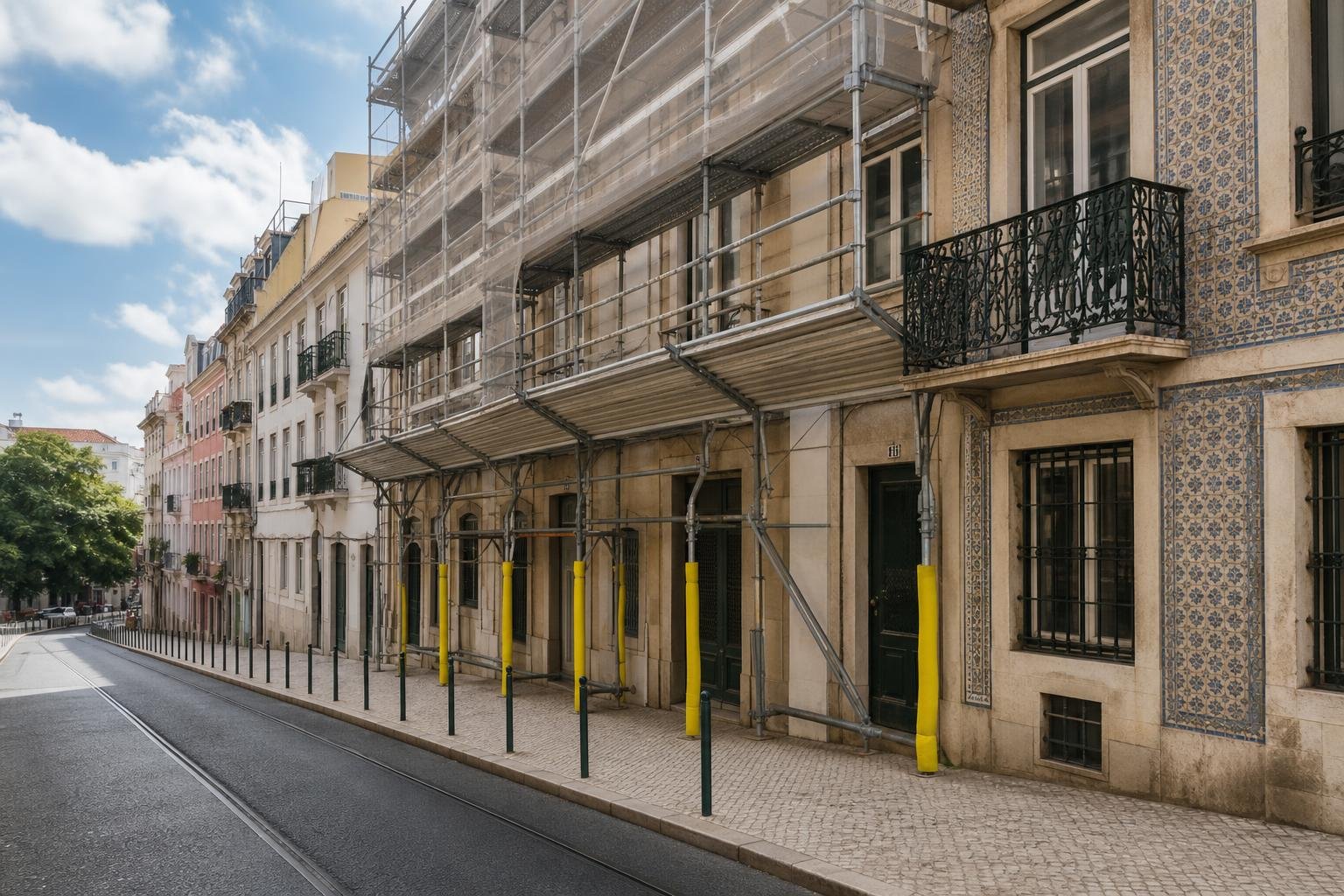
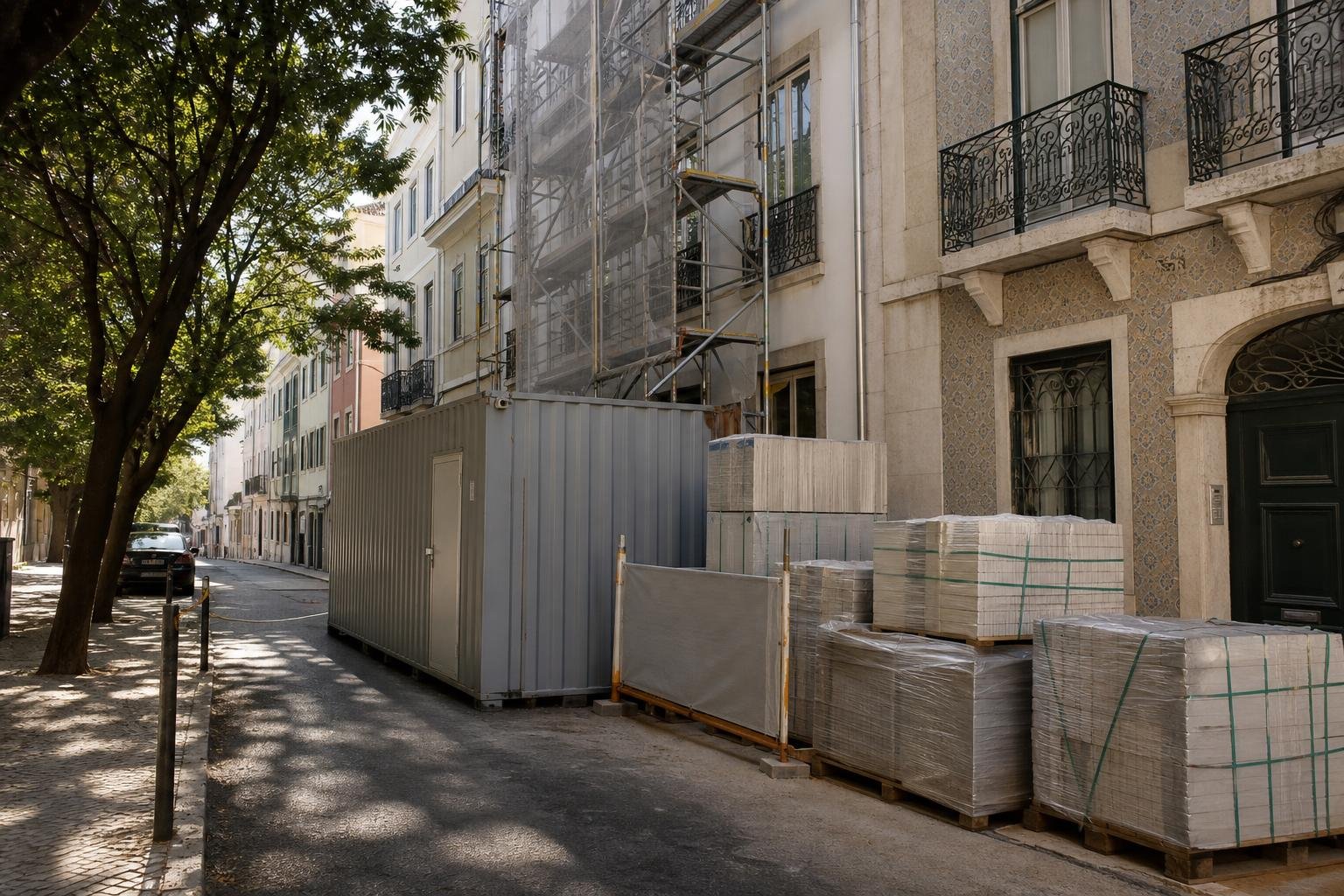
If scaffolding, a lifting platform or a skip is needed, plan the logistics early. Permission to occupy public space is a separate matter from planning approval. On a narrow street, access and pedestrian protection can affect the work sequence and cost.
Design maintenance before the budget is signed off
An accessible skylight is easier to maintain and inspect. Consider external glass cleaning, leaf removal, access to gutters, blind replacement and seal checks. If the opening is above a stair, decide from the outset how maintenance will be carried out without unsafe improvised solutions.
Include a straightforward handover pack in the scope: product manual, warranties, model and colour references, installation photographs, cleaning instructions and service contacts. Then carry out a visual check at the end of summer and before the wetter period: look for debris around flashings, cracks in visible sealant, exposed fixings, leaves obstructing drainage and signs of moisture on internal finishes.
Do not let the skylight become an isolated decision. Coordinate it with roof insulation, ceiling design, artificial lighting and the drainage plan. If the works also include new windows, review the principles of junctions and protection in our guide to replacing windows during a Lisbon renovation. For the external envelope, see also protecting windows and façades during external works. The best skylight is one that brings daylight for years without demanding constant attention.
Considering a new skylight in an existing roof? Obra Lisboa can help organise the work, from assessing the roof and coordinating the technical trades to execution and final flashings. A well-prepared decision prevents natural daylight from becoming a heat or water-ingress problem.
AI-generated editorial image; it does not depict an Obra Lisboa project.

Obra Lisboa