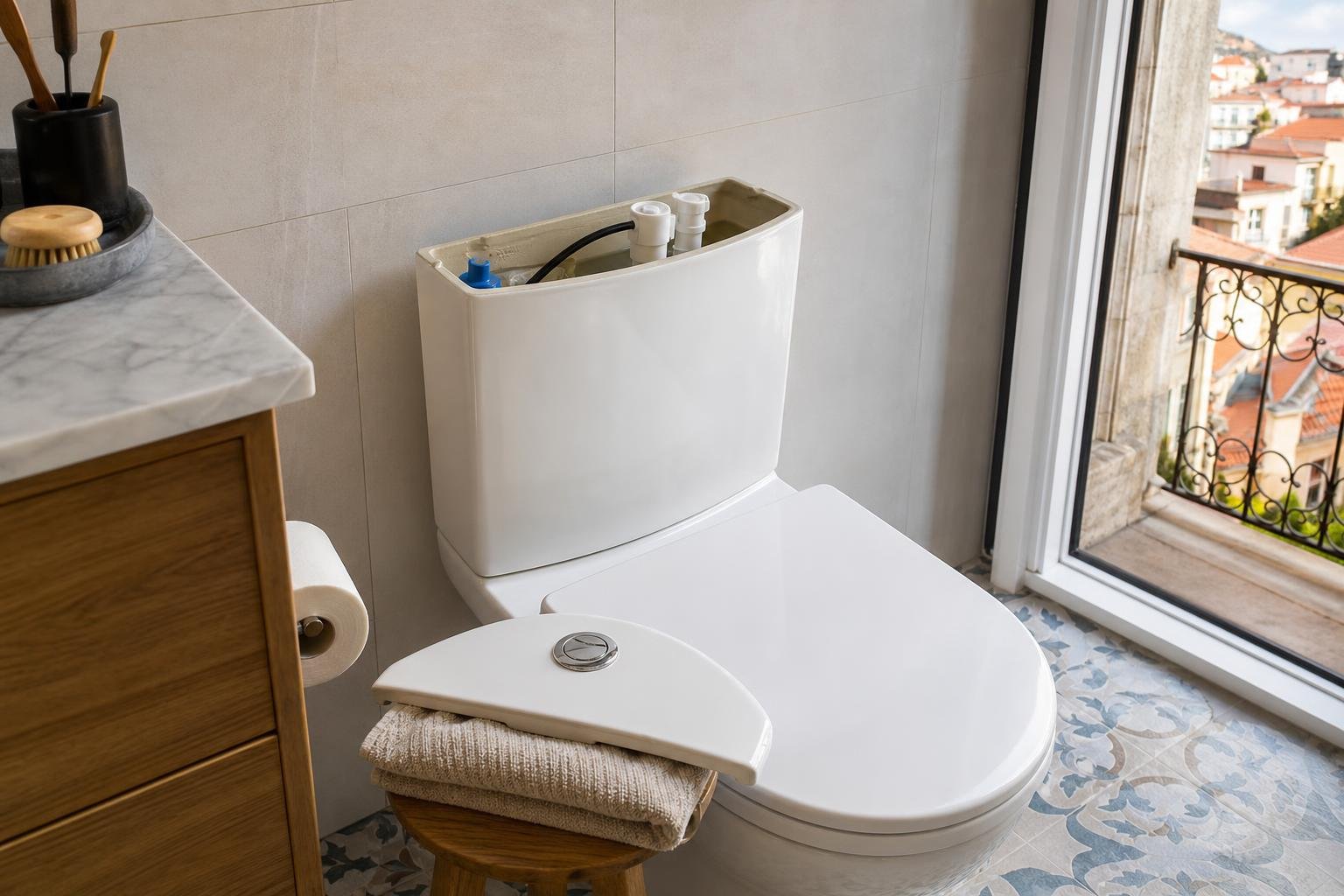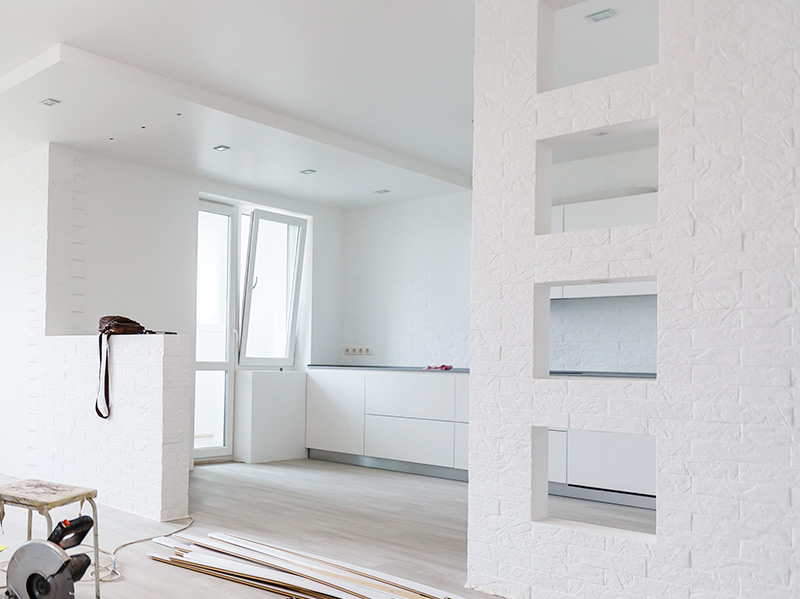
In Portugal, “pladur” is often used to describe plasterboard partitions, wall linings and ceilings. Pladur® is a brand; plasterboard is the material category. A construction system also includes its framing, fixings, joints and any insulation specified within the cavity.
The appropriate solution depends on where it will be installed and what it needs to do. A bedroom partition, a bathroom ceiling and a shower enclosure face different conditions.
Where can plasterboard be used?
Interior applications include partitions, wall linings and suspended ceilings. They can help reorganise a room or accommodate services when the specified system suits the existing support and intended use.
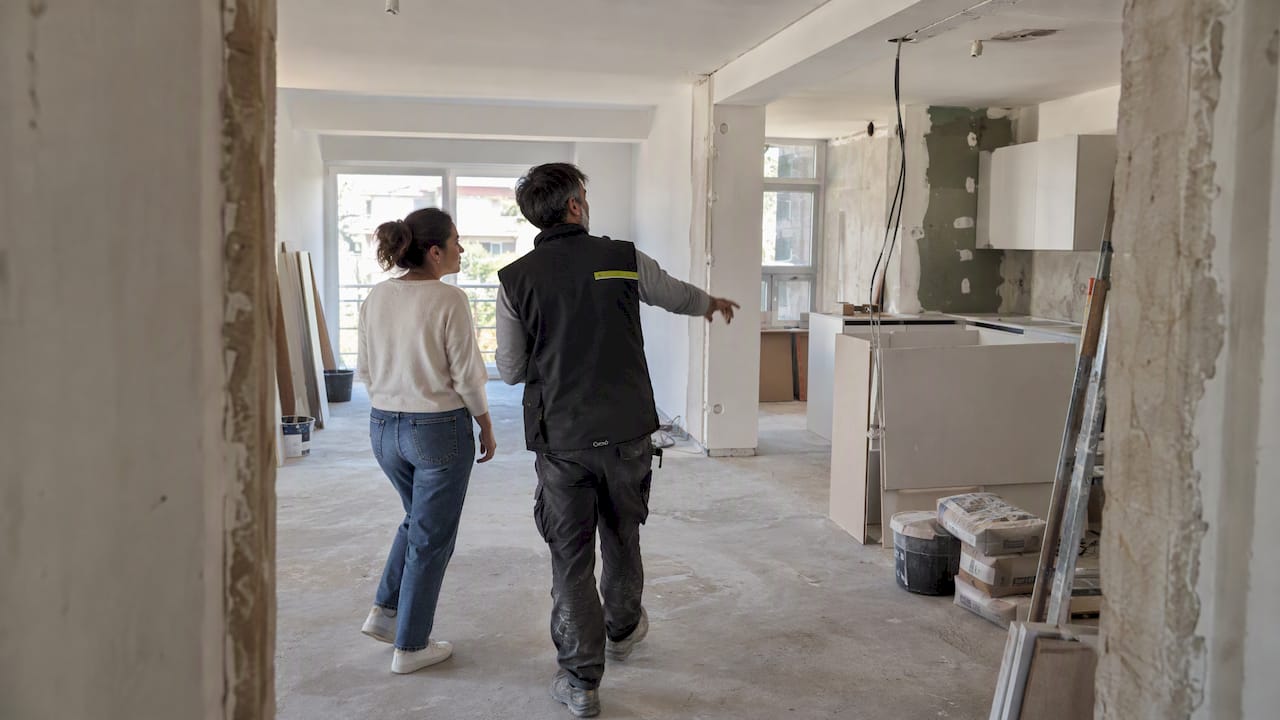
During a renovation, coordinate the boards with electrical work, plumbing, lighting and equipment. Maintenance access and fixings for cabinets or other loads should be planned before the framing is closed.
Moisture resistance and waterproofing are different
A board suitable for humid conditions does not, by itself, make the entire wall waterproof. Product selection depends on the expected exposure and the manufacturer's instructions for the complete system.
In areas with direct water contact, the waterproofing solution needs to address joints, junctions, pipe penetrations and the remaining components. Knauf's AQUAPANEL Indoor manual, for example, specifies waterproofing for walls exposed to water and a suitable barrier in areas with direct water contact.
Existing leaks, staining or deteriorated materials need assessment before a new lining is installed. Covering a surface does not resolve the source of water ingress.

Acoustic performance depends on the system
Acoustic performance comes from the system configuration: boards, number of layers, framing, cavity, specified insulation and junction details. There is no universal acoustic rating for every plasterboard wall.
Pladur® FONIC 13, for example, has a gypsum core and cellulose facing sheets. Mineral wool, when specified, is installed within the system's cavity; it is not a layer inside that board.
When comparing proposals, ask for the system identification and its applicable performance. Sockets, doors, service penetrations and connections to adjoining walls also need consideration.
AQUAPANEL and AQUAROC are cement-based boards from other manufacturers
AQUAPANEL® Indoor is a Knauf product and AQUAROC® is a Saint-Gobain Placo product. Both are cement-based boards with applications defined by their manufacturers. They are not plasterboard variants from the Pladur® brand.
Materials and components from different systems should not be assumed to be interchangeable. The specification should identify the board, framing, jointing products and finish suitable for the application.
What should you define before requesting a proposal?
- The room and purpose: partition, wall lining, ceiling or technical enclosure.
- Expected humidity and any direct contact with water.
- The acoustic, thermal or fire performance required by the project.
- Loads to be fixed, including cabinets, equipment or suspended items.
- Services and maintenance access that must remain available.
- The intended finish and the scope included in the proposal.
To discuss your property, send its location, photographs, available measurements and the changes you have in mind. See our plasterboard and suspended ceiling service or contact Obra Lisboa. The product and installation method need to be defined for the particular intervention.
Manufacturer documentation
The product and system distinctions in this article are supported by the documents below. The applicable product data and installation instructions should be checked when preparing the work.
- Knauf AQUAPANEL® Indoor
- Knauf — sistemas AQUAPANEL Indoor, agosto de 2025, p. 23
- Saint-Gobain Placo — AQUAROC® 13 1200
- Pladur® FONIC 13
Updated on 31 October 2026.