
During the hottest part of the year, an air-conditioning system may release a steady stream of water. At a house, it is tempting to route that flow into a container and use it for watering or cleaning. It can be a sensible saving measure, but it should not be treated as a new water supply: output depends on operating hours and air humidity, can stop as soon as the system is switched off, and the collected water is not suitable for drinking.
A sound solution separates three decisions: where the water comes from, what it will be used for, and how the system will be maintained. An improvised pipe over a façade, an uncovered bucket, or a connection to domestic plumbing may solve immediate drainage, but can introduce dirt, overflow, mosquitoes, maintenance failures or confusion with potable water. This guide sets out how to assess a small, useful installation without turning a technical detail into a household risk.
What condensate water actually is
Air conditioning removes moisture from indoor air while cooling it. That moisture condenses inside the equipment and leaves through a drain. It is not rainwater and it is not treated mains water; it comes from the air after passing through a condensate tray, pipework and components that may collect dust, biofilm or particles.
The practical rule is straightforward: do not drink it, cook with it, use it for personal hygiene or connect it to potable-water outlets. It is also unwise to assume that it is consistently clean simply because it looks clear. Portuguese rules on water for reuse exclude potable uses and focus on preventing health and environmental risks. Condensate from a domestic system is not the same as treated wastewater, but the principle of matching water quality to its use remains useful. For context, consult the Portuguese legal regime for producing and using reclaimed water.
In practice, this flow is a supplementary resource. It may reduce mains-water use for occasional tasks, but it does not replace properly designed irrigation or remove the need to run the air-conditioning system efficiently.
First decide whether collection is worthwhile
Before buying a tank, watch each indoor or outdoor unit’s discharge point for several days and note when it flows. A house with several conditioned rooms may have several condensate outlets; bringing them together requires properly planned routes, falls and traps. One unit used only in the evening may provide water too irregularly to justify pipework, a pump or automation.
Make a simple estimate: collect the water on a typical day of use, measure it, and repeat on days with different heat and humidity. Do not design around the most humid day. In Lisbon, garden-water demand usually rises in summer, but condensate availability follows actual air-conditioner use rather than a fixed schedule.
It is also worth dealing with avoidable waste first. The water-efficiency programme published in the Diário da República supports using water from other sources for watering and washing where possible, while pairing that approach with efficient irrigation, leak control and lower-evaporation watering times. In other words, condensate reuse works best alongside drip irrigation, climate-suitable planting and careful watering.
Suitable uses around a house
The most cautious uses are outdoors and non-potable: watering ornamental plants, washing a patio, rinsing garden tools or carrying out small external cleaning jobs. Even then, favour uses where the water is not stored for long periods and does not come into contact with food, toys or food-preparation surfaces.
For watering, choose trees, shrubs and ornamental plants in the ground, applying water to the soil rather than by spray. Avoid using it on vegetable plots producing food eaten raw, culinary herbs likely to be consumed without washing, or systems that atomise droplets into the air. Do not use it to fill swimming pools, decorative ponds or containers accessible to children and animals.
A manual arrangement is often the most dependable: a small tank, a low tap and a dedicated watering can. If you choose drip irrigation, keep it visibly independent from potable water, label it clearly and never create a physical connection to domestic plumbing. For broader decisions on non-potable collection, see rainwater harvesting for a house.
Tank, lid and overflow: details that determine success
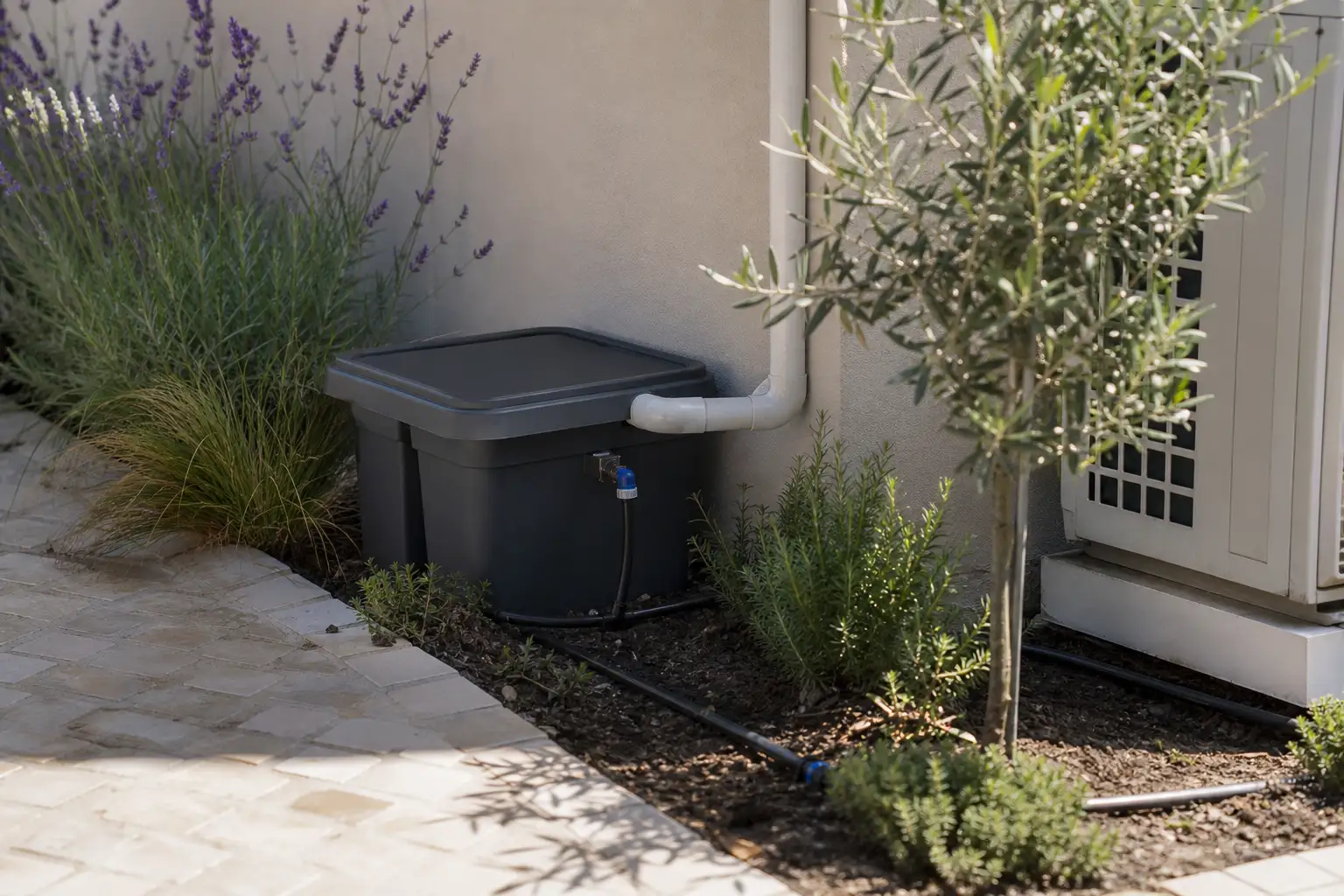
Choose an opaque, covered tank that is easy to clean. A lid limits leaves, dust and insects; opacity reduces light and helps prevent algae. Set it on a stable base close to the intended use, where an accidental overflow will not wet walls, foundations, neighbouring property or walking routes.
The condensate pipe must preserve the drainage arrangement specified for the unit and must not allow water to back up into the equipment. Add a simple, accessible filter upstream of the tank to catch coarse debris, but do not mistake that filter for water treatment. Plan a safe, lawful overflow route as well, because a tank can fill while no one is at home.
Avoid uncovered containers. Beyond odours and debris, stagnant water can create undesirable conditions. Portugal’s Directorate-General of Health stresses that preventing Legionnaires’ disease relies on managing and maintaining networks, systems and equipment that can support the growth and spread of Legionella; review the DGS guidance on Legionella prevention and control. For a small domestic arrangement, the sensible response is to avoid aerosols, clean it regularly and avoid keeping water longer than necessary.
When a permanent system is the wrong choice
There are times when a supervised container—or ordinary drainage—is safer than a fixed reuse system. Examples include units that are difficult to access for cleaning, very long pipe runs, a pump needed to overcome level differences, façades where visible alterations need approval, or homes without a garden or a regular outdoor use for the water.
It is equally unwise to create a separate supply for toilet flushing, washing machines or indoor taps without a proper design and rigorous network separation. The risk is not only water quality: it is the potential for cross-connections, backflow, neglected maintenance and incorrect use by future occupants.
In Lisbon, water-efficiency solutions can form part of broader urban-development works. The municipality refers to TRIU reductions for certain greywater recycling measures and for rainwater retention or use in non-potable applications; see Lisbon’s information on urban charges, exemptions and reductions. That does not mean a standalone condensate tank automatically qualifies, but it does underline the value of keeping non-potable water separate and using it thoughtfully.
A checklist before you proceed
A well-considered installation answers these questions before any wall is drilled:
- Has the flow been observed over several days rather than assumed?
- Will the use be outdoor, non-potable and free from spraying?
- Is the tank covered, opaque, stable and washable?
- Are there an accessible filter, an overflow route and safe drainage?
- Does the new pipework preserve air-conditioner drainage and service access?
- Is the system completely separate from potable water?
- Who will empty, clean and inspect it over time?
If any answer is uncertain, scale the idea back. A small collection point that is clean and easy to monitor is better than a hidden installation that stores water and problems. If this work coincides with a refurbishment, coordinate pipe routes, power and drainage early in the design; the same forward planning is valuable in any home renovation.
Planning a house renovation or reorganising external services? Obra Lisboa can help incorporate drainage, technical areas and everyday-use solutions into a clear work plan, without mixing networks or compromising future maintenance.
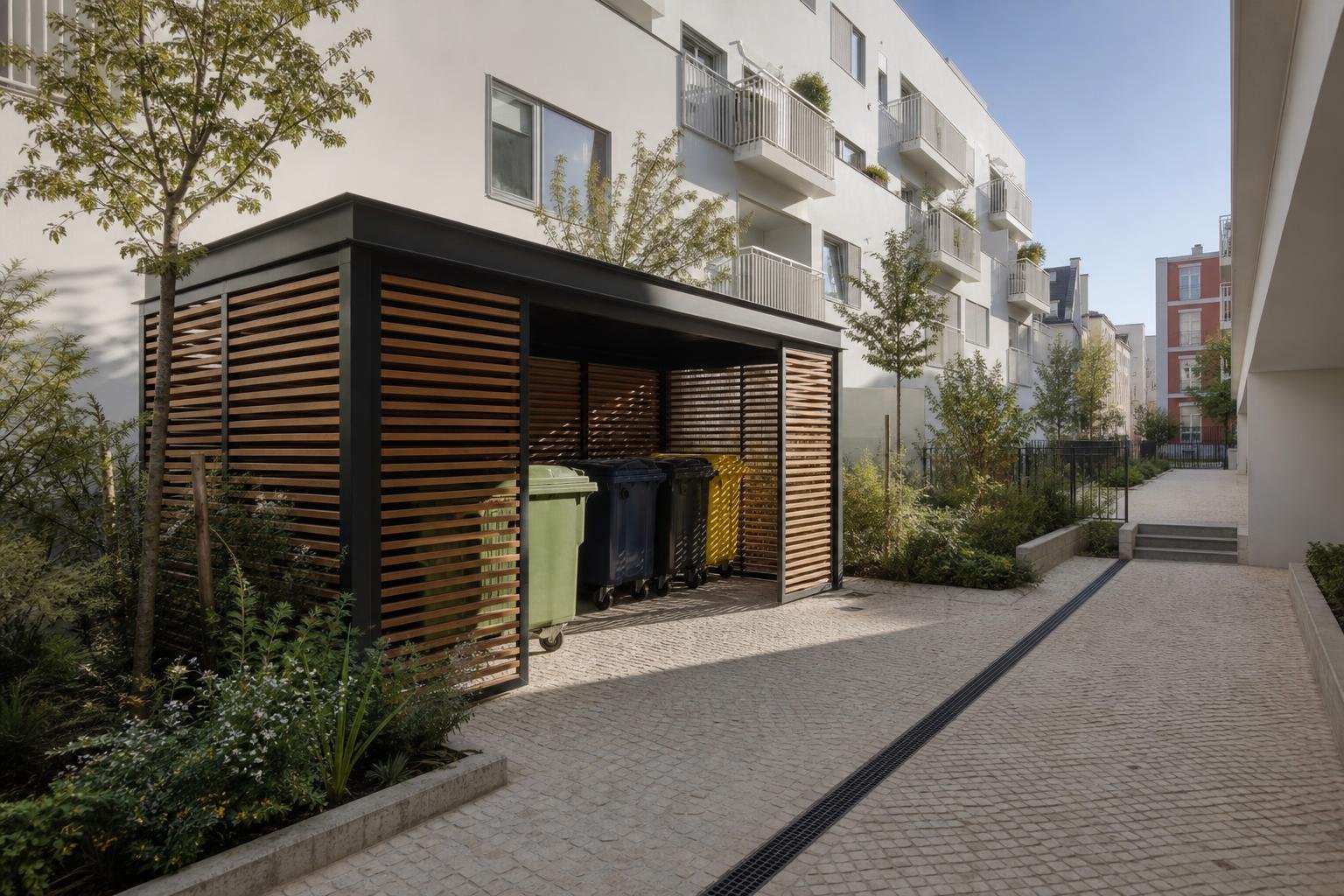
AI-generated editorial image; it does not depict an Obra Lisboa project.

Obra Lisboa