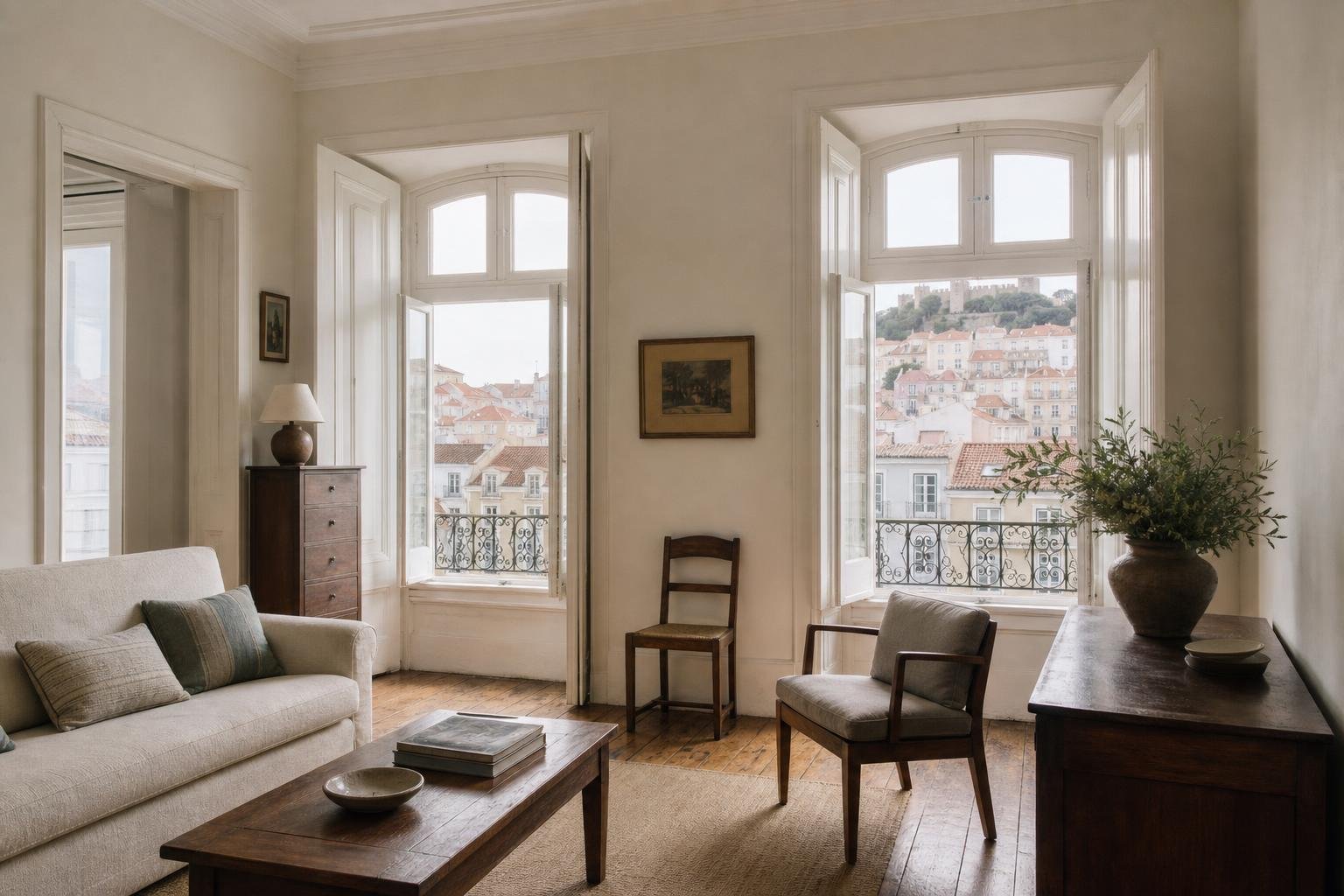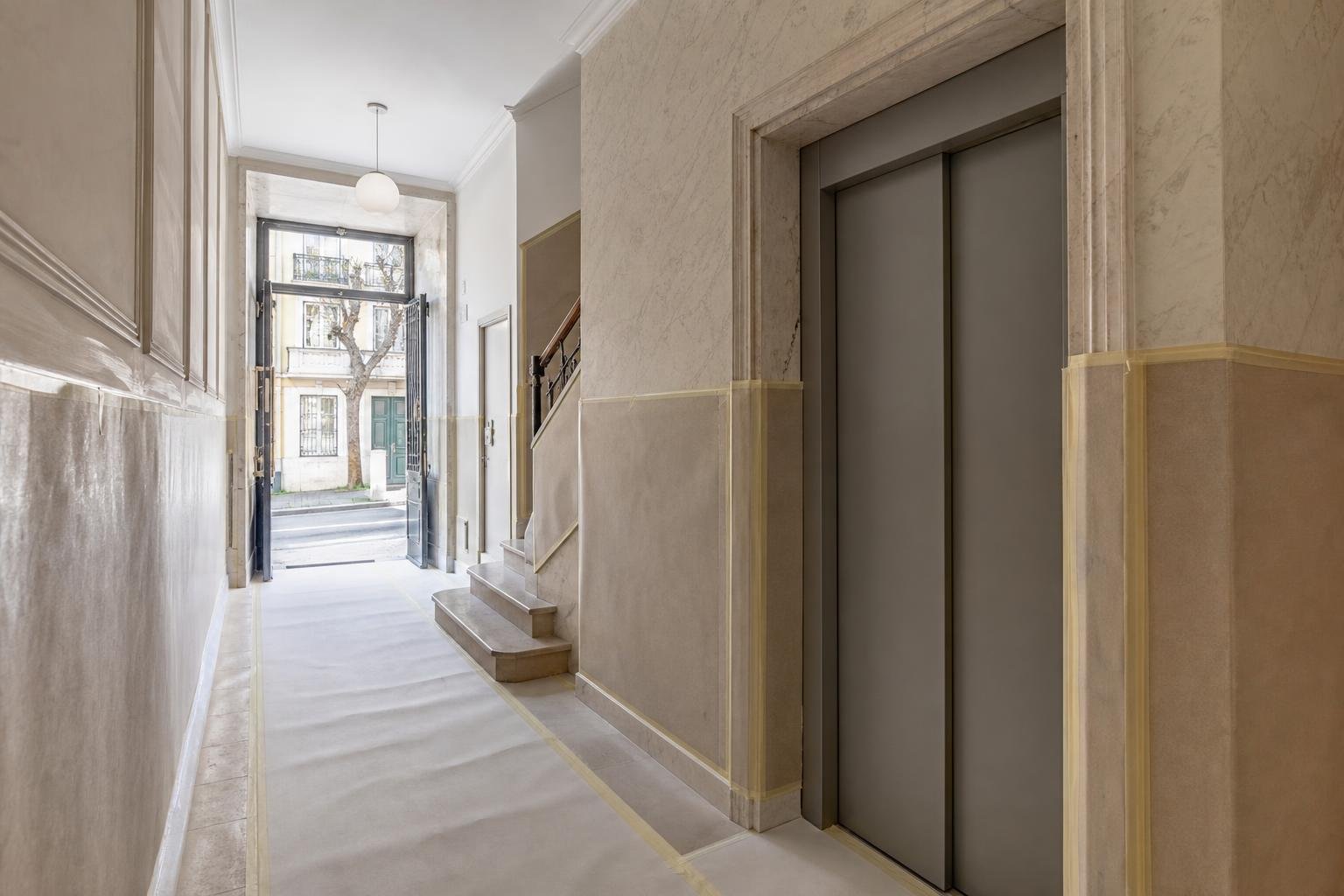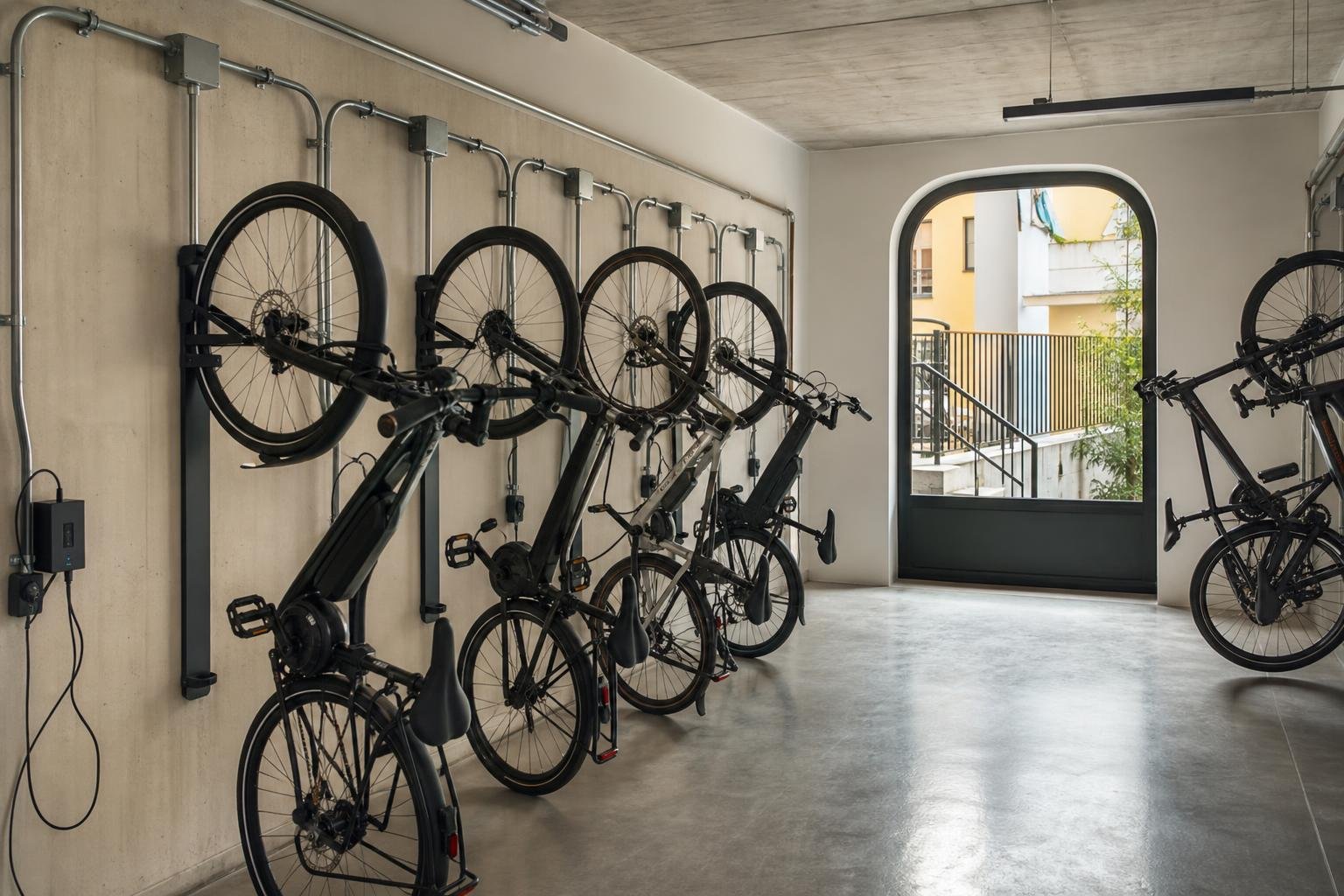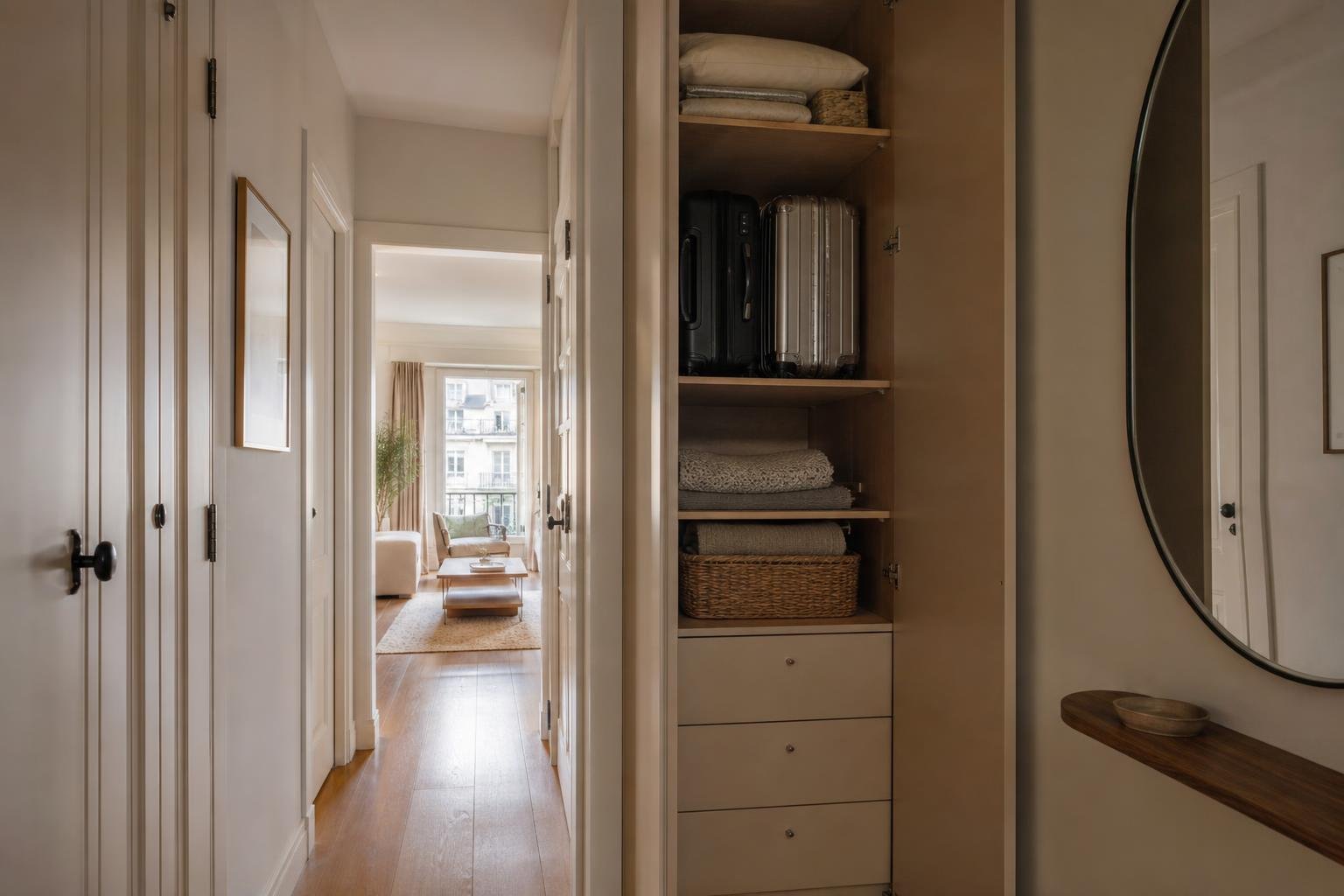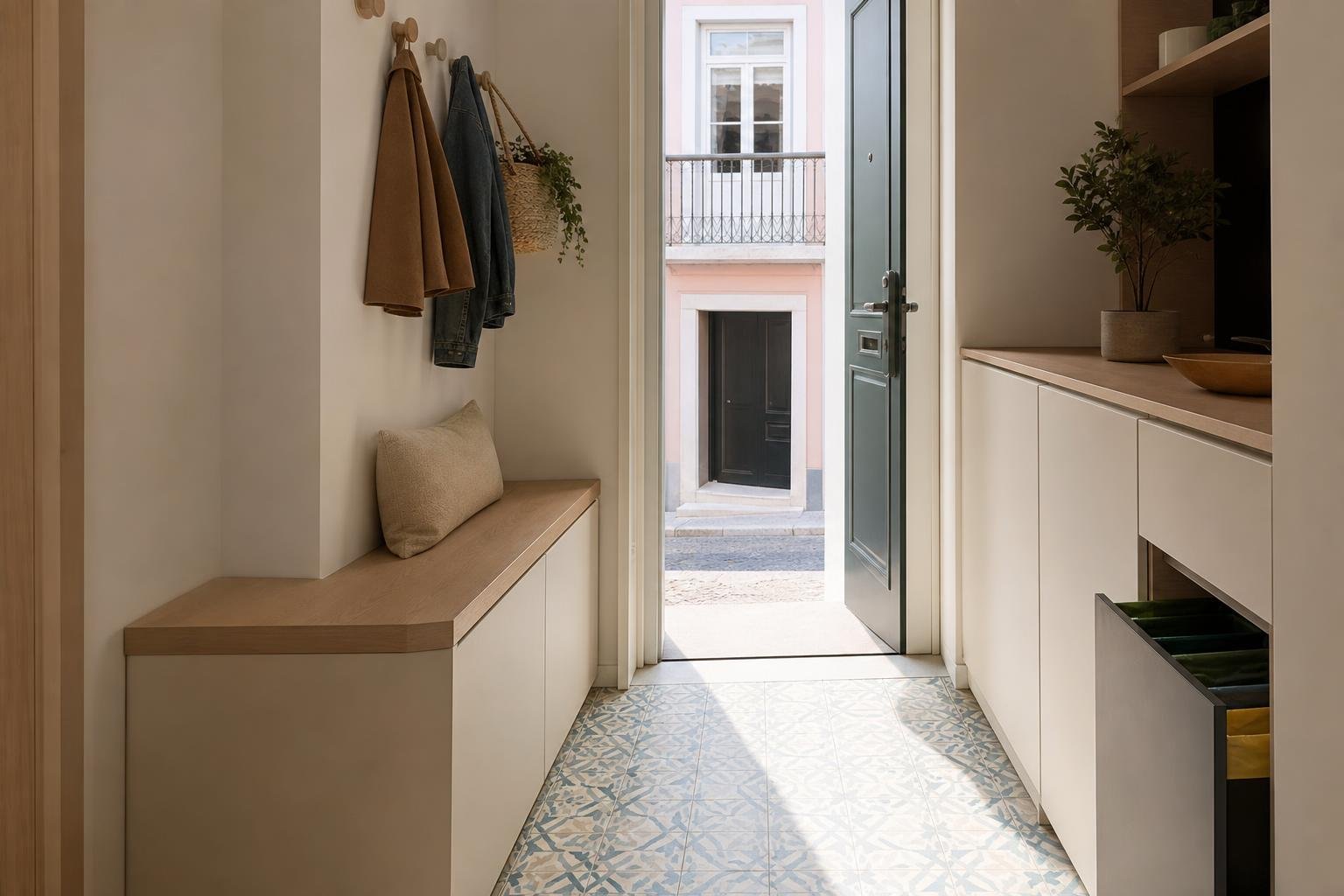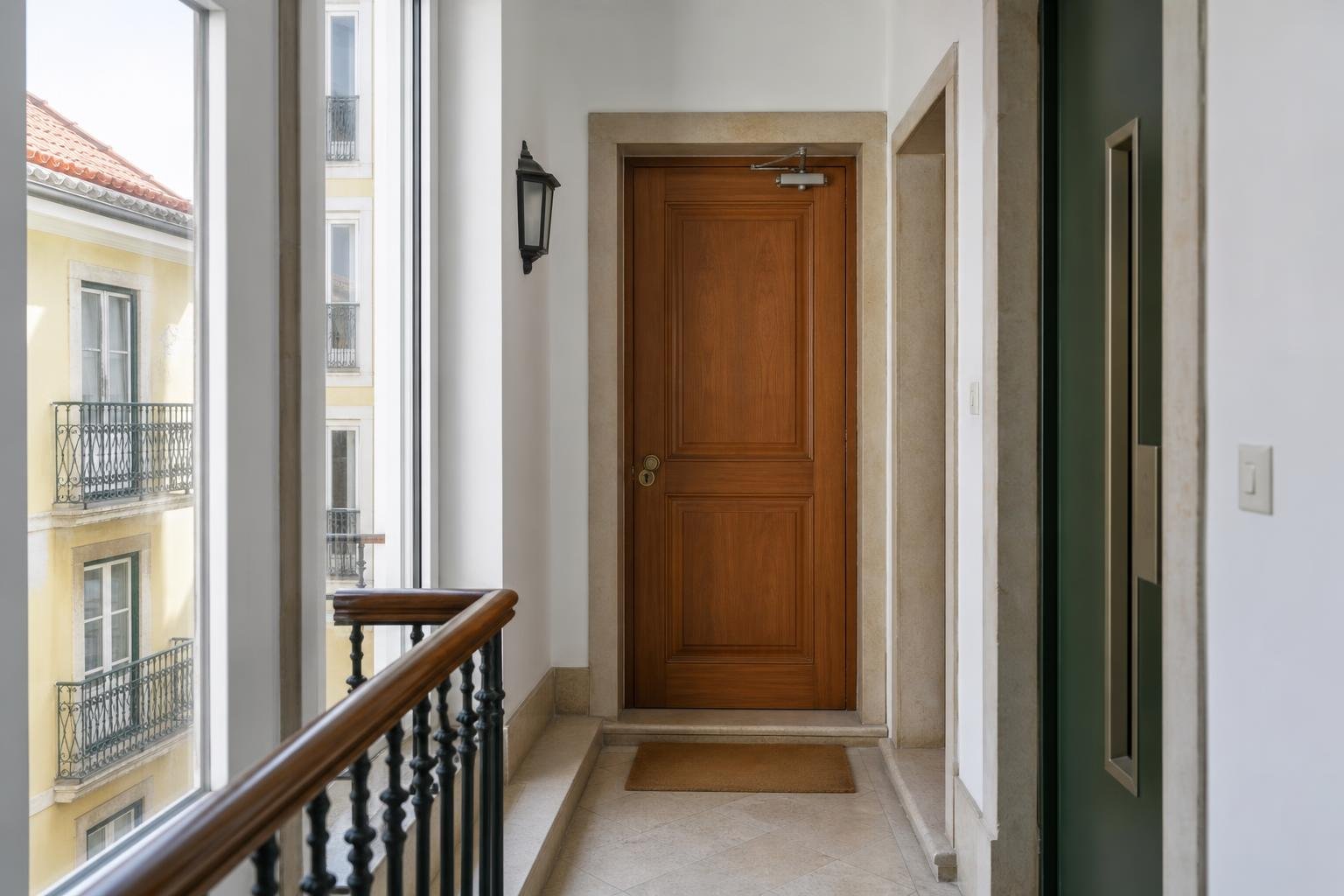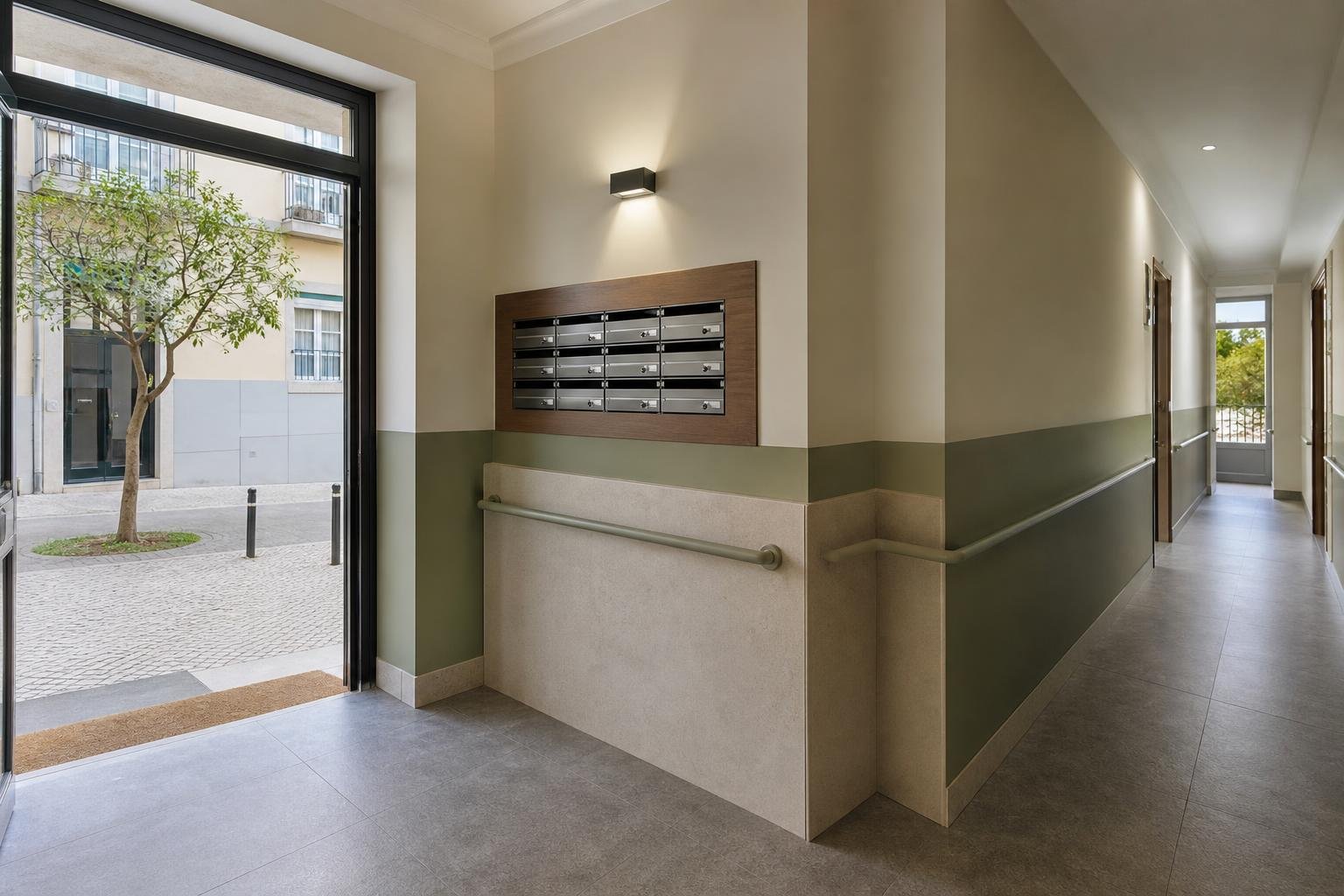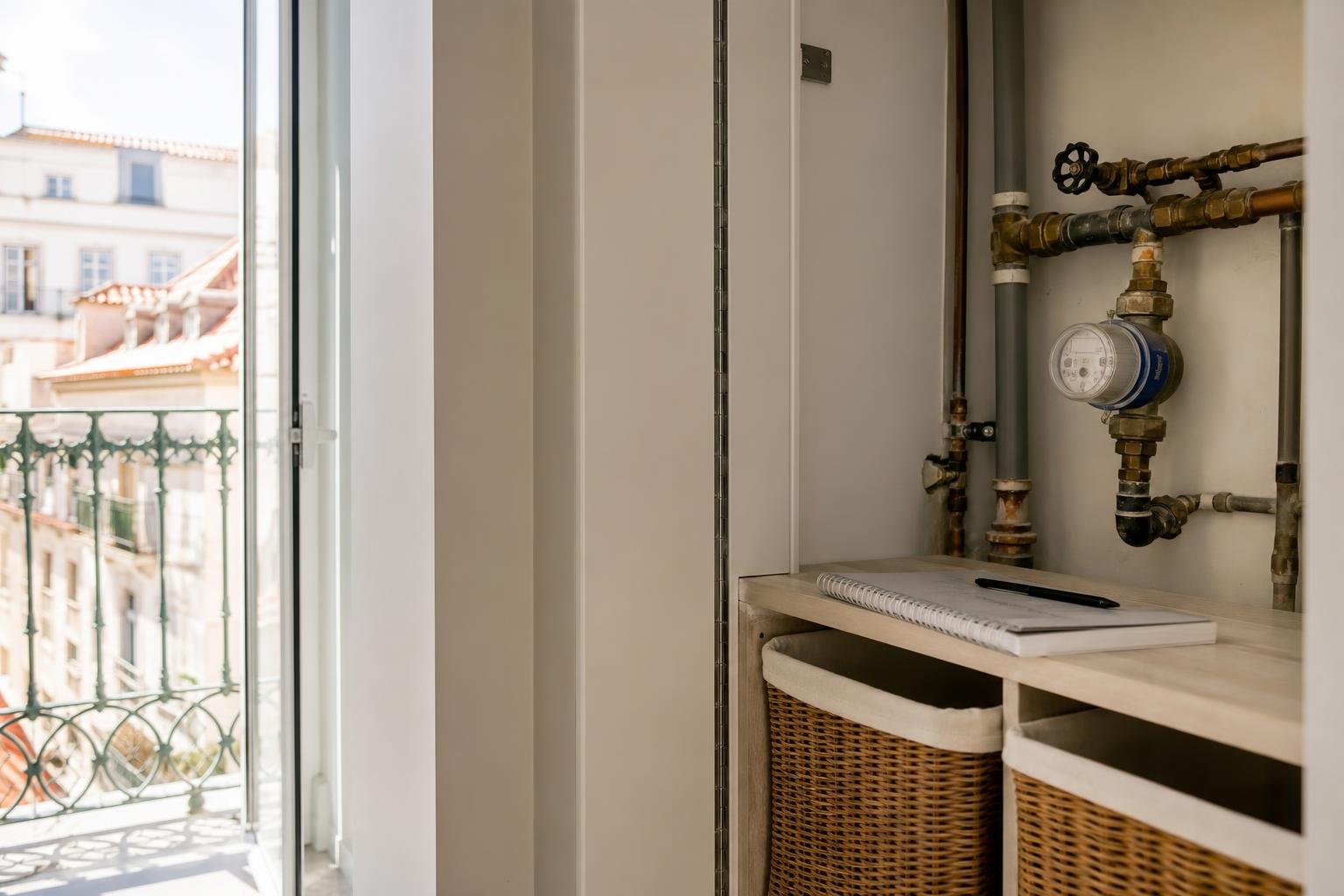
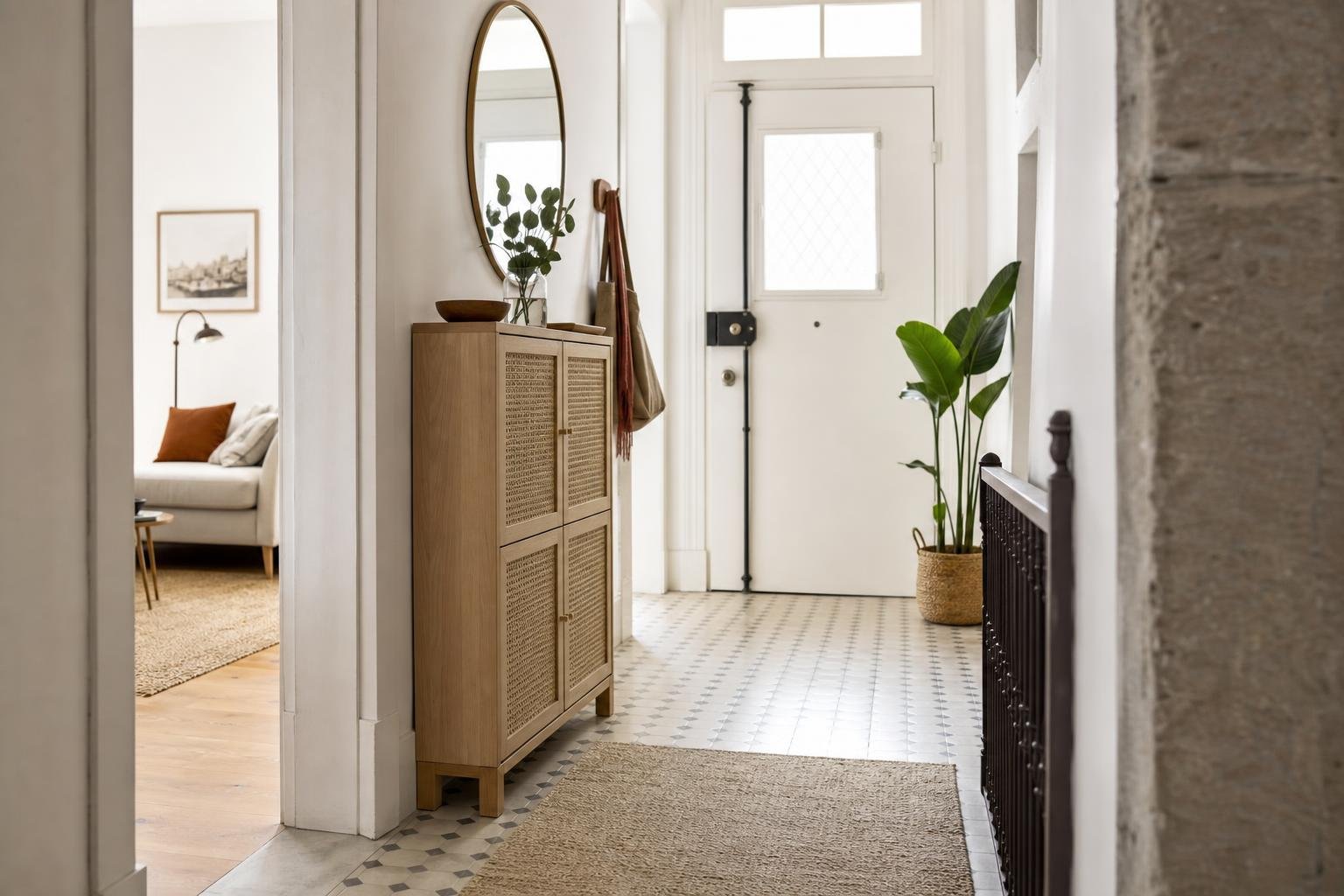
An apartment entrance has a demanding job. It receives people, bags, deliveries, umbrellas and, very often, shoes that have just been outside. When a shoe cabinet is selected only for maximum capacity, the usual consequences follow: stale smells, grit on the floor, doors hitting furniture and a hallway that stops working.
A useful solution does not need to turn the hall into a utility room. It needs to separate damp footwear from clean footwear, allow quick cleaning, respect the entrance door swing and preserve an obvious route through the home. Indoor air quality is affected by activities, materials and humidity inside the dwelling; the Portuguese health authority’s guidance on indoor air explains why a closed, damp cupboard deserves attention.
This guide sets out how to plan practical shoe storage for a one-bedroom flat, a family apartment or a narrow Lisbon entrance—without sacrificing circulation or creating a permanent source of odours.
Start with the door swing and walking route, not the cabinet
Before measuring the free wall, watch what actually happens on arrival: where keys are placed, where two people need to pass, which way the entrance door opens and whether there is access to an electrical panel, meter cupboard or storage-room door. A shoe unit that looks harmless when empty can become an obstacle when someone arrives with luggage or a pushchair.
Use masking tape on the floor to mark the proposed depth, then open the door repeatedly. Repeat the test while holding a shopping bag or moving a chair through the space. It quickly reveals whether the unit is taking over the turning area. In narrow hallways, choose shallow tilt-out compartments or vertical storage on a wall without doors. Do not extend a bench or cabinet into the entrance opening simply because it fits on the drawing.
If the renovation includes made-to-measure joinery, coordinate it with entry wardrobe planning. Coats, bags and shoes can form one coherent zone, but each item needs its own accessible place. Daily footwear should not require opening a tall cupboard intended for winter luggage.
Match the cabinet depth to the footwear you actually own
There is no single ideal dimension. Adult trainers, tall boots, children’s shoes and slippers all take up different volumes. An efficient cabinet therefore combines adjustable shelves with one or two taller bays, rather than repeating identical compartments from bottom to top.
- Keep washable, easy-access shelves for everyday footwear.
- Reserve a lower section for boots, wet shoes or footwear used for dog walks.
- Store occasional pairs in labelled boxes, but never seal damp footwear in cardboard boxes.
- Avoid shelves so tight that shoes must be stacked; this damages materials and makes cleaning and finding pairs harder.
In an older apartment, check the fixing as well. Uneven masonry, stucco finishes and lightweight partitions need fixings suited to the fully loaded weight of the unit. If you are unsure about the wall or a new partition, review the basics of plasterboard and its uses before drilling or hanging heavy modules.
Provide airflow without turning the cabinet into a grille
Shoes bring water, dust, organic matter and odours indoors. Closing them immediately inside an airtight unit concentrates the issue; adding strong fragrance only hides it. The better approach is to give air both time and a route. Consider perforated doors, discreet gaps at the top and bottom, fine metal mesh panels, or a back panel set slightly away from the wall where the cabinet design allows it.
Do not drill random holes through an external wall or connect shoe storage to extraction ducts. Those changes can introduce leaks, noise or disrupt the home’s ventilation. Portuguese technical rules for dwellings state that air should enter through principal rooms and be extracted through service rooms, with openings arranged to renew indoor air and avoid stagnant zones. For larger interventions, see the ventilation requirements published in the Diário da República.
In everyday terms, allow very wet footwear to dry on a ventilated tray outside the cabinet before putting it away. A shoe cabinet improves organisation; it does not replace whole-home ventilation.
Build a transition zone that can be cleaned quickly
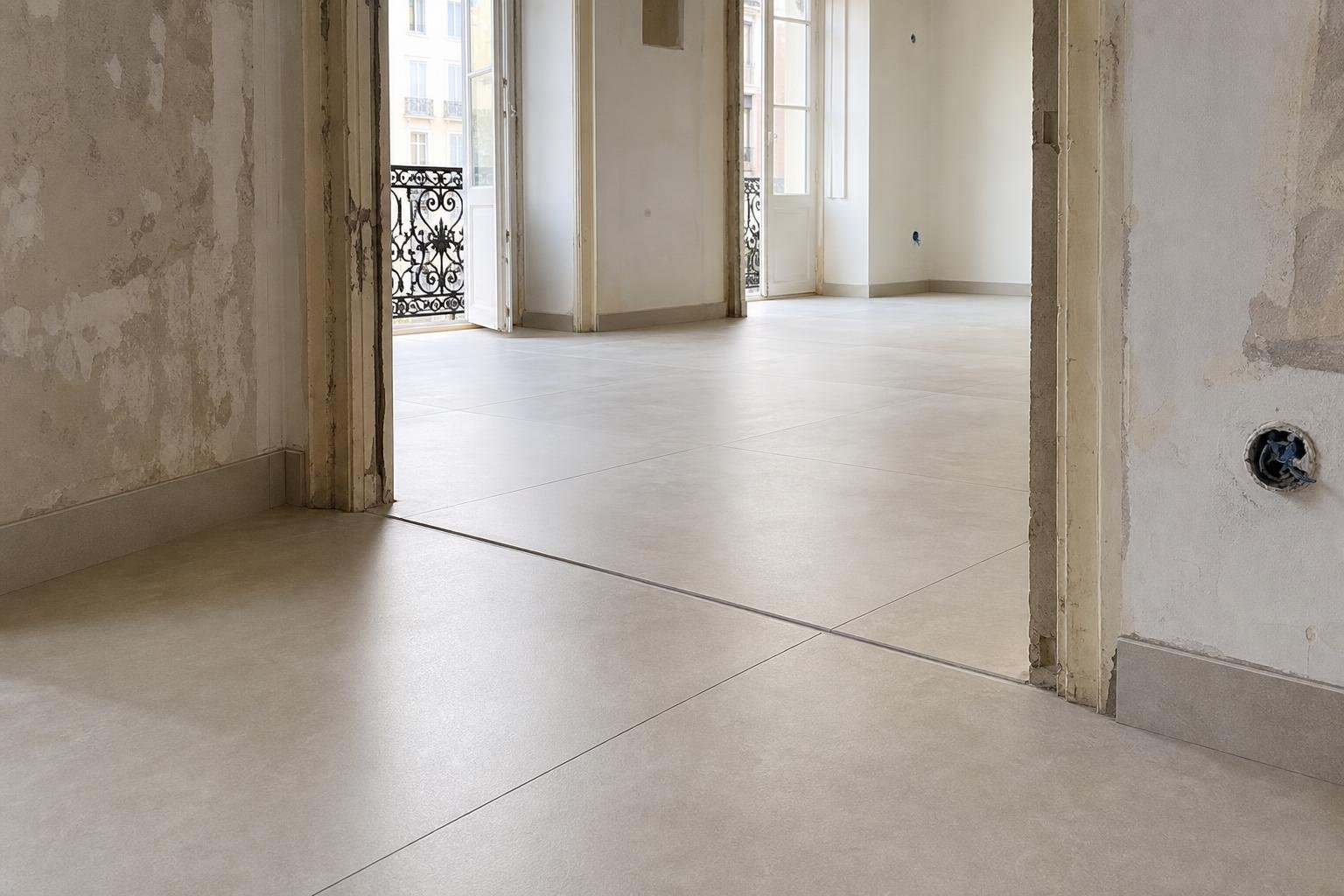
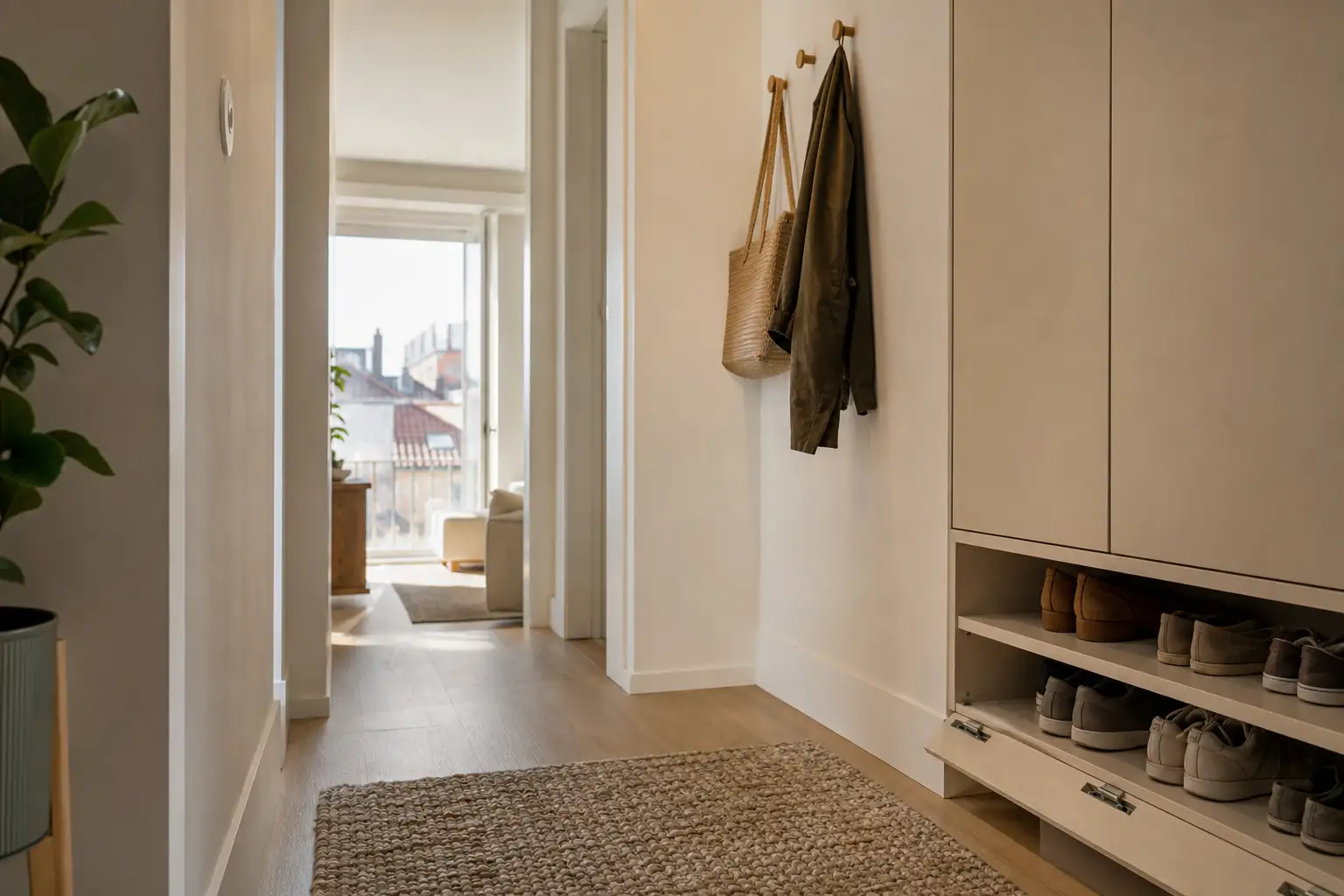
A functional entrance separates what comes from the street from what is already clean. Place a durable mat by the door, preferably with a non-slip backing, and a shallow washable tray for wet pairs. Where there are old timber floors or hydraulic tiles, avoid mats that hold water for days, and protect the finish from rough rubber or trays with abrasive edges.
Cleaning should take only minutes: vacuum or remove grit, wipe shelves with a damp cloth and wash the tray. Portugal’s health authority advises using a vacuum rather than a broom and cleaning dust with a damp cloth, while keeping equipment and installations clean. Read the DGS general recommendations for indoor air.
Do not store bleach, sprays or detergents inside the shoe cabinet, particularly in homes with children. If the entrance must also hold them, create a separate high, closed compartment and follow the principles in this guide to safe cleaning-product storage.
Organise footwear by frequency, not by how much you can fit
Shoe storage becomes chaotic when it is expected to hold every pair in the household. Treat it as a daily station, not an archive. Keep this week’s footwear close at hand; occasion shoes, specialist sports gear and out-of-season pairs can move to a ventilated wardrobe, dry storage room or clearly labelled boxes.
For families, allocate shelves or baskets by person. In a home with frequent visitors, keep two or three empty spots close to the door rather than forcing everyone to pile shoes in the corridor. In a studio or one-bedroom apartment, a slim storage bench can work if its lid does not trap moisture and its use does not obstruct the escape route.
Review the contents at the start of autumn and spring. Remove damaged pairs, wash insoles where the manufacturer allows it, and let everything dry completely before putting it back. That routine will reduce odours more effectively than any fragrance left inside the unit.
When shoe storage belongs in the renovation plan
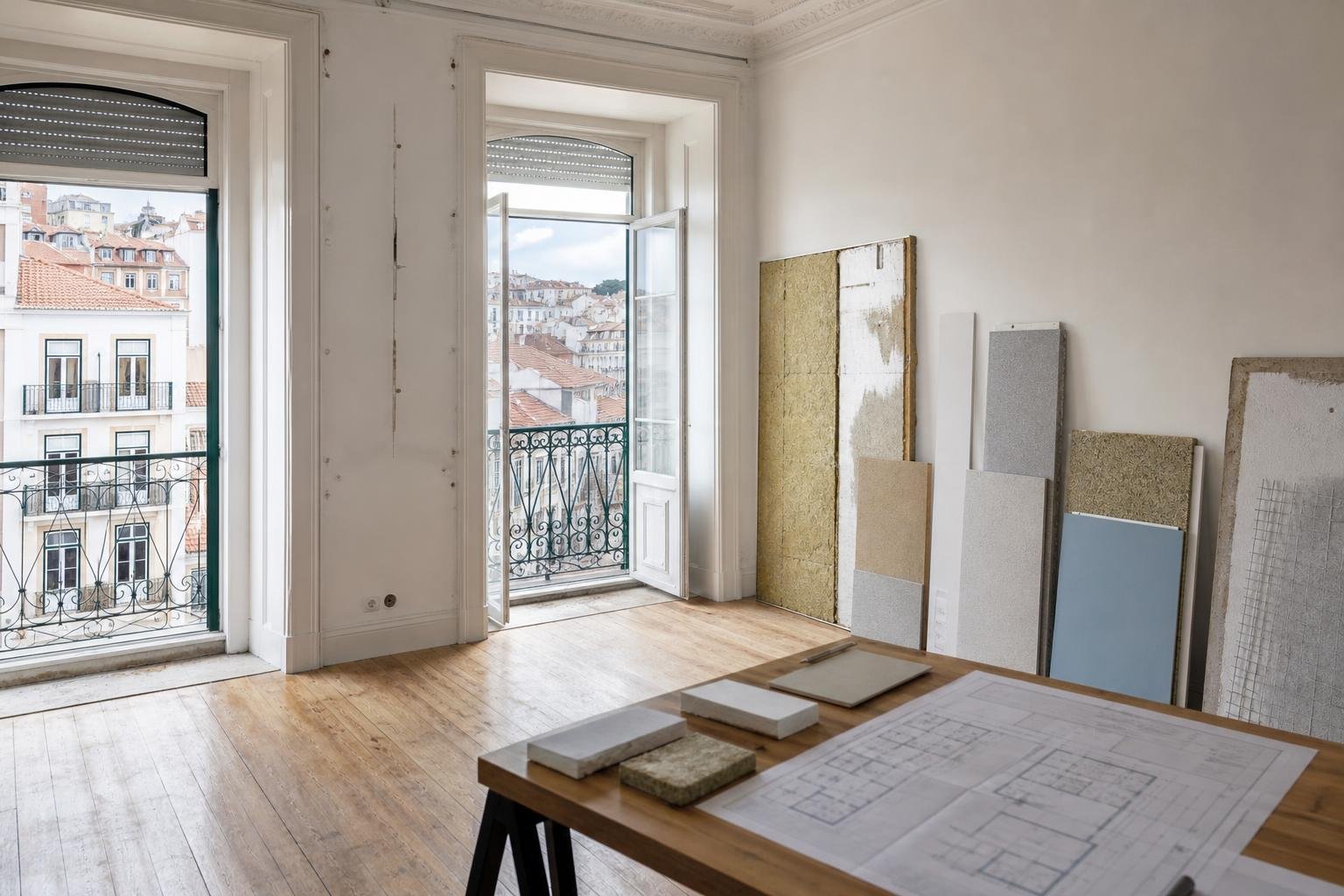
Sometimes buying a ready-made cabinet is not the answer. If the entrance has recurring damp, deteriorated skirting boards, a cold wall or a door that already clashes with the route through the home, begin with diagnosis. Do not conceal stains behind new furniture: inadequate ventilation, a leak or a thermal bridge will continue to affect finishes and indoor air.
During renovation, it can be worth allowing for a cordless-vacuum outlet, sensor lighting, skirting resistant to regular cleaning and an umbrella niche with a removable drip tray. Custom furniture can also work around service boxes without preventing maintenance access. The aim is not to fill every centimetre; it is to allow maintenance, doors and people to move easily.
If the hall is linked to changes in walls, flooring or electrical work, define the shoe-storage position during design. Moving it after finishes are complete often means unnecessary holes, visible patching and rushed compromises.
Reworking your entrance or planning a broader renovation? Obra Lisboa can help coordinate storage, materials, circulation and construction so that small everyday details work properly together.
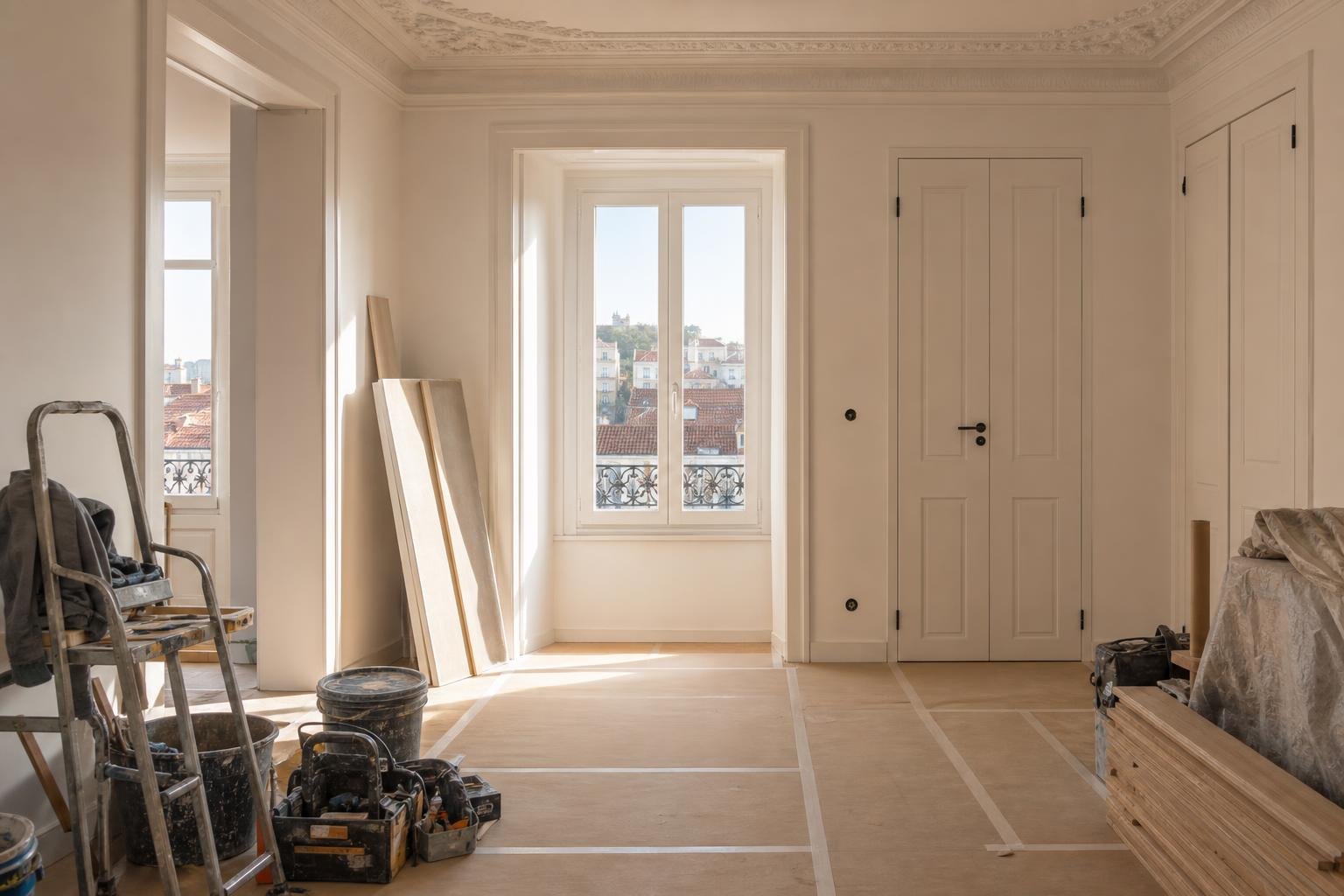
AI-generated editorial image; it does not depict an Obra Lisboa project.

Obra Lisboa