
In an apartment, cleaning products often end up beneath the sink, beside food in the pantry or scattered across an enclosed balcony. It is an understandable shortcut: bottles are awkward, supplies are used in several rooms and storage is limited. Yet improvised storage makes cleaning harder, increases the chance of spills and can put incompatible products too close together.
The useful answer is not more storage boxes. It is a defined domestic utility point: a closed, adult-accessible place, separate from food, where every bottle stands upright, remains visible and stays in its original container. Portugal’s Directorate-General of Health advises keeping household chemicals in a closed cupboard, out of children’s reach and away from food; it also warns against using drink or food containers for them. Read the DGS guidance on household chemical safety before reorganising your cupboard.
This guide explains how to choose the location, plan the cabinet interior and set straightforward rules for daily use. In compact Lisbon homes, where kitchens and bathrooms are often tight, a well-planned cleaning cupboard can free up working space without compromising safety.
First, sort what you actually need to store
Before choosing a cupboard, bring everything together on a protected surface and group it by purpose: everyday cleaning, laundry, bathroom, glass, floors, occasional maintenance and tools. This often reveals duplicate half-used bottles, outdated products and accessories that do not need to be stored with chemicals.
Do not treat every product as interchangeable. Bleach, drain unblockers, acidic descalers, solvents, aerosols and pest-control products need a more controlled area than a neutral cleaner. The DGS states that chemical products should not be mixed and specifically warns against combining bleach or hypochlorite products with acids or ammonia because toxic gases can form. Keep labels readable and follow the DGS household-safety advice.
- Keep a shelf for frequent use: all-purpose cleaner, cloths and gloves.
- Place stronger products in a low, rigid, wipe-clean tray inside the cupboard.
- Store refills behind opened containers rather than around the home.
- Remove unlabelled, damaged or impossible-to-identify containers.
This review is also a way to curb repeat purchases. A cupboard with fewer, well-chosen products is safer and easier to maintain.
Choose the location by risk, not simply by spare space
The best location is near a cleaning area, but it does not have to be in the kitchen. A hallway cupboard, a laundry column, an enclosed balcony protected from direct sun or a utility module near the entrance can all work. What matters is keeping products away from food, heat sources and areas freely accessible to children.
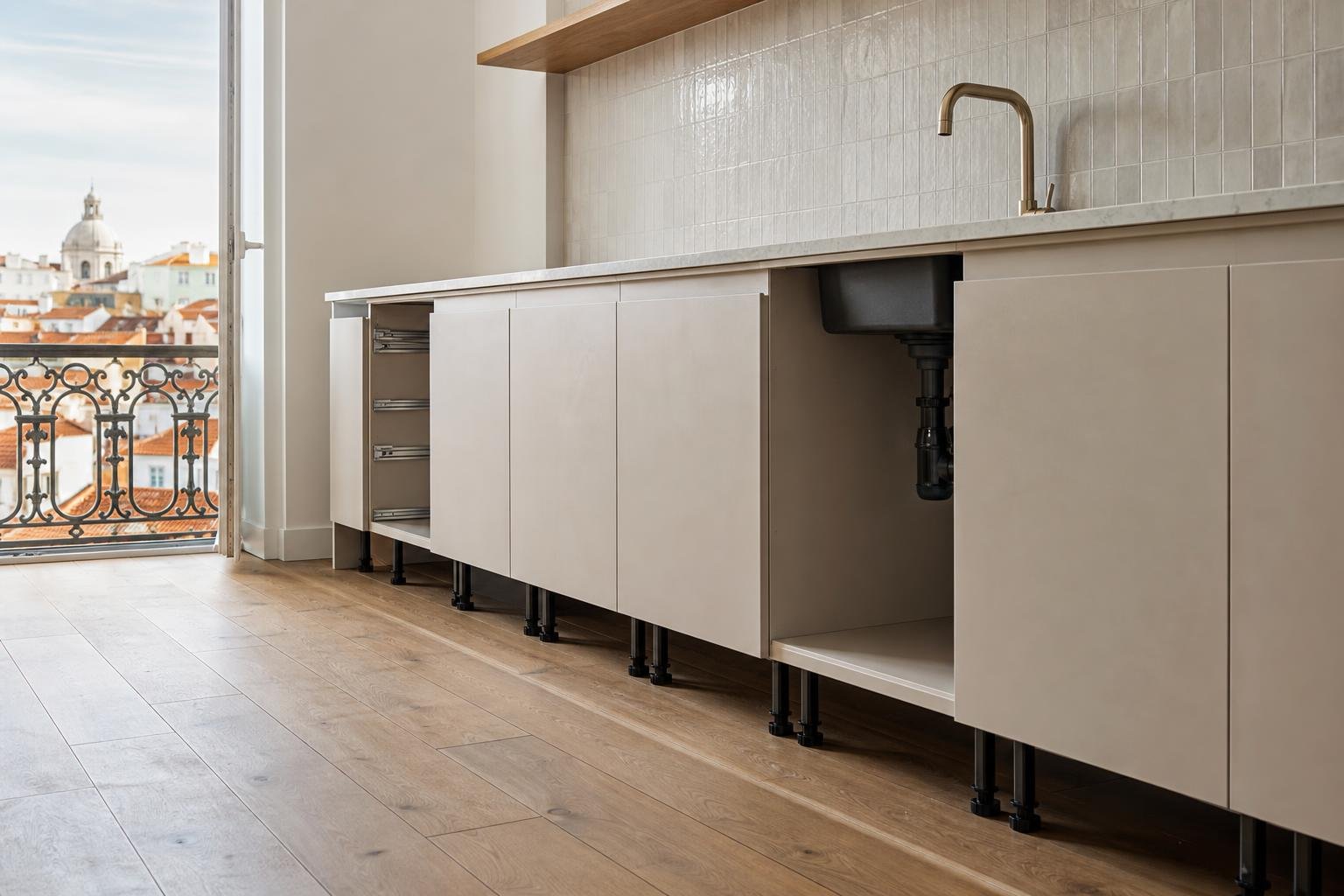
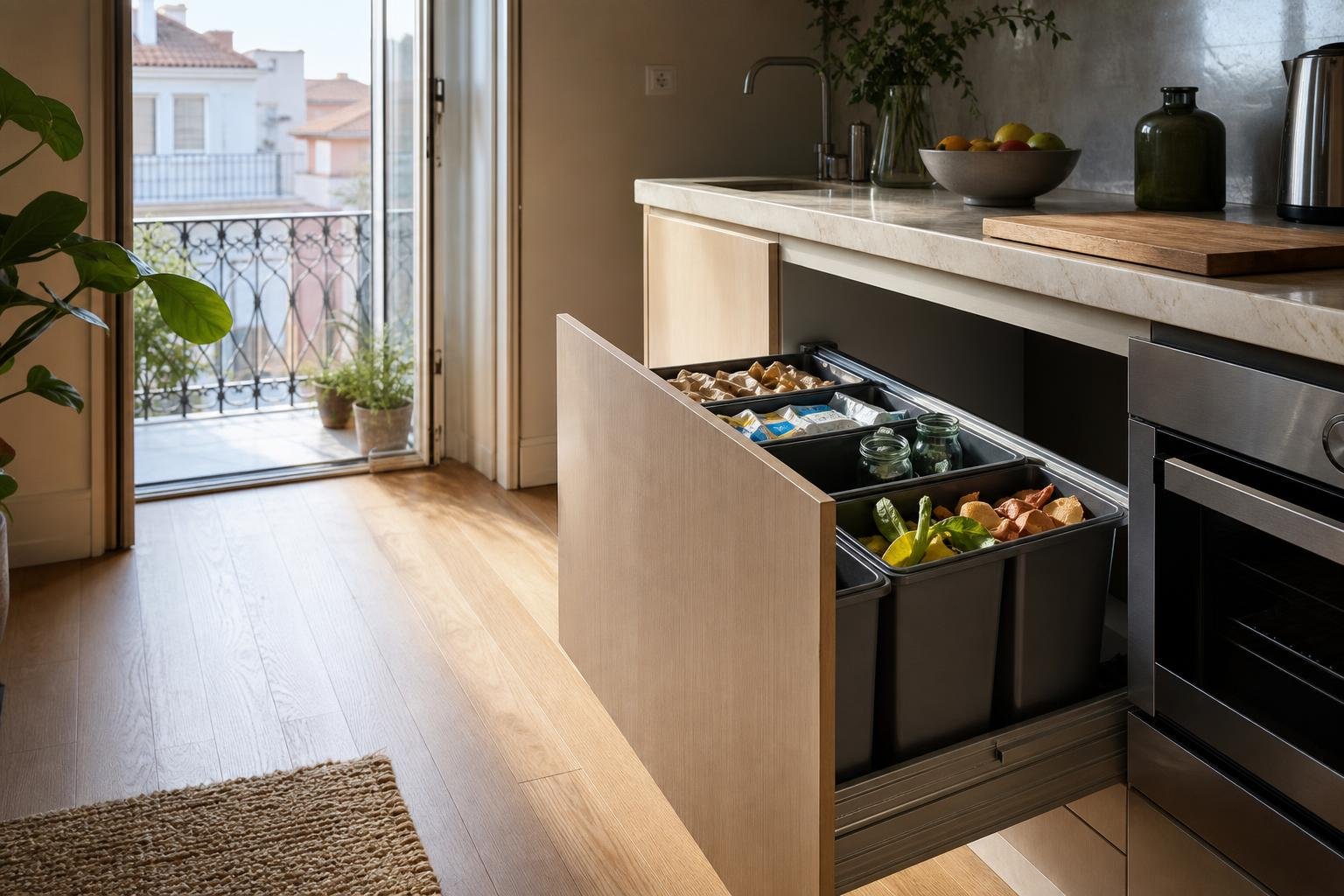
The cabinet under the kitchen sink is convenient, but it only works when it is not crowded with pipework, bins, dishwasher products and damp. A small leak or persistent condensation can damage cardboard, labels and the cabinet itself. If it is your only option, use washable containment trays, keep bottles clear of plumbing connections and preserve access for maintenance. For a closer look at this often-overlooked zone, read our guide to under-sink cabinet ventilation.
Also avoid cupboards above the hob, beside an oven, on balconies exposed to strong heat or inside wardrobes with clothing. High temperatures, moisture and stagnant air are poor storage conditions for household containers. A cool, dry internal cabinet is usually the more reliable choice.
Ventilate the home, not the cupboard into the kitchen
Ventilation does not mean leaving a chemical cupboard permanently open. It means reducing the build-up of odours and vapours in the apartment while dealing with any moisture affecting the storage area. The DGS notes that cleaning activities can worsen indoor air quality and recommends airing the home for at least ten minutes a day, including while cleaning. See the DGS general recommendations for indoor air.
In practice, open windows on opposite sides of the home when using strongly scented products, use existing extraction in the bathroom or kitchen, and close containers properly before returning them to storage. If the cupboard is in a laundry area or enclosed balcony, check that the room does not remain damp after clothes are dried indoors. The room’s ventilation should be addressed through the building or room itself; improvised holes between a cupboard and the kitchen can transfer odours into a food-preparation area.
A lasting chemical smell is not a reason to spray air freshener inside the cabinet. First check lids, spills, damp cloths, nearby drains and the room’s ventilation. Chemicals are among the sources that can affect indoor air quality, as explained on the DGS indoor-air information page.
Plan the cupboard interior for visibility, reach and cleaning
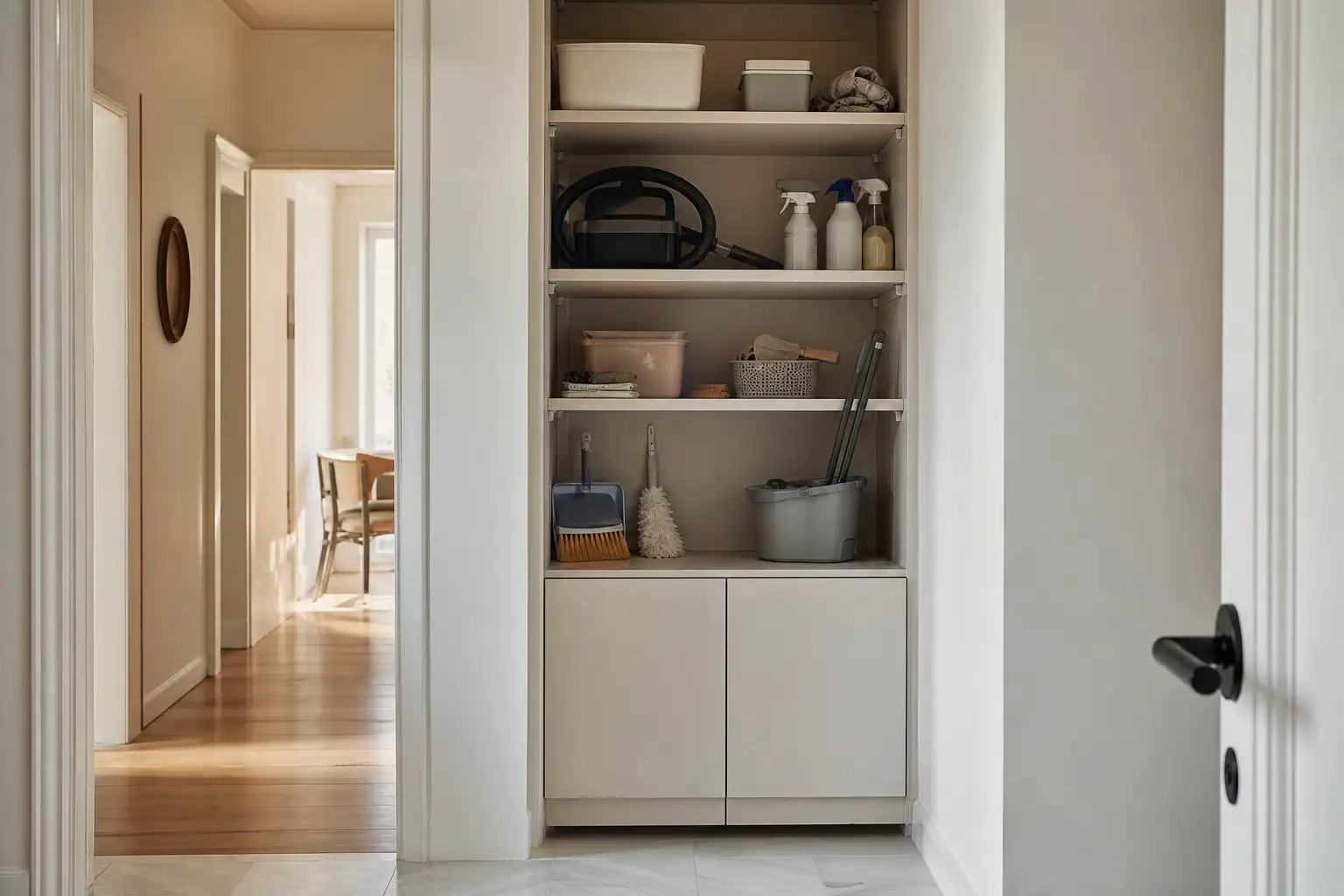
A deep cabinet with fixed shelves quickly becomes a pile of bottles. Start with the height of your tallest containers and allow enough room to remove them without knocking over the rest. Rather than filling the back of the cupboard, create clear levels.
- At the bottom: heavy bottles, buckets and larger containers, always upright.
- In the middle: regularly used products in open baskets or lipped trays.
- At the top: dry cloths, spare gloves and light accessories; never products that could fall when the door opens.
- On the door: only light brushes or cloths, where the hinges and internal clearance allow it.
Choose wipe-clean surfaces: properly edged melamine, compact laminate, painted metal or removable plastic boxes. Avoid lining shelves with fabric or cardboard, which can hide small leaks and absorb moisture. A plastic tray beneath liquid bottles makes a spill easier to deal with and protects the cabinet finish.
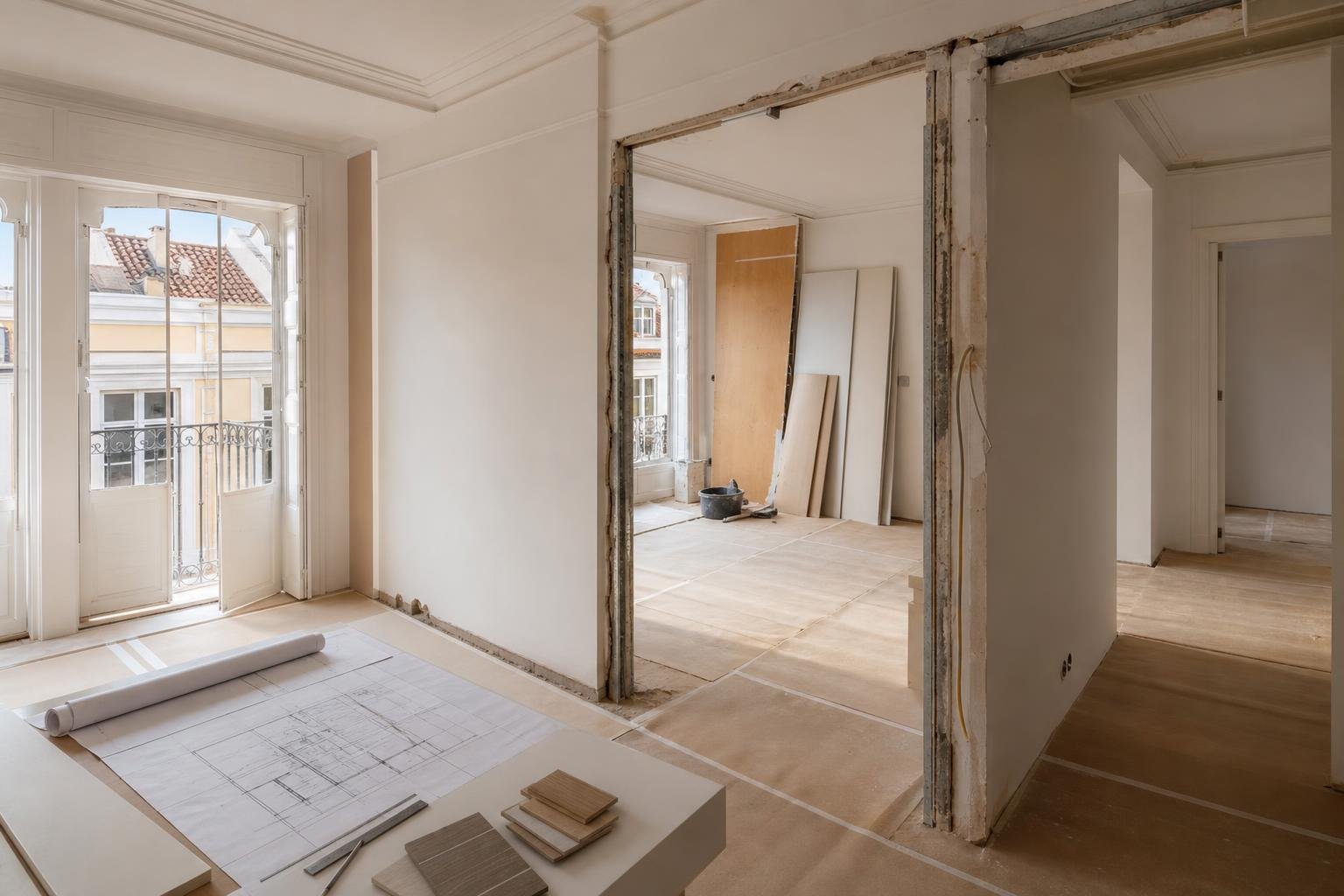
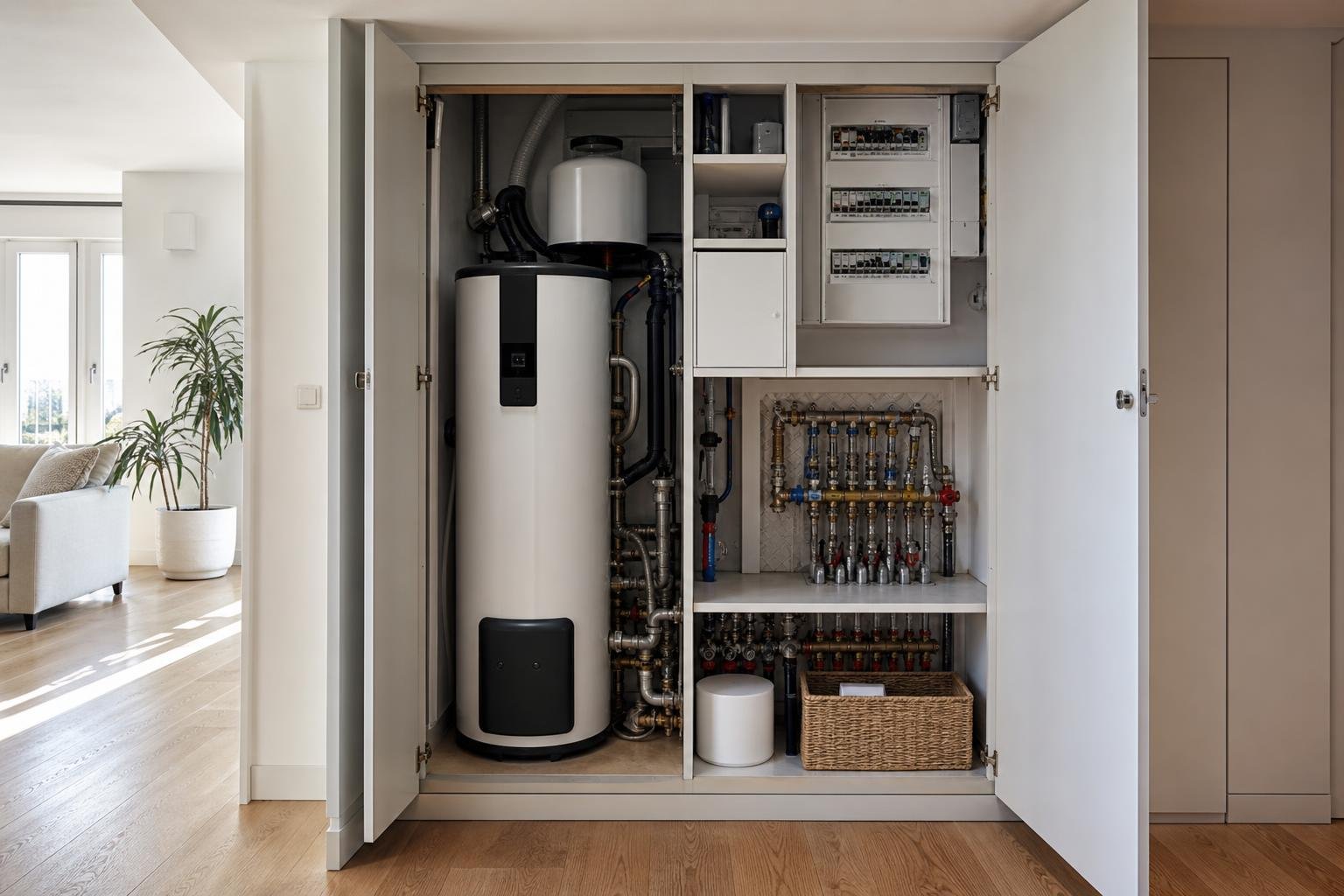
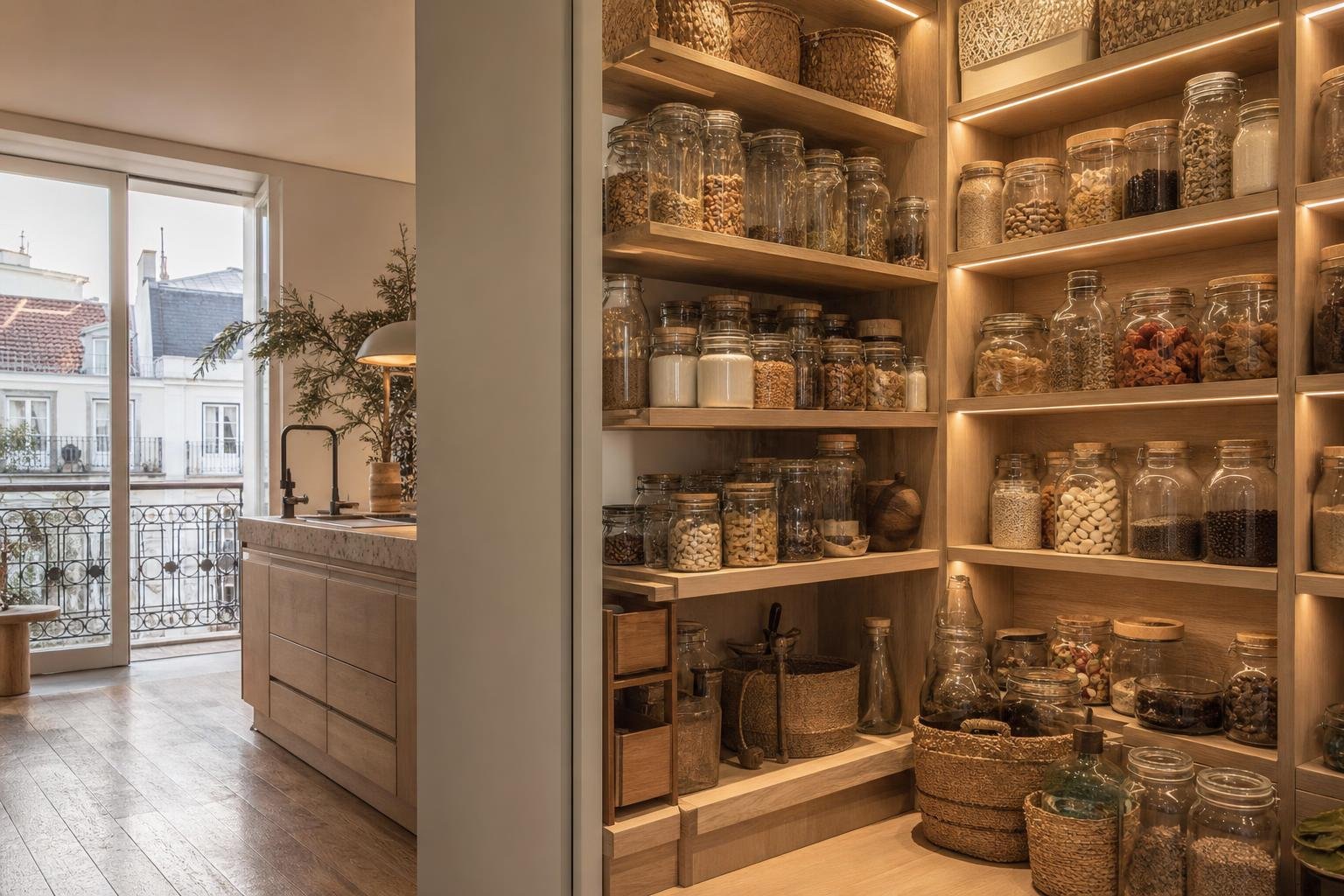
When renovating, it is worth including this utility point in the overall layout, just as you would plan a pantry or laundry space. Storage works best when it is considered before walls are closed and furniture is installed. Our article on technical utility cupboards in apartments offers related planning principles.
Locks, access and rules for children, pets and guests
A simple lock may matter more than an elaborate cabinet. If young children or pets live in the home, choose a door with a high latch, childproof catch or a two-step opening system. Do not rely on shelf height alone: a chair, stool or open door can quickly change what is reachable.
Keep products in their original packaging, with lids and labels intact. Do not transfer cleaners to decorative jars, water bottles or food containers. It is also sensible not to leave spray bottles on worktops after cleaning. Any adult in the home should be able to identify the contents, read the instructions and put the product away without guesswork.
Set a clear household rule: cleaning products are not lent out without explaining what they are; they are never mixed in the same bucket; and they are not left within reach during cleaning when children or pets are nearby. This reduces risk without turning everyday life into a laboratory procedure.
A realistic approach for studios, one-bedroom homes and flats without a laundry room
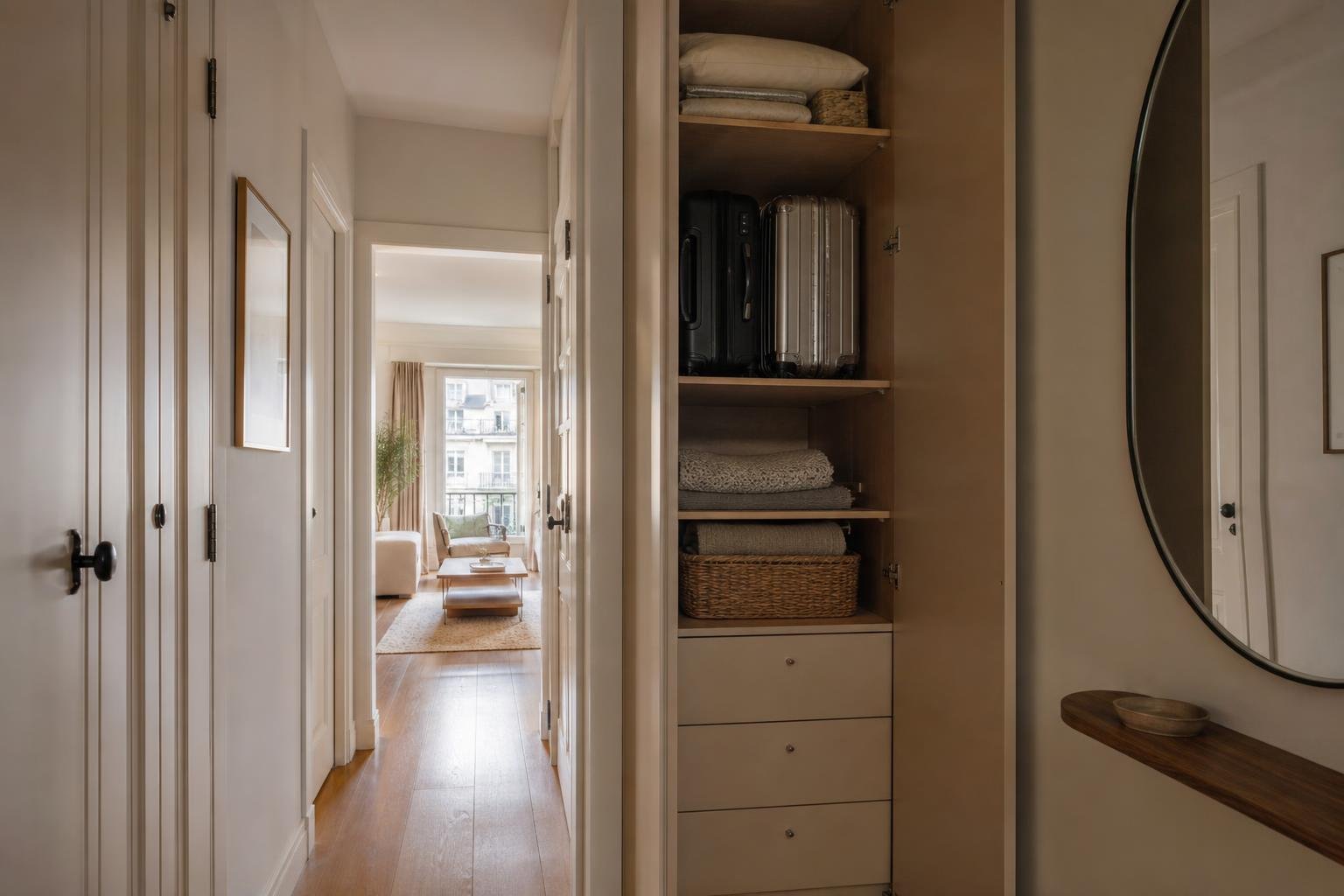
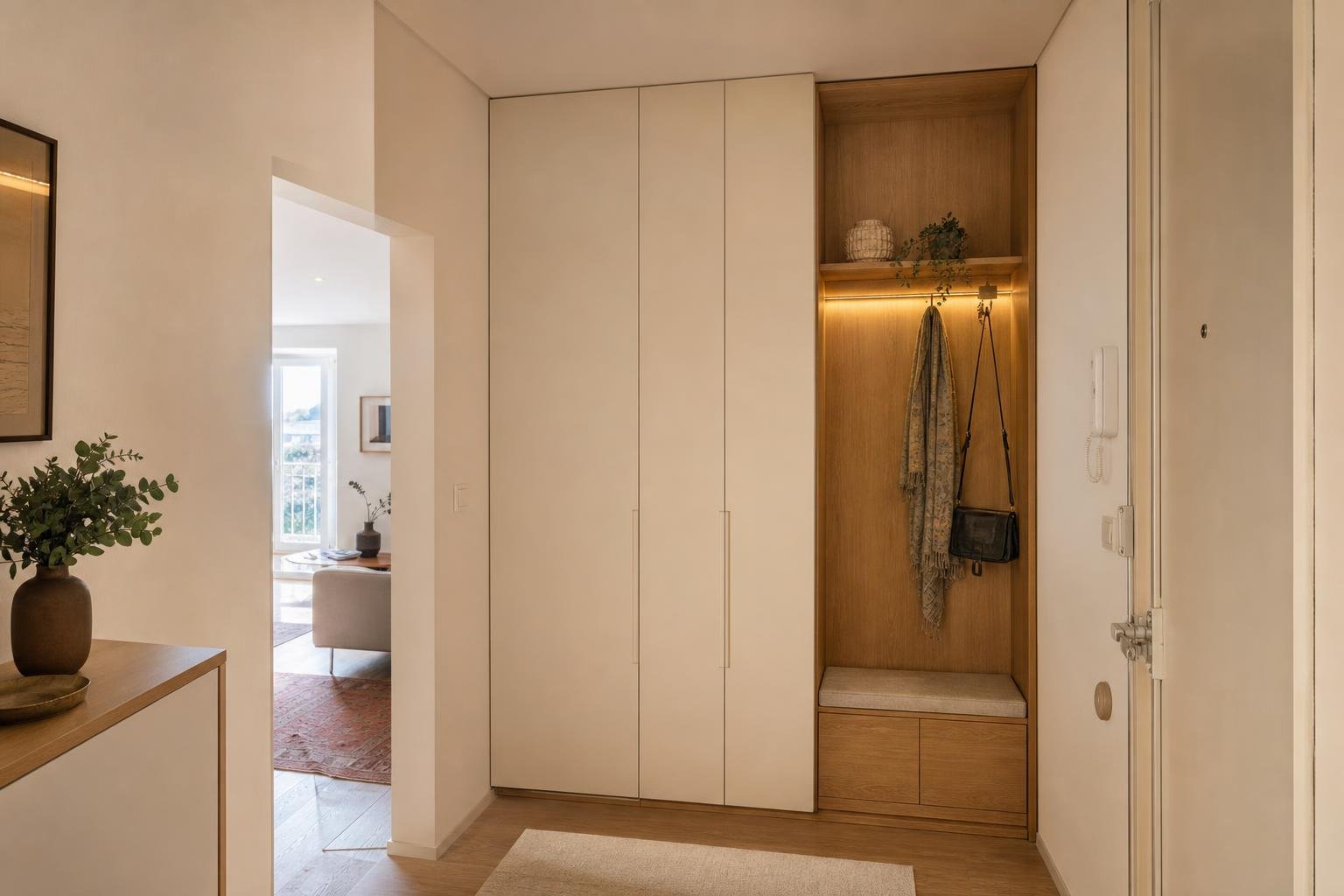
In a studio or one-bedroom apartment, a tall, narrow hallway cabinet can solve most of the problem. Look for enough depth for standard bottles, but not so much that containers must be stacked in two rows. An opaque door keeps the room calm; three or four adjustable shelves allow the cabinet to adapt to the products you already use.
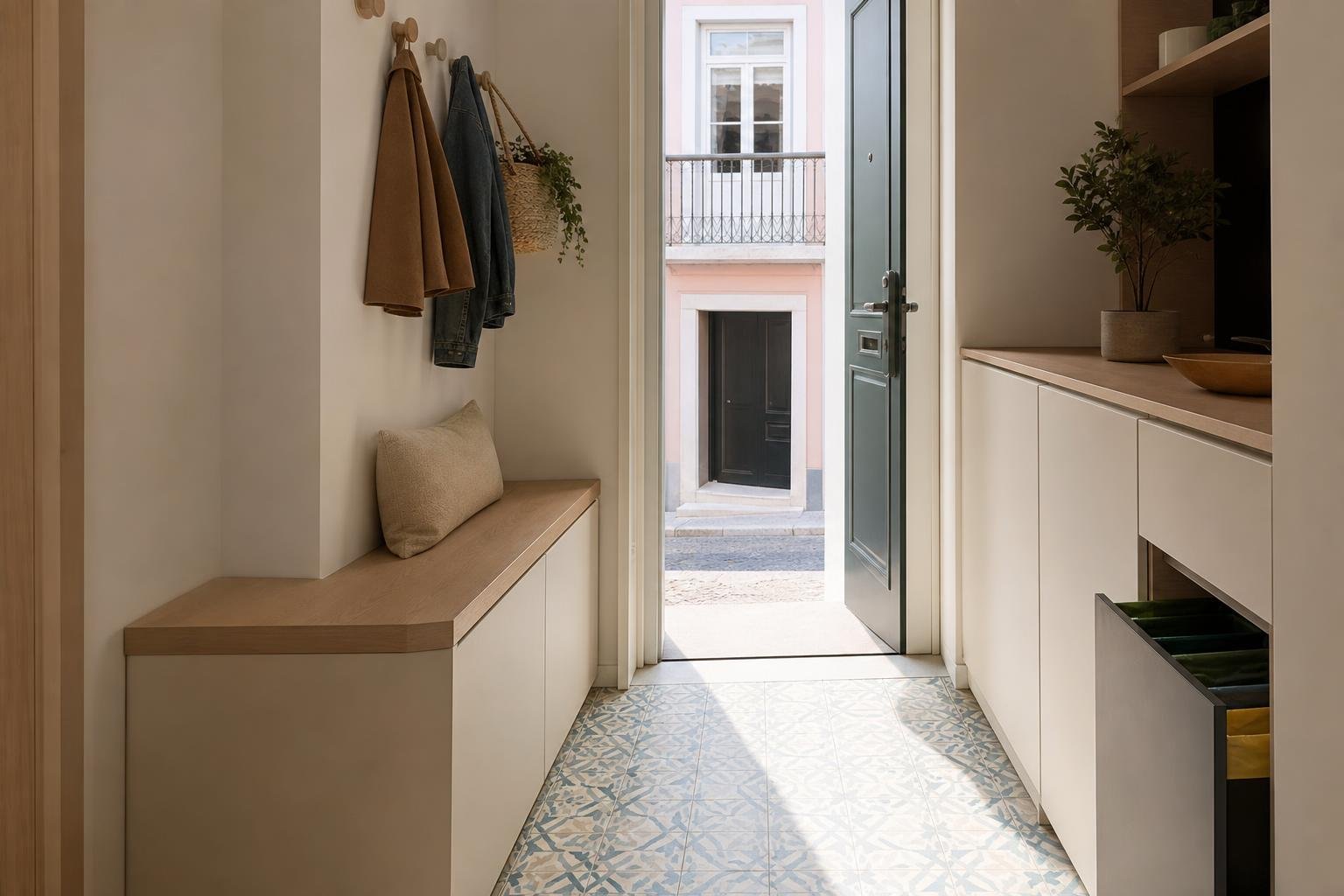
Another option is to split an entrance cupboard: a closed lower section for cleaning products and an upper section for coats or household linen. If you use a module on an enclosed balcony, first make sure the area stays dry, does not receive excessive direct sun and is not made humid by laundry drying. A trolley can be useful for light, immediate-use supplies, but it is not a substitute for closed storage for household chemicals.
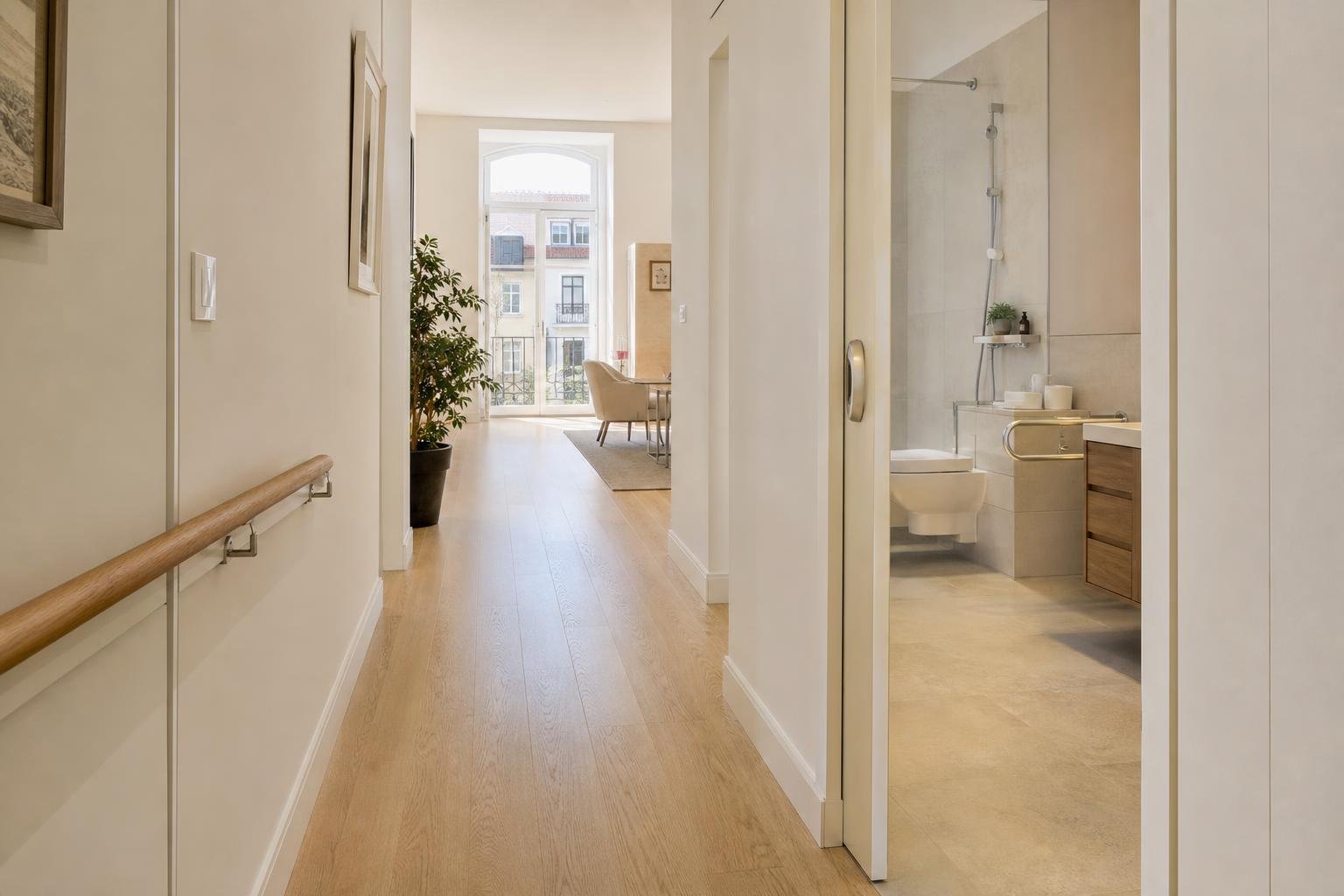
When planning a renovation, ask for an easy-opening door, nearby lighting and an electrical outlet only where it serves suitable equipment. The goal is not simply to hide supplies. It is to make every item easy to clean around, check and return to its place in minutes.
Planning a kitchen, laundry space or entrance storage area? Obra Lisboa can help incorporate useful storage, maintenance access and appropriate finishes into a renovation plan.
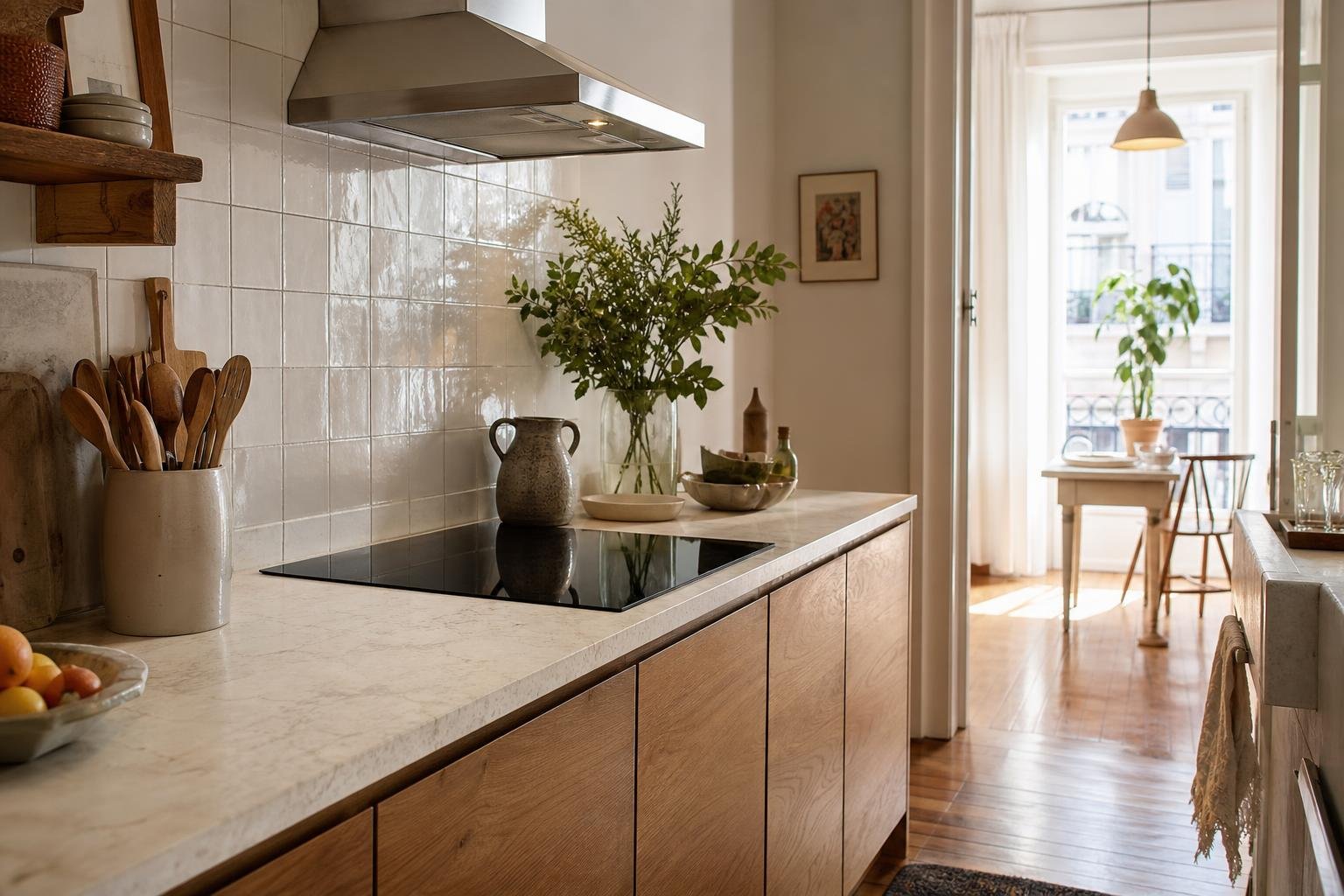
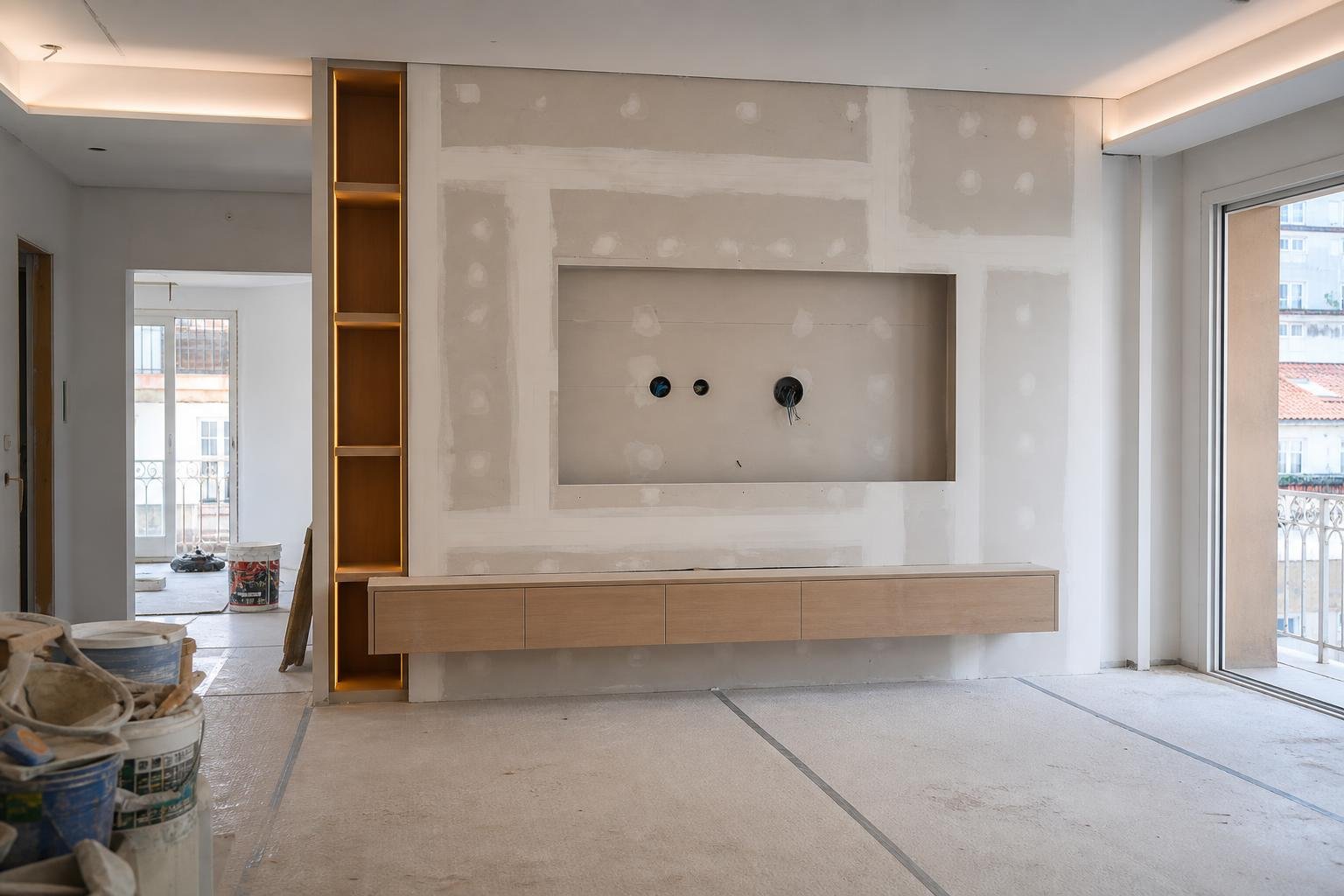
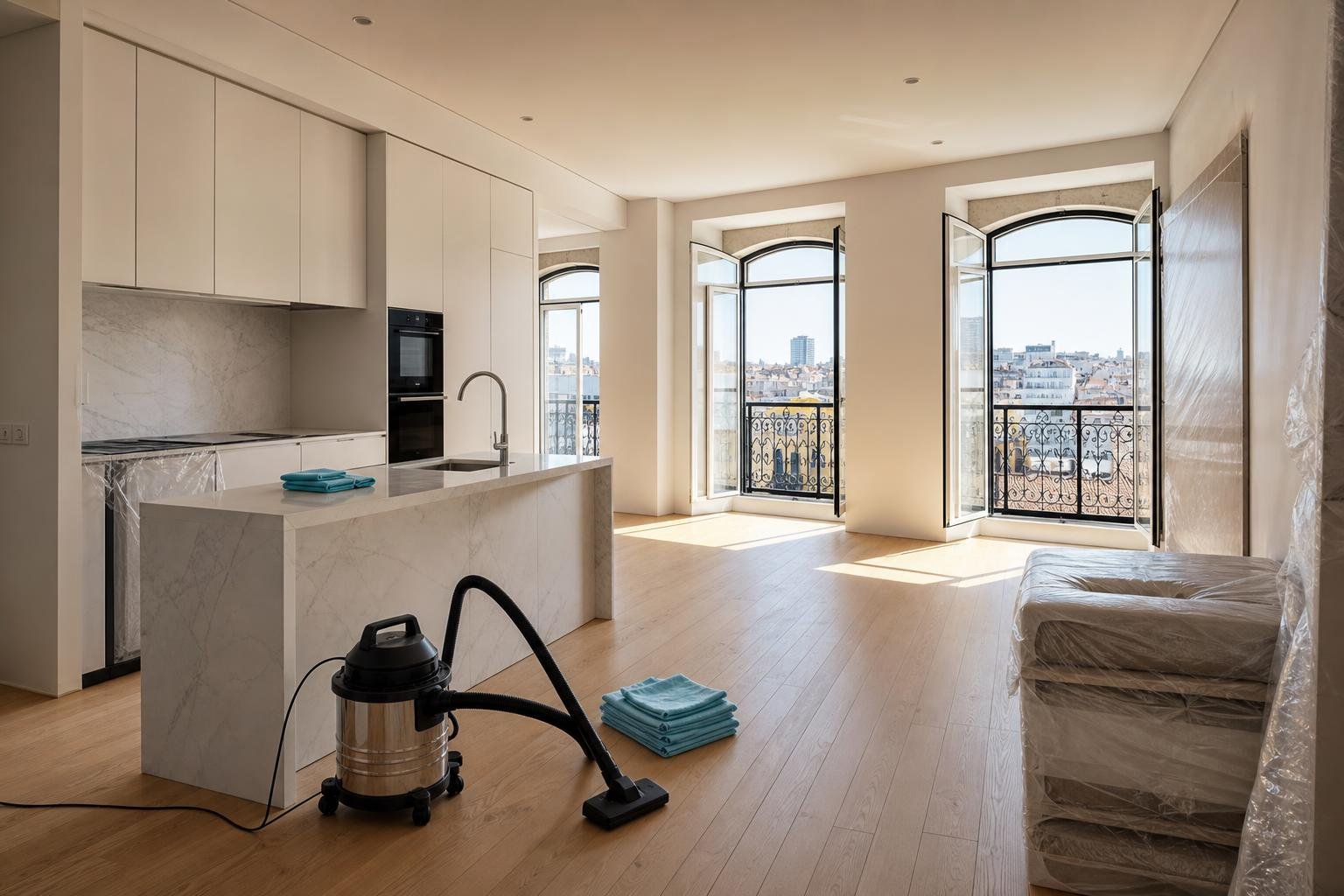
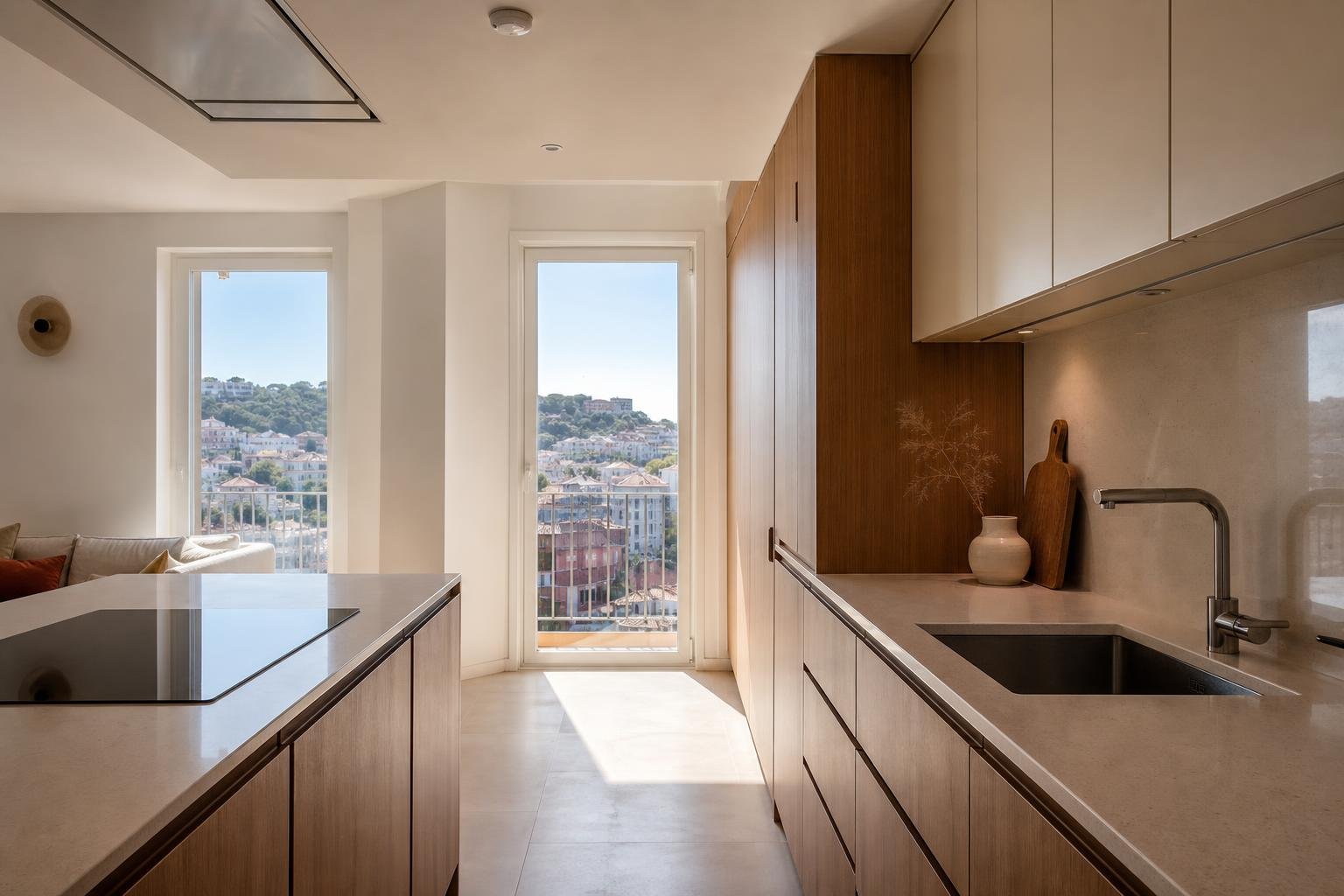
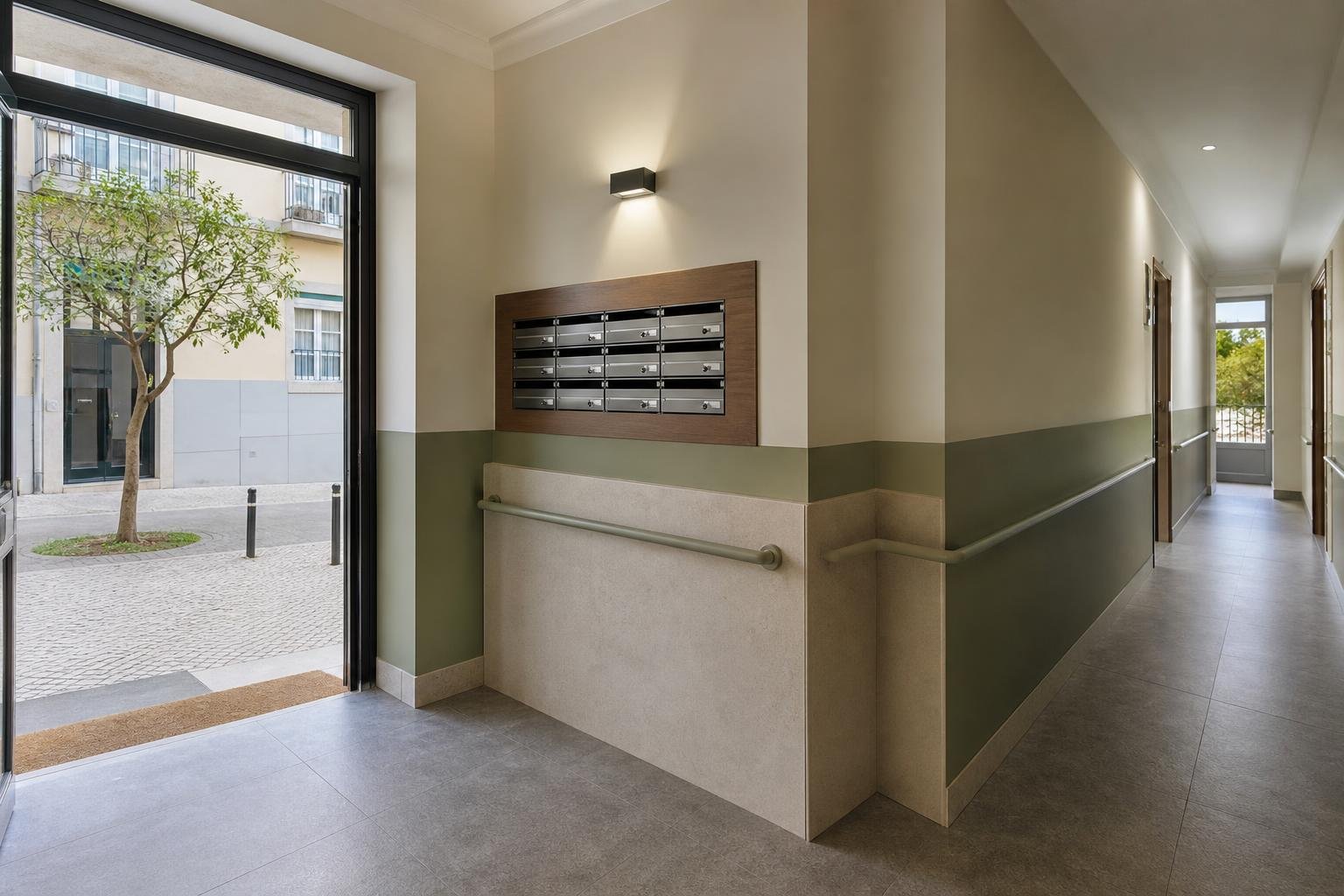
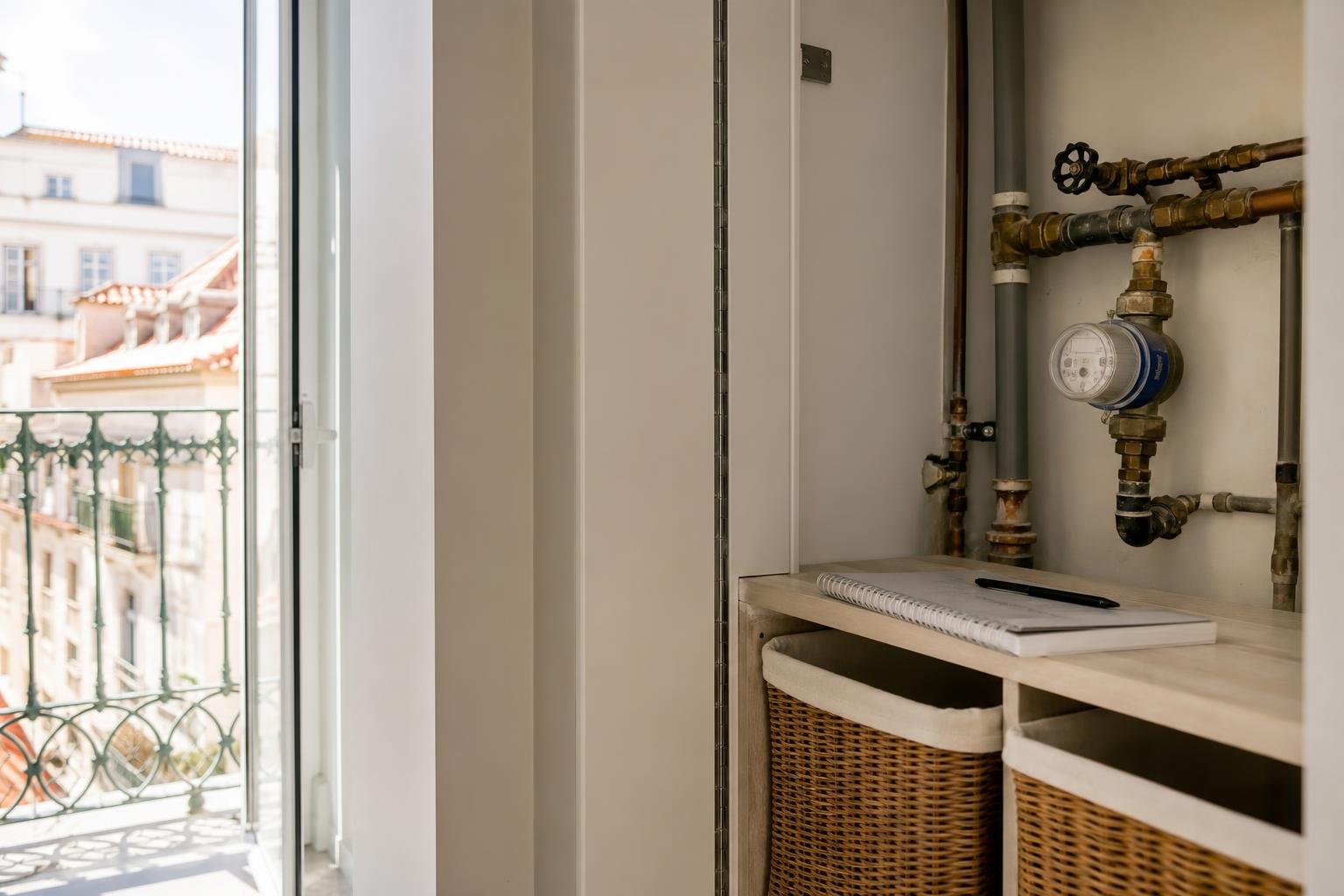
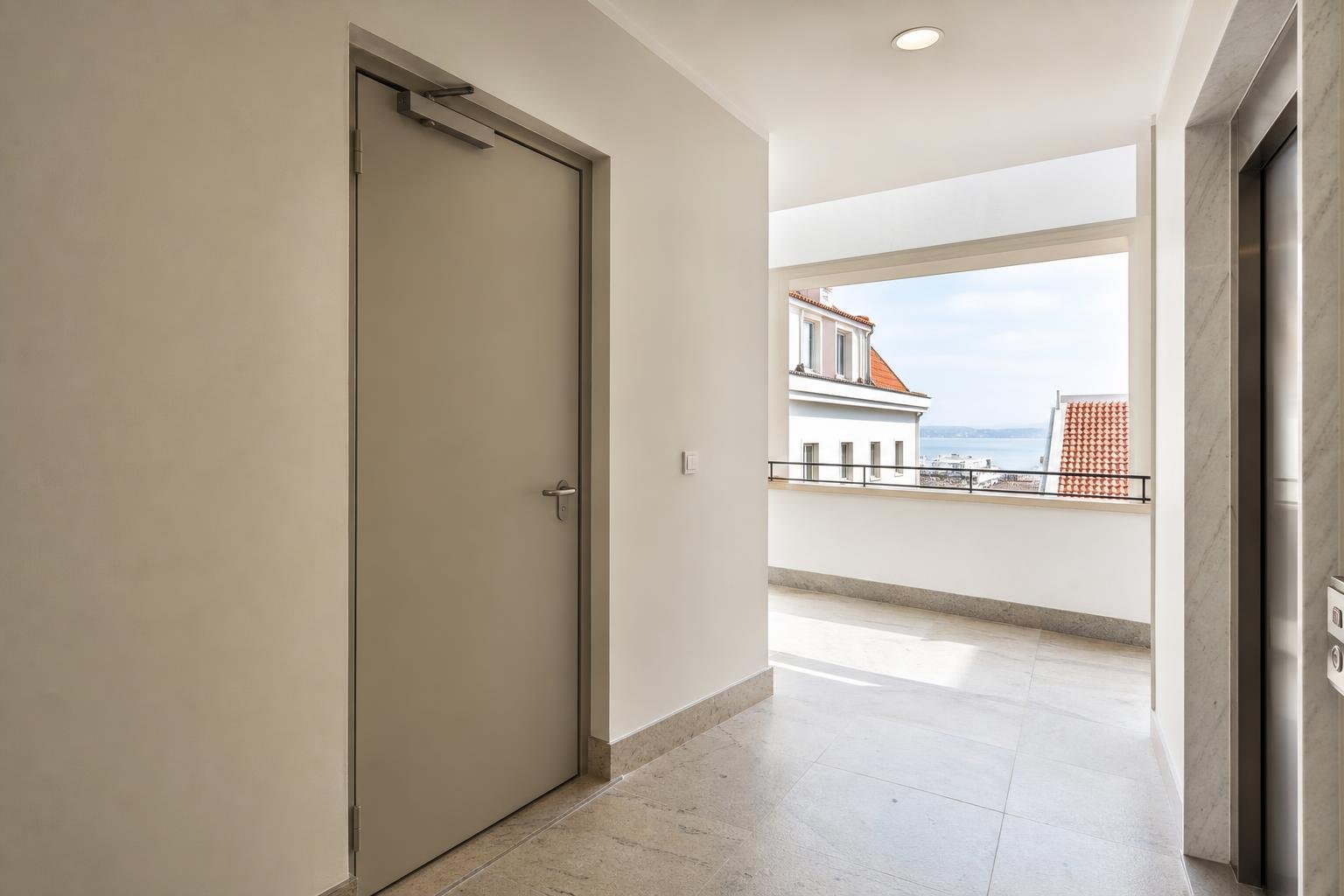
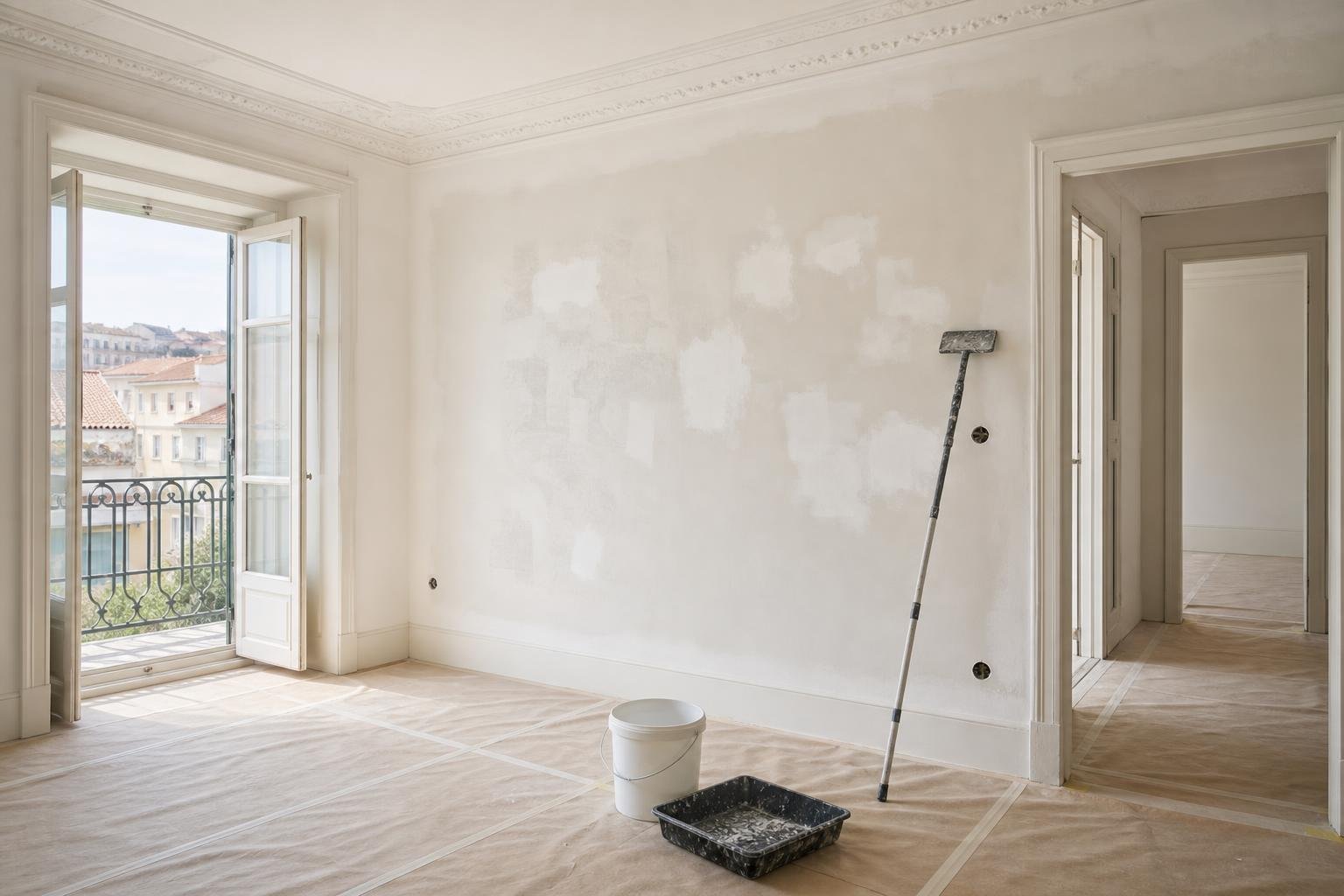
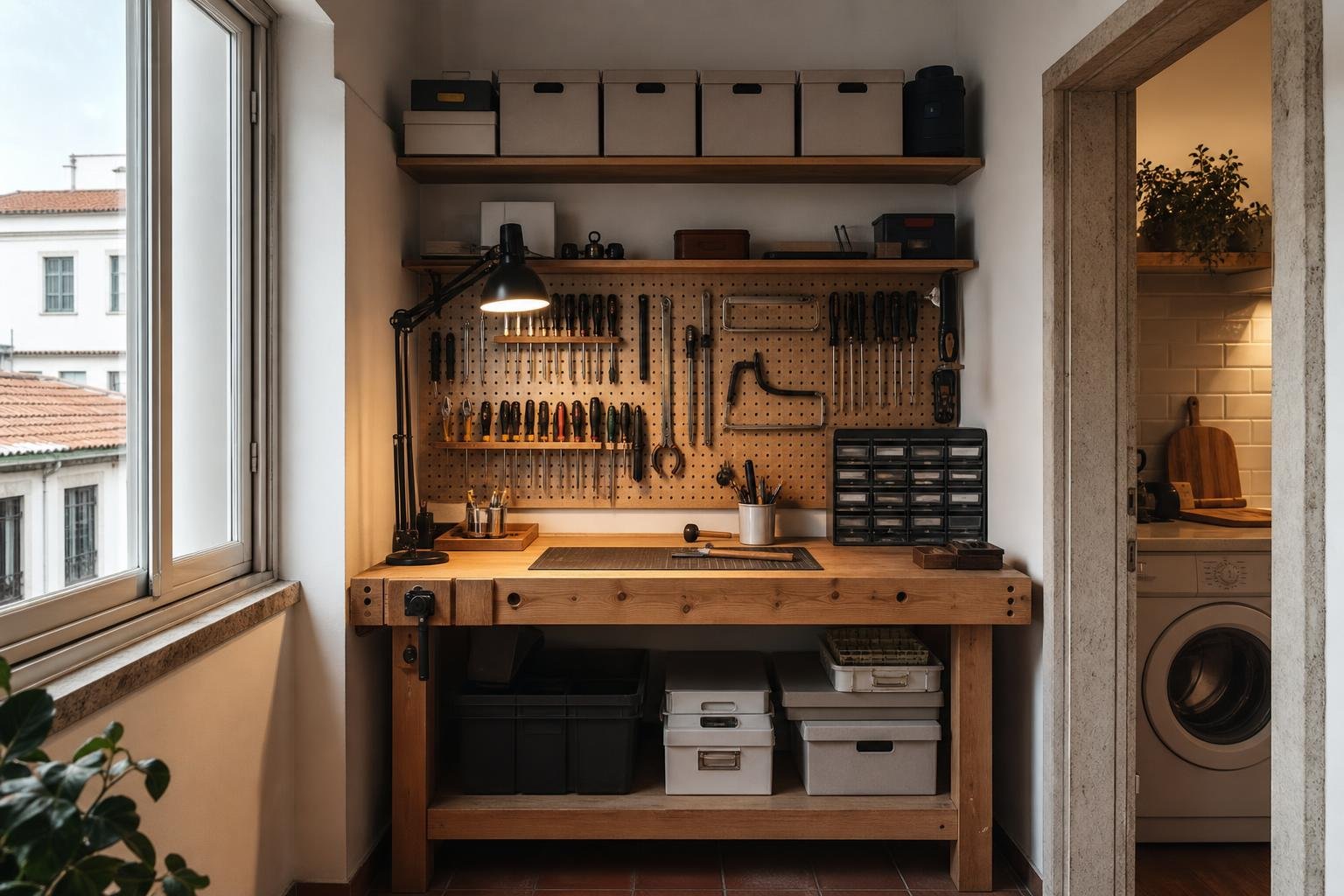
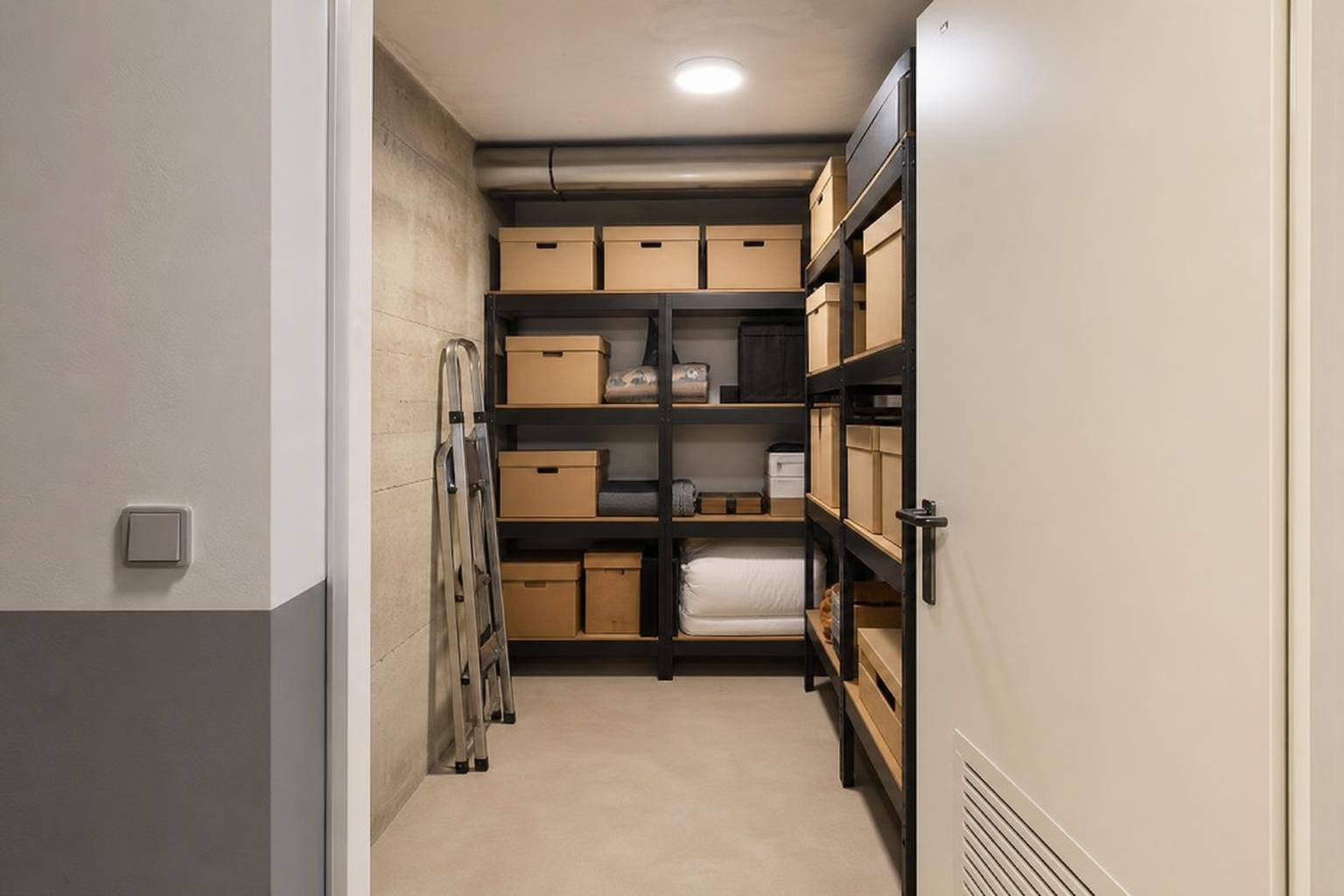
AI-generated editorial image; it does not depict an Obra Lisboa project.

Obra Lisboa