
A ceiling fan does not lower air temperature in the way an air-conditioning unit does. It moves air around the body, which can make a room feel more tolerable in hot weather. That can matter in Lisbon: at the Lisboa/Instituto Geofísico station, the 1991–2020 climate normal shows average maximum temperatures of 28.2 °C in July and 28.8 °C in August, with more than 110 days a year reaching at least 25 °C. Check the full IPMA climate data for Lisbon before designing around the memory of one exceptionally hot day.
In an apartment, getting the installation right involves more than replacing a pendant light with a fan. You need to decide where the blades will have room, what structure will carry the load, how lighting will work and whether the electrical installation allows a safe control arrangement. This guide separates a light, effective upgrade from work that creates noise, vibration or regret.
Start with the cause: stored heat, direct sun or stagnant air?
Before choosing diameter, finish or remote control, notice when the room gets hot. A west-facing living room with exposed glazing in late afternoon is receiving solar gain that a fan cannot remove. An internal room, by contrast, may feel stuffy mainly because the air is still. Those are different problems and they call for different priorities.
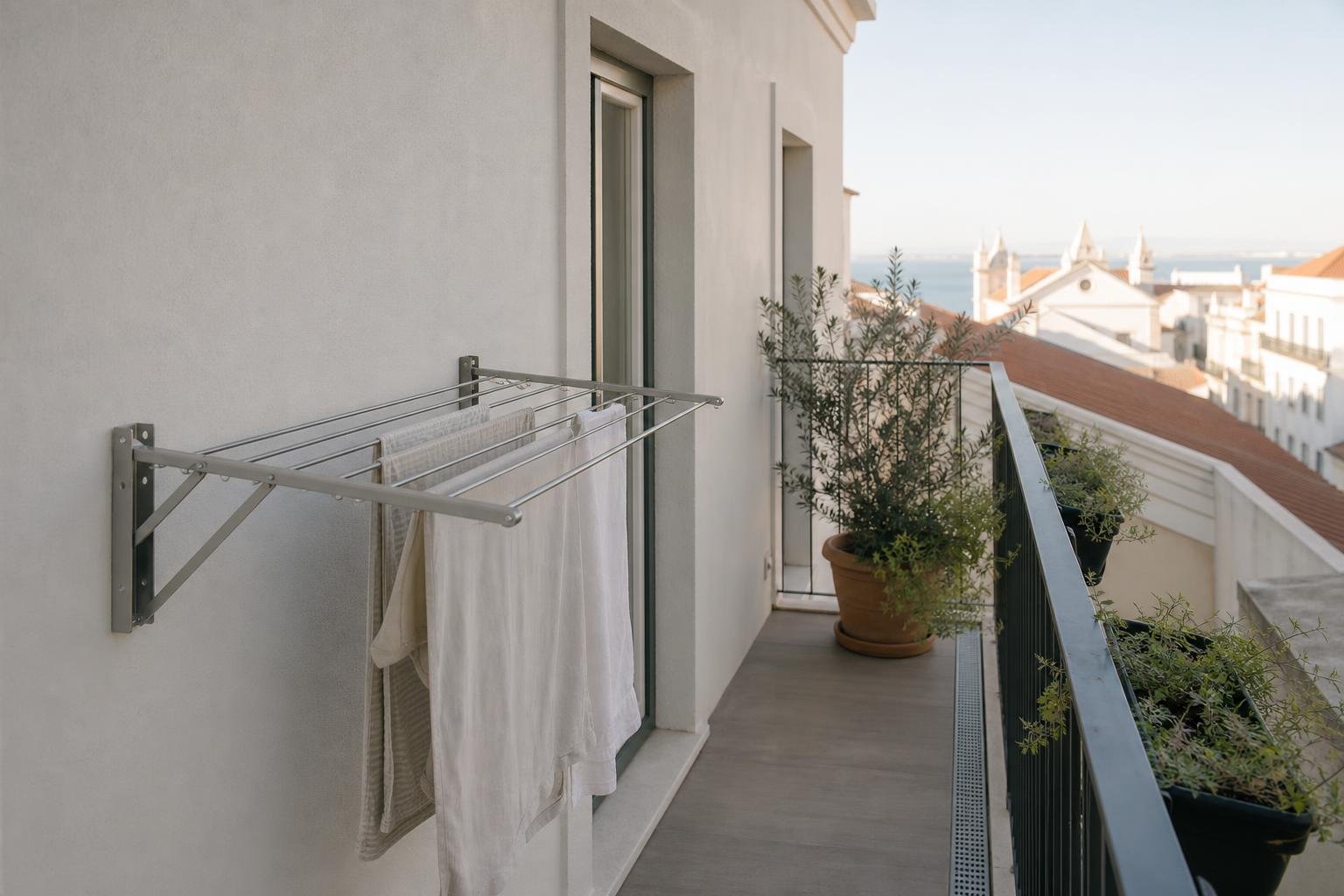
ADENE recommends limiting solar gains with shading and using natural ventilation, particularly at night when outdoor air is cooler. See its guidance on summer thermal comfort. In practical terms, use the fan as a complement: close exterior shutters or blinds during direct sun, air the home when outside temperatures drop and move air in the room that is actually occupied.
If the bedroom remains hot at dawn, or if there is condensation, mould and a persistent musty smell, do not treat a fan as a solution to the underlying cause. Review ventilation, leaks, shading and window performance first. Our guide to ventilation in renovated homes helps make that distinction.
Choose the room and centre point around real use
In a living room, the best point is often the centre of the seating or dining area, rather than the geometric centre of the plan. A fan above the sofa can be useful; one placed too close to a wall or behind a beam loses reach and may create an uncomfortable draft for only one person.
In a bedroom, favour the area above the bed, provided the blades remain clear of wardrobe doors, curtains and light fittings. In apartments with low ceilings, a compact low-profile unit is often wiser than insisting on a decorative drop rod. Always confirm the clearances specified by the manufacturer of the actual model; do not improvise distances from catalogue photographs.
In kitchens and bathrooms, the criteria change. Steam, grease and frequent cleaning make the choice less straightforward. Rather than fitting a ceiling fan above a cooking or shower area, assess proper extraction first. For kitchens, see options and limits for extraction without a direct outdoor vent.
The fixing must carry the fan, not merely the light-point cover
A junction box, an old hook or plasterboard panel does not by itself prove that the ceiling can support a running fan. The appliance has its own weight and creates dynamic loading: if the fixing has any play, vibration transfers to the ceiling and becomes noise.
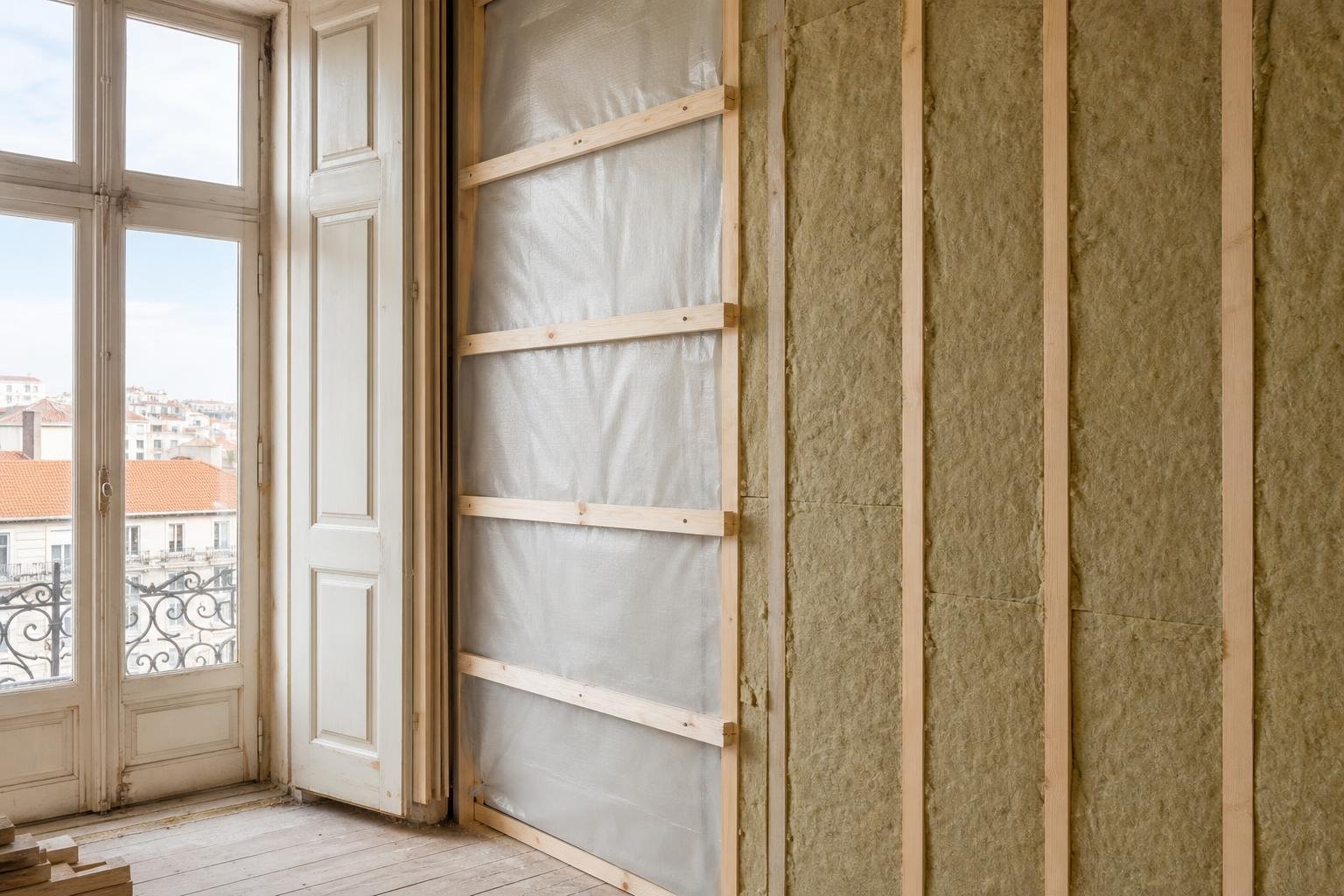
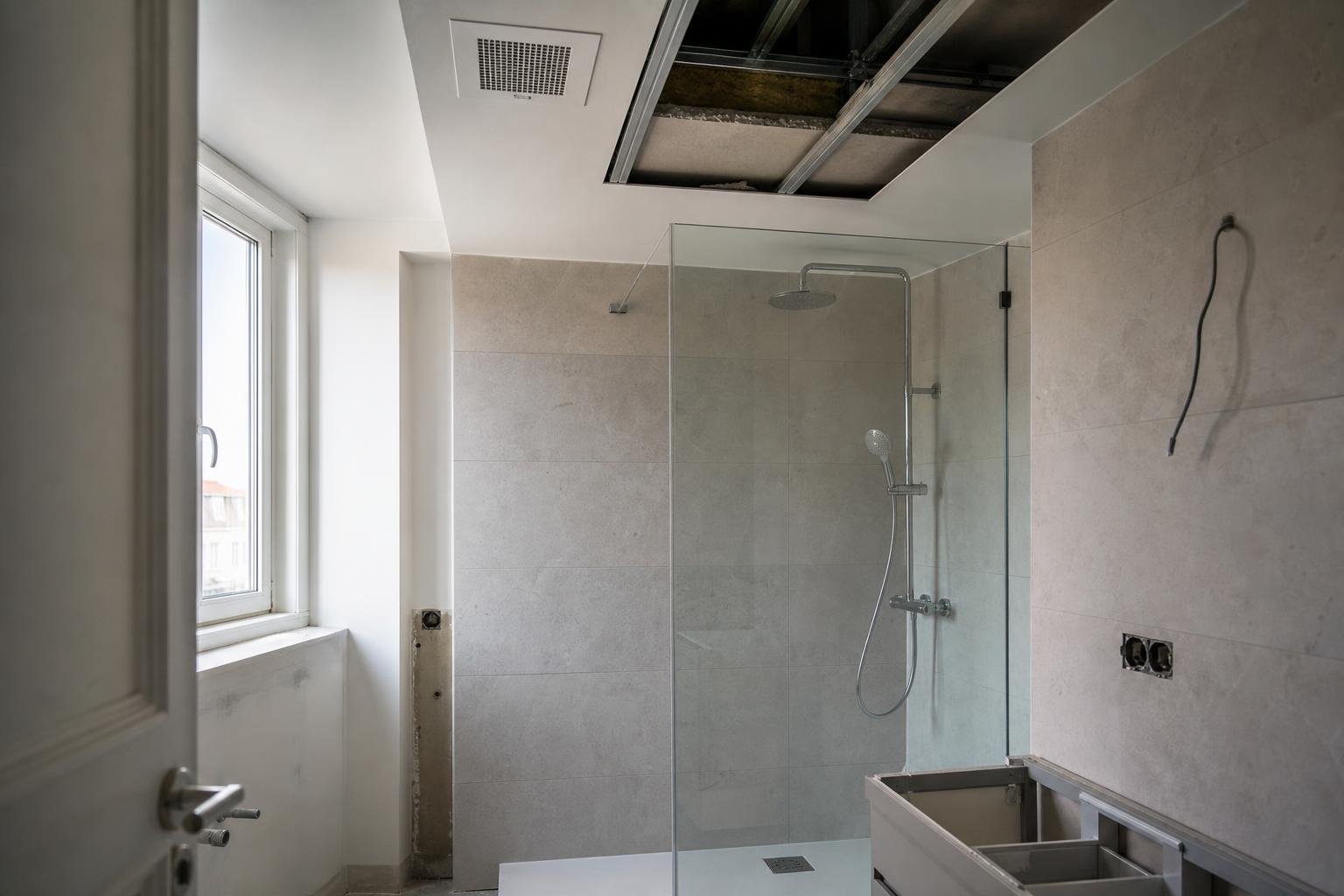
On a concrete ceiling, the installation may require anchors and screws selected for the substrate and declared fan weight. With a suspended ceiling, the resistant structure above the lining must be located and an appropriate fixing designed; fixing only to the board is not a sound approach. In older Lisbon buildings, where plaster, timber and later alterations can coexist, it is worth opening only what is necessary to identify the support before ordering the unit.
Ask for the work to finish with a check of tightness, blade balance and operation at several speeds. Slight wobble on day one should not be accepted as normal: it is the right time to correct the installation, not after the ceiling has been painted.

Do not assume a light point means a ready electrical circuit
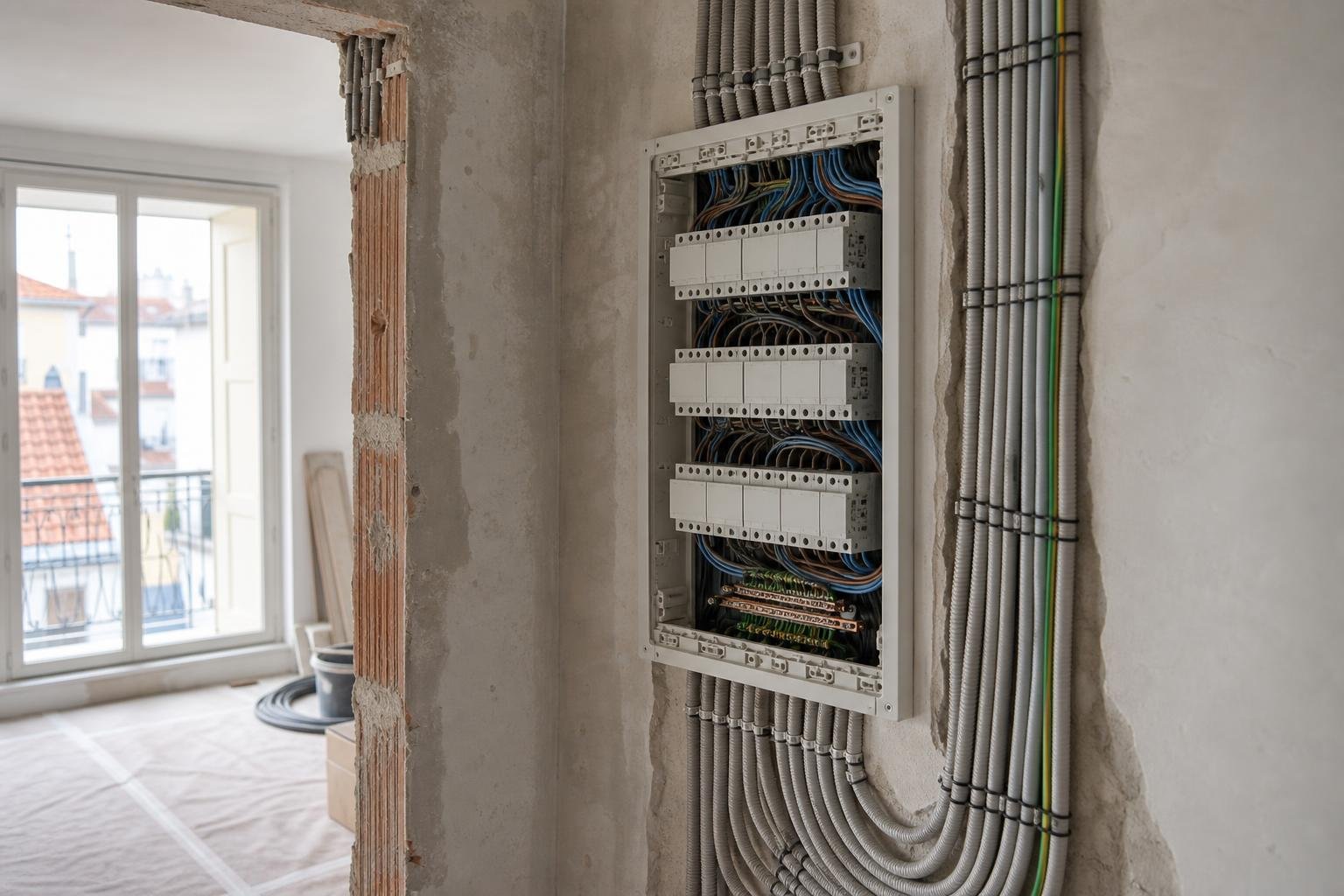
An existing ceiling point may be able to supply a fan, but that does not remove the need to assess the installation. Conductors, connections, circuit protection, earthing where applicable and compatibility between motor, integrated light and chosen controller all need checking. A wall control, for example, may require more conductors than are available at the current switch box.
Avoid permanently powering motors through extension leads, concealed plugs or adaptors placed above a suspended ceiling. They make maintenance harder and can overheat, become inaccessible or create unreliable connections. Plan, too, how the unit can be isolated for cleaning and future work.
If the work affects common elements such as the façade, balcony or roof, separate requirements may apply. Lisbon City Council’s documentation notes that work affecting common parts of a building requires condominium authorisation recorded in meeting minutes; consult the municipal document on prior notification for building works. An indoor fan will normally not affect those elements, but external equipment or new cable routes can change the position.
Size for quiet comfort, not excessive airflow
Size should follow usable floor area and room shape, but a larger fan is not automatically better. In a small living room, overly broad blades can create a strong draft at the sofa and aerodynamic noise. In a long room, one central unit may leave the ends with little benefit; it may be better to review furniture arrangement, cross ventilation or shading before adding a second appliance.
Look for genuinely quiet low speeds, reversible direction where the manufacturer provides it, and a timer for sleeping hours. Silence depends on motor quality, structure and blade balance alike. In a bedroom, test the low setting with the door closed and the room quiet; that is when minor hums and vibrations become apparent.
Choose an integrated light only if it serves the room’s lighting plan. A very bright central fitting can create hard shadows and does not replace reading or ambient light. Our article on interior corridor lighting offers a principle that applies throughout the home: plan layers of light rather than relying on one ceiling point.
Set the work sequence so the ceiling is not opened twice
If you are painting, repairing cracks, replacing the light point or building a suspended ceiling, decide on the fan before finishing work begins. The clean sequence is to confirm location and support; prepare reinforcement and wiring; test the circuit; close and repair the ceiling; paint; then fit the mounting base, motor and blades at the end. This reduces the risk of splashes, damage to the appliance and touch-ups around the canopy.
Keep the technical sheet, installation diagram and a photograph of the structure before the ceiling is closed. Later, those records help replace the unit without unnecessary probing. Keep the connection box accessible as well: an immaculate ceiling is not worth an electrical connection that cannot be inspected.
Finally, set realistic expectations. A properly installed ceiling fan improves perceived comfort in the room being used, uses relatively little electricity compared with active cooling systems and can reduce the need to run other equipment on some evenings. It does not replace solar control, appropriate ventilation or correction of a building envelope that overheats every day.
If you are renovating an apartment and want to integrate ventilation, lighting and electrical points without later patchwork, Obra Lisboa can help turn those decisions into a clear work sequence.
AI-generated editorial image; it does not depict an Obra Lisboa project.

Obra Lisboa