
Replacing handles looks like a minor choice until a door is left marked, a drawer becomes awkward to open, or the new design requires twenty cabinet fronts to be drilled again. In a kitchen or wardrobe, this hardware is touched every day: it needs to offer a secure grip, avoid catching clothing, stand up to cleaning and suit the scale of the furniture.
The right choice starts before finishes are compared. Measure the existing holes, watch how doors open, check where handles may collide and think about who uses the room. The result may be discreet, yet it changes the whole composition and can prevent unplanned joinery work.
Measure first, then choose the finish
With bar handles, the key dimension is the hole-centre spacing, not the overall length of the handle. Remove one existing handle and measure from the centre of one hole to the centre of the next. Note the hole diameter, the thickness of the door or drawer front and the screw length as well. A difference of only a few millimetres can prevent a direct replacement.
Photograph every type of front and make a short schedule: narrow drawers, wide drawers, tall doors, lift-up fronts and wardrobes. Older kitchens often contain several spacings within the same run. Do not place an order based on a single drawer measurement.
When holes do not match, there are three sensible routes: find a compatible model; choose a backplate or handle that covers the old holes; or repair the front before drilling again. The last option depends on the material. On lacquered MDF, veneered timber and laminate, a poorly placed repair can remain visible in certain light.
If the work extends beyond hardware replacement to removing units, changing doors or carrying out other alterations, separate that small task from a wider building intervention. Lisbon City Council notes that some internal alterations that do not affect stability, façades or the roof may be exempt from prior control, but the exact scope should be checked before expanding the works. Read the municipal guidance on exempt works and public-space occupation.
Choose the handle around the real movement
A handle that looks good on a sample can be uncomfortable in a hard-working kitchen. Test the movement: can fingers fit behind it without scraping the door? Can a heavy drawer be opened without twisting the wrist? Is a wardrobe handle at a sensible height for the people who use it?
Common options solve different problems:
- Knobs: suitable for light drawers and small doors; they usually require one hole.
- Bar handles: provide a broader grip and work well on heavily loaded drawers.
- Shell pulls: suit drawers, but require regular cleaning inside the recess.
- Integrated rails or channels: create a continuous front, although they need careful fitting and can collect crumbs in kitchens.
Accessibility is not simply about applying statutory minimums to every piece of domestic furniture, but it is a useful design lens. Visual contrast, intuitive operation and moderate effort make a home more comfortable for longer. The technical accessibility regime published in the Portuguese Official Gazette offers a helpful reference when considering clarity, reach and legibility in controls and fittings.
Set proportions by cabinet front, not by fashion
There is no universal handle size for a drawer. Proportion depends on width, weight and the character of the furniture. On a wide pan drawer, a short bar can concentrate force in one point and make the front feel as if it twists; two matching pulls, correctly aligned, may be more comfortable. On a narrow door, an oversized handle can dominate the composition and increase the chance of a clash with the next door.
Use repetition as the starting rule: the same finish can run through the kitchen, utility room and wardrobes, while handle lengths vary with each front. Put masking tape on the doors to simulate the item before drilling. Open all doors, pull all drawers and check for contact with walls, appliances, opposite handles or window furniture.
For sliding wardrobes, also check the clearance between doors and adjacent walls or shutter boxes. A projecting handle may stop the door from completing its travel. For storage solutions that need dimensions and access to be considered from the outset, see built-in wardrobes in a renovation: dimensions, access and storage that work.

The finish must cope with water, grease and fingerprints
Choose the finish for the room, not only to match the tap. Near a kitchen sink, handles with deep recesses demand more cleaning. On dark matt doors, a grip with too little finger clearance encourages people to touch the front itself, making marks more obvious. In bedrooms, brushed brass, timber and matt black can all work well, but check how they age and which cleaning products they can tolerate.
Choose forms without harsh edges in circulation areas and avoid strongly projecting shapes in narrow routes. In a compact Lisbon apartment kitchen, a handle that sticks out too far can become a point of impact when moving bags or trays around the room.
Ask for a sample, or buy two pieces first and test them. Look at them in daylight and under artificial light; compare them with appliances, visible hinges and aluminium profiles. Brushed stainless steel often disguises minor marks more successfully than highly polished chrome, while painted hardware should have an even finish, particularly around the fixing points.
If you are revising the kitchen more thoroughly, coordinate hardware, lighting and work areas rather than deciding each item separately. Kitchen worktop lighting affects both daily use and how material colours are perceived.
Mark every position before drilling
Accurate marking matters more than drilling quickly. Use a rigid template or drilling jig, mark the centres carefully and confirm the position on two fronts before repeating the process. On drawers, align all handles to the same reference: the geometric centre, the top edge or a common line established in the drawing. On doors, the height should allow easy opening while remaining consistent across the run.
Make a pilot hole where the material calls for it and protect the outer face with tape to reduce chipping. Do not overtighten screws: they can mark a lacquered front, distort a slender handle or damage chipboard. If the supplied screw is too long, do not cut it down without checking the thread and useful thickness; obtain the correct size instead.
On solid timber, old holes can sometimes be plugged and blended in. On deteriorated chipboard, the issue is not merely visual: the new screw may no longer have enough purchase. In that case, a covering solution or a new front may be more durable than repeatedly trying to repair the same area.
Include hardware in the renovation decision schedule
Handles are among the last visible choices, but they should be decided early. Add the model, finish, hole-centre size, quantity, location and opening direction to the joinery schedule. Keep one or two spare pieces, particularly when a supplier sells hardware as a collection that may later change.
It is also sensible to establish who supplies and who installs the items. Where building work exceeds the legal threshold applicable to private works, the construction contract must be in writing and include the parties, scope, price, programme and payment terms, as explained by IMPIC in its construction-activity FAQs. Even for a smaller intervention, stating in writing what includes fitting, adjustment and correction of drill holes prevents conflicting assumptions.
Finally, walk through the kitchen and wardrobes as if you were already living there: open a drawer with one hand, use the adjacent door, pass beside the island, try the upper units and wipe a handle. That is when a decorative detail becomes a functional decision.
Planning kitchen cabinetry, wardrobes or bespoke joinery in Lisbon? Obra Lisboa can help coordinate choices, measurements and installation so small details reach site with less improvisation. You may also find our practical kitchen planning guide useful.
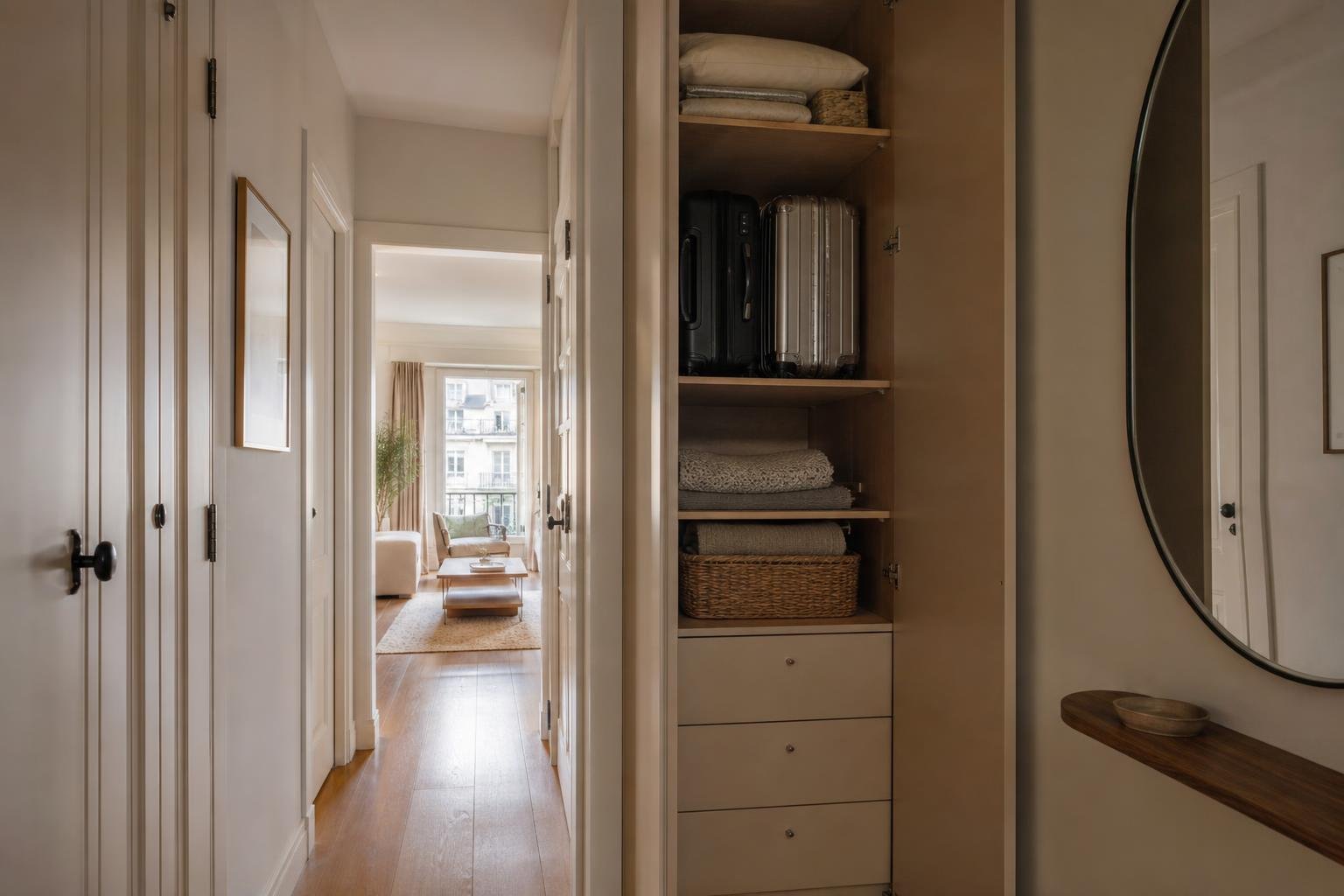
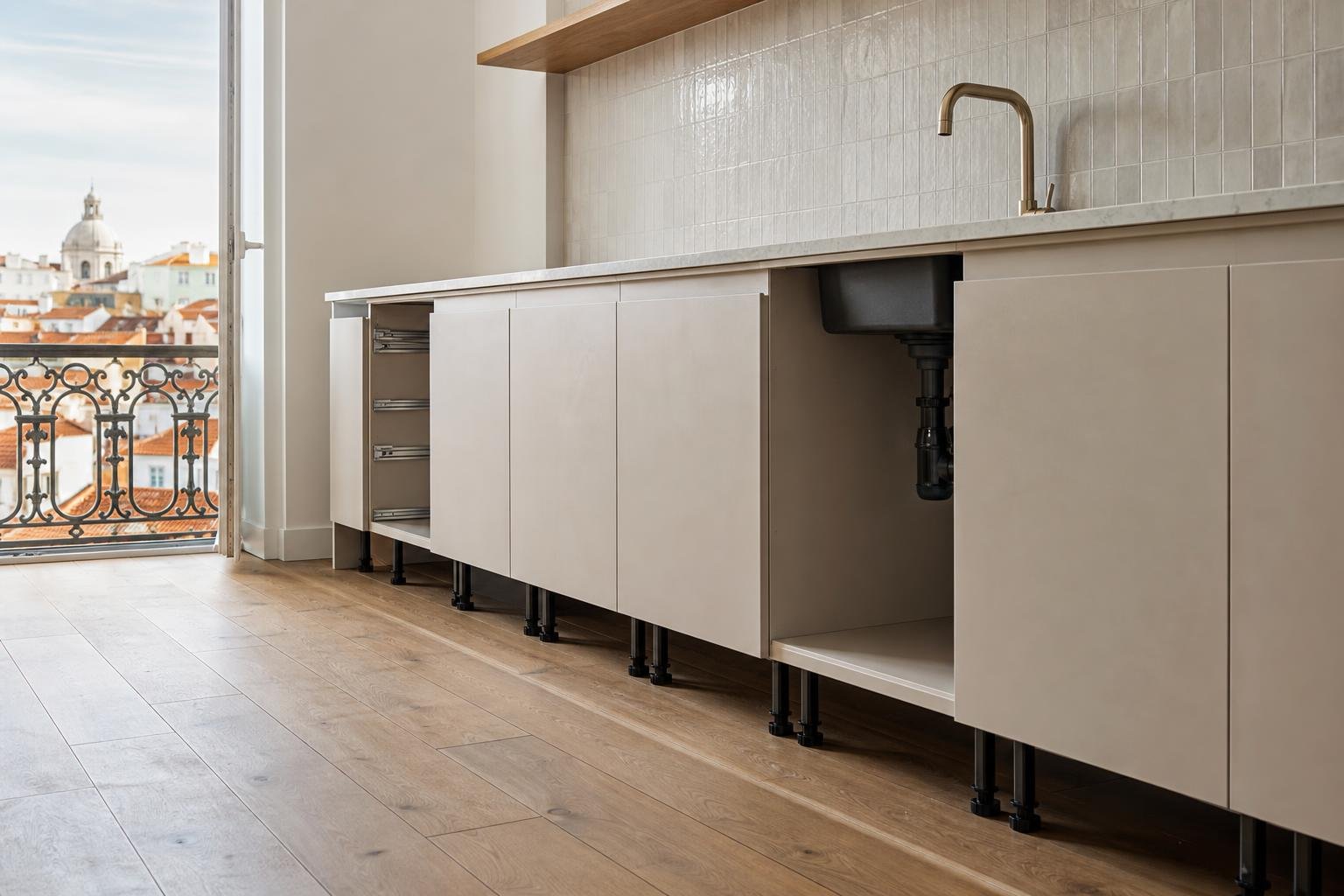
AI-generated editorial image; it does not depict an Obra Lisboa project.

Obra Lisboa