
A home compost bin can reduce the amount of garden trimmings and food-preparation waste leaving a house, but it is not simply a box hidden at the back of the garden. Its location, contact with the ground, drainage and feeding routine decide whether it produces a useful soil improver or a recurring source of flies, smells and leachate.
In Lisbon, dry summers make lack of moisture a real concern; in autumn and winter, rainfall calls for a covered, well-drained arrangement that does not leave the base waterlogged. IPMA climate normals for Lisbon show average rainfall of only 2.6 mm in July, compared with 133.9 mm in November. That is why the same compost heap can become too dry in one season and compacted in another. Check the IPMA climate normal for Lisbon before choosing the bin’s final position.
The aim is not to compost every item described as organic. It is to establish a manageable routine: suitable waste, dry material on hand, air, moderate moisture and time. This guide covers the decisions worth making before buying or building the equipment.
First, decide whether your space and routine suit a compost bin
Home composting works best when there is a steady source of brown materials: dry leaves, shredded pruning waste, untreated straw, or plain uncoated brown cardboard torn into strips. A house with even a small garden can usually maintain this reserve more easily than a home without outdoor space, but you do not need a vegetable patch to make use of the finished compost.
Portuguese rules provide for source recycling of biowaste through domestic or community composting and state that equipment must comply with general rules and be registered with the body responsible for the municipal waste system. Read the Portuguese legal framework for biowaste published in Diário da República and check the local arrangements offered by the municipality or waste operator.
If your household produces little kitchen waste, choose a compact bin and feed it gradually. If garden pruning is frequent, plan a separate area for leaves and twigs: filling a bin only with grass clippings or only with vegetable peelings is the quickest way to lose balance.
- Choose a capacity that matches actual output, not initial enthusiasm.
- Leave room to open the lid, turn material and remove compost.
- Make sure the route remains easy to use in wet weather.
Choose the site: light shade, free drainage and sensible distance from the house
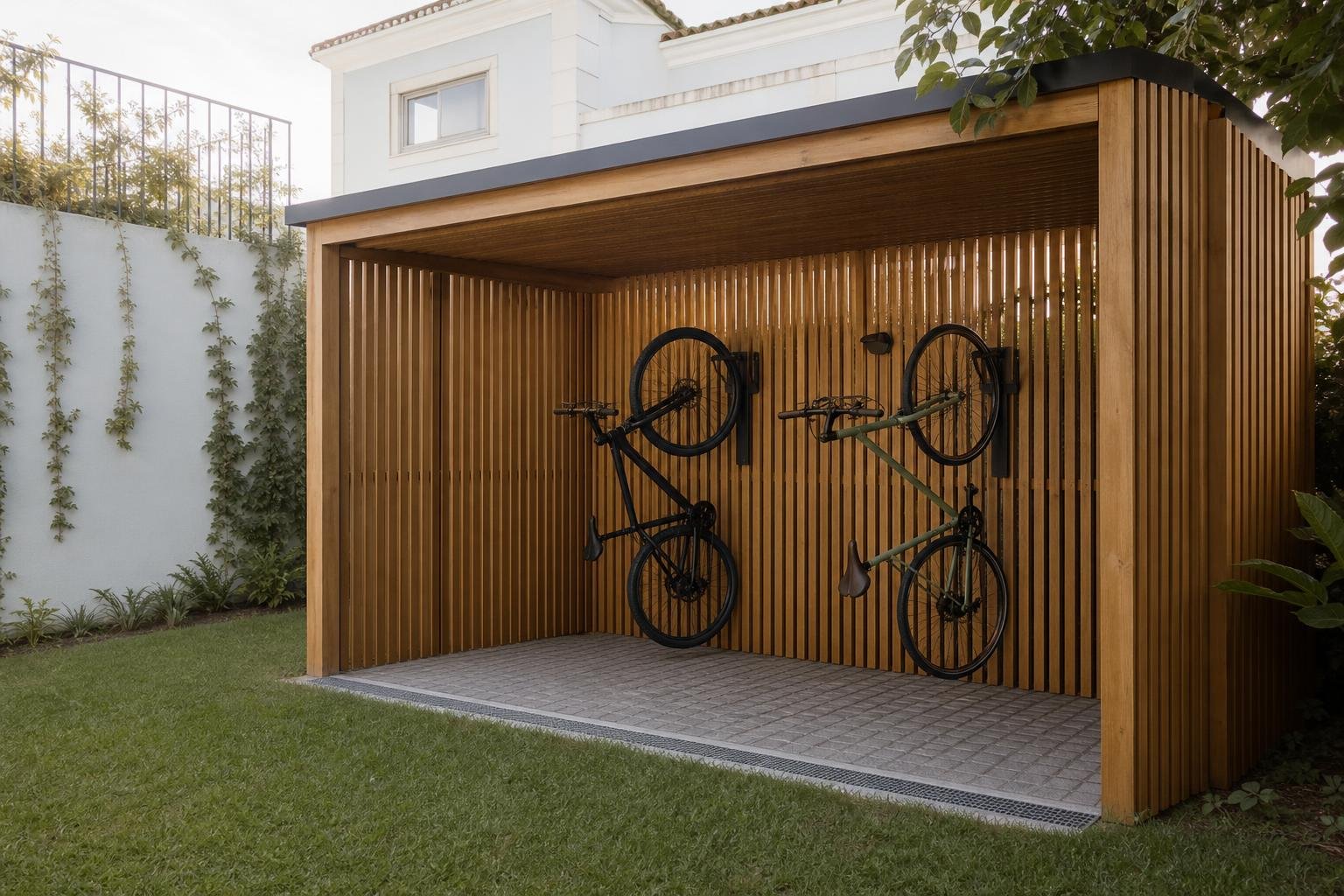
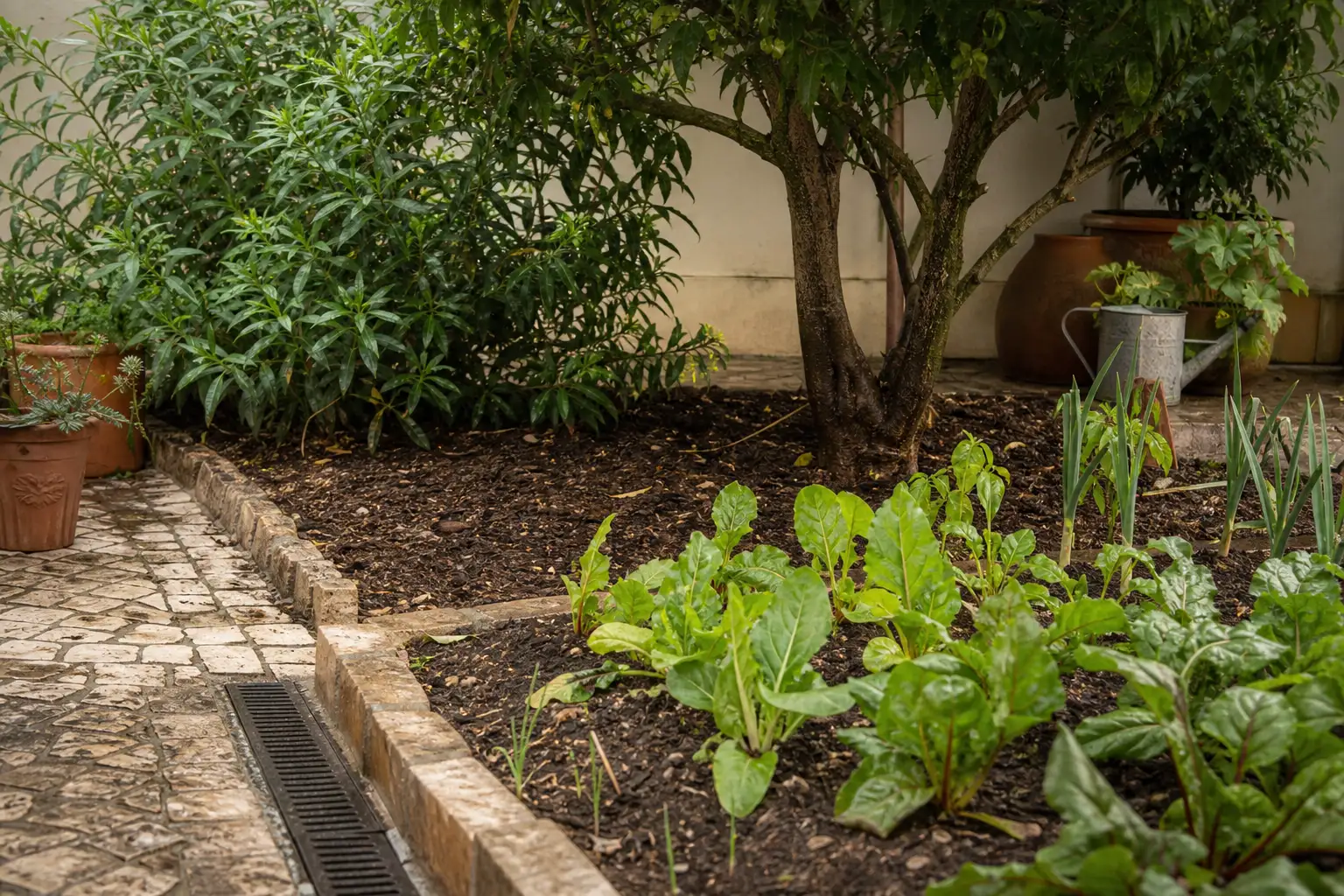
Place the compost bin on natural ground or on a properly drained permeable base, never directly on an impermeable slab with no route for water to escape. Contact with the soil helps useful organisms enter and prevents water being trapped at the bottom. Where a garden is fully paved, create an appropriate draining strip rather than pushing the bin against a wall.
Light shade is usually the best choice. Strong afternoon sun can dry out a small heap quickly in July and August, while deep shade beneath dense planting can leave the area cold and damp in winter. Avoid locations beside doors, bedroom windows, outdoor dining areas or boundaries where maintenance could disturb neighbours.
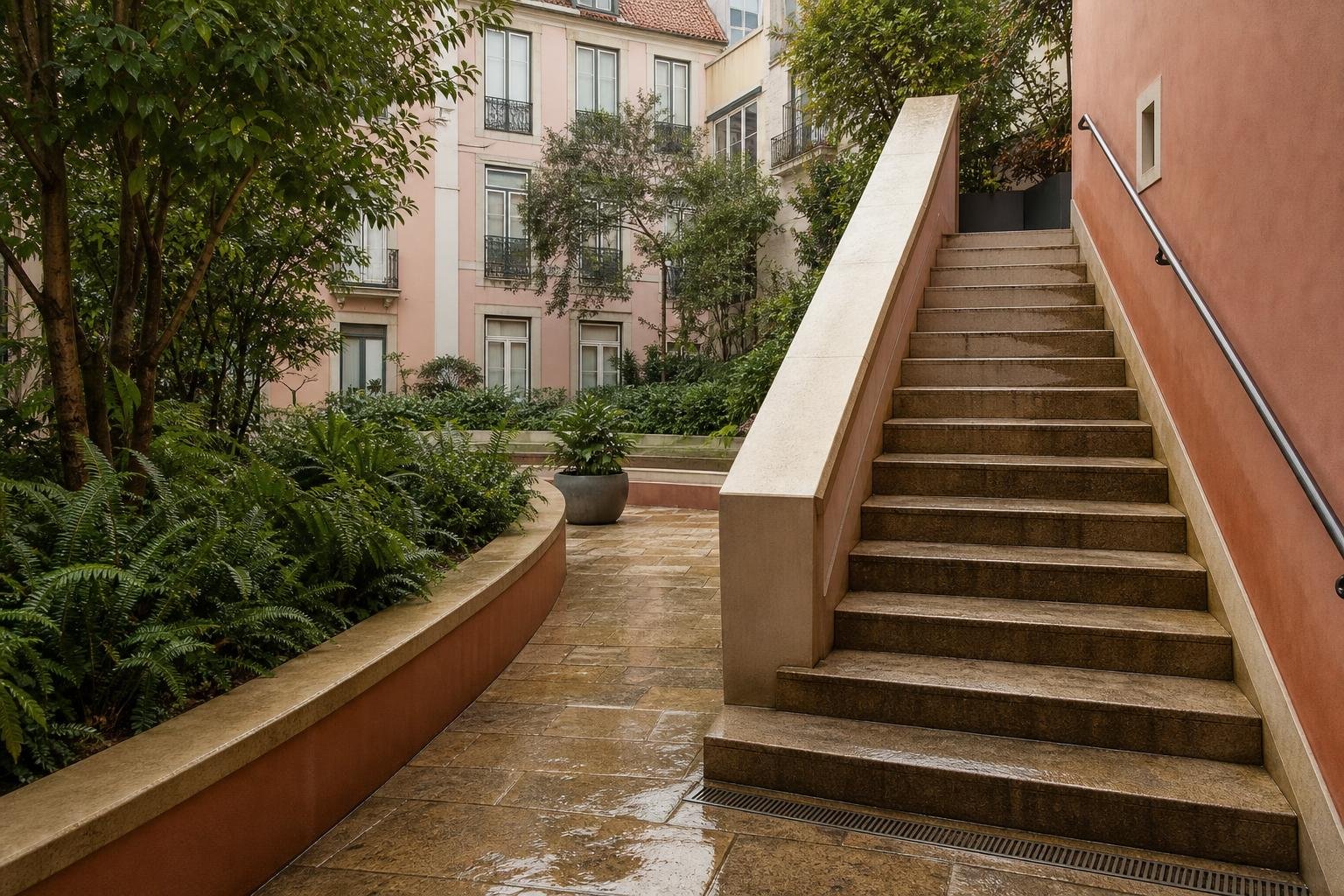
Watch how water behaves before deciding. After heavy rain, note where puddles form and where roof runoff travels. A compost bin should not sit under a downpipe discharge. If you are redesigning the exterior, connect this decision to patio and courtyard drainage in Lisbon: a healthy heap needs moisture, not saturation.
Prepare the base and drainage before adding the first material
Simple preparation prevents many later problems. Start with coarse twigs at the base, or another woody material that keeps air channels open. Add brown material above it, followed by a small amount of soil or finished compost. The purpose is not to seal the bottom; it is to create a porous structure from the start.
On sloping ground, set the access side at a practical level and make sure surface water does not run through the bin. In a rain-exposed location, a well-fitting lid is useful, but it should not make ventilation impossible. If dark liquid regularly runs out, the cause is normally excess water, too much green material or compaction—not a lack of perfume or commercial activators.
Municipal rules published in Diário da República stress the use of approved waste equipment and suitable hygiene and health conditions. See the Diário da República regulation on waste depositing and domestic composting as a useful reminder to treat composting as a proper part of household waste management.
Balance greens and browns instead of building layers of waste
“Greens” are moist, nitrogen-rich materials such as raw fruit and vegetable peelings, coffee grounds, plastic-free tea bags and small amounts of grass clippings. “Browns” are dry, structural materials: leaves, shredded twigs, straw and uncoated cardboard. The practical rule is straightforward: every addition of greens should be covered with browns.
Cut larger pieces and spread them out rather than tipping a whole bucket into one spot. Large quantities of cut grass or very wet leftovers stick together, remove air from the heap and ferment. The result is a sour or rotten smell that cannot be fixed by adding a thin layer of leaves on top.
Do not add meat, fish, bones, dairy products, fats, large amounts of cooked food, pet waste, diseased plants or weeds carrying mature seeds. Even where a generic guide may allow some of these in tightly controlled systems, in an urban home setting the risk of odours, animals and contamination makes them an impractical choice.
To keep scraps manageable before they reach the garden, review the layout of your kitchen recycling area, using a washable lidded container and emptying it regularly.
Use simple signs to manage moisture, air and odours
A balanced heap smells like damp earth, not rubbish. Take a small handful from the middle and squeeze it: it should feel like a well-wrung sponge. If it drips, add dry browns, break up clumps and turn the material. If it is dusty, dry and cold, add greens, moisten lightly and mix.
You do not need to turn the heap every day. Turn it after adding a substantial quantity of material, when you notice compaction or when decomposition slows down. A narrow garden fork or manual aerator lets you work through the heap without dismantling it. Heat in the middle is a positive sign of activity, but a home heap can work slowly and still produce good compost.
Use symptoms as a diagnosis:
- Strong odour: too many greens, excess water or too little air.
- Flies: exposed scraps; cover them immediately with browns.
- Ants: a heap that is often too dry; check moisture.
- Little change: pieces are too large, the mix is poor or turning is needed.
A clean lid, a rim free from residue and a dry-material store beside the bin solve more than commercial additives.
Know when compost is ready and use it without overdoing it
Mature compost is dark, loose, earthy-smelling and no longer shows most of the starting materials clearly. Woody fragments may take longer; screen them out and return them to the next batch. Do not use compost that is still hot, sticky or strongly smelling around young roots, small pots or seed trays.
In a house garden, spread a thin layer over planting beds and around shrubs, without piling it against stems. Work a moderate amount into the soil before planting, or blend it with a suitable growing medium in large containers. Compost improves structure and water retention, but it does not automatically replace a fertilising plan or correct poor drainage.
In Lisbon, it is especially useful as organic mulch before the driest months, while keeping it clear of plant crowns. For wider outdoor decisions—surfaces, water and garden organisation—see ways to improve an outdoor space. Good composting is ultimately about designing a small domestic system that stays clean, accessible and easy to maintain throughout the year.
Renovating the garden, patio or service area of a house? Obra Lisboa can help bring drainage, outdoor surfaces, storage and water points into one coherent plan before work begins.
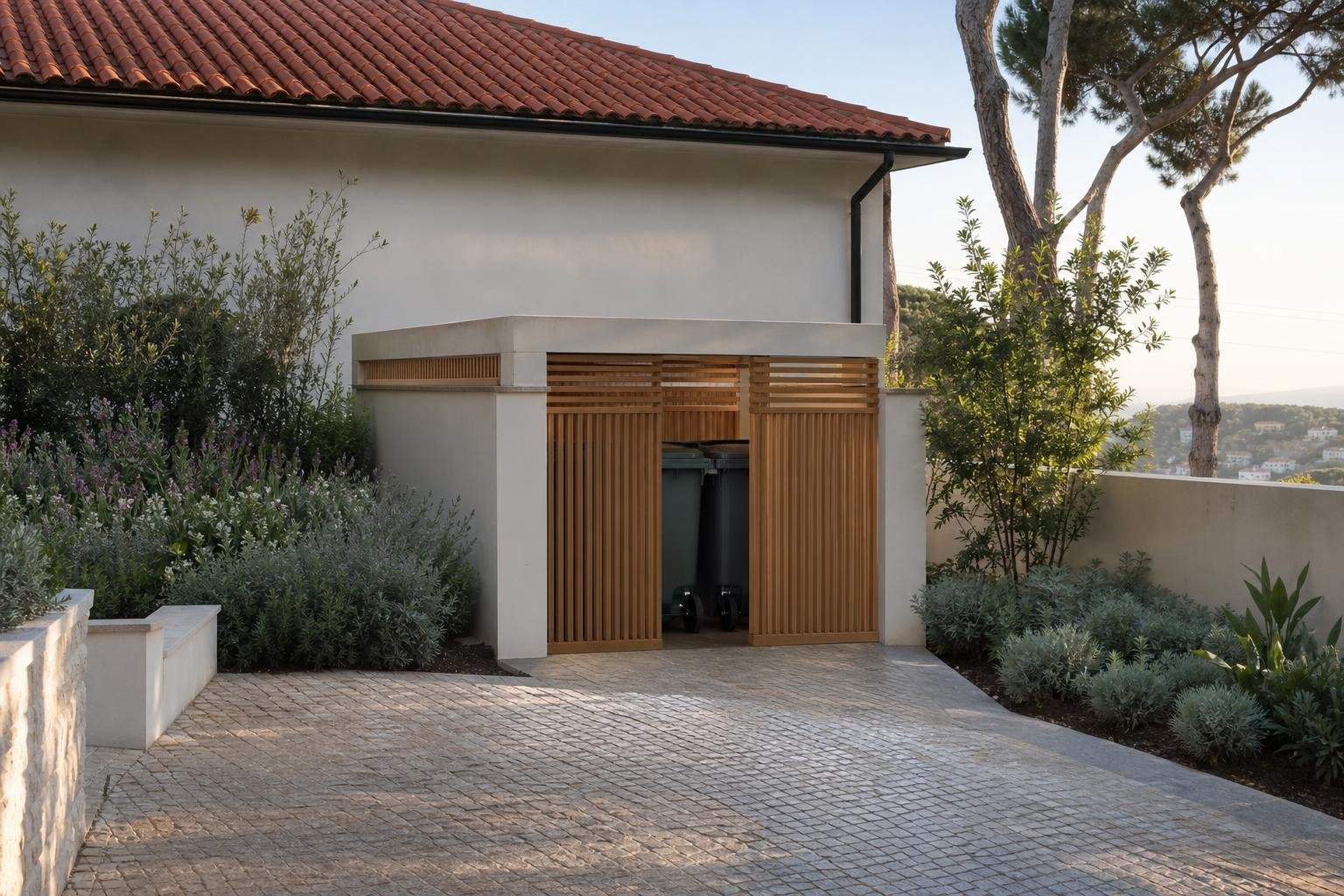
AI-generated editorial image; it does not depict an Obra Lisboa project.

Obra Lisboa