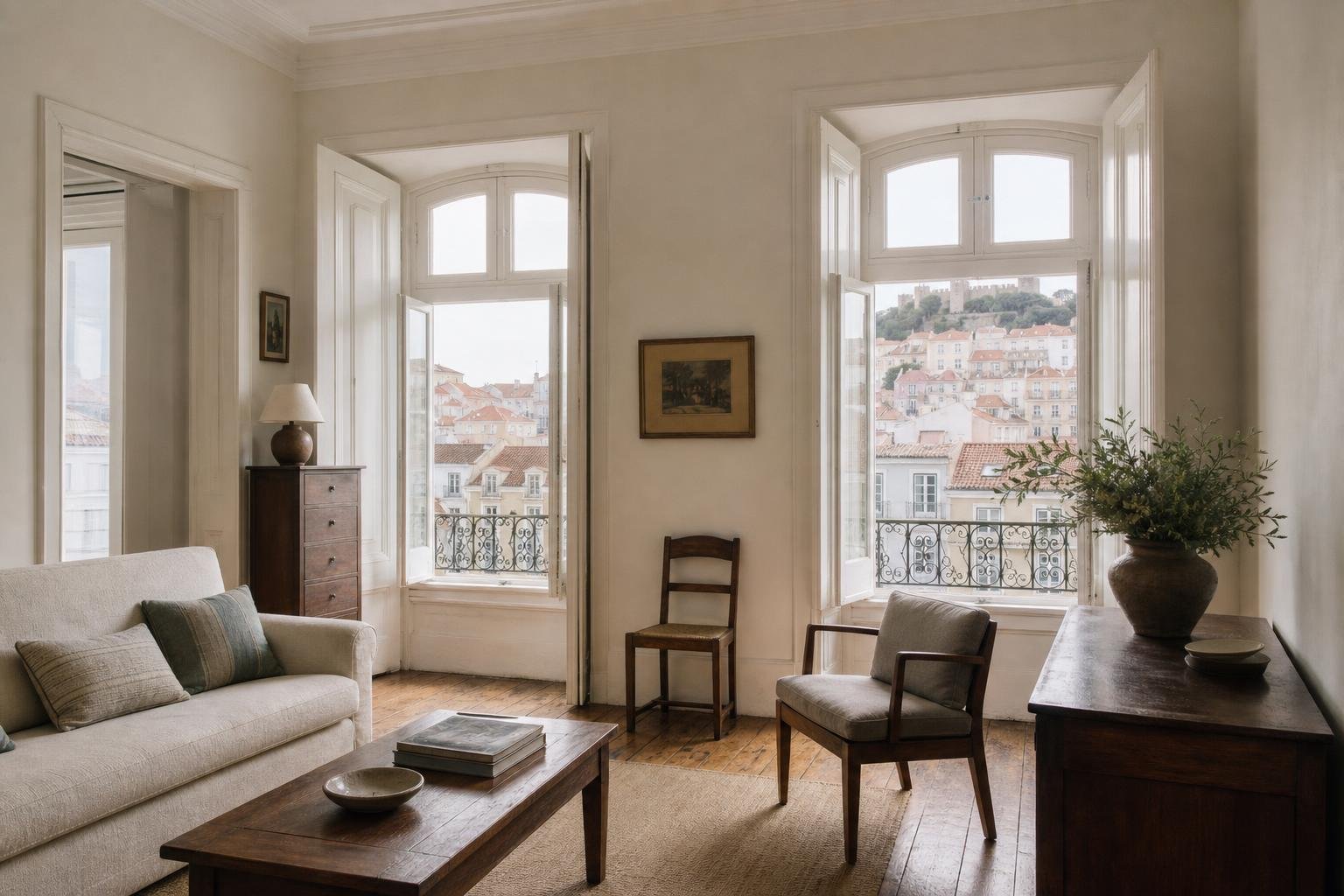

In an older Lisbon apartment, timber interior shutters are more than decoration. They control direct light, allow the home to be aired without fully exposing it to the street, and provide privacy after dark. When they are stuck beneath layers of paint, warped or missing their hardware, the usual reaction is to remove them. That is not always the most useful decision.
Restoring shutters means looking at the whole assembly: the opening, window frame, glazing, hardware, wall and the routines of the people living there. A beautiful shutter that will not close, scrapes the floor or requires furniture to be moved every day will soon remain permanently open. This guide explains what is worth retaining, what should be corrected, and when replacement is the more sensible route.
First, establish what the shutters still do for the room
Before ordering new blinds or curtains, test each room in the morning, afternoon and evening. Open one leaf, close the other, and note where glare appears, whether a work surface becomes uncomfortable, and whether the room can still be ventilated. Orientation matters greatly: Lisbon’s climate normal records average maximum temperatures of 27.9 °C in July and 28.3 °C in August, so solar control is not a minor detail in exposed rooms. See the IPMA Lisbon climate normal for the local context.
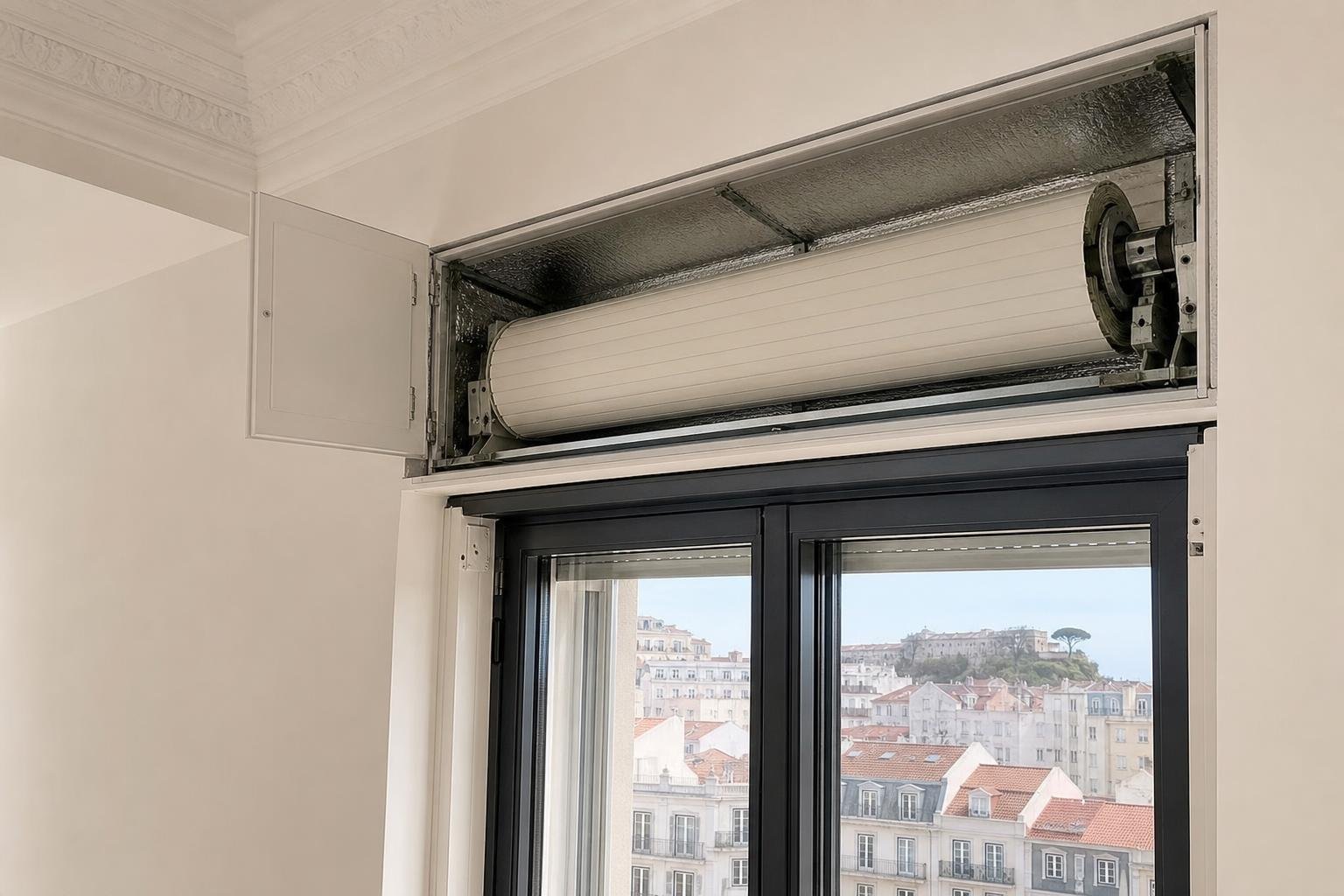
An interior shutter does not replace external shading, but it can reduce direct light on a bed, sofa, screen or timber floor. It also gives you intermediate settings: closed leaves with slats partly open, or only half of the window screened. In street-facing bedrooms, this ability to regulate light and visual exposure is often more valuable than a solution that is simply open or shut.
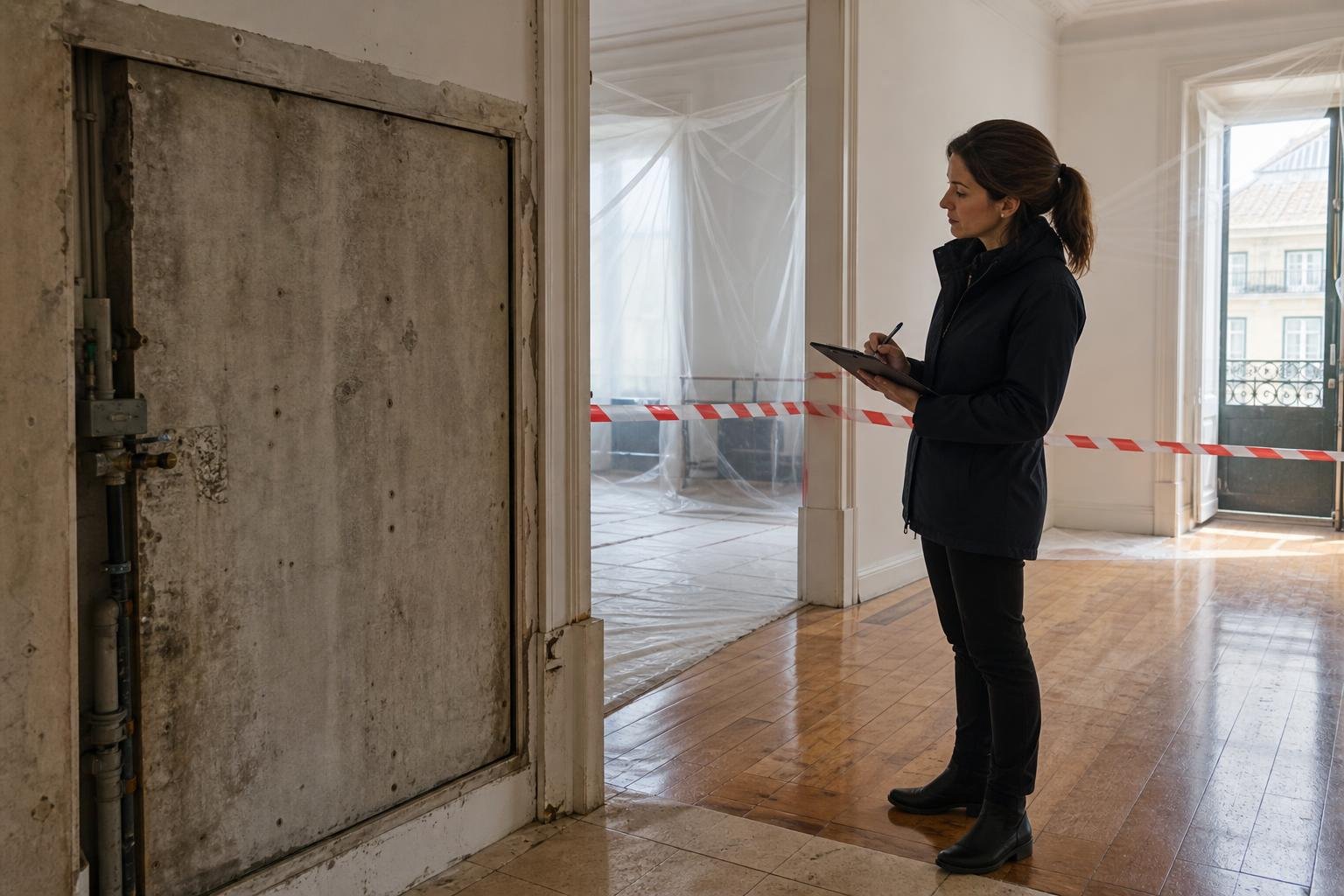
List the faults in order: a leaf rubbing on the floor, a loose hinge, missing latch, split timber, flaking paint, light leaking through gaps, or a closure that is difficult to reach. That survey prevents a cosmetic restoration that does not restore proper use.
Separate repairable wear from compromised timber
Scratches, small splits, knocks and heavy paint build-up do not automatically mean that the timber has reached the end of its life. Many old shutters were made from thicker sections than current alternatives and allow local repairs. Look more closely, however, for soft timber near the sill, persistent dark staining, insect galleries, severely twisted leaves, or loss of material around hinges.
Remove paint only from a small suspect area first and assess the timber’s soundness; do not begin by stripping the entire shutter. If the issue is concentrated at the bottom, it may be caused by water entering through the window, failed external seals, or recurring condensation. Repairing the shutter without addressing that source merely postpones the problem until the next wet season.
In older buildings, comfort should come from coherent measures. The technical framework published in the Diário da República on thermal comfort, indoor air quality and daylight stresses suitable indoor conditions and gives priority to passive solutions. In practical terms, shutter repair should be coordinated with window sealing, ventilation and solar control rather than treated as an isolated item.
If repainting is needed, remove loose coatings, consolidate weakened areas and retain the profiles, panels and mouldings that define the original design. A perfectly smooth surface can be less faithful—and less durable—than a discreet, properly prepared repair.

Adjust leaves, hinges and latches before considering replacement
Many shutters fall out of use simply because they open badly. Start by checking whether the problem lies in the leaf or the opening: the lining may be out of square, the floor may have moved, the window frame may have been altered, or repeated plastering and painting may have narrowed the opening. Sanding the edge of the leaf without diagnosis can create excessive gaps and worsen light leakage.
A careful sequence is:
- mark the exact point of contact with pencil or painter’s tape;
- tighten or reposition hinges before removing timber;
- correct minor distortion, then adjust only the edge that needs it;
- test full opening, closure and intermediate positions;
- protect freshly exposed timber with a compatible finish.
Keep original hardware where feasible. Hinges, espagnolette bolts, pulls and retaining catches have a direct effect on everyday comfort. A visually similar part in the wrong position can force the leaf to bang or prevent the window from opening. When a fitting is missing, survey the remaining hardware first so that the replacement respects its scale and location.
This approach follows the same principle as restoring old interior doors without losing character: adjust and repair first, and replace only when the piece can no longer perform safely and reliably.
Balance daylight, fresh air and privacy room by room
There is no single ideal shutter setting for an entire home. In a living room, it may make sense to retain two operational leaves and use sheer curtains to soften daylight. In a bedroom, blackout and privacy may take priority; in a kitchen, cleaning and access to the window may matter most. Do not turn a decision for one room into a rule for the whole apartment.
ADENE notes that shading limits solar gains and that natural ventilation—especially at night, when outdoor air is cooler than indoor air—can help remove accumulated heat. Read ADENE’s explanation of passive summer comfort strategies. Shutters can support this routine, but they should not prevent the necessary renewal of air.
Try gradual arrangements: one leaf folded back against the wall and the other partly closed; slats angled to cut direct sun; a translucent curtain during the day and closed shutters at night. With French windows, also check the clearance needed to open doors, hang laundry or pass through the room. The best solution is the one that can be used easily every day.
When planning the work, connect it to cross ventilation in a Lisbon apartment. Opening windows on opposite sides for a shorter period can be more effective than leaving a single window slightly open for hours.
When replacement is justified—and what to confirm first
Replacement can be justified where decay is extensive, distortion repeatedly prevents operation, previous alterations are irreversible, or the existing arrangement no longer meets the intended use. Even then, record the piece before removing it: photograph both sides, measure thickness, moulding widths, hinge positions and distance to the glazing. Those references help avoid a new shutter that is out of proportion or incompatible with the opening.
If you choose a replica, request a finish sample and confirm the opening direction. Solid timber, veneered panels or a contemporary alternative can all work if they withstand daily use and do not prevent the window from opening or being cleaned. Do not conceal water ingress, condensation or window-frame defects behind a new shutter.
In Lisbon, changes involving the façade, external openings or buildings under heritage protection may require confirmation of the applicable procedure. The city’s building-work licensing service is a useful starting point for understanding when work goes beyond ordinary internal repairs. Where several elements need coordination, also see Obra Lisboa’s guide to replacing windows during a Lisbon renovation.
The best decision is rarely “keep everything” or “replace everything”. It is to retain what still provides comfort and identity, correct what prevents use, and replace only where repair is no longer technically honest.
Planning to restore shutters, windows or other original apartment features? Obra Lisboa can help turn an initial survey into a clear intervention plan that respects the building and the way the home is used every day.
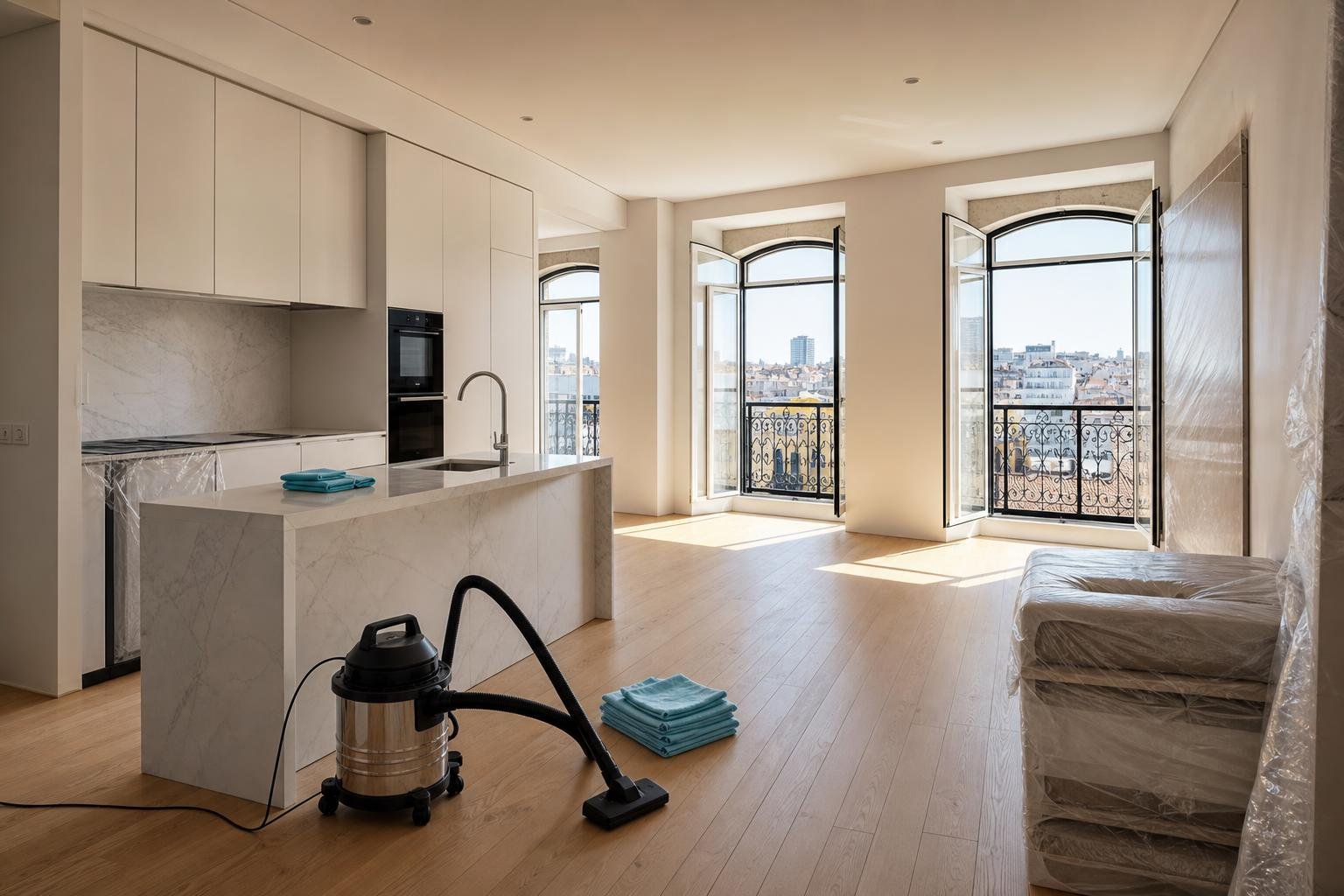
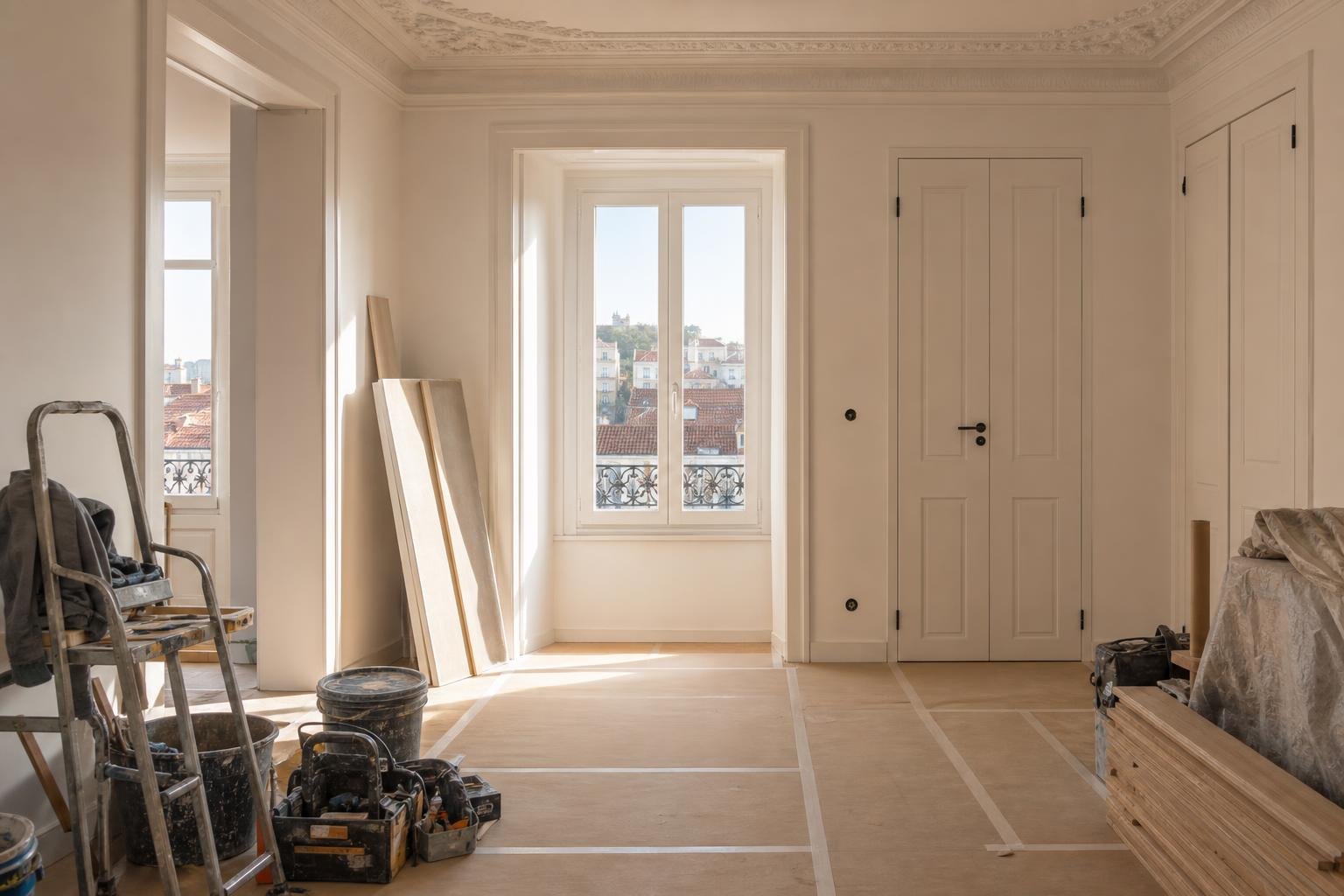
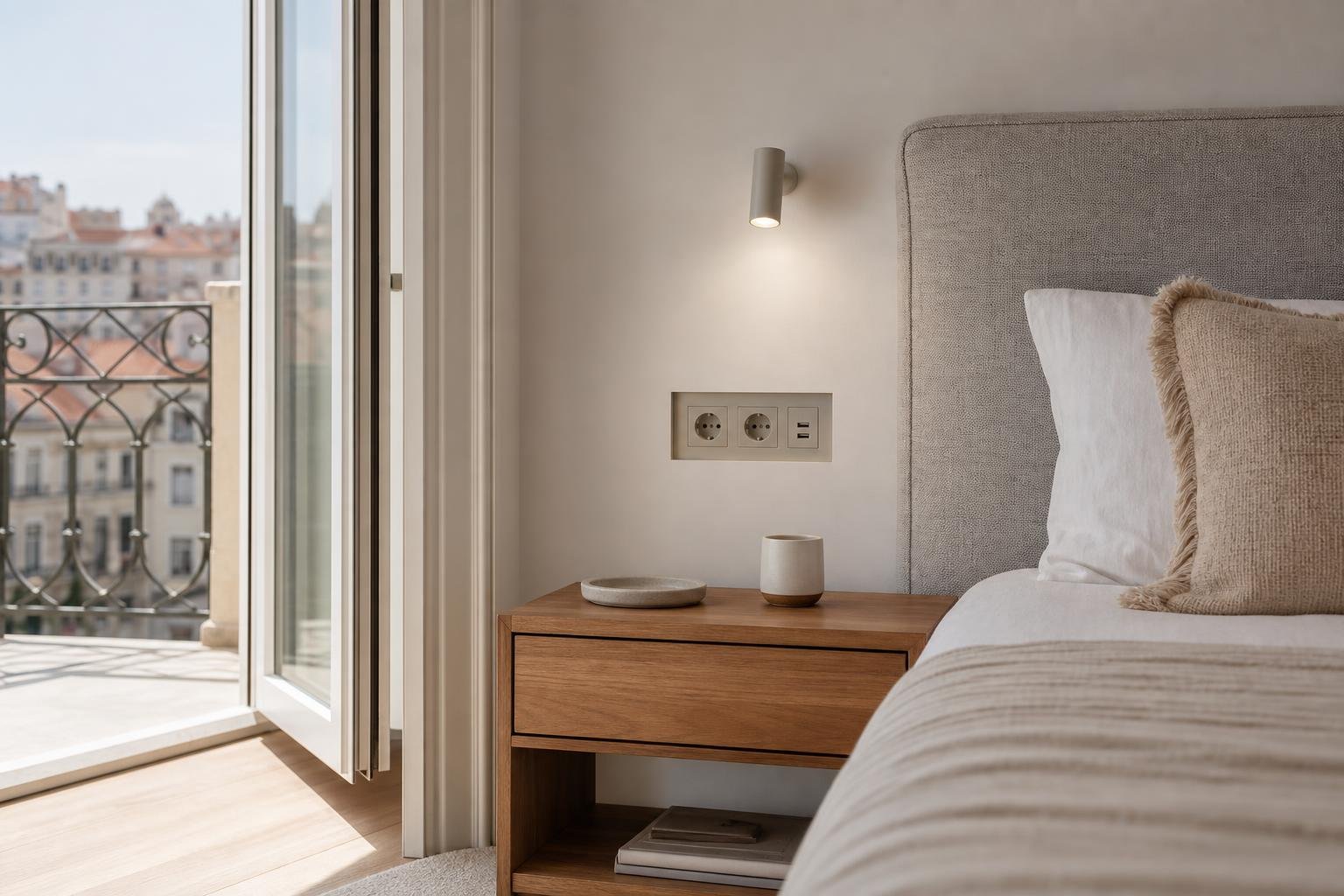
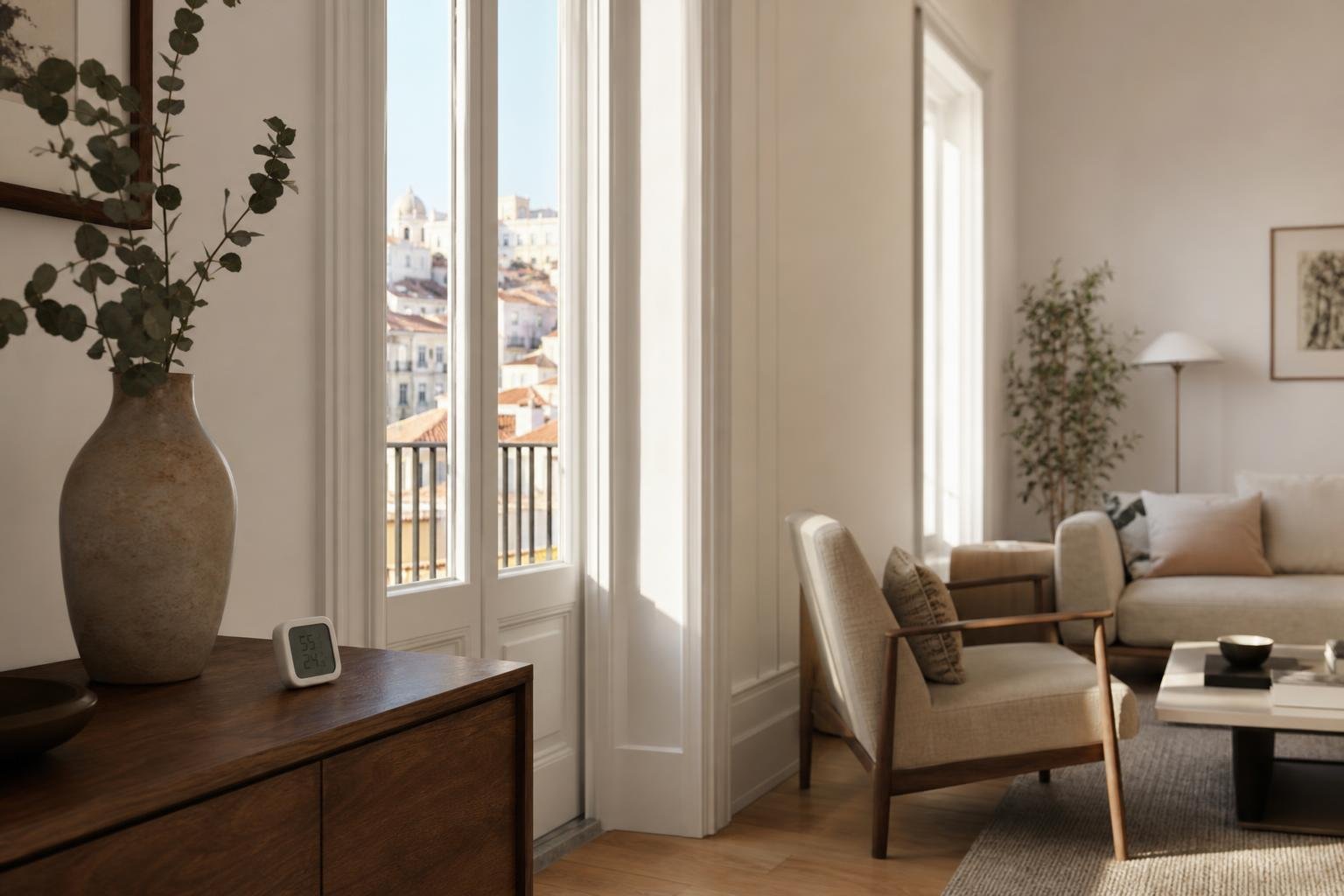
AI-generated editorial image; it does not depict an Obra Lisboa project.

Obra Lisboa