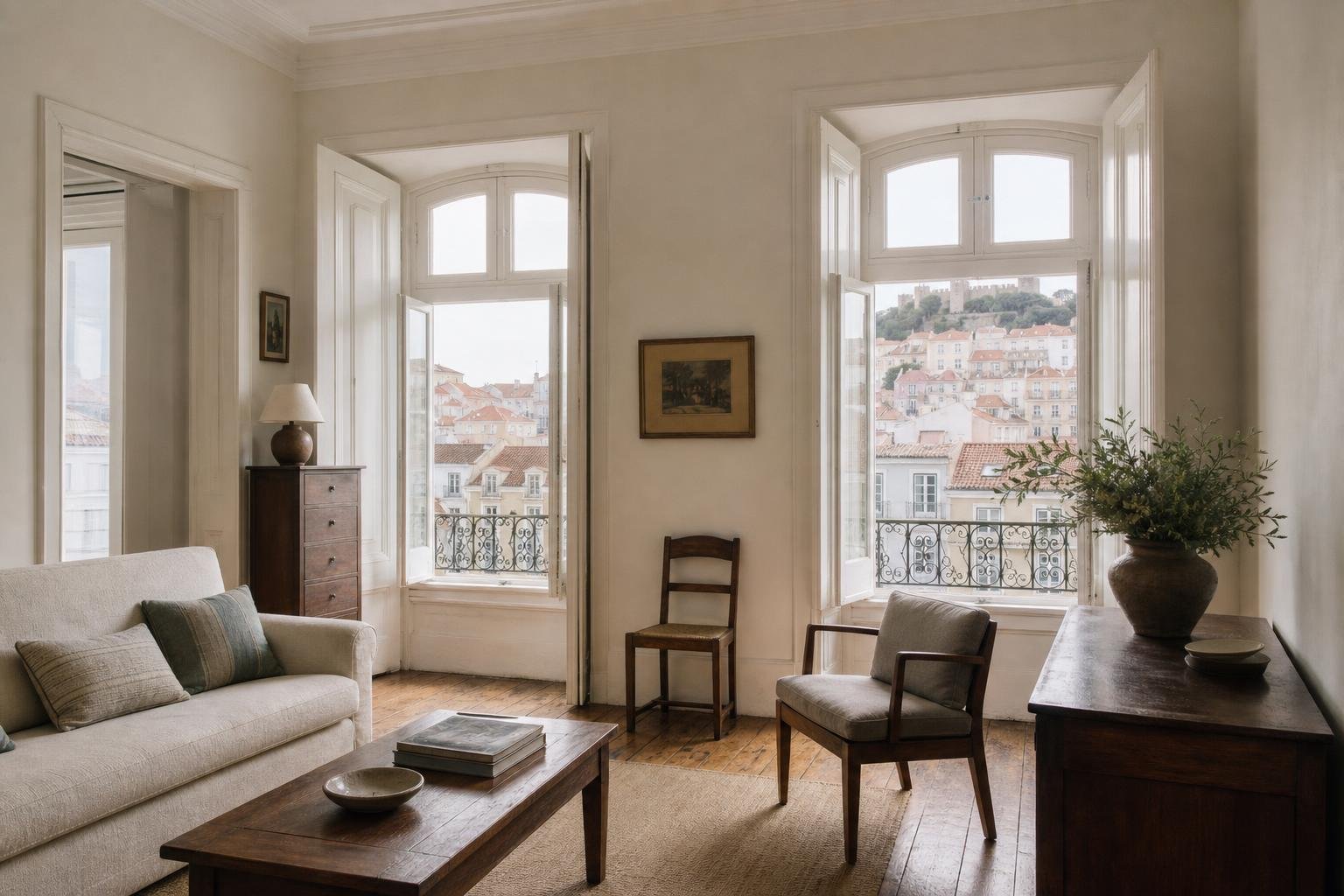

In a Lisbon apartment, an old internal door is more than a timber leaf between rooms. It can set the scale of the ceiling height, the rhythm of a corridor, the relationship with skirting boards and even the way daylight moves through the home. When it sticks, rattles, leaks sound or carries layers of paint, replacement may look like the quickest answer. It is not always the best one.
Many solid-timber and panelled doors can be repaired: minor distortion can be corrected, a frame stabilised, hinges renewed, decayed patches repaired and sealing improved. The right decision starts by separating a tired door from a structurally compromised one. Before changing openings, frames or features with heritage value, check the project context and property status through Lisbon’s building-work prior-notification service.
Start with diagnosis, not sandpaper
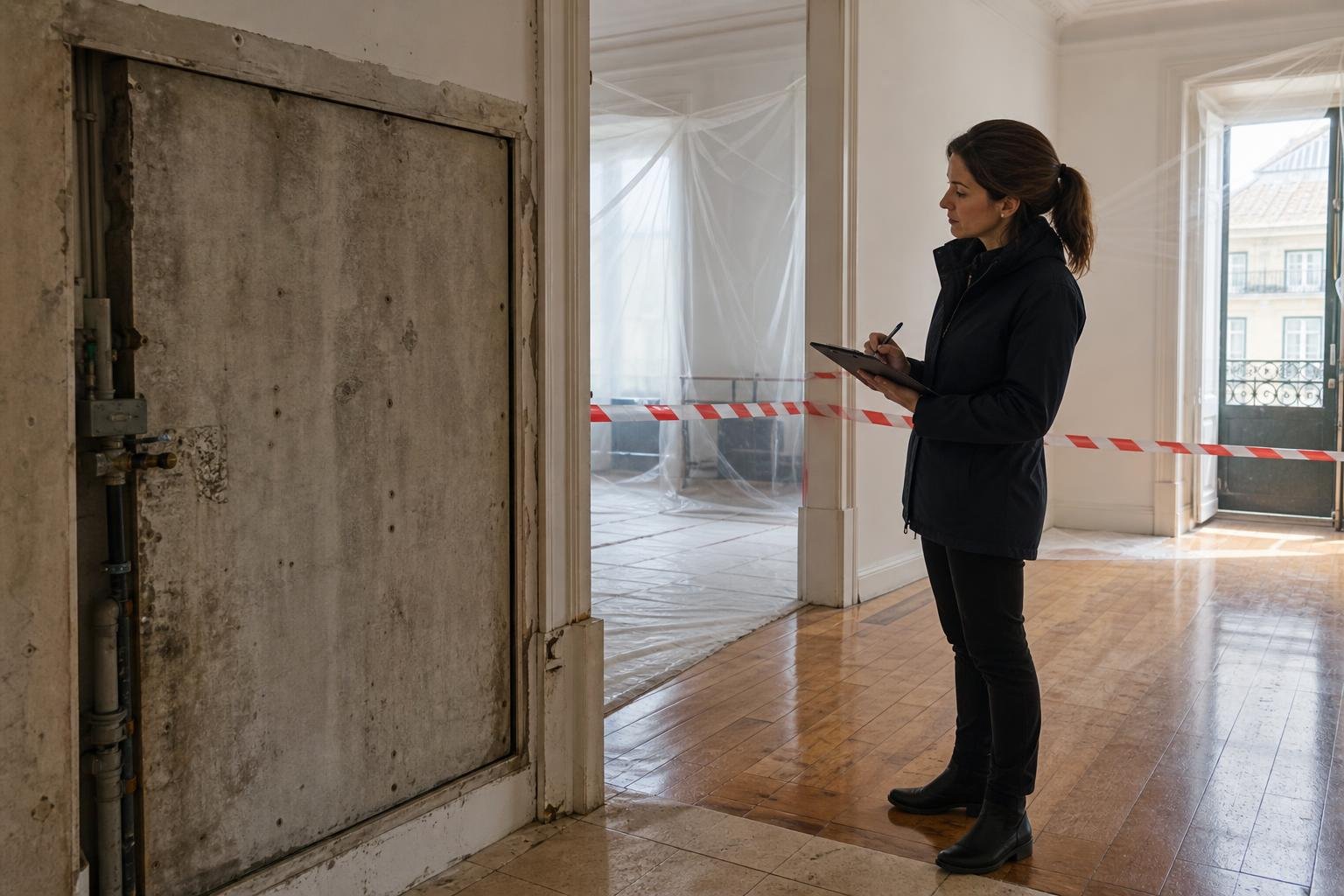
Open and close every door slowly. Note where it catches: the floor, jamb, head or only around the latch. A door that scrapes after new flooring may simply need adjustment; a leaf that meets the frame unevenly may point to movement in the frame, moisture or worn hinges. Look for open joints, darkened timber, insect damage, failing paint and soft areas, especially at the bottom of the leaf.
Only remove a rose or backplate where this can be done without damage, then check whether screws still bite into sound timber. Do not mistake a few historic fixing holes for a general failure. Record the leaf dimensions, thickness, swing direction, hinge positions and existing gaps before ordering any replacement hardware.
- Usually repairable: scratches, built-up paint, uneven gaps, tired latches and small splits.
- Needs technical assessment: a loose frame, rot, active wood-boring insects, persistent distortion or changes to the opening.
Check whether the timber and frame still work together
A door may look beyond repair because it operates poorly, while the real fault lies in the frame or floor. In older buildings, walls and frames are not always perfectly square. Forcing a completely straight new leaf into that opening can create fresh gaps and unconvincing trims.
Check whether the frame moves as the door is operated, whether cracks have opened between architrave and wall, and whether hinges are out of line. A professional should establish whether the job is limited to tightening and packing hardware, whether the frame needs consolidation, or whether the wall has an underlying issue. In Lisbon, work affecting significant features in buildings with heritage value calls for particular care: the municipality’s guidance on protecting built heritage stresses minimising unnecessary alteration.
Do not trim a leaf merely to cure rubbing before checking whether the floor level has risen, moisture is present or the frame has moved. Cutting is irreversible; hinge adjustment or a local correction may not be.
Repair defects without erasing the door’s character
Good repair does not mean making an old door look like a featureless new panel. Flaking paint can be removed in a controlled way; small splits can be glued and secured; local losses can be filled or repaired with compatible timber. Whether to repaint or expose timber depends on the design, timber species, existing repairs and the rest of the apartment.
Avoid excessive filler on edges, panels and joints: it softens the profile and tends to reveal itself in use. Where old paint, varnish or treatment products are unknown, plan surface preparation with dust control and ventilation. Portugal’s Directorate-General of Health advises ventilation during painting and DIY work, and caution with surface-treatment products that release pollutants indoors; see its indoor-air recommendations.
On painted doors, test a small area before committing to stripping the whole leaf. Careful preparation and repainting while retaining the profiles can sometimes be more coherent than exposing heavily patched timber.

Hardware is the detail that changes everyday use
Hinges, latches, handles, plates and locks carry an important part of a door’s identity. Before replacing them all, establish whether dirt, paint binding the mechanism, worn screws or poor alignment is the actual problem. A quality hinge can be cleaned, repositioned and lubricated; a handle can remain even when the latch needs replacement.
When selecting new hardware, respect the scale of the door. A tiny handle on a tall leaf looks lost; an oversized backplate may cover marks that later become visible at the edge of the finish. Also check the handle spindle position, latch backset and distance to the leaf edge. For bedrooms and bathrooms, consider privacy and emergency-release needs, not appearance alone.
Where the aim is better operation without losing character, a sensible route is often to retain serviceable handles or plates while fitting discreet, compatible mechanisms. Test the complete assembly: attractive hardware that requires slamming to latch is not a successful repair.
Acoustic comfort and privacy: fix the leaks first
An old internal door will rarely provide the acoustic insulation of a modern technical door. Yet much of the disturbance comes from gaps: excessive clearance below the leaf, poor contact with the frame, a latch that does not pull the door home, or loose architraves.
Begin by correcting the geometry. Then assess suitable perimeter seals, a threshold or drop seal where the use justifies it, and a latch that holds the leaf closed without force. Do not seal a room that needs airflow without considering the home’s overall ventilation strategy. The health authority recommends daily ventilation and ventilation during moisture-producing activities, so privacy and fresh air should be designed together rather than treated as opposing goals.
For a closer look at practical options, read our guide to interior doors and acoustic seals. If the issue includes walls, ceilings or floors, changing the door alone may have limited effect.
When to restore, reproduce or replace
Restore when the leaf is stable, its design contributes to the whole and defects are local or correctable. Reproduce when the original no longer offers safety or sound material, but the opening, neighbouring doors and character of the home call for continuity. Replace with a new solution when deterioration is extensive, specific safety requirements apply, or a wider redesign makes the existing leaf unsuitable.
In buildings or areas with specific rules, preserving timber features may be more than an aesthetic preference. Regulations published in the Diário da República illustrate a recurring rehabilitation principle: conserve or restore representative timber elements, and reproduce them with compatible methods, form and materials when conservation is no longer viable. This is not an automatic rule for every apartment, but it is a useful decision framework.
If the work coincides with broader comfort upgrades, use the energy certificate as a renovation plan to sequence priorities. Internal doors do not directly alter the rating, but the project may be the right time to coordinate ventilation, heating, windows and finishes.
Want to keep old doors without turning the work into a chain of improvised repairs? Obra Lisboa can help define the diagnosis, work sequence and finish details before the project begins.
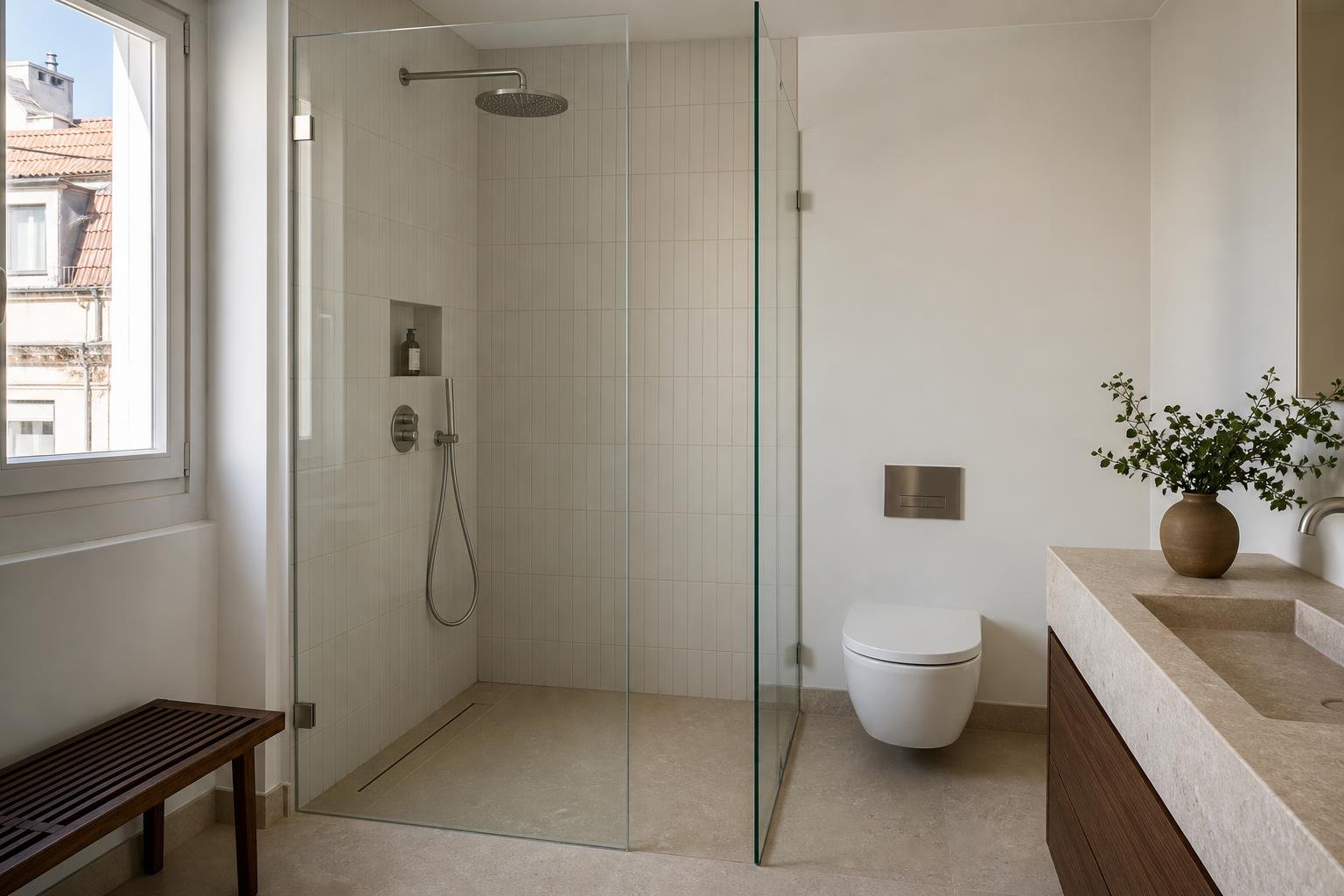
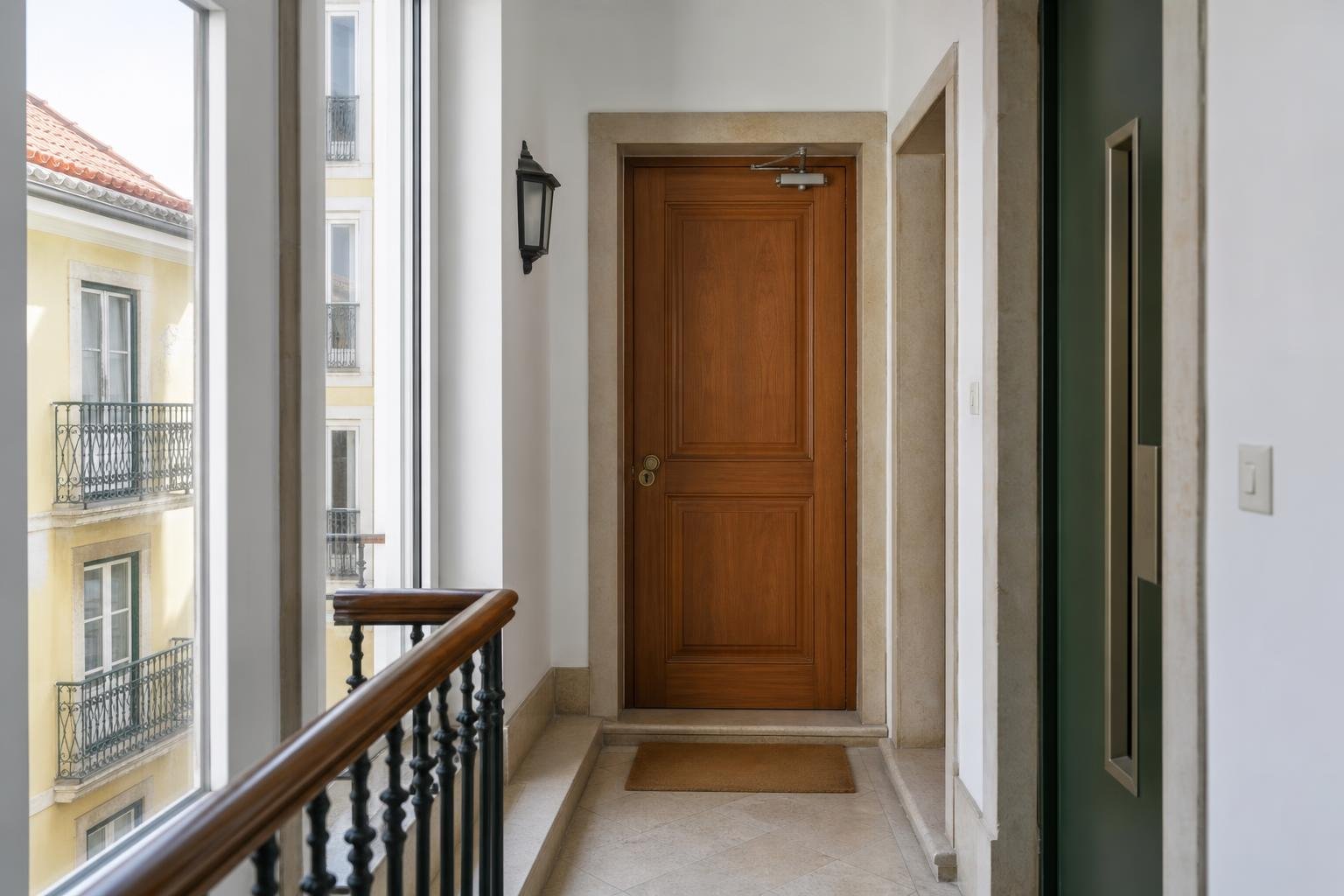
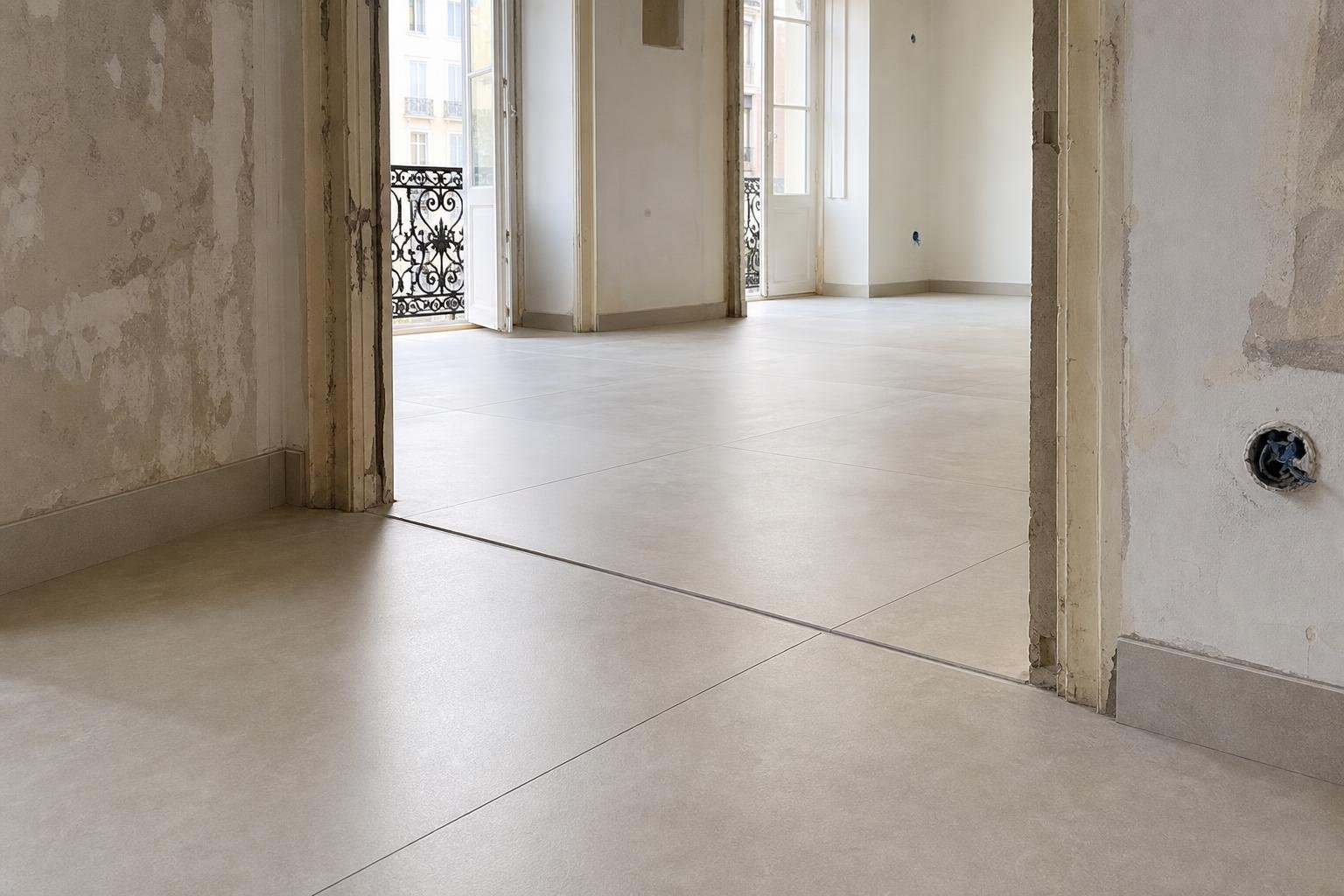
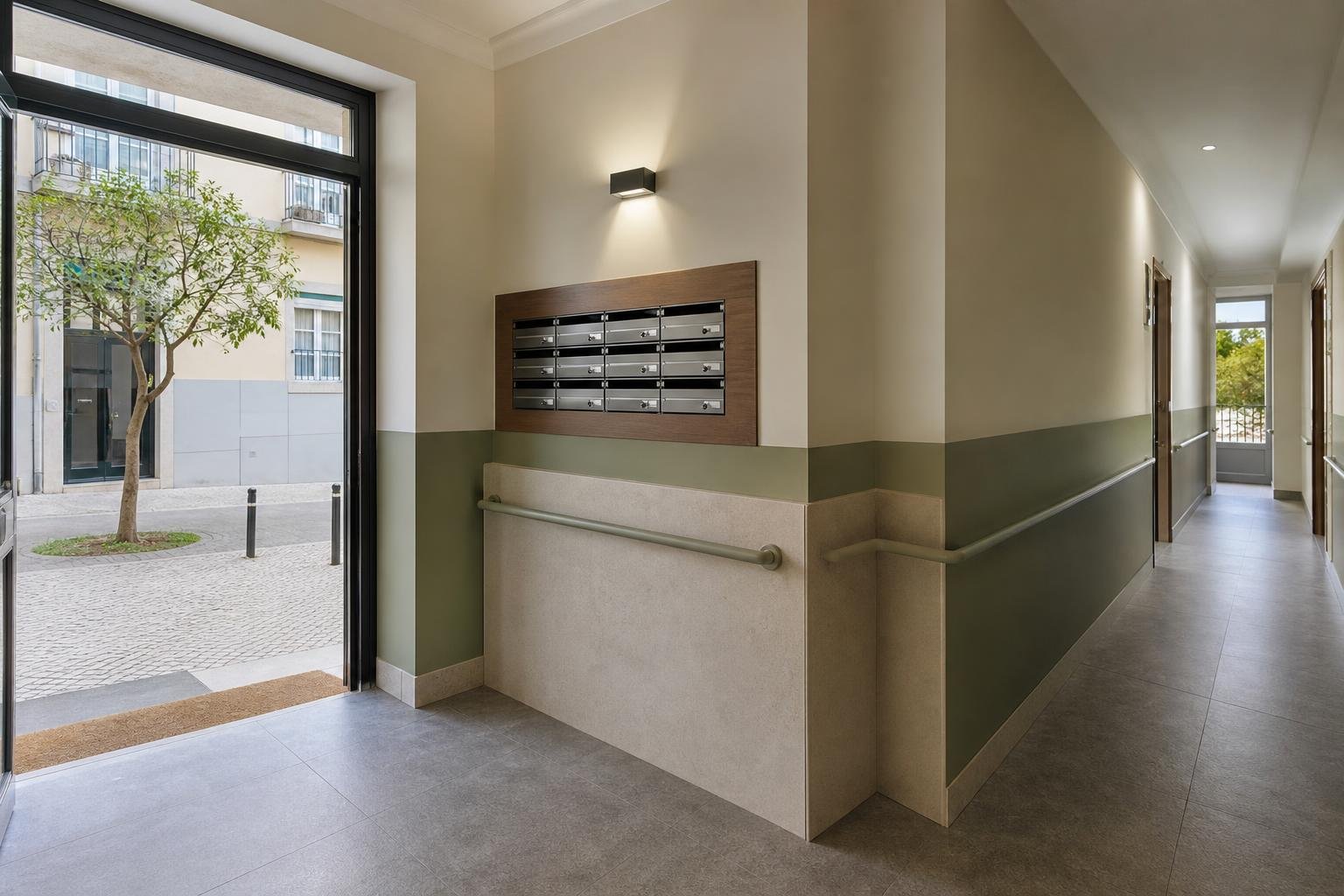
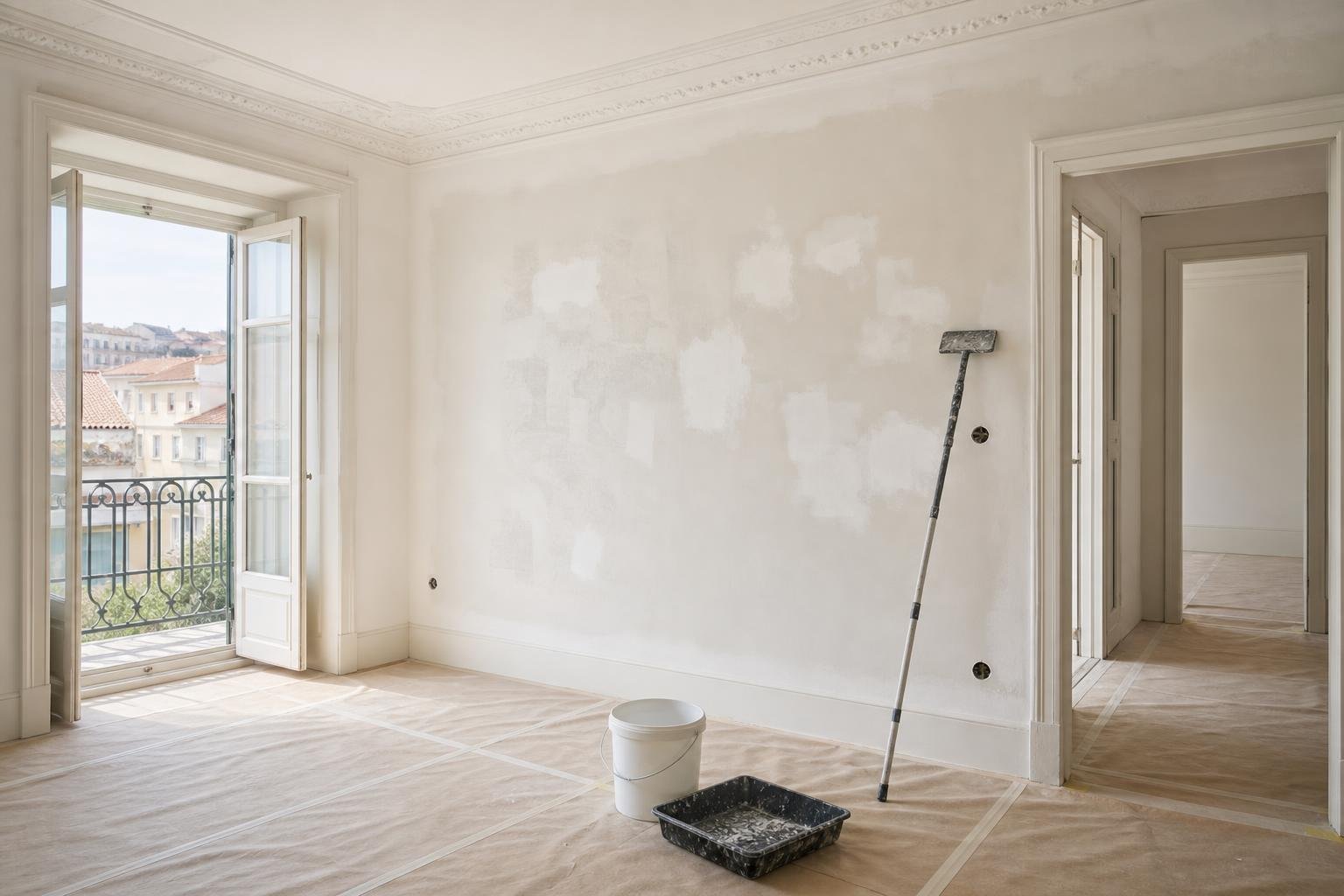
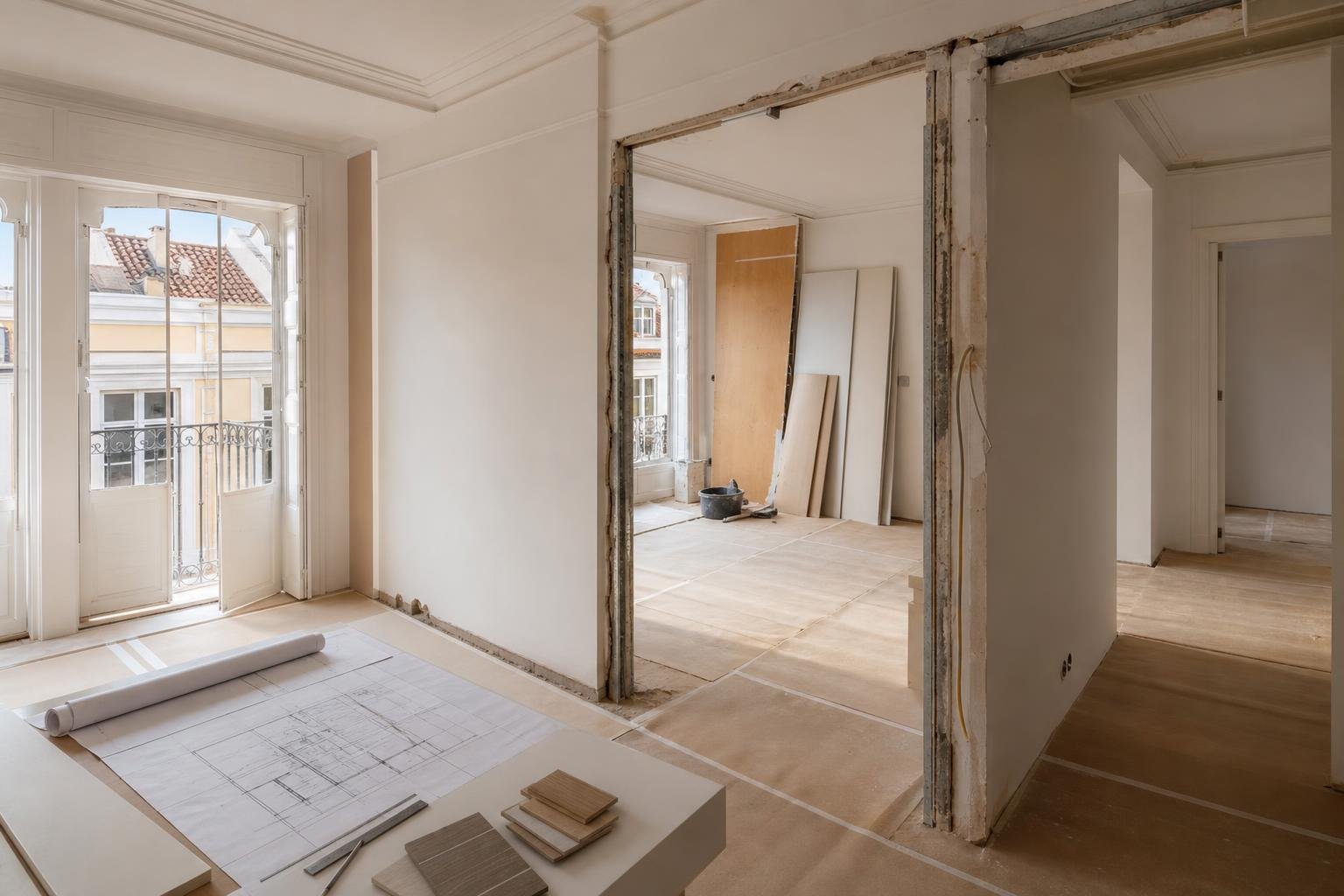
AI-generated editorial image; it does not depict an Obra Lisboa project.

Obra Lisboa