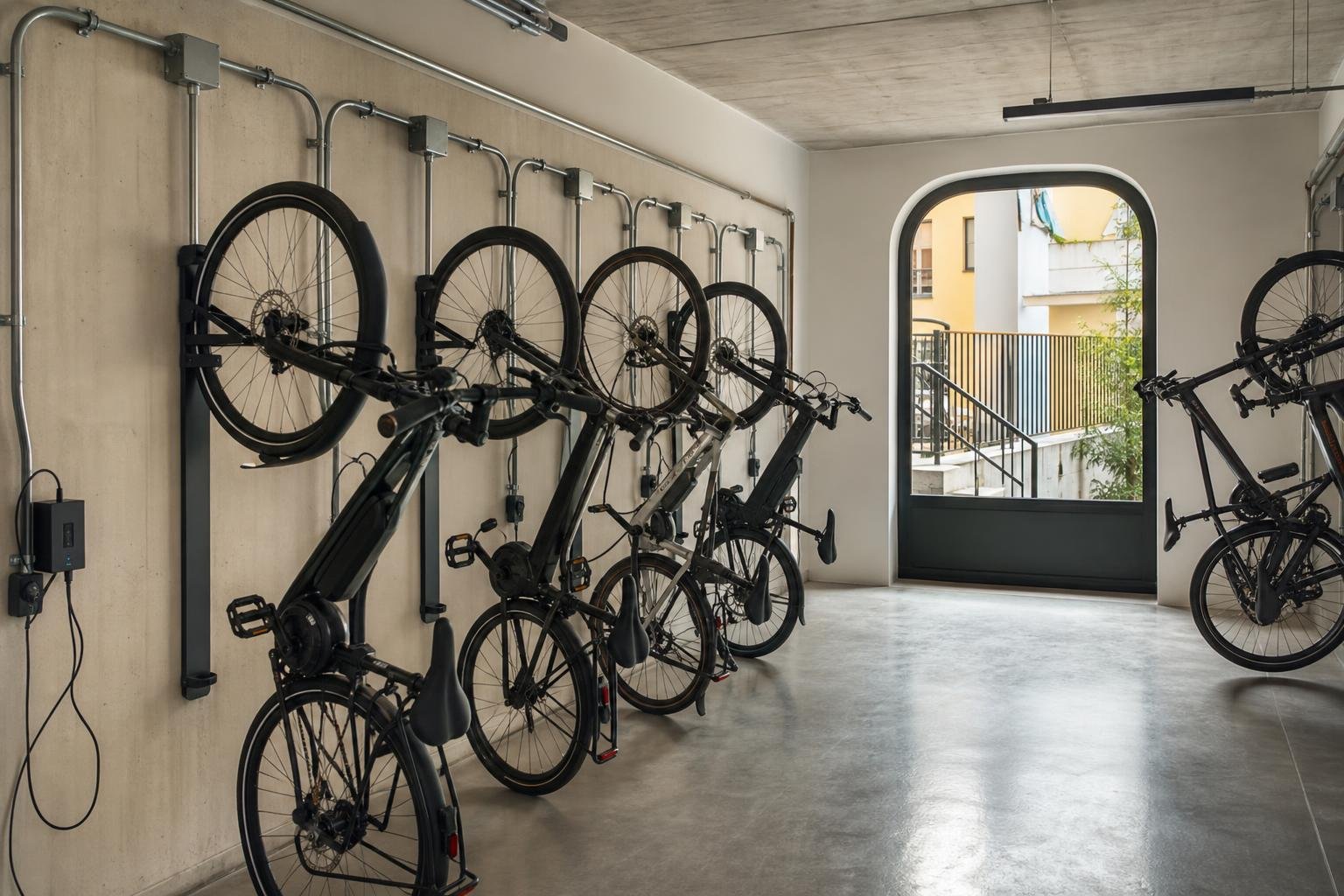
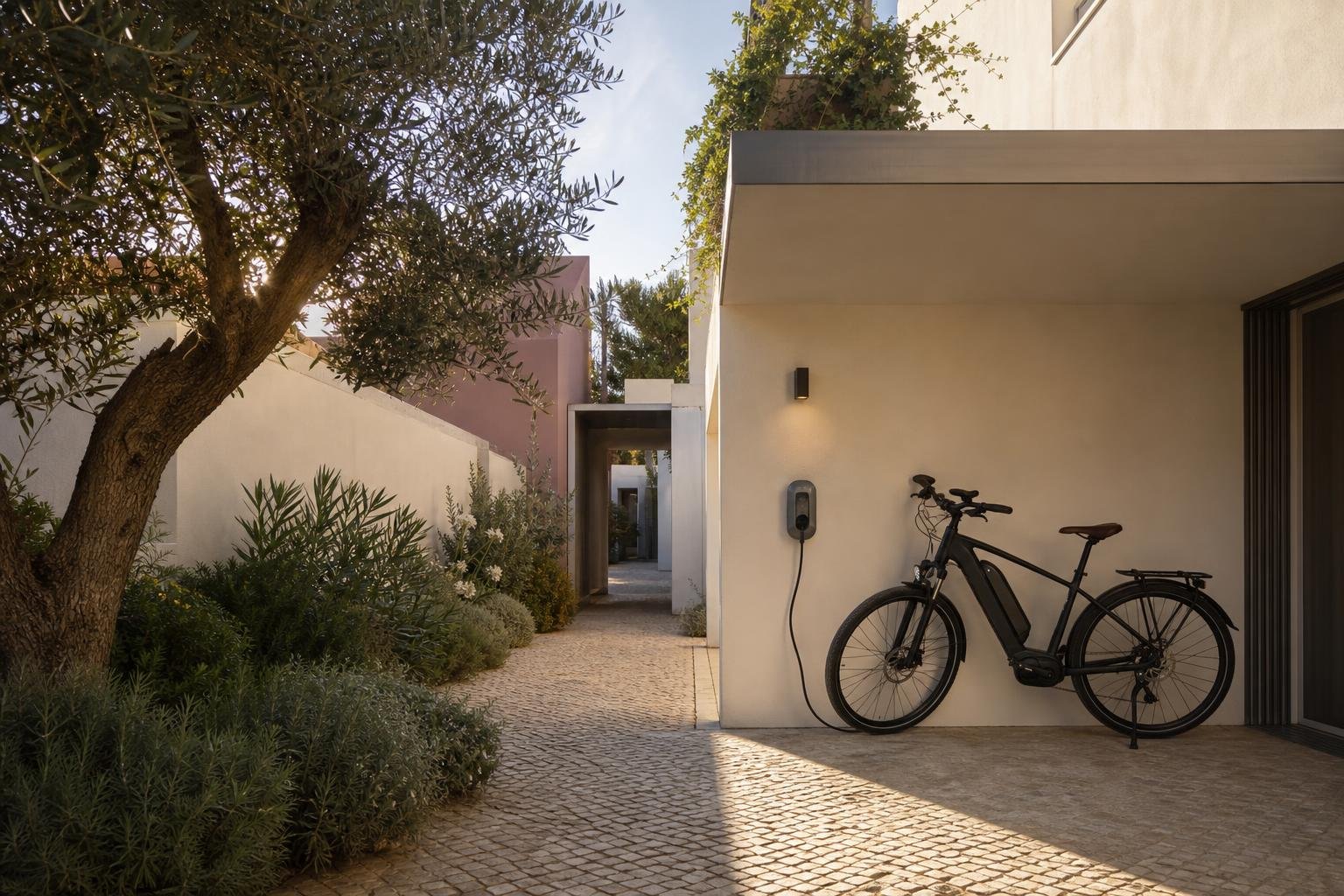
An e-bike makes short journeys, hills and shopping trips easier, without requiring a sophisticated garage. Charging it, however, should not mean running an extension lead across the patio, using an indoor outlet through an open window or leaving the charger in the weather. At a Lisbon house, the most reliable answer is usually straightforward: a dry, ventilated and accessible place planned together with the electrical installation.
The aim is not to turn bicycle storage into a car-charging installation. It is to create a safe routine: arrive, park, connect without stretching cables, keep the equipment out of rain and be able to disconnect it without walking through the house. The right arrangement depends on the bike’s daily route, the courtyard’s solar exposure and the condition of the consumer unit.
Start with the real route from gate to charging bay
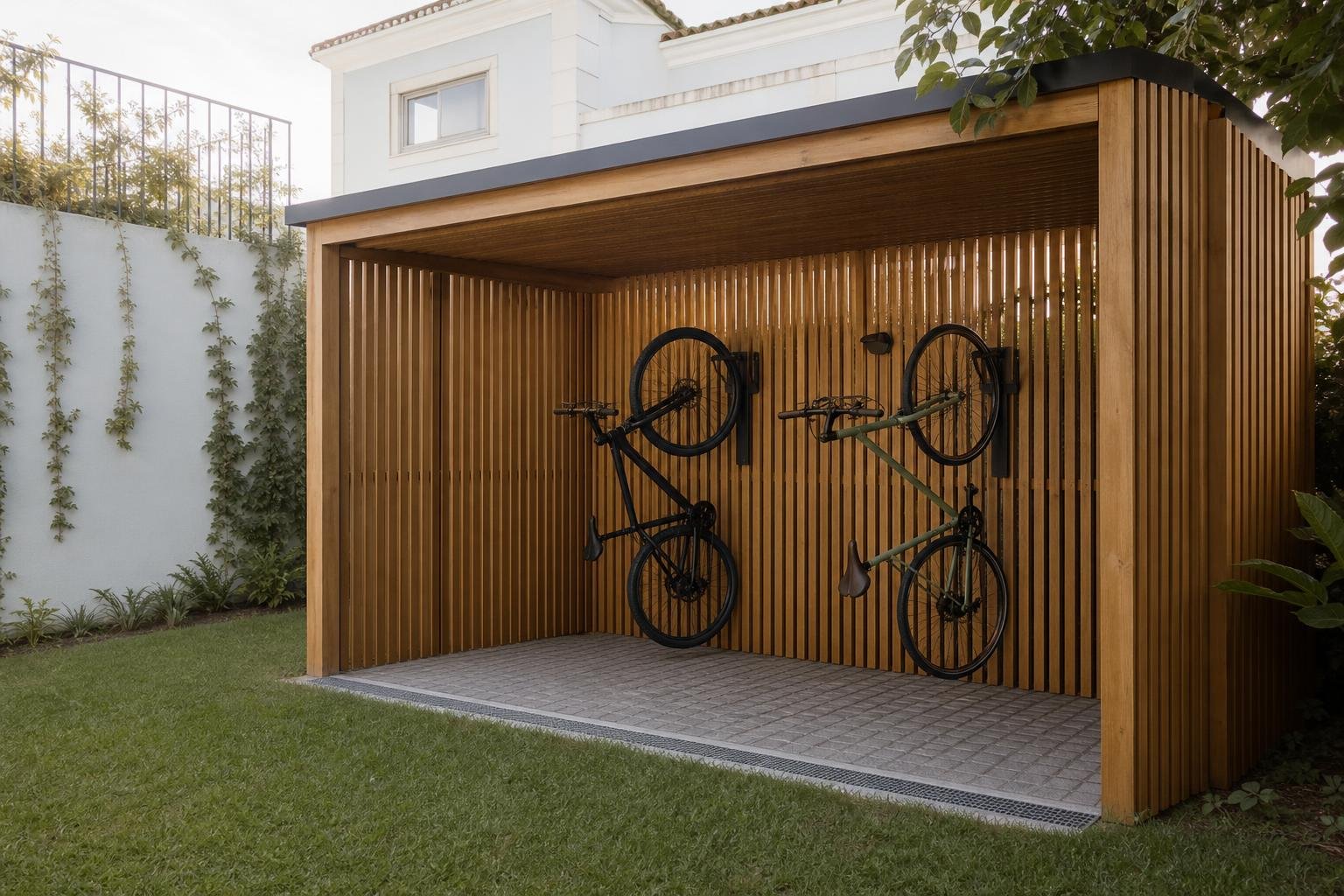
First choose where the bicycle naturally ends up when it arrives home. If charging means carrying it up steps, negotiating pots or leaving the gate open, the system will soon be ignored. A side shelter, a covered spot by the utility room or an outdoor store can be more useful than a remote garage.
Allow room to park, remove a detachable battery where applicable, place the charger and move around without catching handlebars on a wall. Keep clear of pedestrian routes, steps, car manoeuvring areas and places where a garden hose or patio washing will directly soak the outlet.
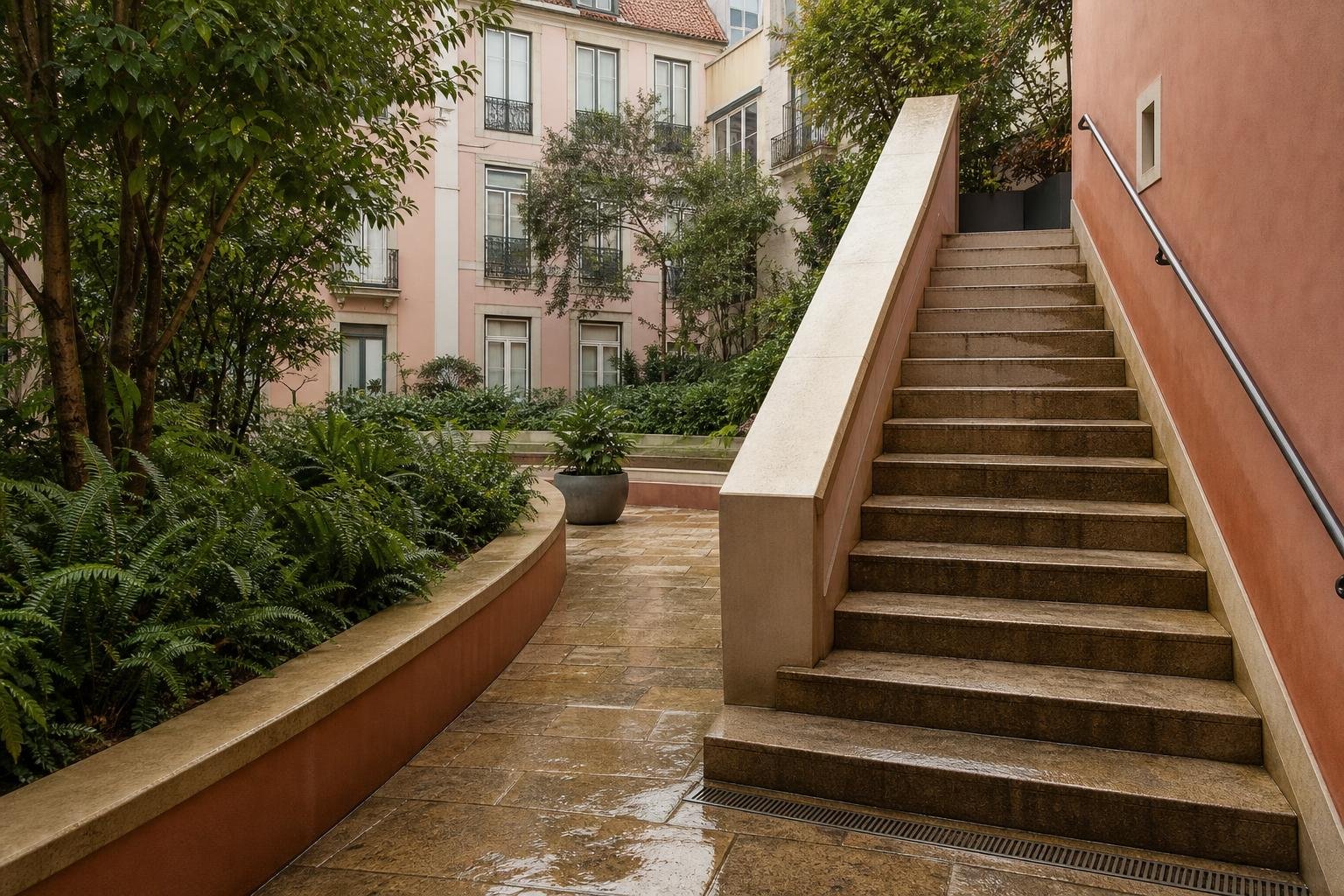
On an exposed plot, weather protection is part of the design. Lisbon’s climate normals show hot summers and rainfall concentrated in other periods, so direct sun, wind-driven rain and runoff need attention from the outset. Use the IPMA Lisbon climate normal to understand those local conditions.
An outdoor outlet is not an indoor outlet moved outside
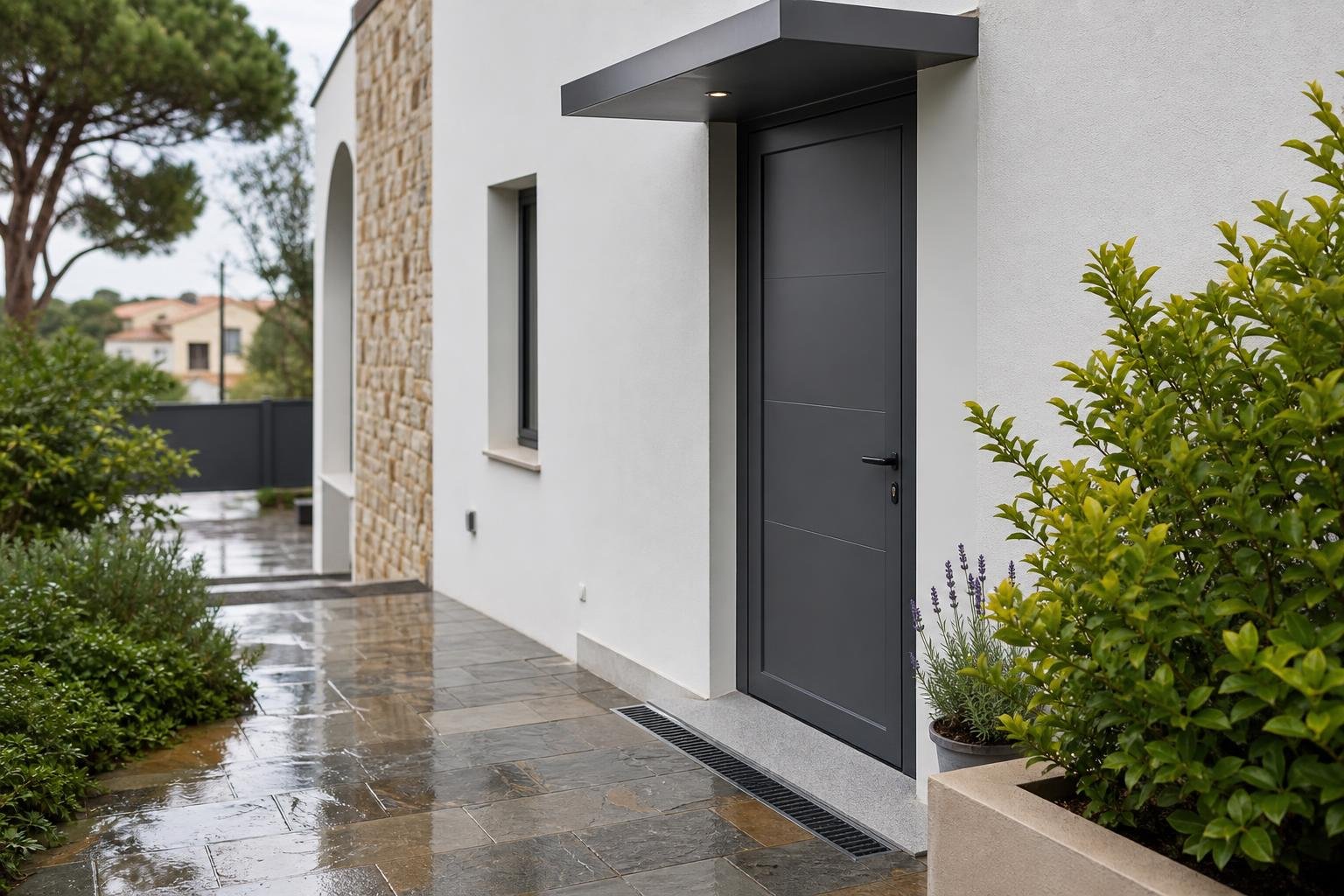
The charging point should be a fixed outlet suitable for its setting, located away from direct water exposure and protected by an appropriate cover or enclosure. A cover only works when it closes properly; an outlet low beside the paving, below a downpipe or behind regularly watered planting is still a poor choice.
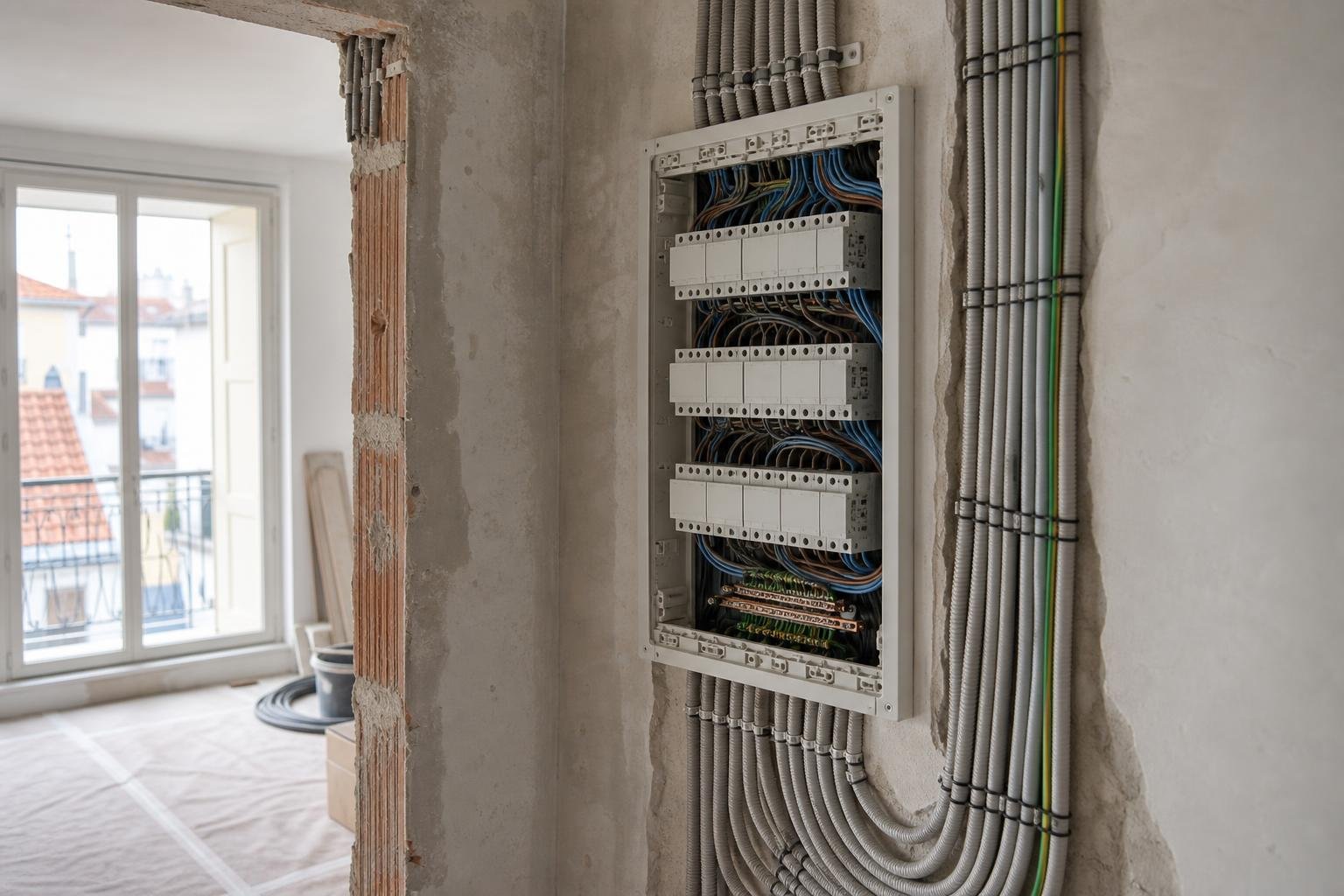
Ask a qualified electrician to assess the installation, particularly in an older house, where the consumer unit has no spare capacity or where substantial outdoor loads already exist. Portuguese technical rules require protective conductors in domestic circuits and provide for residual-current protection; they also require circuits to be sized for anticipated loads. Review Portugal’s Low-Voltage Electrical Installation Technical Rules before assuming that any existing outlet is suitable.
In practical terms, a dedicated and clearly identified outlet makes daily use, maintenance and future changes easier. An e-bike does not need excessive capacity, but a charger, power tools, pressure washer and lighting should not all depend on one improvised connection.
Keep the charger away from water, heat and impact
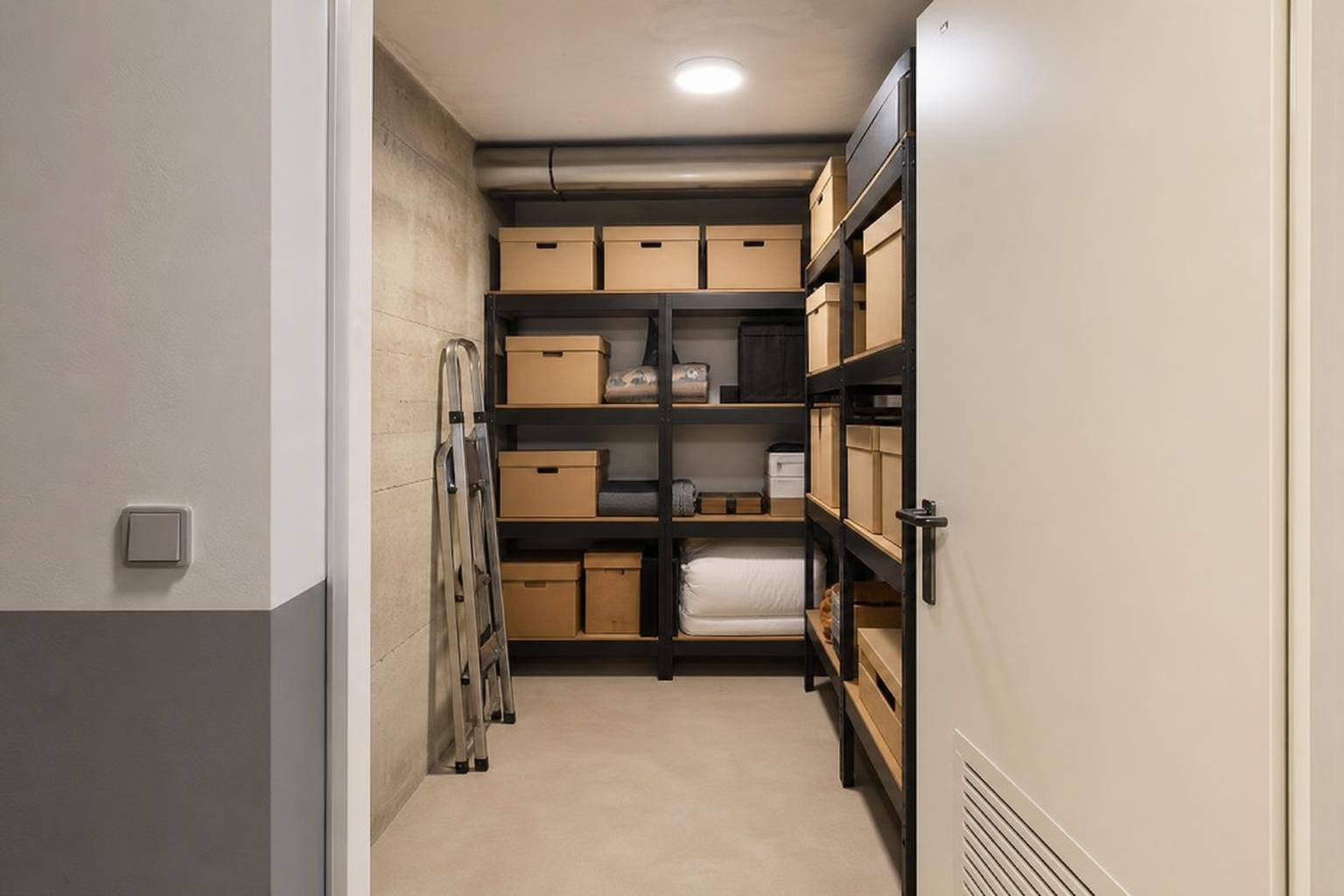
The charger needs a stable surface, raised above the floor and clear of puddles. A ventilated technical cabinet, a shelf below a canopy or a protected wall bracket are more sensible than placing it on the ground. Leave free air around it: wrapping equipment in fabric, closed boxes or bags can trap heat.
It also helps to distinguish between storing a bike outdoors and charging it in the rain. A bicycle may have components designed for exterior use, but the charger, plugs and connections need more controlled conditions. Follow the battery maker’s instructions and use the supplied charger, or one explicitly approved as compatible.
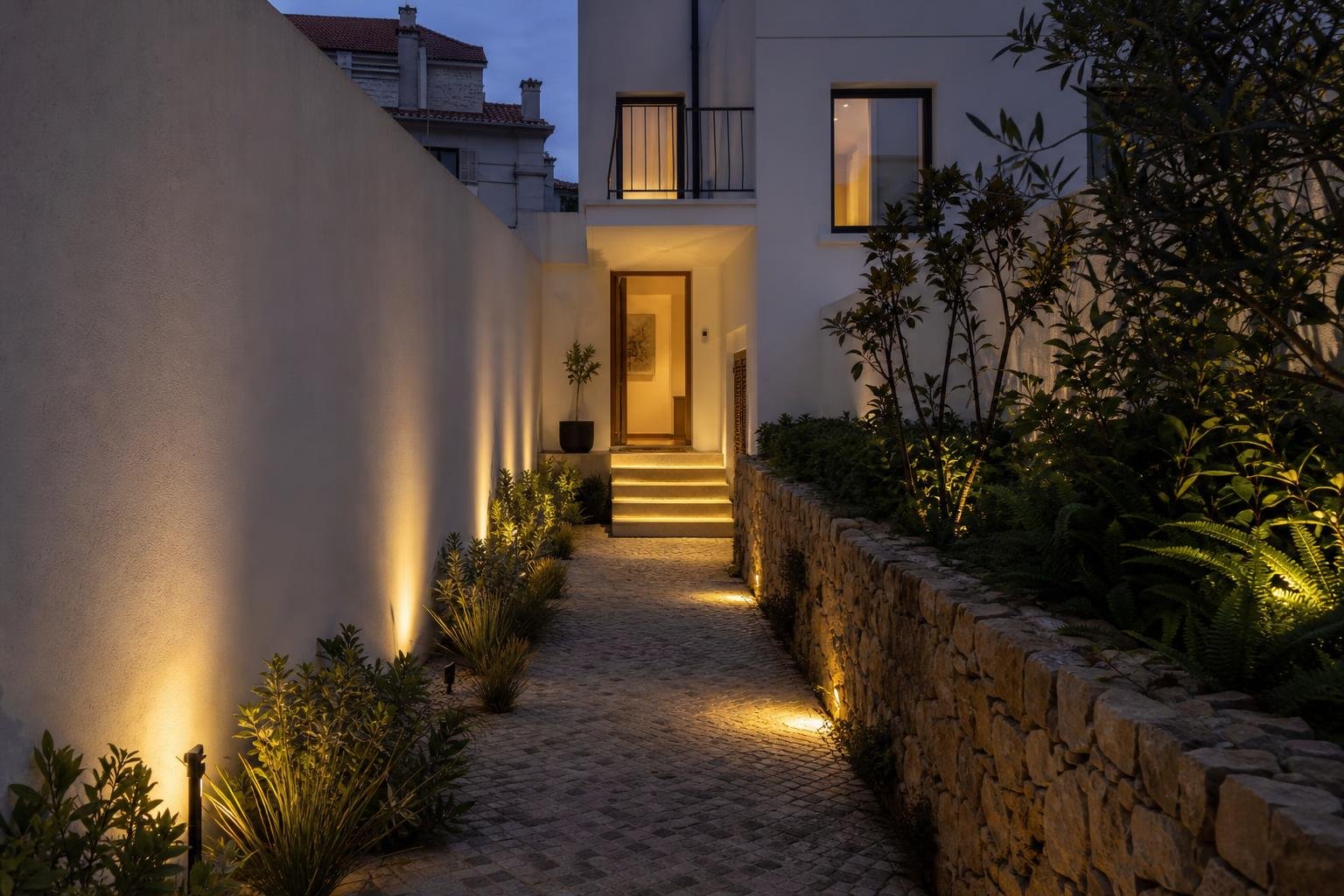
If the shelter has a door, provide permanent ventilation and a secure lock. High and low vents arranged so they do not admit driving rain are generally more useful than making the compartment completely sealed. For the surrounding area, see how to plan outdoor lighting for entrances and paths without excess light.
Keep cables short, visible and free of permanent extensions
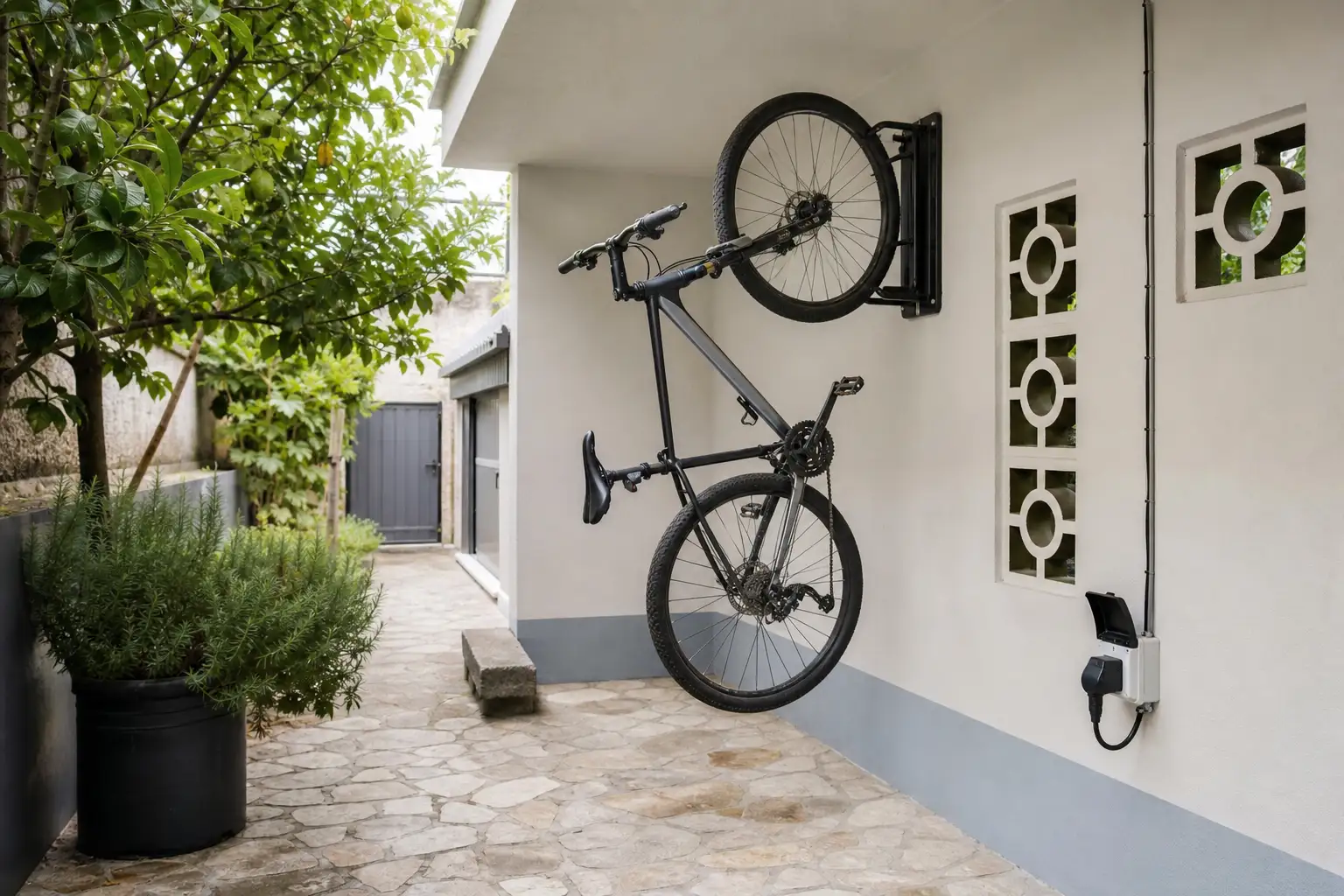
The practical rule is to bring the outlet to the bike, rather than the bike to the outlet. Measure the charger lead with the bicycle in its normal parking position, then add only enough slack to avoid stressing the plug. A lead stretched along the floor is a trip hazard and more likely to wear or let water reach connections.
An extension lead may solve an occasional need, but it should not become the permanent installation. Do not leave plugs, multiway adapters or coiled leads outdoors for weeks. If the socket is too far away, install a fixed point or move the bicycle bay.
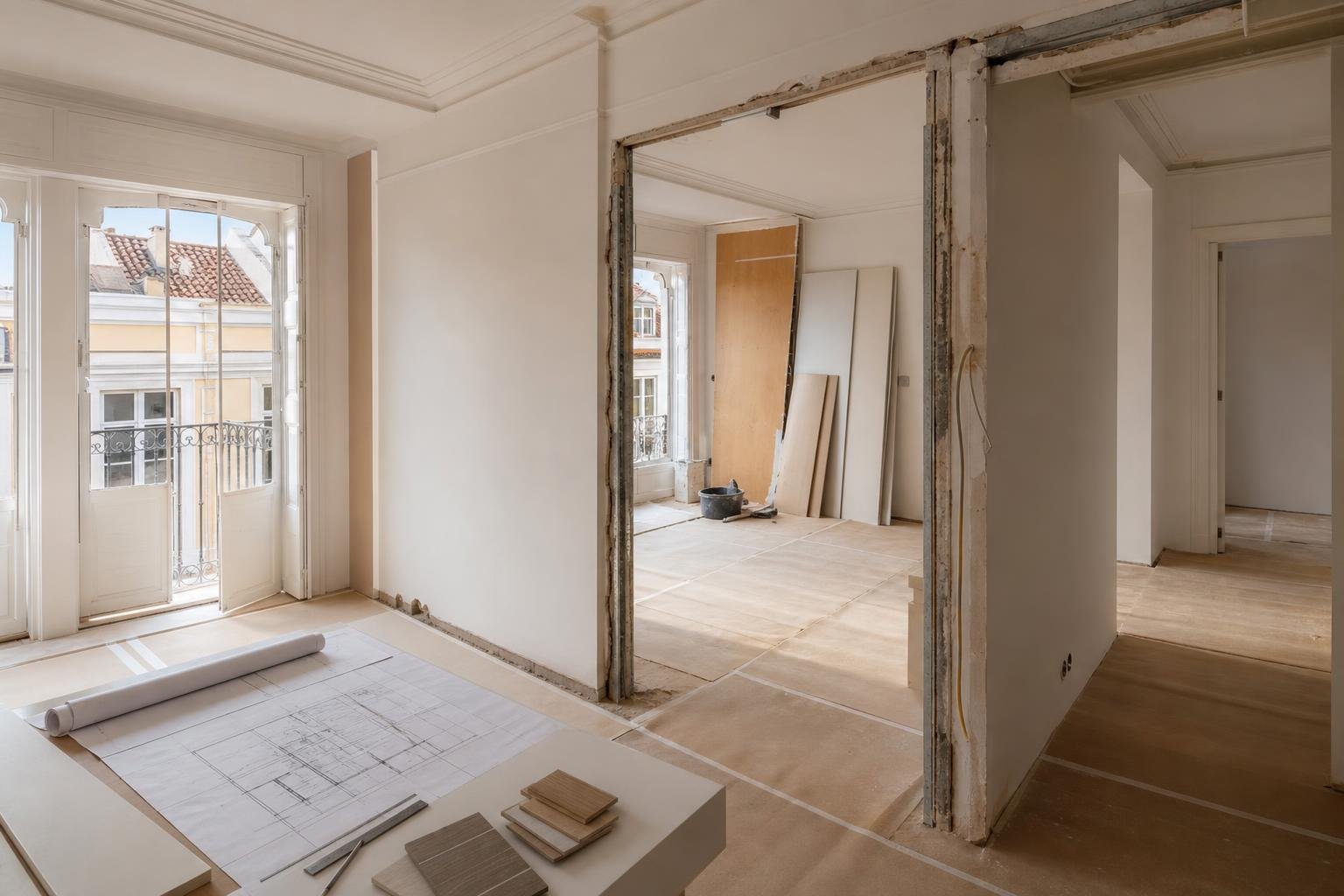
During renovation, include this need before chases, finishes or external walls are closed. Our guide to sockets and switches in a renovation shows why everyday uses should become electrical decisions early in the work.
Choose a bay that reduces theft and minor damage
The charging point should let you lock the bicycle frame to a fixed element, rather than simply running a chain through a wheel. A proper wall anchor, robust steel hoop or well-fixed structural rack makes the bay safer without making charging awkward.
Avoid completely burying the bicycle behind stored materials. Clutter makes it harder to check cables, plugs and damp, and makes rapid removal less easy. A tidy area lets you notice standing water, cable damage or an outlet cover left open straight away.
If the bike is close to the gate, combine lighting aimed at the floor and lock with a shelter that does not leave the battery in late-afternoon sun. Better location and a consistent routine do more for security than indiscriminately adding accessories.
Set a charging routine that does not rely on rushing
Before connecting, check that the plug, cable and outlet are dry and undamaged. Park the bike securely, connect the charger in the sequence recommended by its manufacturer and remove it when charging is complete. Do not charge a battery that has suffered a significant impact, is swollen, smells unusual or becomes abnormally hot: stop using it and seek technical assistance.
Avoid charging immediately after a very hot ride or after the bike has been sitting in full sun. Let components settle in a dry, ventilated place. Equally, do not treat the shelter as storage for paint, fuels, cardboard or textiles beside the charger.
Light electric mobility is part of the solutions being promoted in Lisbon and Portugal; ADENE’s work on electric mobility provides useful context. At home, though, the best improvement remains a charging point designed around the actual bicycle and its daily use, not a rushed adaptation.
Renovating a house and want to include bicycle storage, outdoor outlets and lighting without later patchwork? Obra Lisboa can help coordinate these details with the wider project.
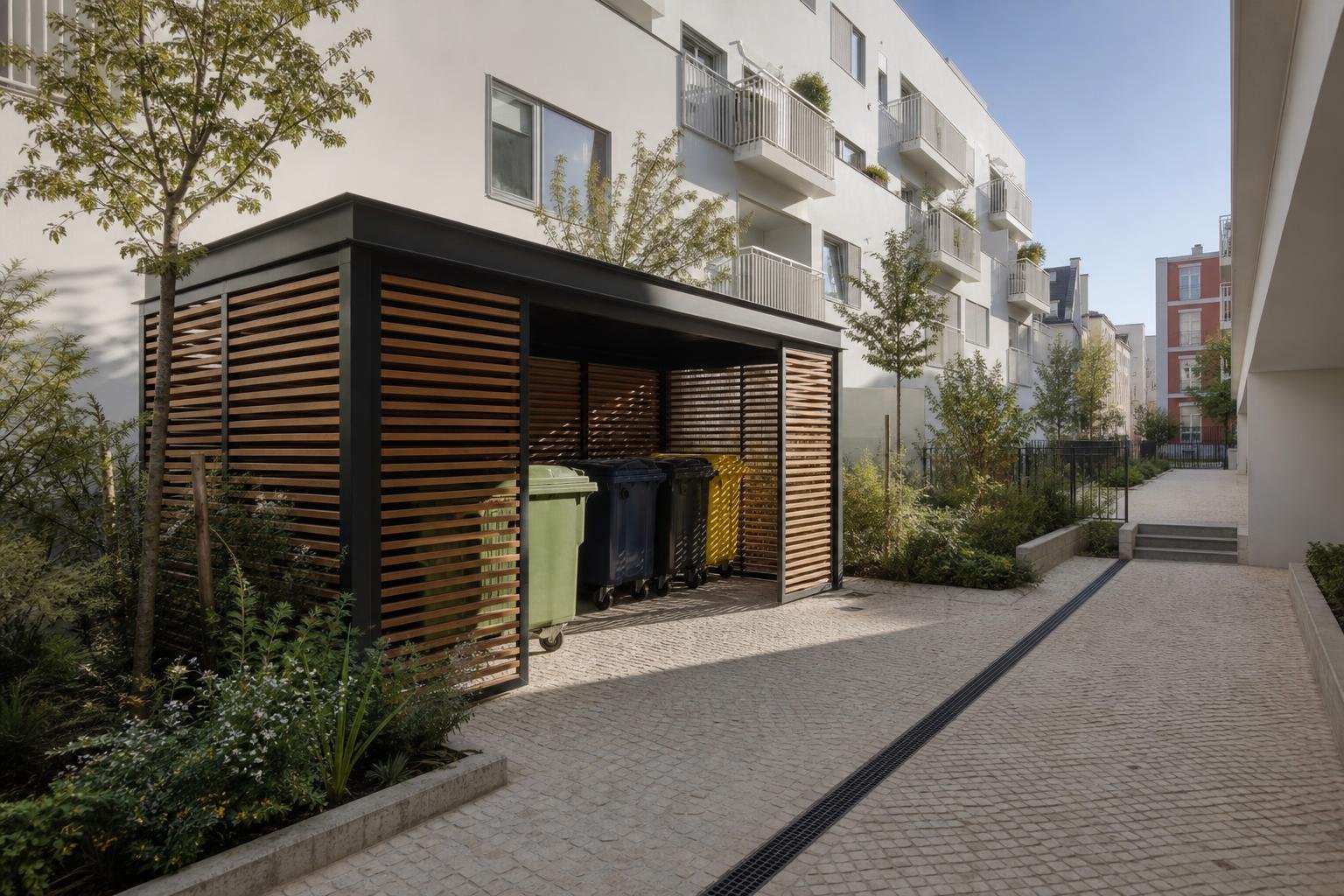
AI-generated editorial image; it does not depict an Obra Lisboa project.

Obra Lisboa