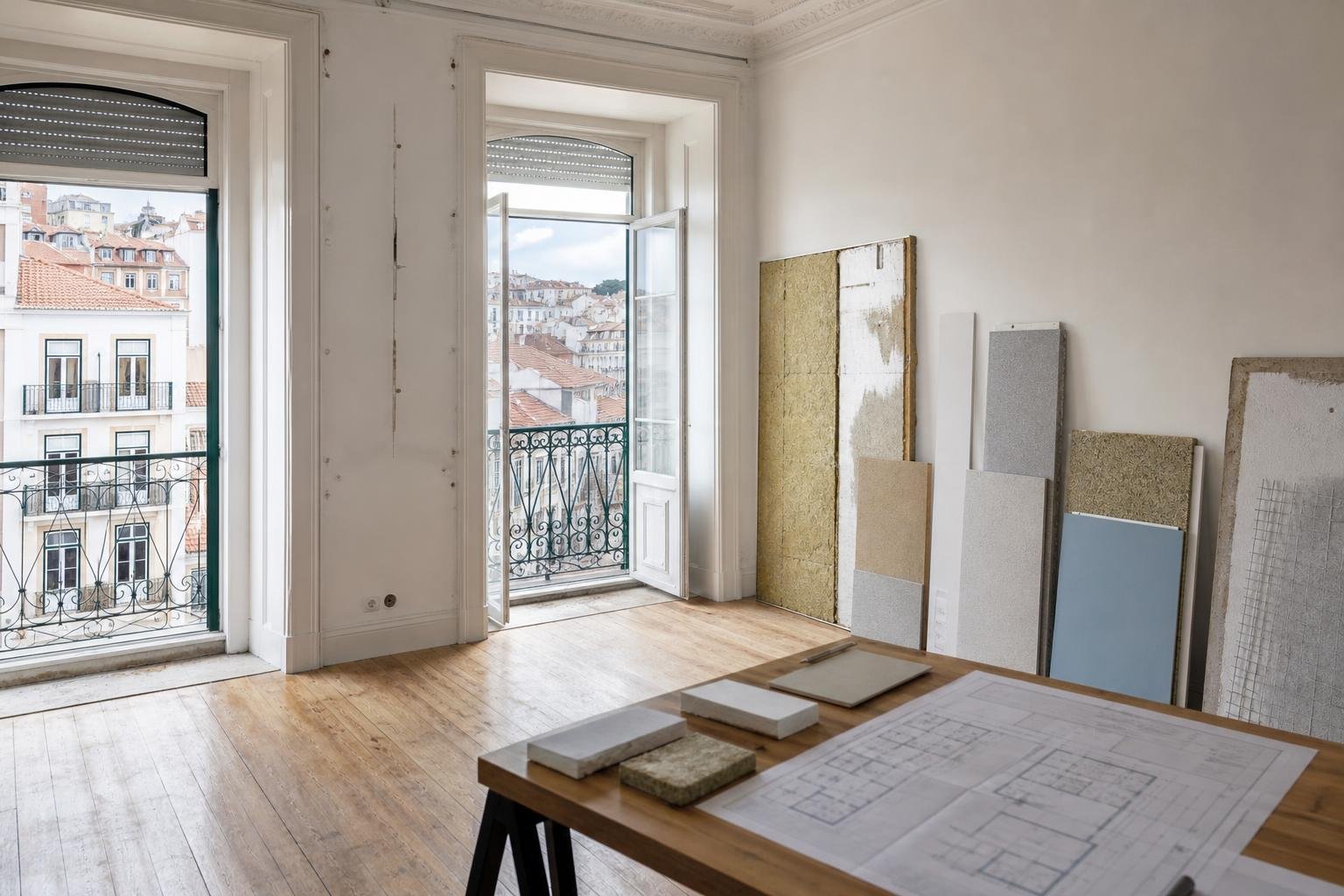
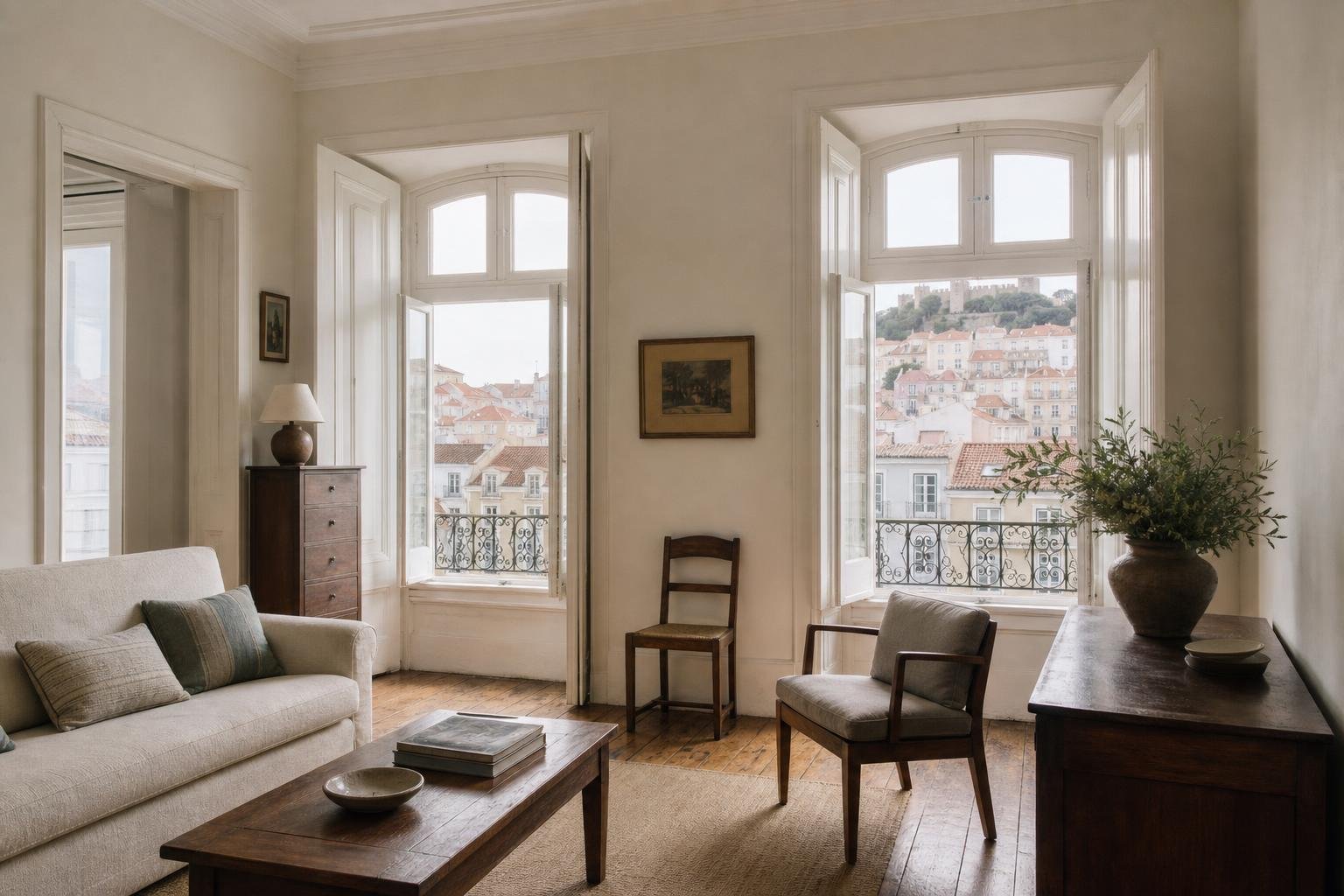
In a Lisbon apartment, a timber window that lets in draughts, noise or water is not automatically beyond repair. Many older frames are made from solid timber, have proportions that are difficult to reproduce and form an important part of the façade. The mistake is to treat the choice as simply “leave it as it is” or “replace everything”. A sound decision starts by identifying where the assembly is failing: the timber, the junction between sash and frame, the glazing, the hardware, the wall connection or the external drainage.
Lisbon combines dry, sun-exposed summers with rain concentrated in the cooler months. The Instituto Geofísico’s 1991–2020 climate normal shows particularly wet conditions from October to January, making sill slopes, external junctions and paint maintenance as important as the glazing specification. See the IPMA Lisbon climate normal for that local context.
This guide explains what can be restored, which upgrades are worthwhile and when replacement becomes unavoidable. For a wider intervention, also read our guide to replacing windows during a Lisbon renovation.
Separate cosmetic, operational and structural defects first
Peeling paint, cracked putty or missing seals are genuine problems, but they do not prove that a window has reached the end of its life. Open every sash and check whether it rubs against the frame, stays where it should and closes firmly against the rebate. Then carefully press the lower rails and stiles: darkened or soft timber near the sill deserves close attention because that is where water commonly lingers.
Also look for distortion: gaps that change markedly from top to bottom, loose glass, pulled-out hinges, sashes that strike each other, or areas where timber can no longer hold a fixing. A useful survey separates:
- surface issues: paint, varnish and fine cracking;
- weathertightness: gaps, failed seals, glazing and poorly sealed junctions;
- mechanical issues: hinges, espagnolette hardware, handles and sash alignment;
- structural failure: widespread decay, persistent twisting or loss of timber section.
Without this distinction, owners can replace a repairable window—or spend on cosmetic repairs for a unit that is no longer stable.
The leak may not be coming through the window
Before blaming the timber, trace the water path. An internal stain may come from failed external sealing, a sill without sufficient fall, cracked render, a nearby rainwater pipe or condensation generated inside the home. If damp appears mainly after wind-driven rain, inspect the frame-to-wall junction and the exterior sill surface. If it appears on cold mornings, especially at corners and on glass, assess ventilation and thermal bridges.
Do not seal every gap without considering fresh-air provision. Portugal’s energy rules treat glazed elements as a relevant part of thermal performance and comfort, including thermal transmittance and solar factor. Read the Portuguese building energy performance regulation before choosing a solution on price alone.
In older buildings, repairing the external junction and restoring drainage at the sill can solve more than replacing an entire sash.
Restore properly: repair timber, adjust sashes and seal without losing character
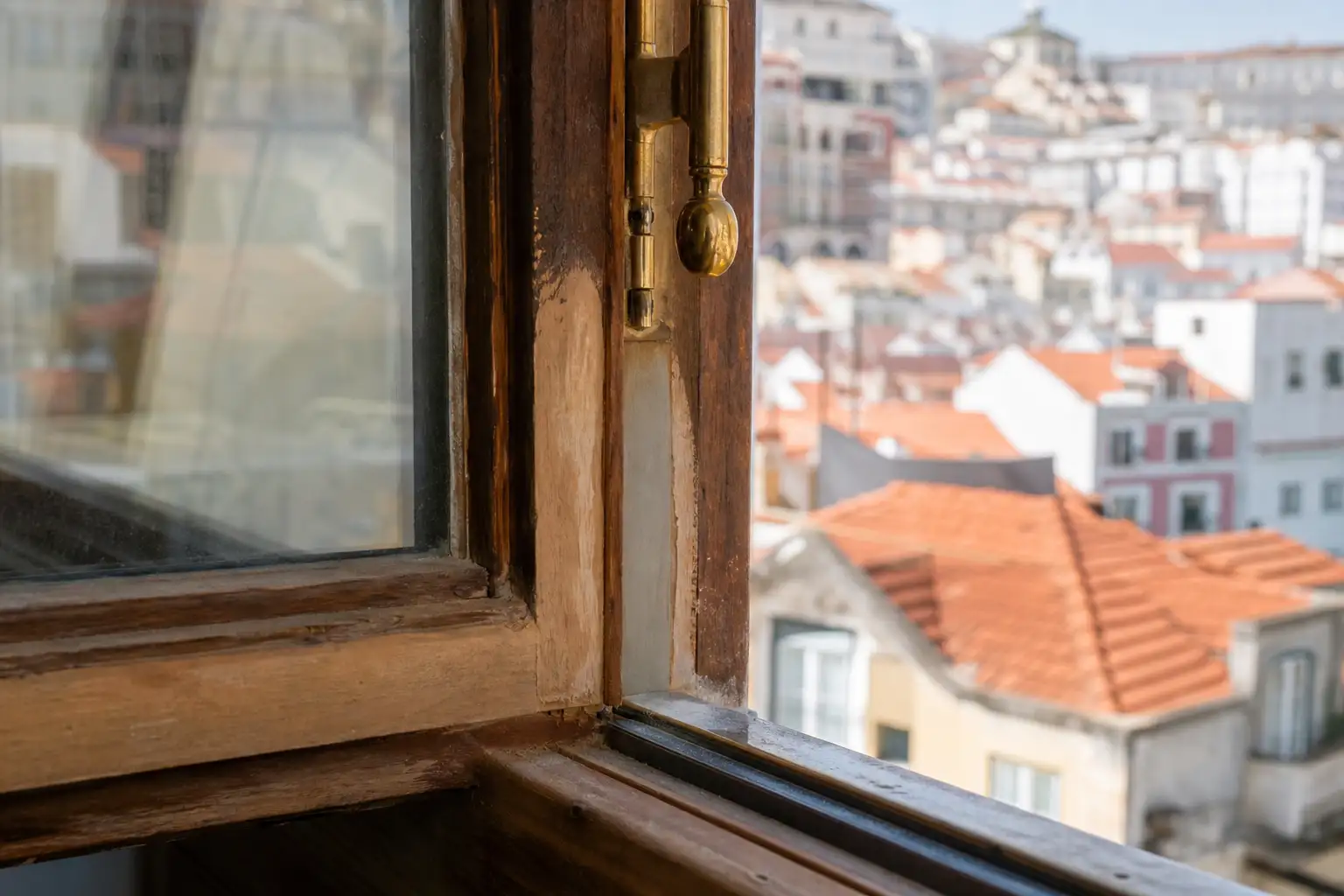
A lasting restoration is not a fresh coat of paint over damp wood. Loose coatings should be removed, the source of water entry identified and the timber allowed to dry. Localised decay can be cut back and repaired with compatible timber inserts; extensive damage or elements that carry hardware need a more demanding assessment. The aim is to retain sound fabric, not conceal deterioration.
Adjustment follows: correct the hardware, tighten or replace suitable fixings, check sash geometry and make sure the closure compresses evenly around the perimeter. Only then is it sensible to fit discreet weatherstrips to the rebate, renew glazing putty or appropriate sealants, and restore the external paint system. A seal that is too thick can stop the window closing; uncontrolled expanding foam can trap water or distort traditional profiles.
If the renovation includes internal wall work, sequence it carefully. Our article on preparing interior walls before painting helps prevent window repairs from damaging finished surfaces.
Single glazing, double glazing and secondary internal windows
Replacing single glazing with a more efficient option can improve comfort, but it changes the weight, thickness and behaviour of the sash. An old sash may not be able to carry heavier glazing, while hinges and fasteners may need strengthening. It is also worth identifying the type of noise involved: constant traffic, motorcycles, street voices and aircraft are not solved in the same way, because the result also depends on airtightness and unwanted gaps around the frame.
Where a façade or original joinery should be retained, a secondary internal window can be worth assessing. It creates an air cavity, keeps the outer window in place and can offer a reversible intervention, but it needs room, cavity ventilation and careful detailing to avoid condensation. It is not an automatic answer in compact rooms or where the original sash already operates poorly.
ADENE notes timber windows with double or triple glazing and strong energy performance as possible rehabilitation measures. See the ADENE example involving improved timber windows, while adapting the choice to the building and the orientation of each façade.
Façade, condominium and heritage checks come before ordering
Changing windows visible from outside can affect the building’s appearance, shared parts and, in some cases, requirements for protected buildings or protection areas. Even when the opening size remains unchanged, a different colour, glazing pattern, profile or opening method can conflict with the existing façade. Photograph the original condition, measure the profiles and confirm the final specification in writing before placing an order.
Lisbon’s municipal service explains that certain conservation works, external alterations and work to listed buildings or their protection areas are subject to licensing. Check the city’s page on building works and licensing. Where work affects common parts, municipal documentation provides for condominium authorisation minutes; verify this in the licence renewal document list.
Condominium approval and exemption from municipal control are separate matters; one does not automatically settle the other.
When replacement is the responsible choice
There are times when repeated repair only postpones a larger problem: deep decay across several elements, sashes that lack rigidity, failed joints, hardware with no sound fixing base, recurring water entry after external repairs, or safety requirements the assembly cannot meet. Replacement can also be justified where there is no architectural value to retain and the current unit is fundamentally unsuitable for the home’s use.
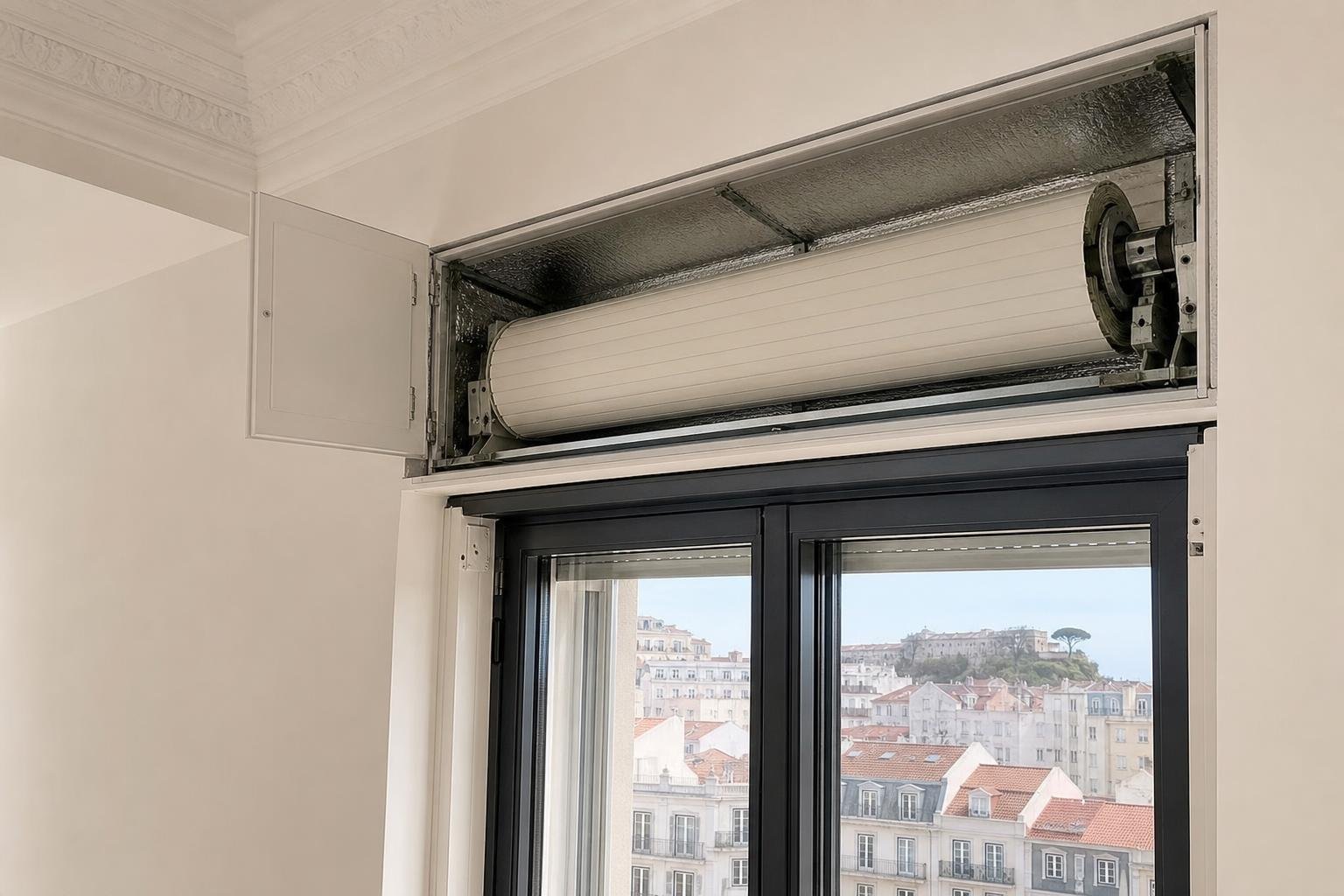
In that case, do not select only between “aluminium, PVC or timber”. Define the design first: number of sashes, opening direction, ventilation, cleaning access, shading, child safety, shutter access and future maintenance. Ask for performance information for the installed window assembly, not glazing alone. On west-facing façades, external solar control can matter as much as reducing winter heat loss.
Finish with a straightforward maintenance plan: clean drainage routes, inspect paint and seals, lubricate compatible hardware and correct small defects before the next rainy season.
Planning to restore or replace windows in a Lisbon apartment? Obra Lisboa can help place that decision within the wider renovation, from junction details and finishes to the coordination needed to avoid repeat work.
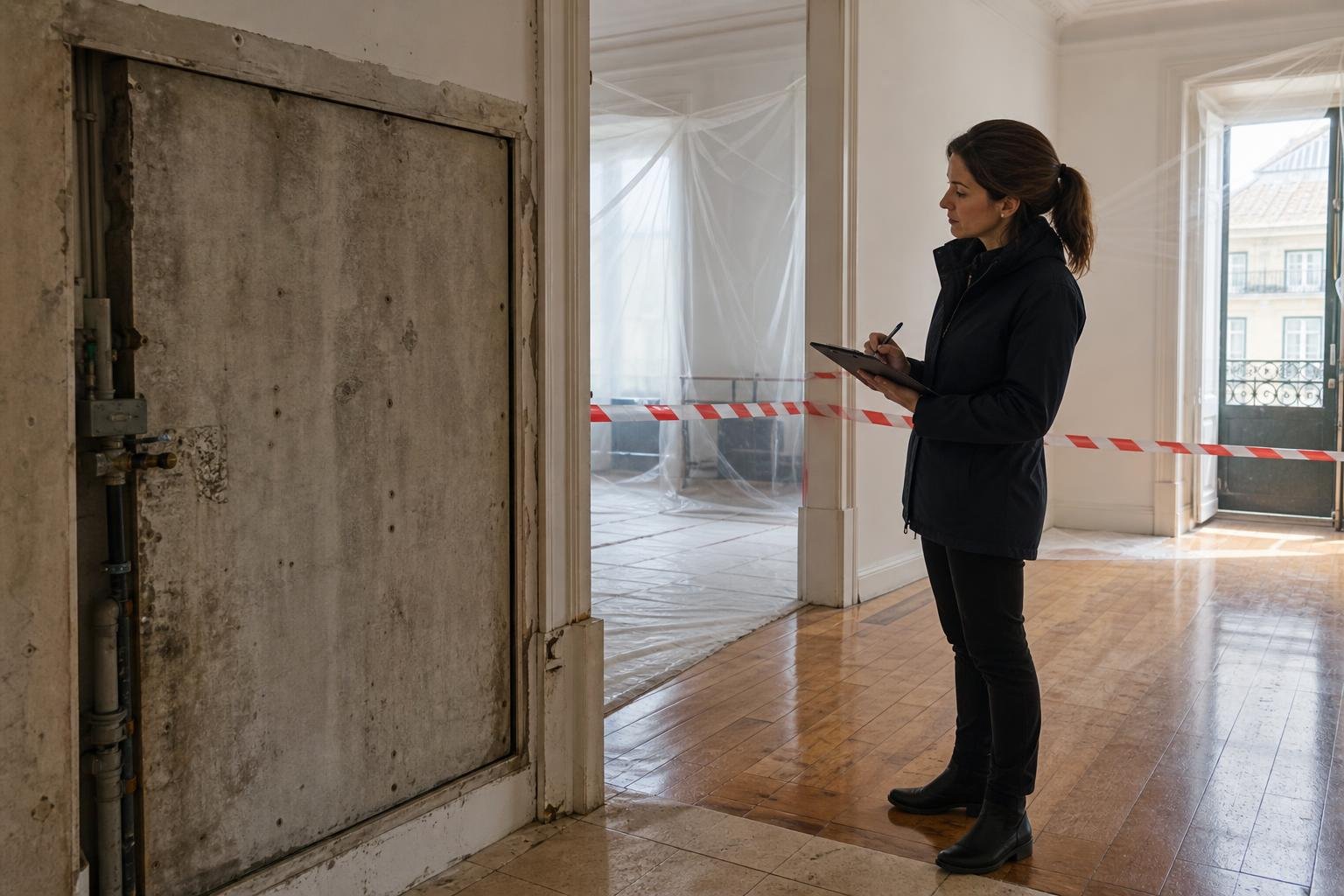
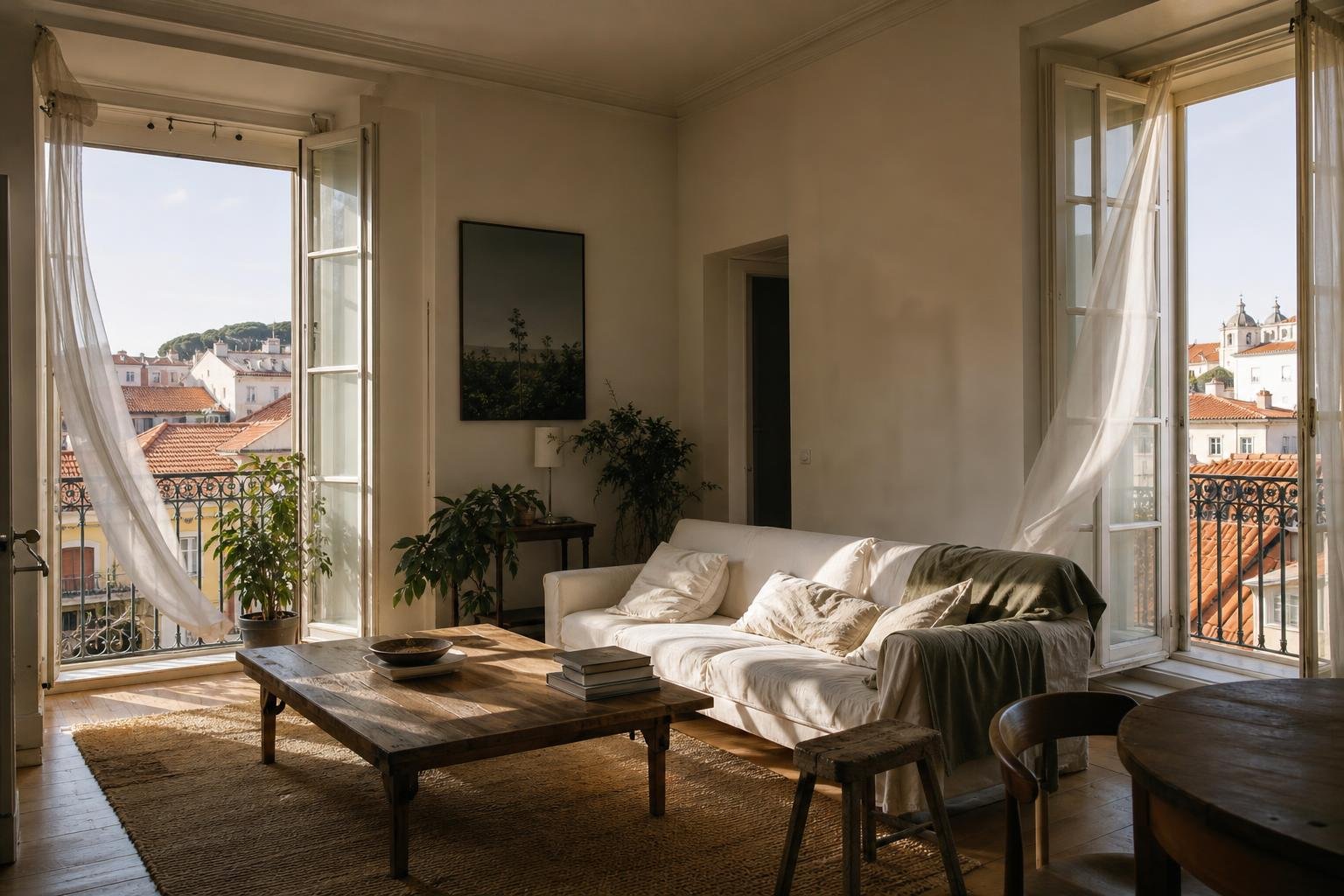
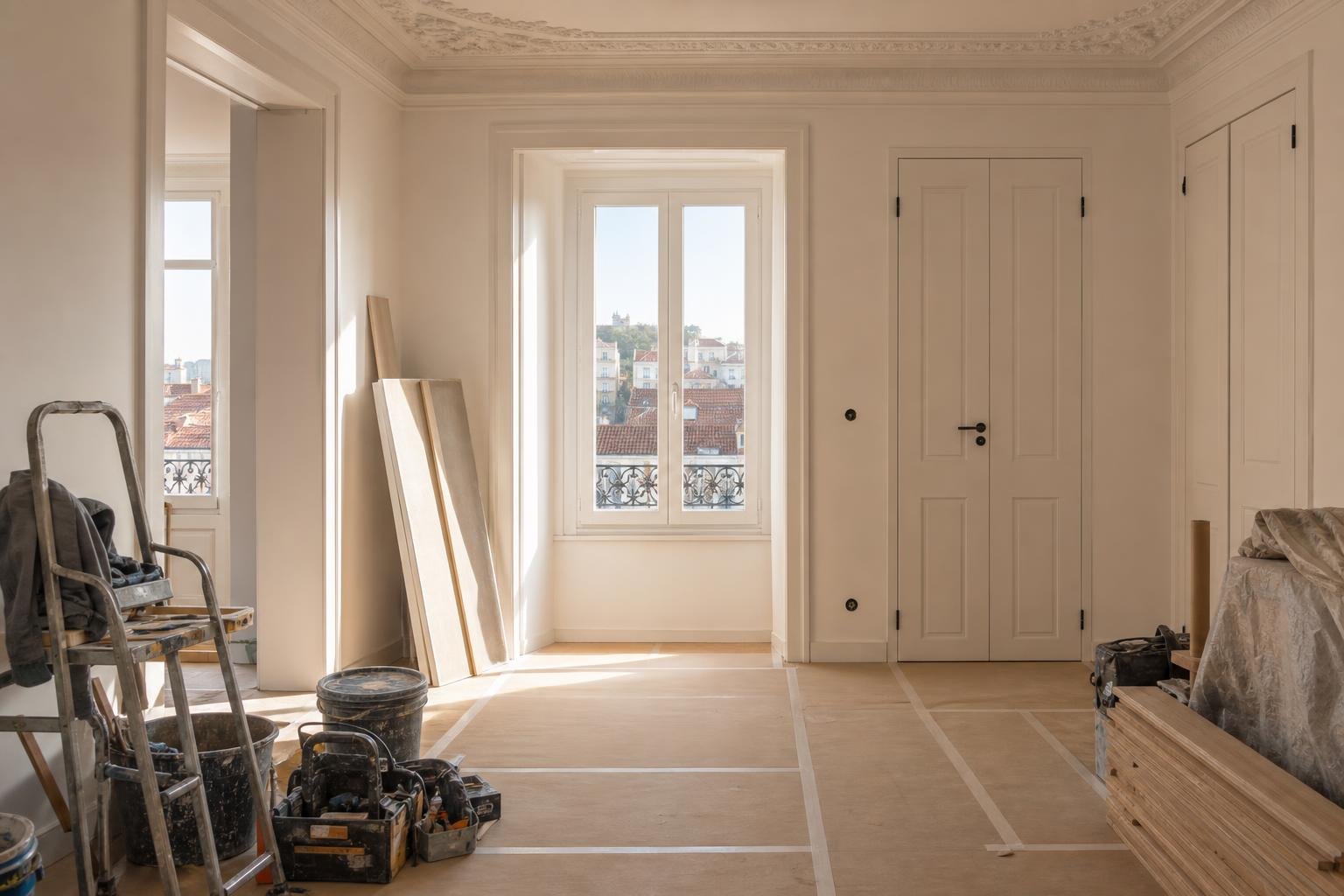
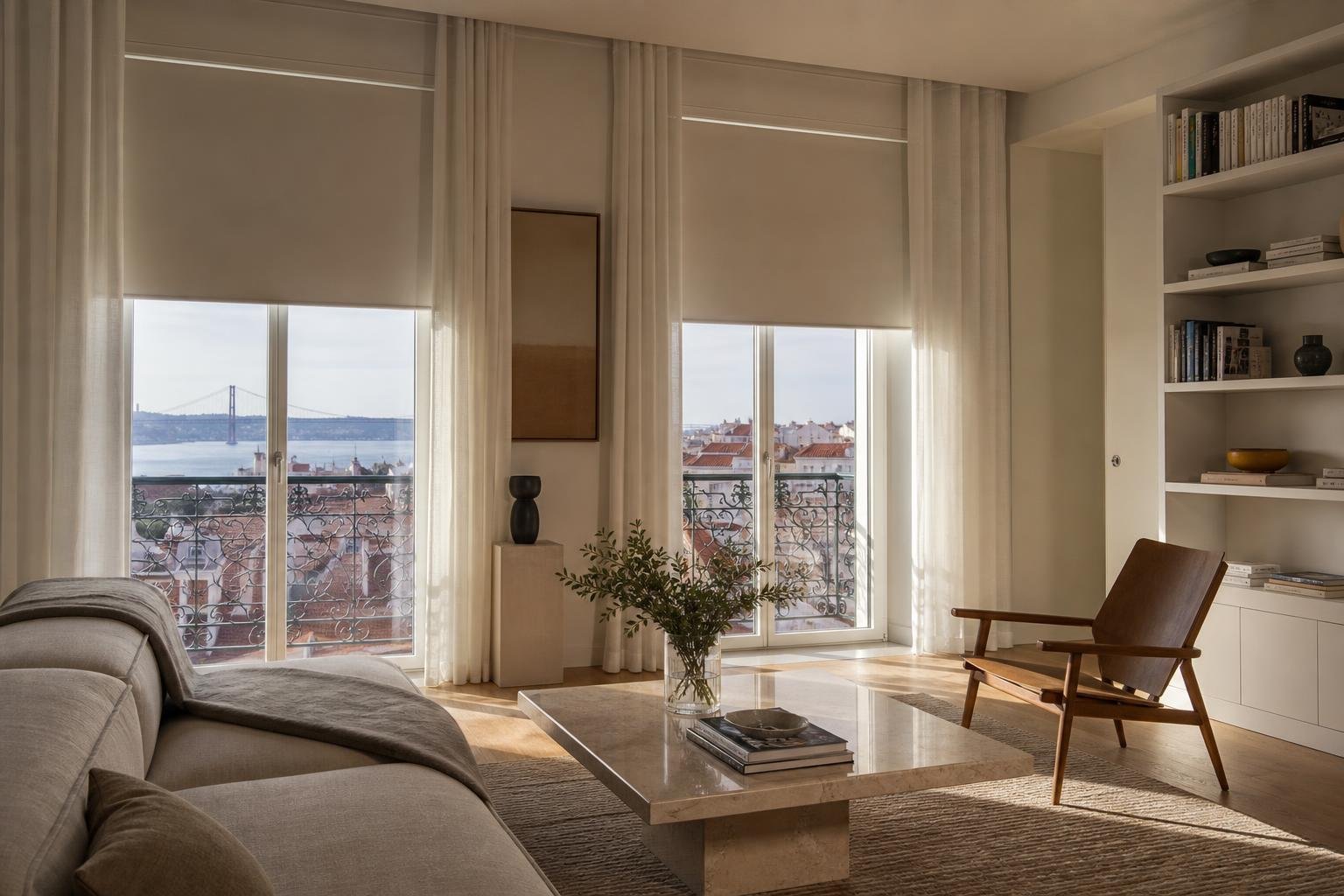
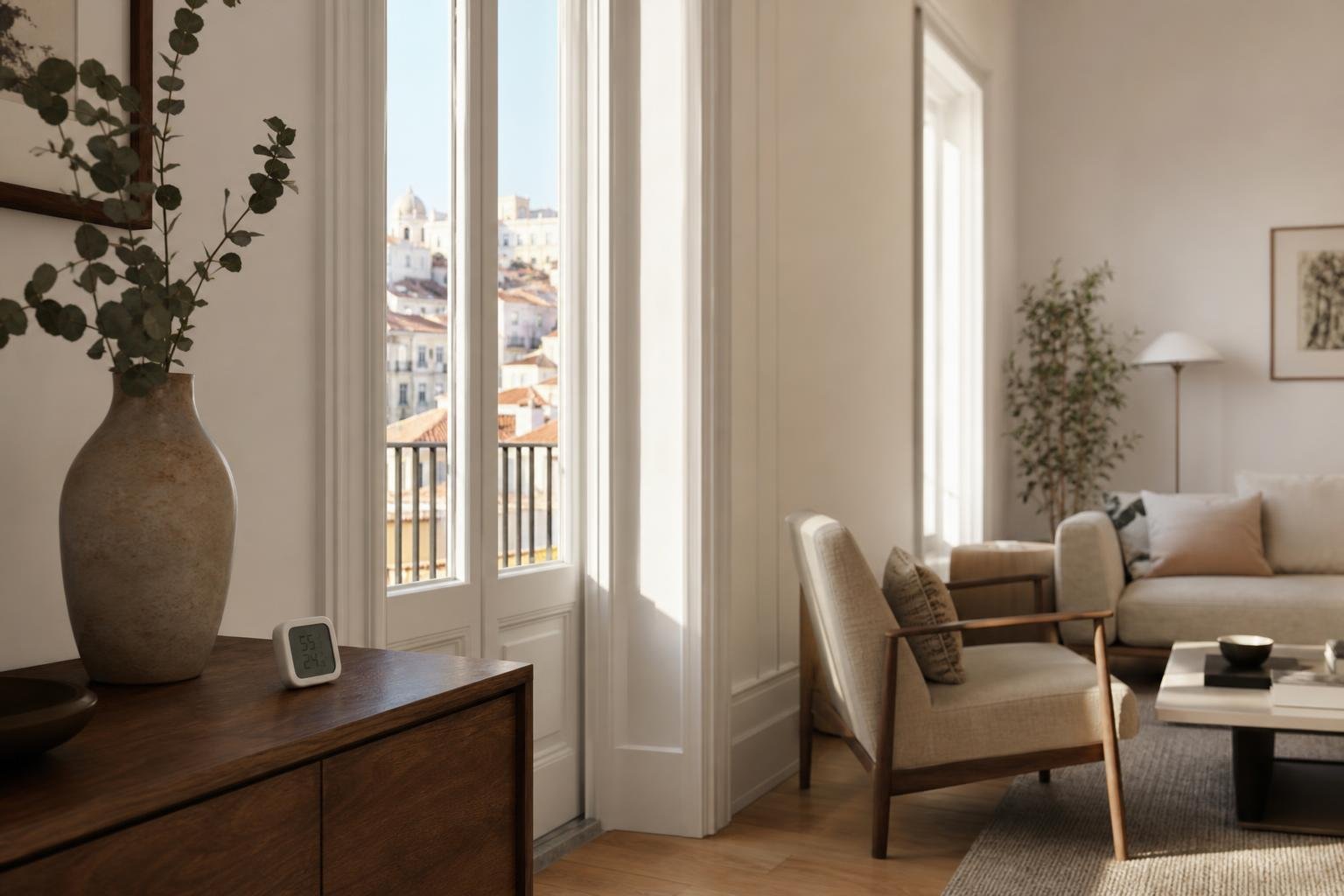
AI-generated editorial image; it does not depict an Obra Lisboa project.

Obra Lisboa