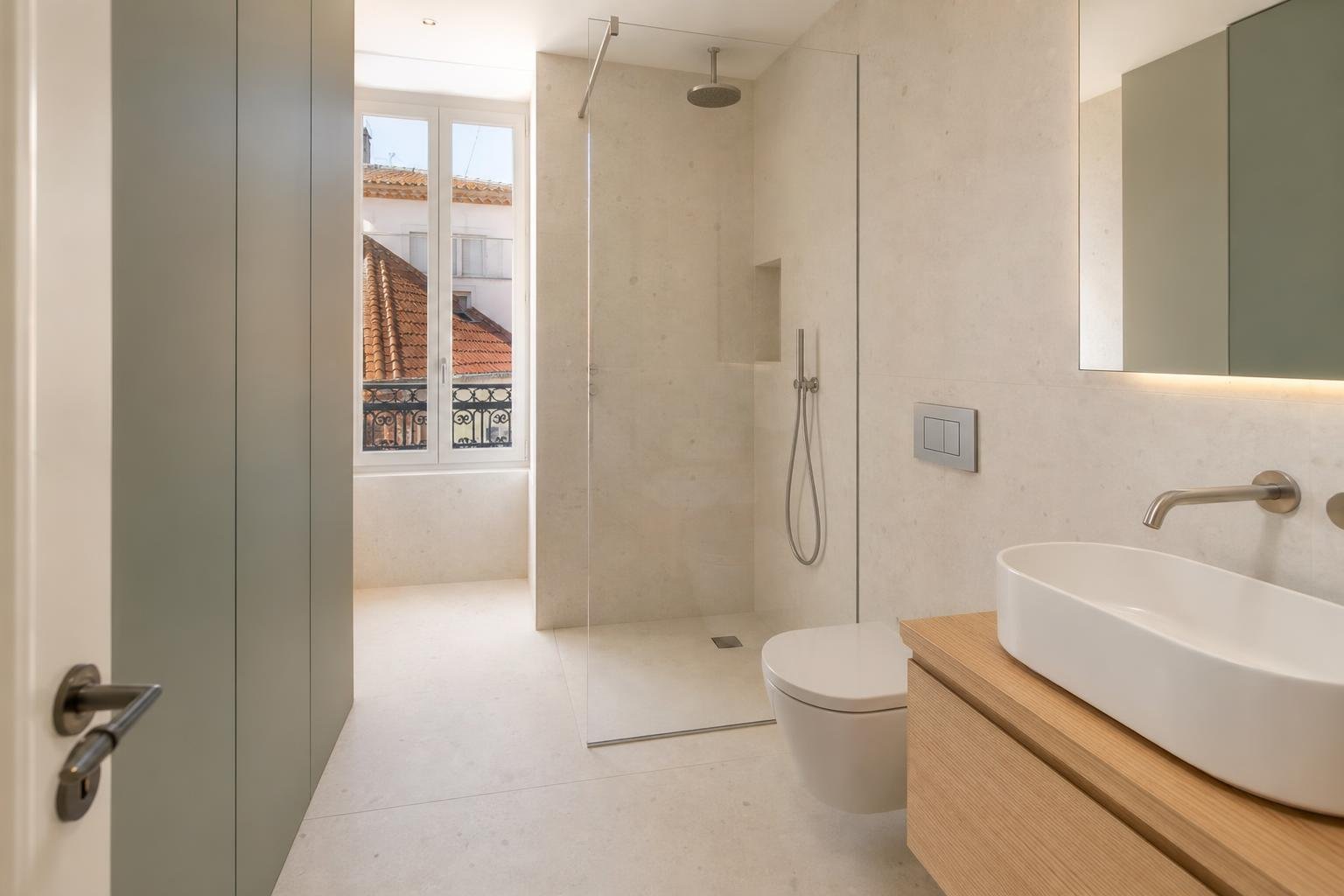

A bathroom can have excellent finishes, a well-proportioned vanity and a generous mirror, yet still feel awkward if the washbasin lighting is poorly resolved. This is where people shave, apply make-up, look after their skin, help a child brush their teeth or simply check themselves before leaving home. A ceiling fitting lights the room; it rarely lights the face well.
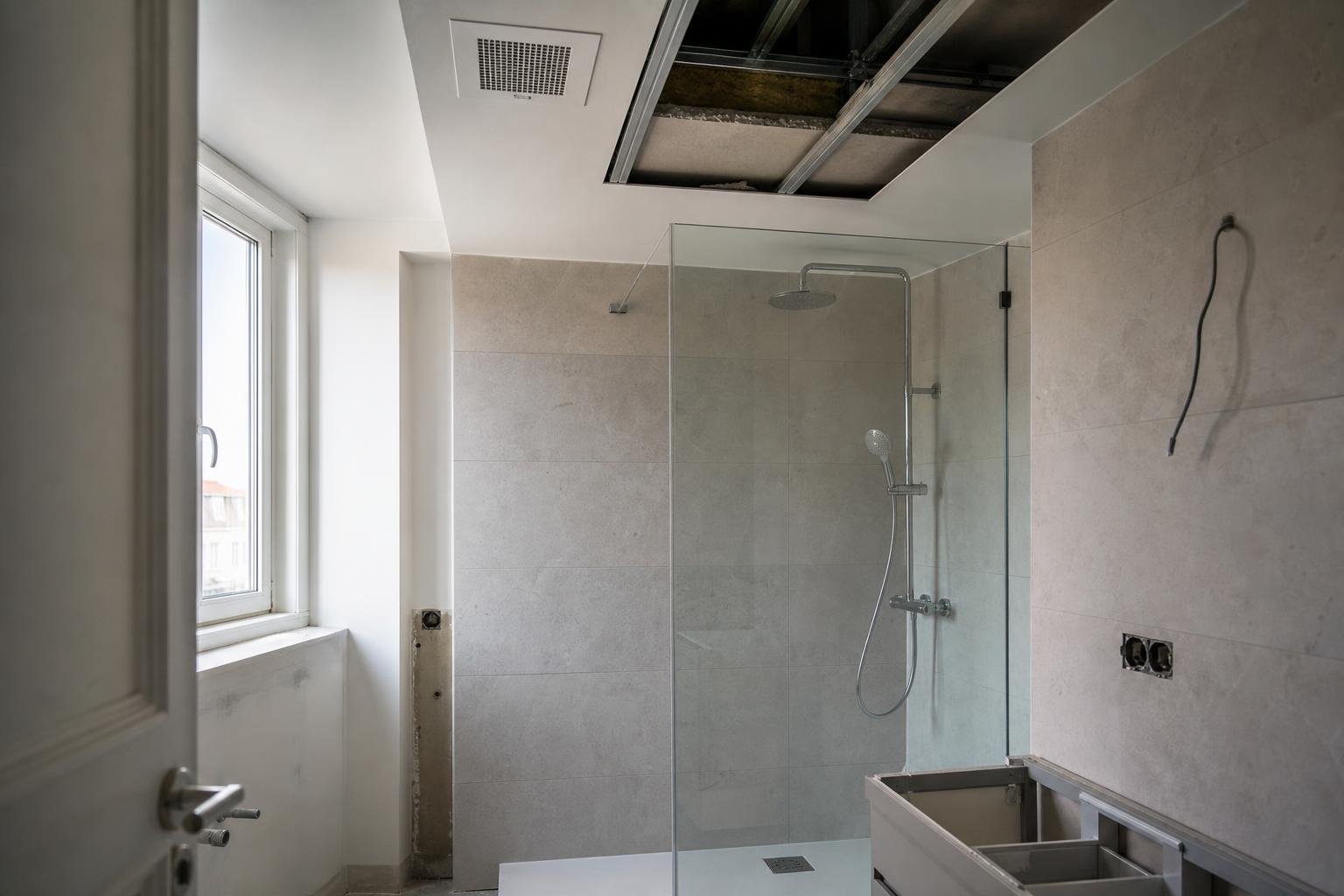
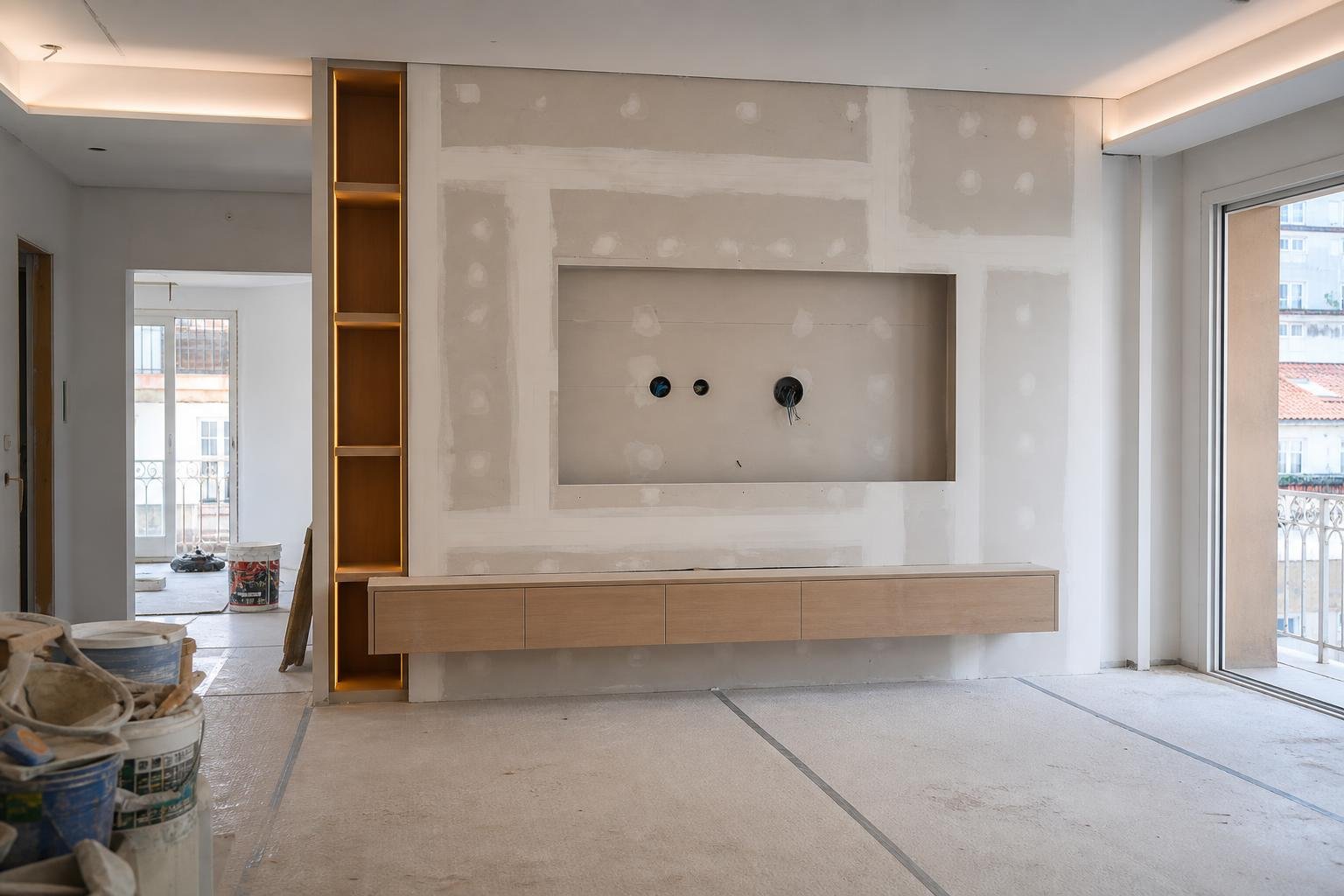
The right time to decide this area is before chases, plasterboard linings and wall finishes are closed. At that stage, cables, switches, mirror power supplies and the relationship with bathroom electrical safety zones can still be planned properly. Leaving it until later often leads to misaligned fittings, visible cables or a backlit mirror chosen simply because every other option has become difficult.
This guide sets out what to specify and check during a renovation, without replacing the judgement of a qualified electrician. To plan the wider installation, see also Sockets and switches in a renovation: plan them before the walls are closed.
Start with the task, not the light fitting
The useful question is not “which wall light looks best?” but “where will the person stand, and what will they need to do at the mirror?” A ceiling light commonly throws shadows below the eyes, nose and chin. For that reason, the most reliable arrangement adds frontal, reasonably even illumination close to the mirror.
For a single washbasin, two vertical fittings at either side of the mirror usually give a balanced reading of the face. With a wide mirror or double vanity, a continuous light line above the mirror can work, ideally supported by side lighting. A fitting placed too high lights the forehead while leaving the lower face darker; a side fitting that projects too far can cause glare at close range.
Draw the elevation showing the vanity width, washbasin centreline, tap height, mirror and fittings. Do not decide from a catalogue’s standard mounting height: compare it with the actual users’ height and the upper edge of the mirror. A good composition looks effortless because it was coordinated early.
Choose a layout that limits shadows
Three layouts are common. The first uses two vertical lights either side of the mirror; it is generally the best option for close-up tasks. The second uses a horizontal bar above the mirror; it takes up less wall area but needs well-shielded optics to avoid glare. The third builds light into the mirror itself, behind or around its edge. It can look discreet, but not every backlit mirror throws enough light to replace task lighting.
Avoid relying solely on a strip behind the mirror. It can make the wall look attractive and create atmosphere, but it often leaves the face under-lit. The most flexible combination is general ceiling light, frontal mirror light and, where useful, a low-level night light.
Before ordering, ask for the technical sheet and check where the fitting directs light: forward, upward, downward or back towards the wall. A fitting may look attractive when switched off yet perform poorly when someone is standing directly in front of it.
Electrical safety: distance from water shapes the design
In a bathroom, the position of equipment is not merely a decorative choice. Portugal’s Low-Voltage Electrical Installation Technical Rules define protection zones associated with baths and showers, with restrictions on equipment and socket outlets. The document includes diagrams of those zones and sets out, among other measures, requirements for electric-shock protection and supplementary equipotential bonding.
In practical terms, do not apply shower-zone rules blindly to the washbasin area, and do not assume that every illuminated mirror can be fitted anywhere. The answer depends on the plan, proximity to a shower or bath, product protection rating, supply method and existing installation. An illuminated mirror must be suitable for its location and fitted in accordance with the manufacturer’s instructions.
Where circuits, lighting points or socket outlets are being altered, leave the final specification to the responsible technician. Do not improvise hidden junctions or bury power supplies that may need servicing behind tiled walls without planned access.

Specify light colour and colour rendering
At the mirror, neutral white or gently warm-white light is often a balanced choice: it keeps the room welcoming without making skin, make-up and clothing look overly yellow. More important than chasing one number is seeing samples or viewing the chosen fitting in operation, particularly where finishes include beige, pink, green or timber tones.
Look at colour rendering too. A source with good colour rendering helps distinguish shades more faithfully, which matters when applying cosmetics or carrying out personal care. Avoid combining very cool ceiling light with very warm mirror lighting in the same bathroom. The contrast makes the space visually unsettled and complicates colour judgement.
Efficiency does not require sacrificing comfort. ADENE highlights more efficient LED lighting as a useful domestic choice in its CasA+ simulator information. Choose quality LED fittings and, where the product design allows it, consider replaceable or serviceable components.
Plan controls for mornings and nights
One switch can be enough in a small bathroom, but it is not always the most comfortable choice. Separating general lighting from mirror lighting lets people use only what they need. A dimmer can be useful, provided the fitting, lamp, driver and dimmer are all compatible. Without that check, flickering, noise and early failure can follow.
Also consider the night-time route. A discreet low-level light beneath the vanity, in a low recess or controlled by a sensor can guide movement without forcing someone to use the bright ceiling light. It is not a replacement for task lighting, but it improves daily use and reduces glare when waking up.
Portugal’s Directorate-General of Health identifies good lighting as a measure for preventing falls at home and highlights the particular risks of bathrooms. Read the DGS guidance on accident prevention when coordinating lighting with non-slip flooring and clear circulation.
Coordinate mirror, extraction and maintenance before closing up
A mirror does not exist in isolation. Where bathroom ventilation is weak, steam can cloud the surface at precisely the moment it is needed. Some mirrors include demisting pads; others rely on effective extraction, natural ventilation or regular airing. The key point is to coordinate these choices rather than attempting to solve condensation with more lighting power.
Allow room for the junction box, any driver and future access to components. Check that the wall structure can support the mirror and that fixing points will not conflict with concealed plumbing. If you select a mirror with an outlet, touch sensor or demister, confirm the necessary circuits and maintenance access in advance.
In a renovation, this coordination should progress alongside ventilation planning. Bathroom Extractor Fans: Choosing Airflow, Position and Controls Before a Renovation provides a practical framework before ceilings and walls are completed.
Effective mirror lighting comes from several small decisions made in the right order. If you are renovating a bathroom in Lisbon, Obra Lisboa can help coordinate lighting, electrical work, finishes and ventilation before the walls are closed.
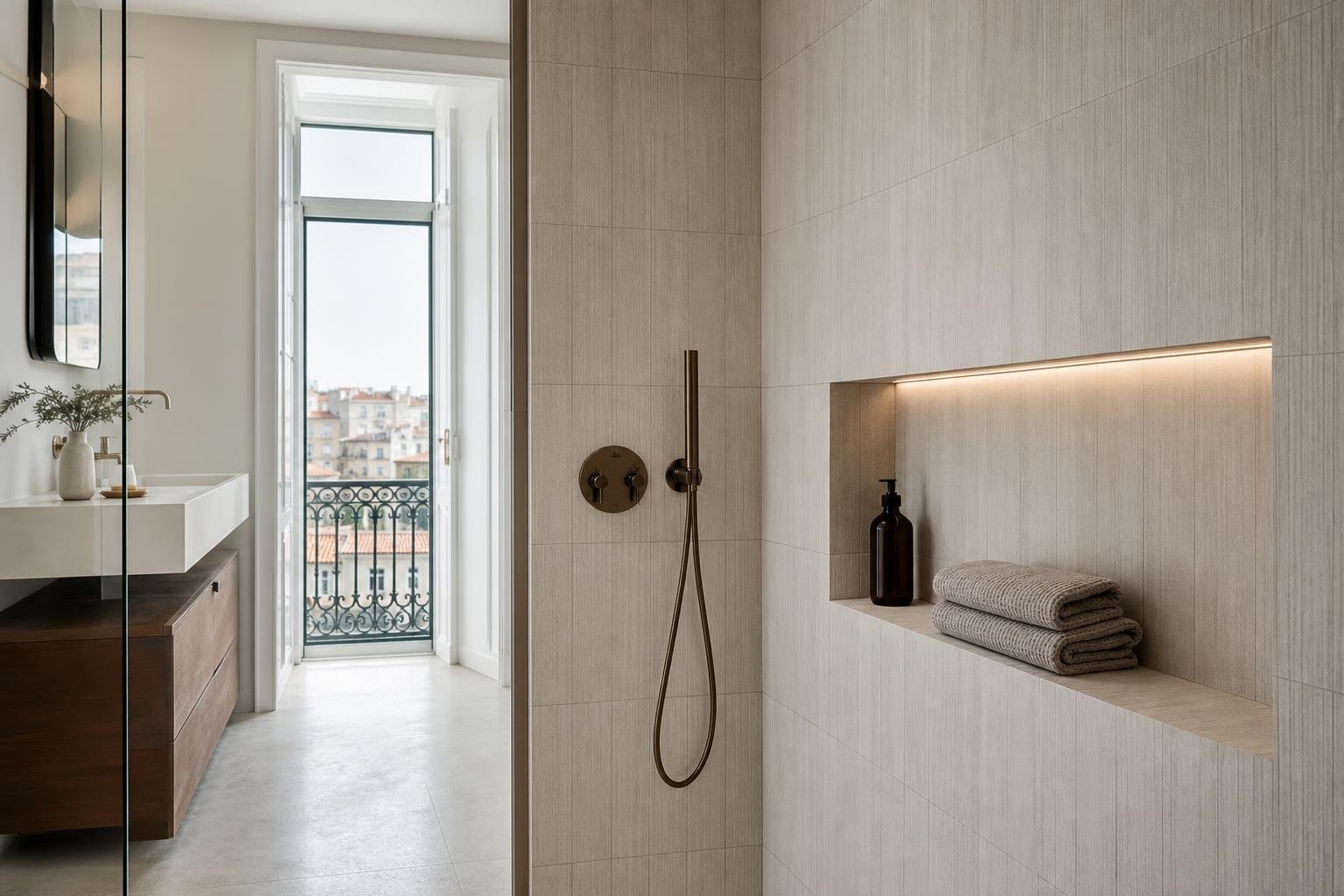
AI-generated editorial image; it does not depict an Obra Lisboa project.

Obra Lisboa