An older bathroom can waste water in ways that are easy to miss: an overly high-flow tap, a toilet without dual flush, a long wait for hot water, or a small leak hidden behind a vanity. Replacing only the visible fittings may improve the look, but it does not necessarily solve those issues. During a renovation, the best time to reduce consumption is before chases are closed, walls are tiled and fittings are ordered.
The aim is not to make daily washing uncomfortable. It is to combine suitable flow rates, straightforward controls, a serviceable pipe layout and choices that match how the household lives. ADENE identifies significant water-saving potential in residential buildings through more efficient taps, showers, toilets and appliances. Read ADENE’s approach to residential water efficiency.
Find the source of waste before browsing fittings
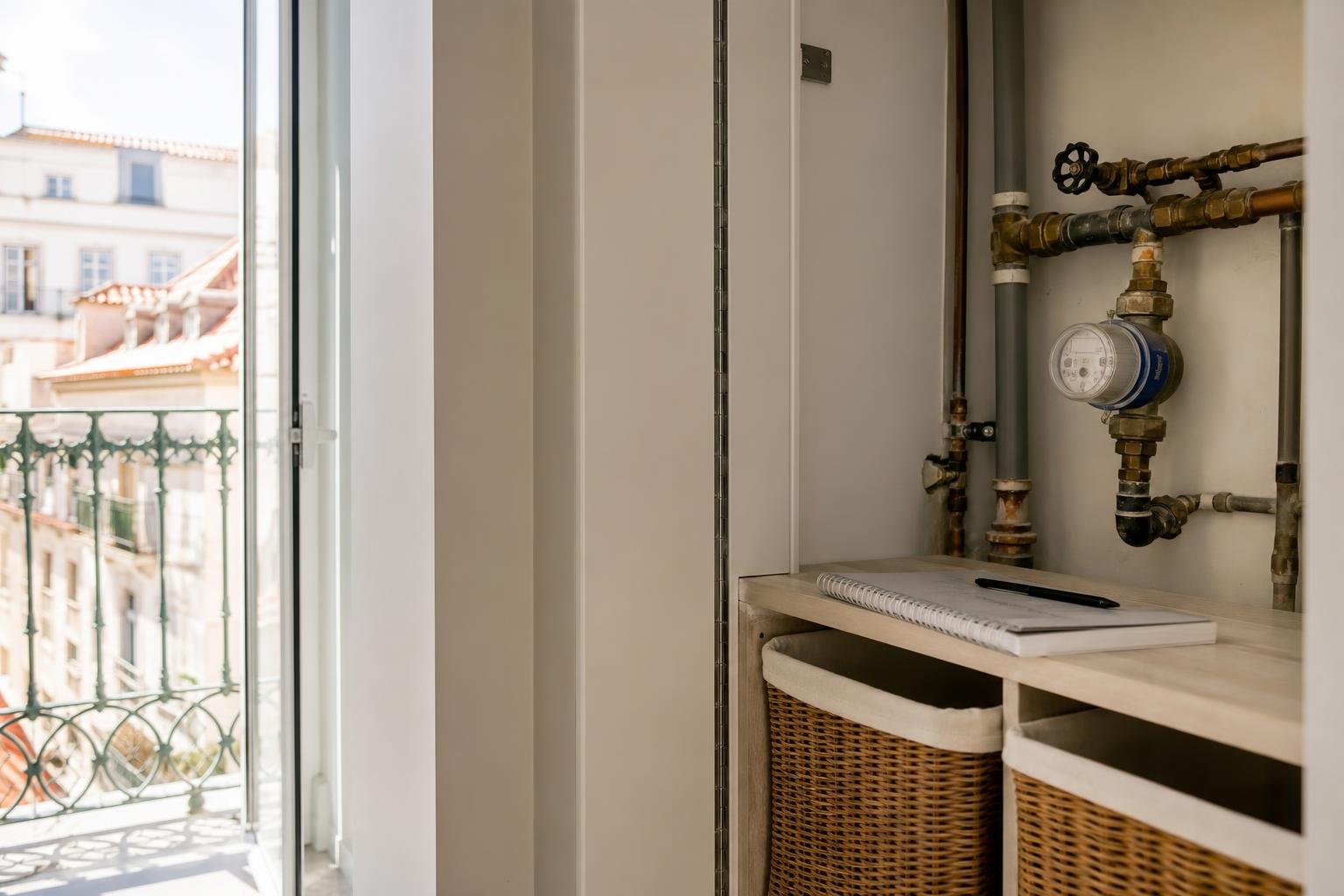
Before choosing tile or a shower tray, make a brief, practical survey. Note where the meter is, whether isolation valves work, how long hot water takes to reach the basin and shower, and whether there are signs of moisture at the vanity, skirting or ceiling below. A bill that rises without a change in household habits also deserves attention.
This helps distinguish everyday use from installation defects. An old tap may simply use too much water; a long hot-water run may encourage people to leave the tap open; an intermittent toilet leak may be inaudible during a busy day. To investigate unusual consumption before work starts, see our guide to detecting and reducing water losses in an apartment.
Bring this list to the technical visit. The scope then becomes more useful than “replace the bathroom”: it can cover water supply, drainage, ventilation, access and fitting choices.
Choose taps and showers around actual use
A handsome control does not automatically mean it is efficient. Compare the manufacturer’s stated flow rate, spray type, ease of temperature adjustment and availability of replacement parts. At a daily-use basin, a well-adjusted mixer tap avoids lengthy temperature mixing; an aerator can reduce flow while still producing a comfortable stream. ADENE notes that efficient water devices can substantially lower consumption for the same purpose and level of comfort. See ADENE’s guidance on taps, showers and consumption.
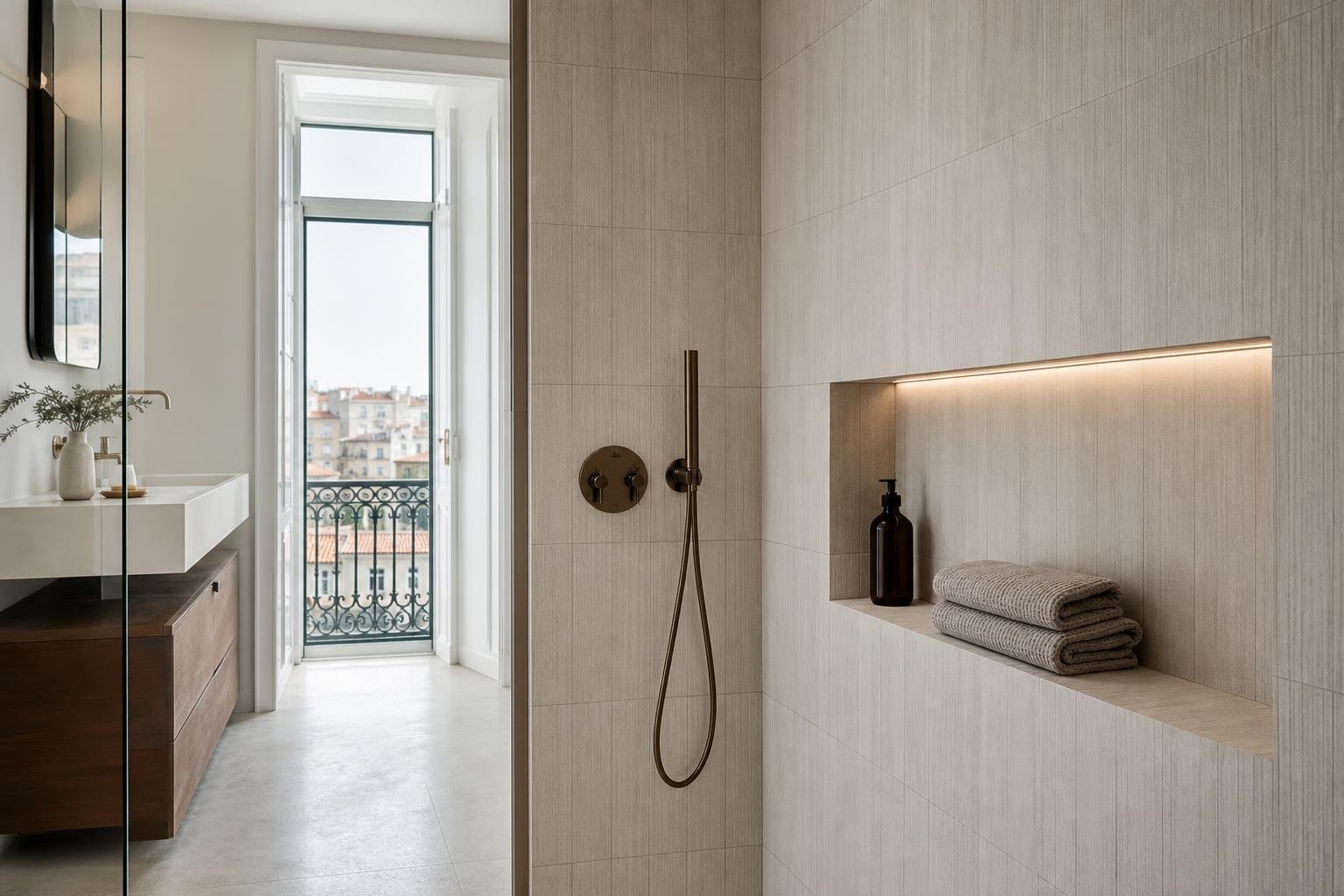
For the shower, do not decide solely by the size of the shower head. Check the apartment’s available pressure and ask for the whole set — mixer, rail, hose and shower head — to be compatible with it. A large-format head with insufficient flow can disappoint, while an unrestricted model at high pressure can raise consumption without improving comfort.
- Choose controls that remain easy to use with wet hands.
- Avoid decorative parts that are difficult to remove for cleaning.
- Ask for clear flow-rate and pressure data, not only commercial descriptions.
The toilet cistern is small, but it matters every day
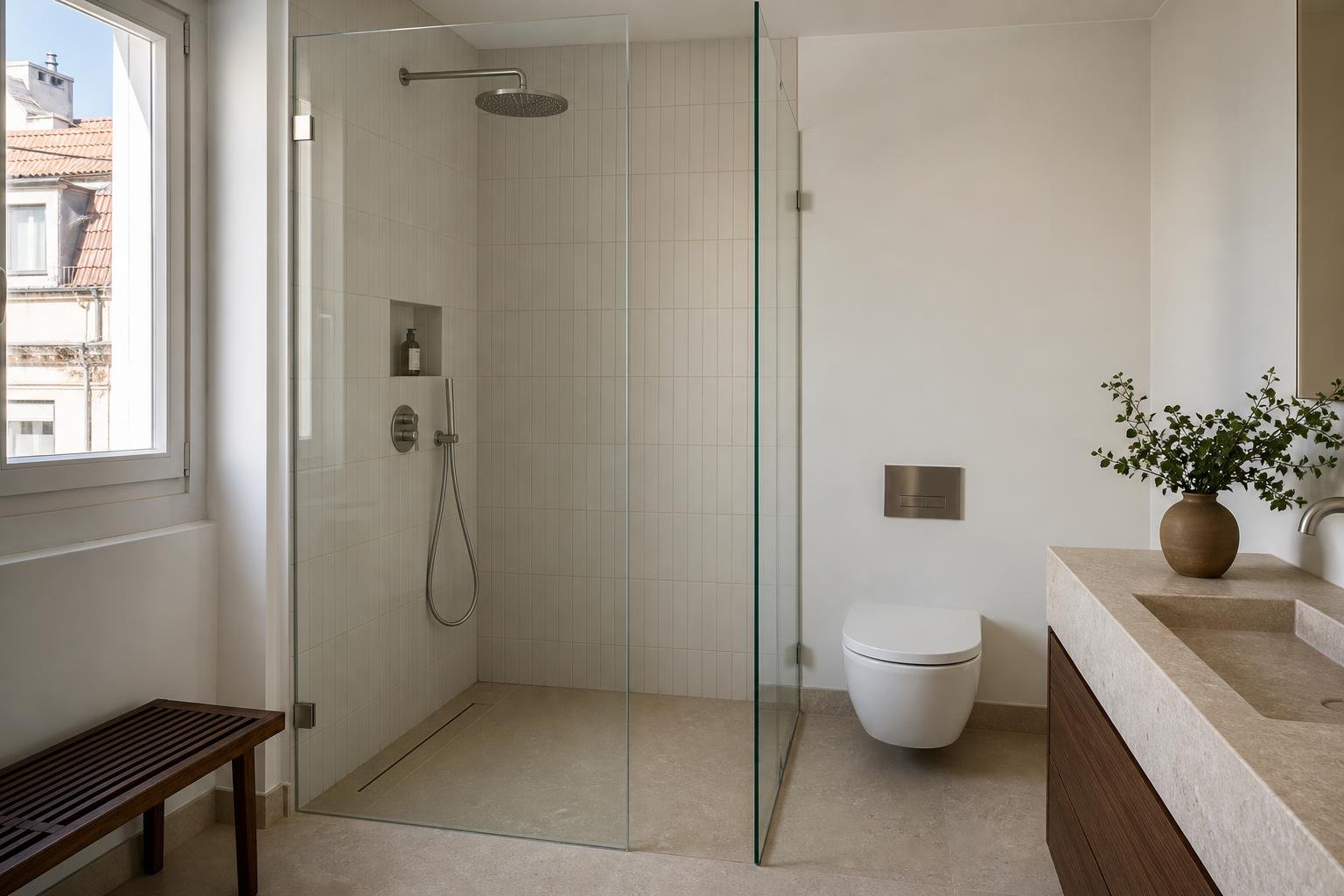
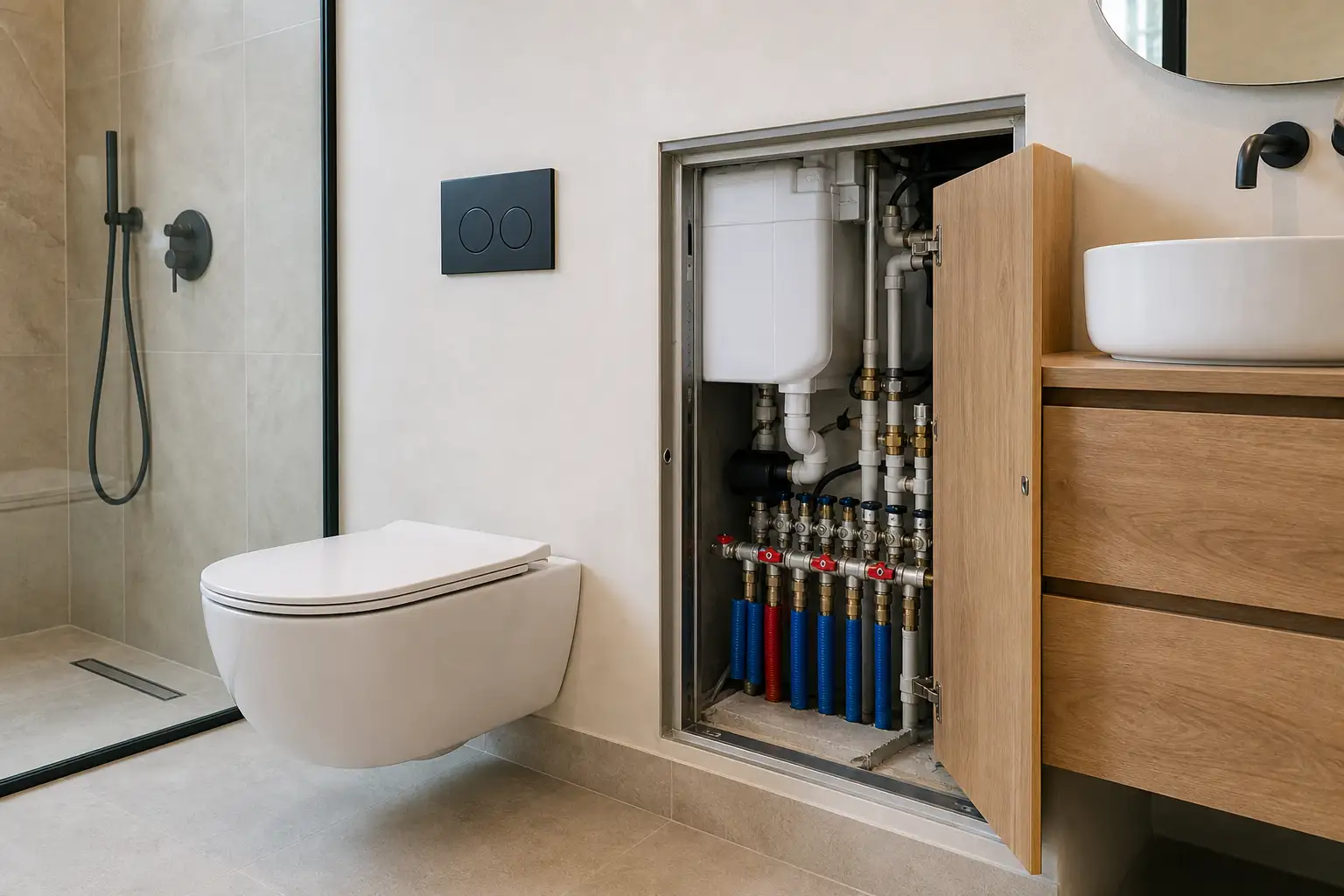
A toilet is used many times a day, so its cistern deserves a technical decision. Dual flush lets the user match volume to need; just as importantly, the mechanism should be accessible and adjustable. With wall-hung toilets, the flush plate often provides access to the concealed frame. Confirm this before final tiling rather than assuming every plate works with every mechanism.
Portugal’s technical framework for building performance includes efficient sanitary devices, such as aerated taps and dual-flush cisterns. Consult the Portuguese Official Gazette regulation on building performance requirements. It does not replace an assessment of a particular home, but it shows why efficiency and plumbing design should be considered together.
In older apartment buildings, also check the supporting wall, the position of the soil stack and the possibility of inspection. Moving a toilet by only a few centimetres can affect pipe falls and connections in ways that do not fit a quick showroom layout.
Cut the wait for hot water without creating a hard-to-maintain system
When the hot-water appliance is far from the bathroom, people often run water to waste while waiting for it to warm up. Before choosing a solution, assess pipe runs, the existing equipment, number of occupants and usual schedules. In some cases, shortening a run during renovation is more sensible than adding technology to a disorganised network.
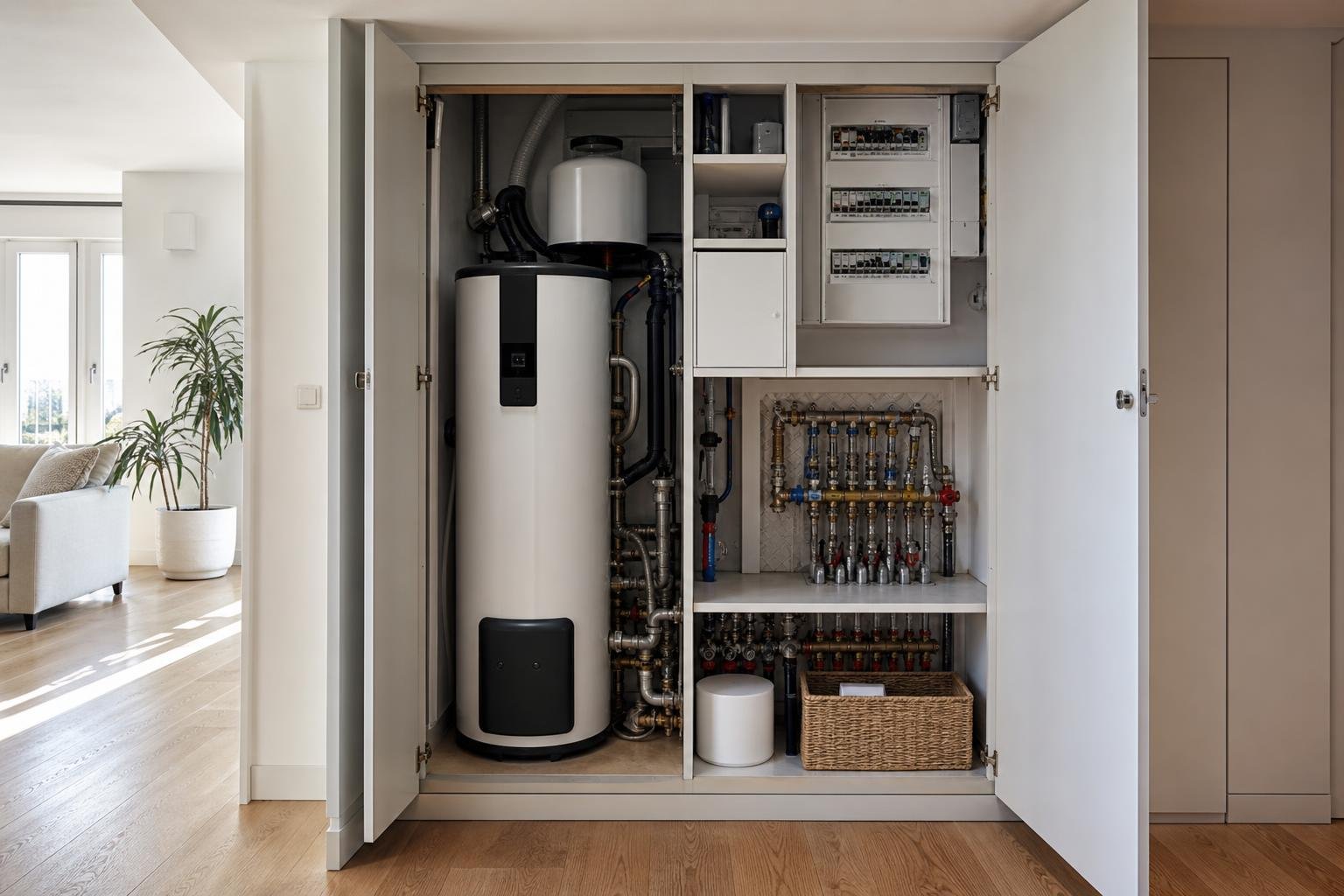
Do not make isolated decisions. A heat pump, storage water heater or another domestic-hot-water system needs space, ventilation, condensate drainage where relevant and maintenance access. If the renovation includes hot-water production, coordinate it with the pipe plan and expected consumption; our article on planning a heat pump for hot water during renovation explores this in more detail.
For larger systems in particular, Portugal’s health authority highlights temperatures that limit microbial growth, citing hot water above 50 °C and cold water below 20 °C. Read the DGS information on Legionella prevention. Final settings should balance those considerations with scald prevention and the characteristics of the installation.
Do not conceal valves, joints and traps without access
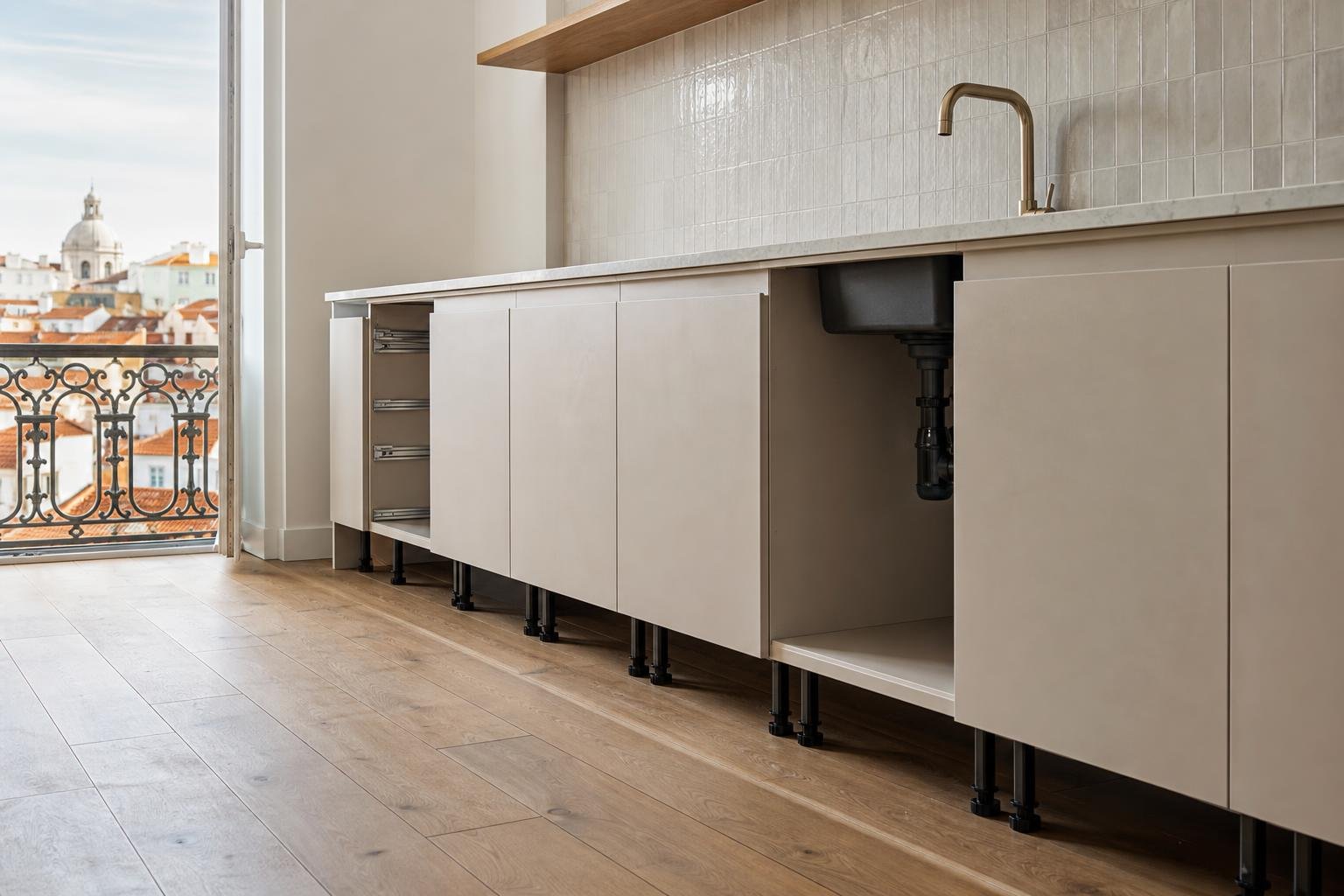
A well-finished bathroom still needs maintenance. Plan identifiable isolation valves, access to the basin trap, a way to replace the shower hose, and a reasonable route to the toilet mechanism. A vanity tightly sealed around connections can look pristine on handover day and turn a simple repair into costly dismantling.
For niches, service walls and bespoke furniture, decide where access panels will sit before ordering fronts and drawers. Where pipes are concealed, keep runs legible and avoid unnecessary joints in closed areas. Waterproofing must also remain continuous in wet zones, at shower-tray junctions and around pipe penetrations. Review the essentials in our guide on how to waterproof a bathroom properly.
Turn decisions into a verifiable site checklist
Before work begins, gather choices that can easily get lost between drawings, orders and site conversations in one clear sheet. Include final fixture positions, mechanism brands and references, expected flow rates, shut-off points, inspection access, tile levels and required tests.
- Confirm the final location of basin, toilet, shower and towel rail before chasing walls.
- Specify accessible shut-off valves for the bathroom and, where useful, individual equipment.
- Test pressure, drainage and watertightness before closing walls or applying finishes.
- Keep photographs of pipes and cables before they are covered.
- Request manuals and replacement-part references at handover.
These steps do not prevent every fault, but they make it less likely that a minor leak will require opening a finished wall. In a coordinated renovation, water saving starts with fitting selection and continues with an installation that is properly built, tested and accessible.
Planning a bathroom renovation in Lisbon? Obra Lisboa can help turn these choices into a coordinated intervention, with attention to services, finishes and future maintenance. Find out more about Obra Lisboa.
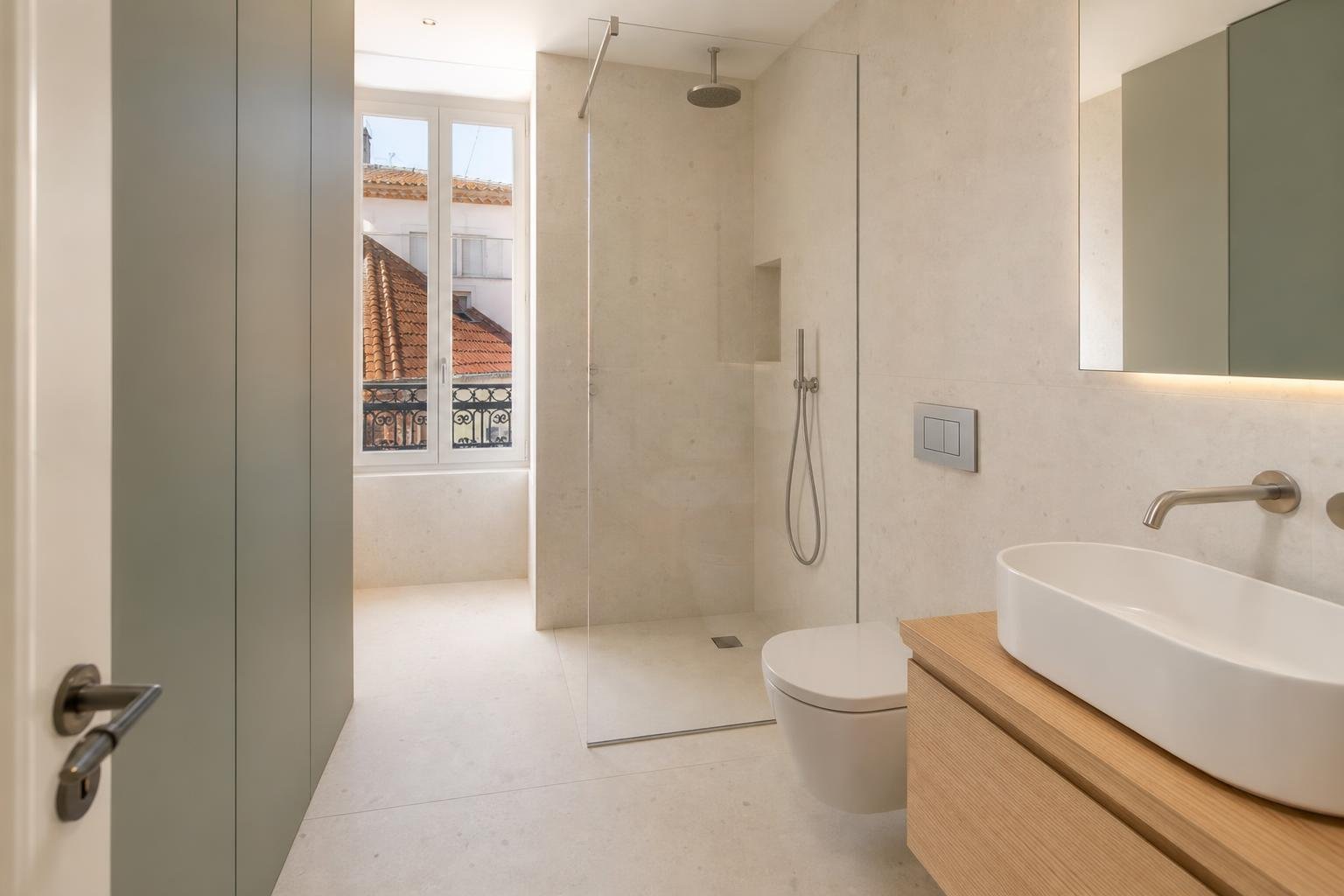
AI-generated editorial image; it does not depict an Obra Lisboa project.

Obra Lisboa