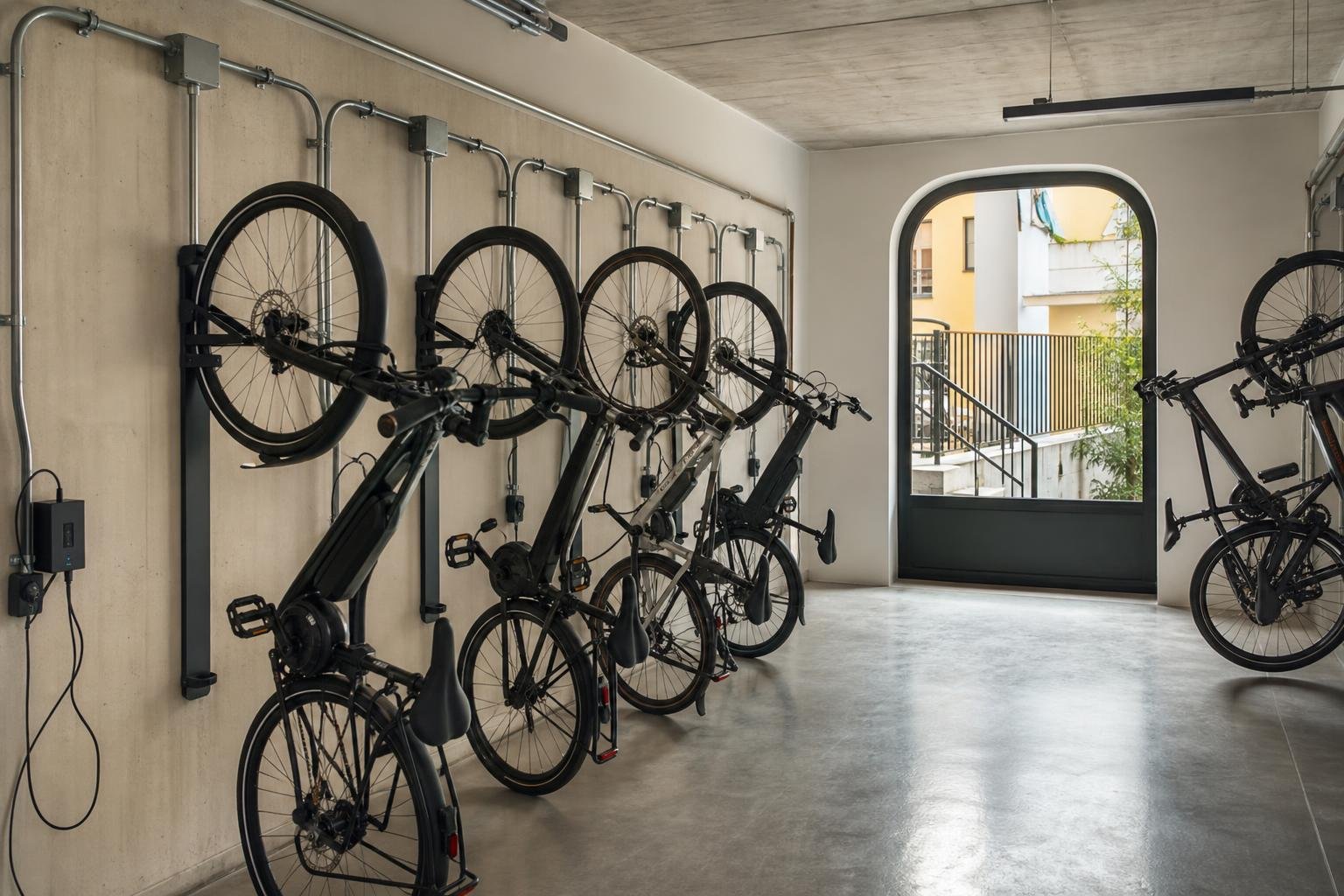
A condominium storage room can seem like the obvious place to keep and charge e-bikes: it is sheltered from rain, avoids carrying batteries through common corridors and gives bicycles a defined home. Yet an extension lead plugged into the nearest socket does not make the room a safe or fair charging area.
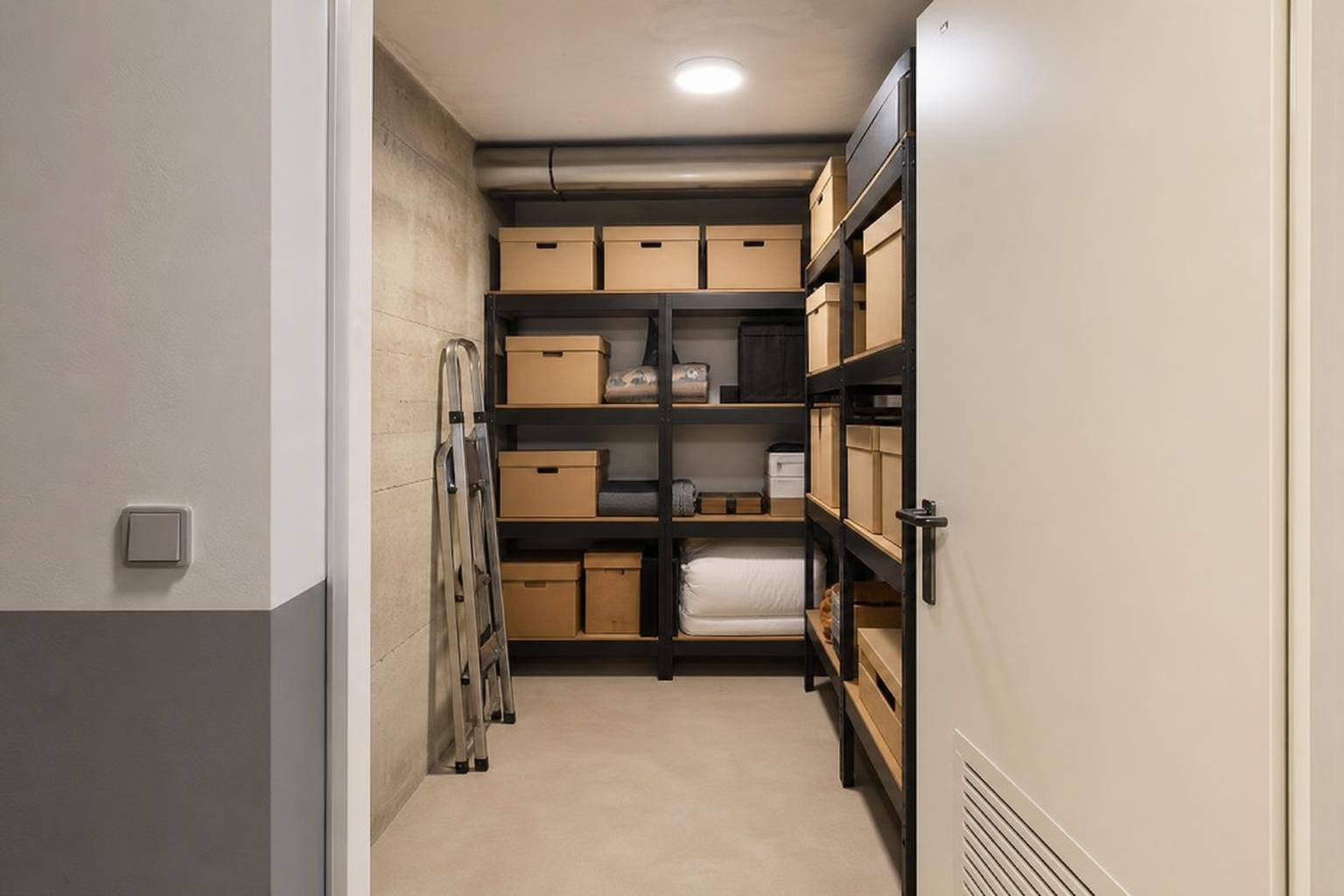
Three separate decisions need to be made from the outset: where the bicycles will stand, where their electricity will come from and who will pay for each user’s consumption. In Lisbon apartment buildings, storage rooms may be narrow, poorly ventilated or crossed by pipes and meter equipment. A workable solution must protect circulation, access for maintenance and the building itself. This guide sets out how to plan a sensible installation without treating a storage room as an improvised technical plant room.
Start with ownership and the rules for the space
Before selecting sockets or bicycle racks, establish whether the room is a private unit, a common area or a common area allocated to particular apartments. That distinction affects who can authorise the work, where cables can run and how costs should be shared. Even where each resident has a numbered compartment, the walls, corridors, electrical boards and supply routes may still serve the whole building.
Present the manager with a specific proposal: expected number of bicycles, charging-point location, cable route, metering method, use rules and maintenance arrangements. A decision recorded in the condominium minutes makes later disputes about electricity, keys, faults or unauthorised occupation much less likely. For works affecting common elements, Lisbon’s municipal procedures require condominium authorisation documents in relevant situations; the Lisbon City Council prior-information service is a useful starting point where planning or change-of-use issues are uncertain.
Do not assume that rules written for electric cars automatically settle the position for e-bikes. Still, electric-mobility legislation provides a helpful discipline: a technically appropriate installation, clear responsibility and controlled consumption. The installation should match the modest power needs of bicycles, without becoming an uncontrolled DIY arrangement.
Assess the electrical circuit before adding sockets
An e-bike draws far less power than an electric car, but several bicycles charging for long periods can add a meaningful load to lighting, gates, pumps and other shared services. The issue is not decided by the charger’s size alone. It depends on the condominium’s available supply capacity, the condition and cross-section of conductors, existing protective devices and the likely level of simultaneous use.
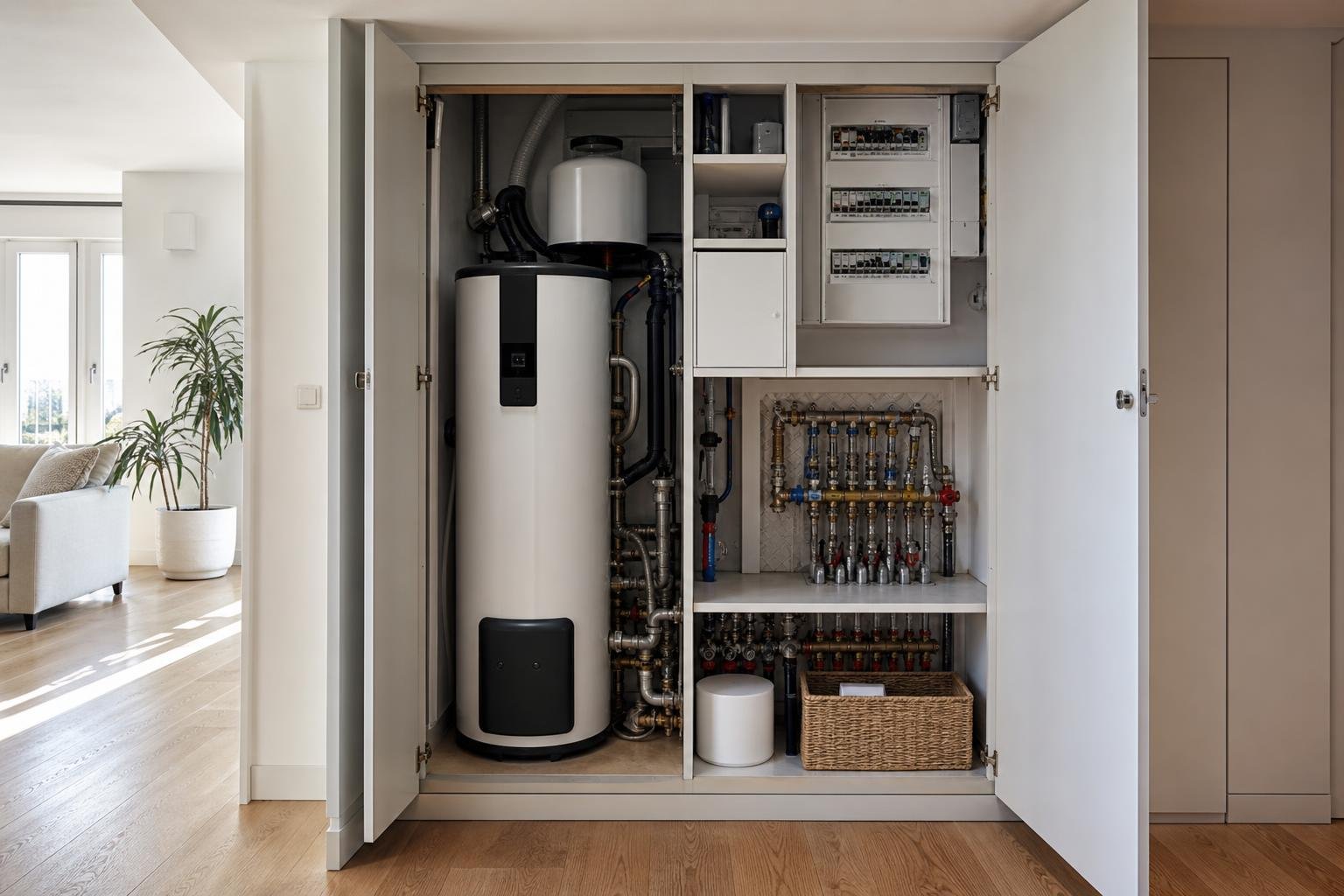
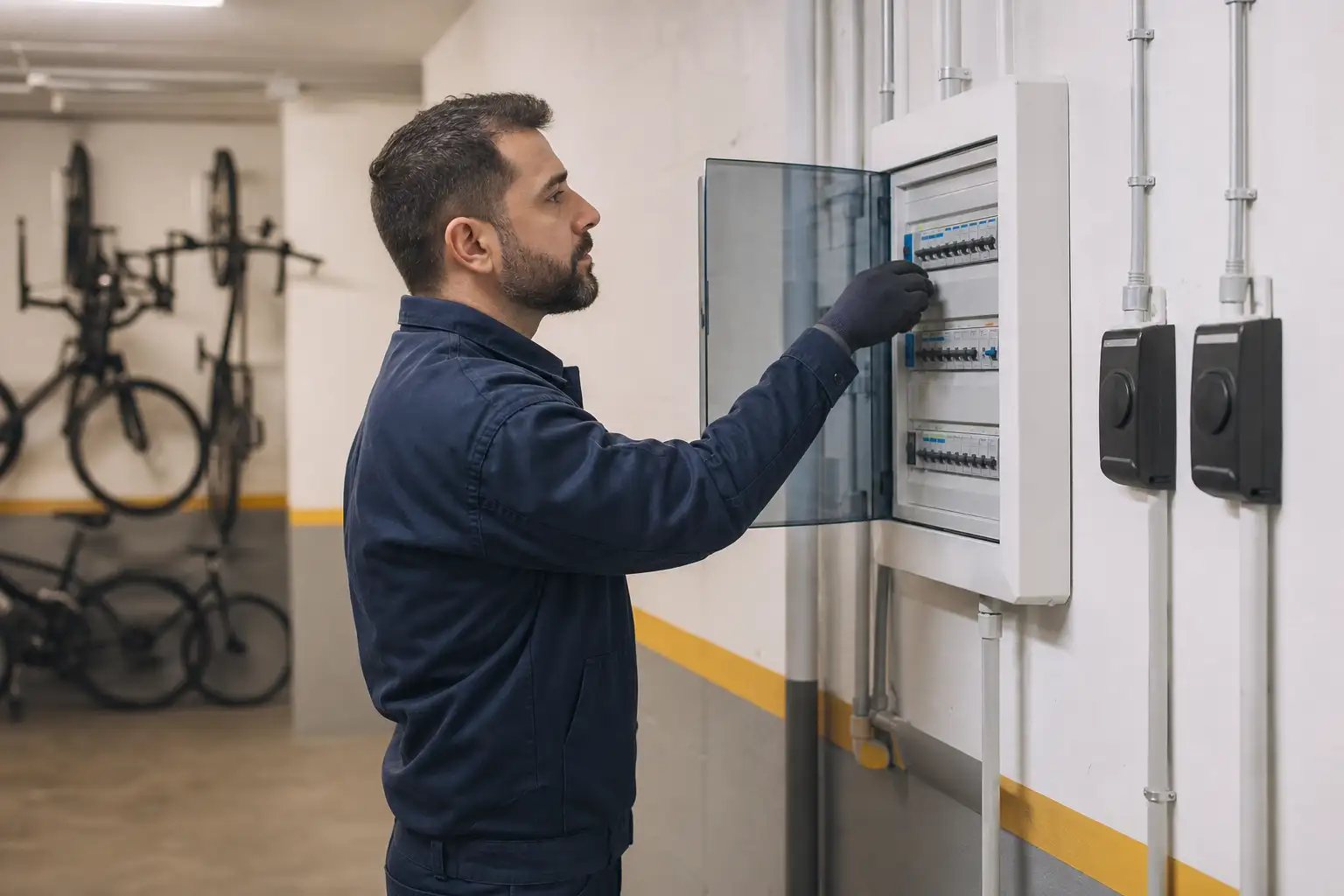
Ask a qualified professional to identify the originating distribution board, available capacity and whether a dedicated circuit is needed. Law no. 14/2015 establishes requirements for installers and responsible technicians working on private electrical installations; check that the contractor is properly covered by the framework described in the Portuguese legal framework for private electrical installations.
Avoid multi-plugs, coiled extension leads, loose sockets on the floor and permanent adaptations taken from lighting circuits. A well-planned arrangement includes suitable protection at the board, fixed and protected cable runs, durable sockets positioned where they are needed and a straightforward means of isolating the circuit. The point is not to overcomplicate domestic charging; it is to stop a temporary workaround becoming an unmonitored permanent installation.
Agree a fair system for measuring and paying for electricity
Charging supplied from the common meter needs a sharing rule before the first bike is plugged in. With one or two bicycles, the condominium may approve a temporary flat contribution. Where there are several users, a sub-meter for each socket or group of sockets makes settlement clearer. Another option is to supply each point from the relevant apartment meter, where the route and installation are practical.
The internal rules should state who pays for the initial works, electricity, repairs, inspections and equipment replacement. They should also say whether sockets are exclusively for bicycle chargers and whether heaters, tools or other appliances are prohibited. Clear boundaries prevent a mobility installation from becoming a general-purpose power supply with no control over use.
National rules for electric-vehicle charging infrastructure include energy metering and load control in specified situations. A bicycle storage room should not automatically be treated as one of those cases, but the principle of measuring use and managing demand remains sound. Review the rules on connection and commissioning of electrical installations before committing to a larger shared arrangement.
Choose a position that limits hazards and friction
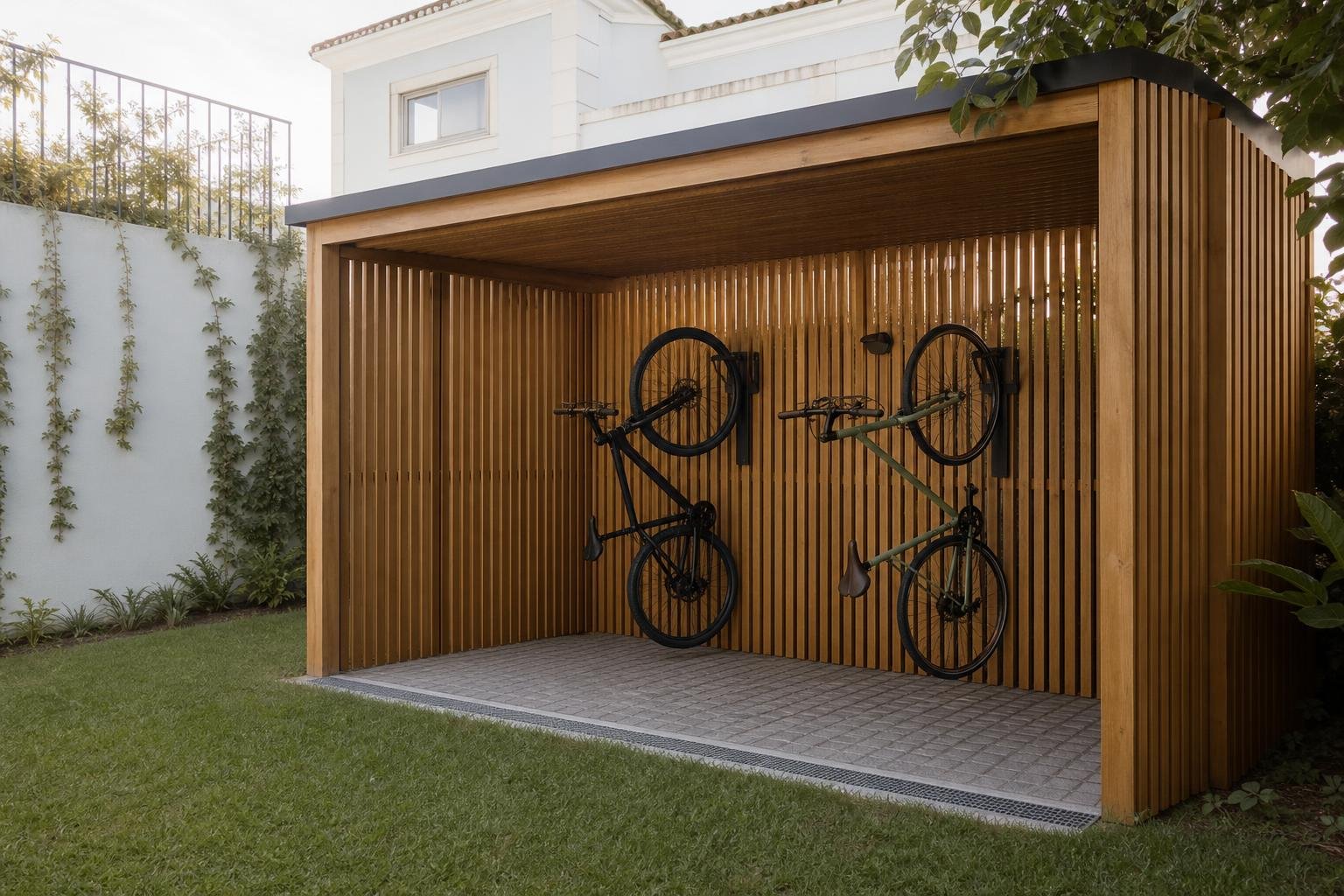
The best charging location is not necessarily the wall nearest the electrical board. Look for a dry, visible area with enough room to park bicycles without encroaching on walkways, doors, electrical boards, meters, fire-safety equipment or maintenance access. Each bicycle should stand securely, and the charging lead should not cross a route or be pulled tight between racks.
In a cramped room, mark circulation routes first and only then lay out the parking positions. Wall or floor racks may free up useful space, but their fixings must suit the substrate and their height must not turn handlebars and pedals into obstacles. For more guidance on making the storage area work, see Condominium Bicycle Storage: Planning Access, Security and Moisture Control.
Do not charge next to accumulated combustible materials, refuse, solvents, paints or areas affected by water ingress. Keep existing natural ventilation openings clear. If the room has persistent odours, condensation or staining, deal with the moisture source first. A new socket does not repair a deteriorating room and can make future maintenance harder.
Set practical rules for batteries and chargers
The condominium rules should require original chargers, or compatible chargers specified by the bicycle manufacturer, and prohibit visibly damaged batteries, cables or plugs. It is sensible to state that batteries affected by a heavy fall, unusual heat, swelling or water exposure must not be charged until they have been assessed by the manufacturer or a competent service provider. Chargers should not be covered, placed on fabric or boxes, or positioned beside stored combustible materials.
Decide whether removable batteries may be charged away from the bicycle. This can make daily use easier, but a loose battery needs a stable surface and a socket position that prevents falls or impact. If the rule is to charge complete bicycles only, arrange parking so that connectors are not exposed to knocks from neighbouring bicycles.
Build in a review period: inspect sockets, cables and fixings regularly, and reconsider capacity as more residents join. Public bike-parking networks treat parking and charging as dedicated infrastructure with identified operation and maintenance, as shown by the Cascais soft-mobility regulation. The scale is different in a condominium, but the need for operational discipline is not.
Turn the decision into a short works specification
A strong proposal for the condominium can fit on one page and avoids vague requests such as “add a socket for bicycles”. Include a layout of the area, the initial and maximum number of points, supply circuit, protective devices, metering approach, containment routes, socket type and height, bicycle racks, access rules and the person responsible for reporting faults. Add room for growth: leaving conduit capacity or board space can prevent walls being opened again when more users arrive.
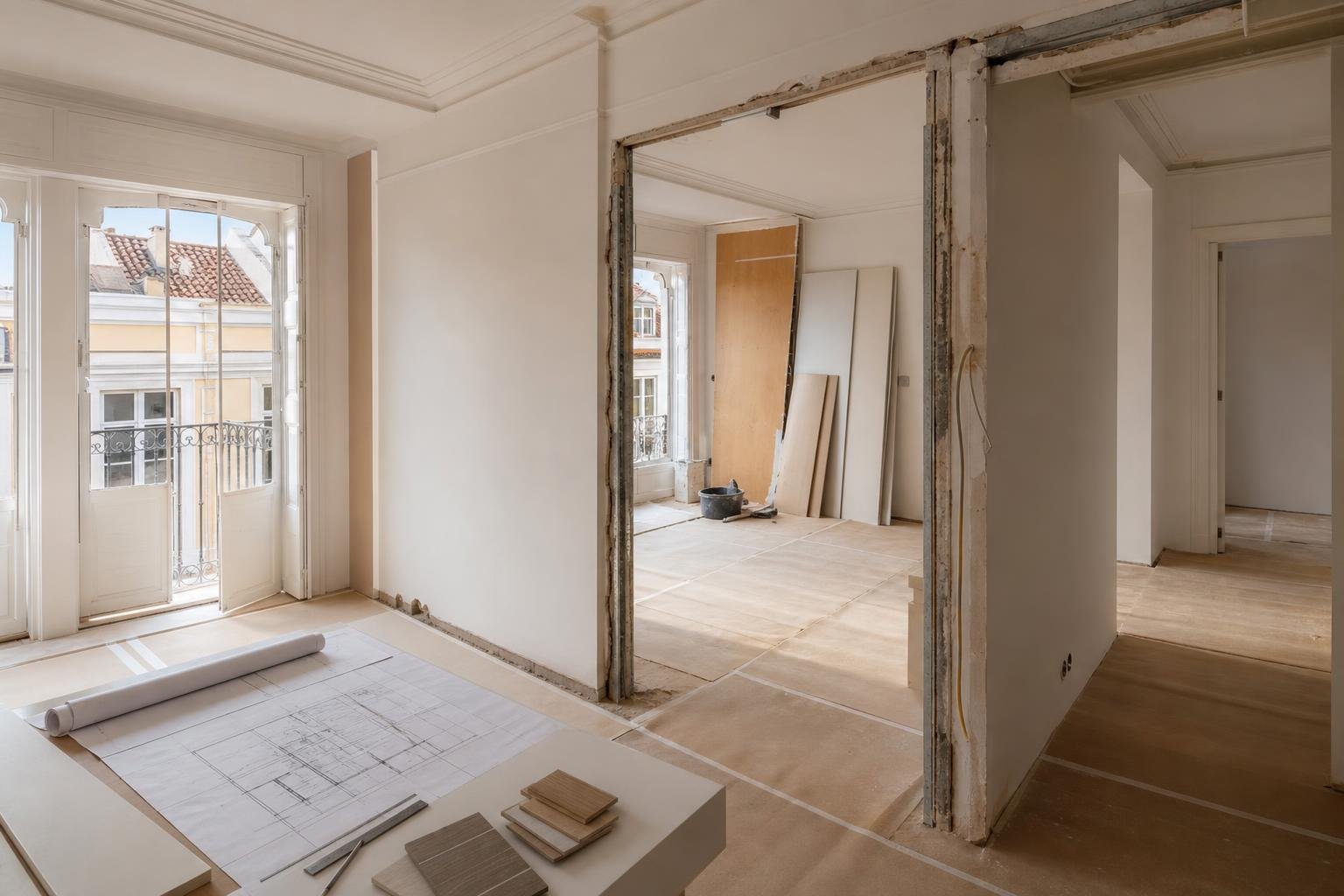
Request separate prices for the shared infrastructure and for individual user equipment. Everyone can then see the cost of preparing the room and the cost of each additional point. If the room is being renovated as part of wider works, coordinate charging with lighting, ventilation and distribution-board planning rather than adding isolated solutions one after another. Sockets and Switches in a Renovation: Plan Them Before the Walls Are Closed explains why this sequence matters.
The desired result is understated: bicycles parked properly, sockets easy to reach, cables protected, electricity use understandable and no blocked route. It is a practical everyday upgrade, not a reason to overload a storage room or bypass condominium responsibilities.
If your condominium is preparing a storage room or common area for e-bikes, Obra Lisboa can help coordinate day-to-day use, technical installations and circulation before works begin.
AI-generated editorial image; it does not depict an Obra Lisboa project.

Obra Lisboa