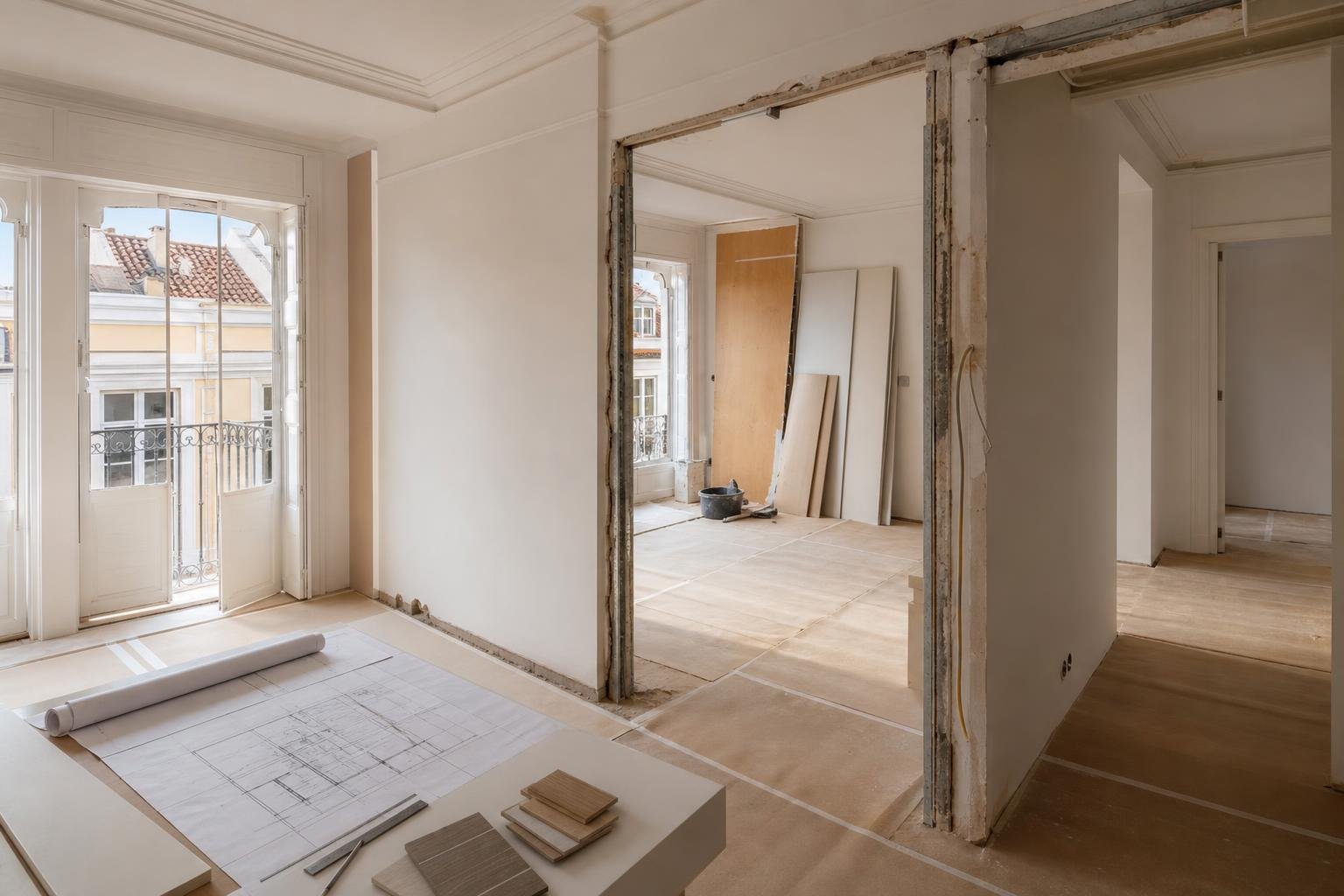
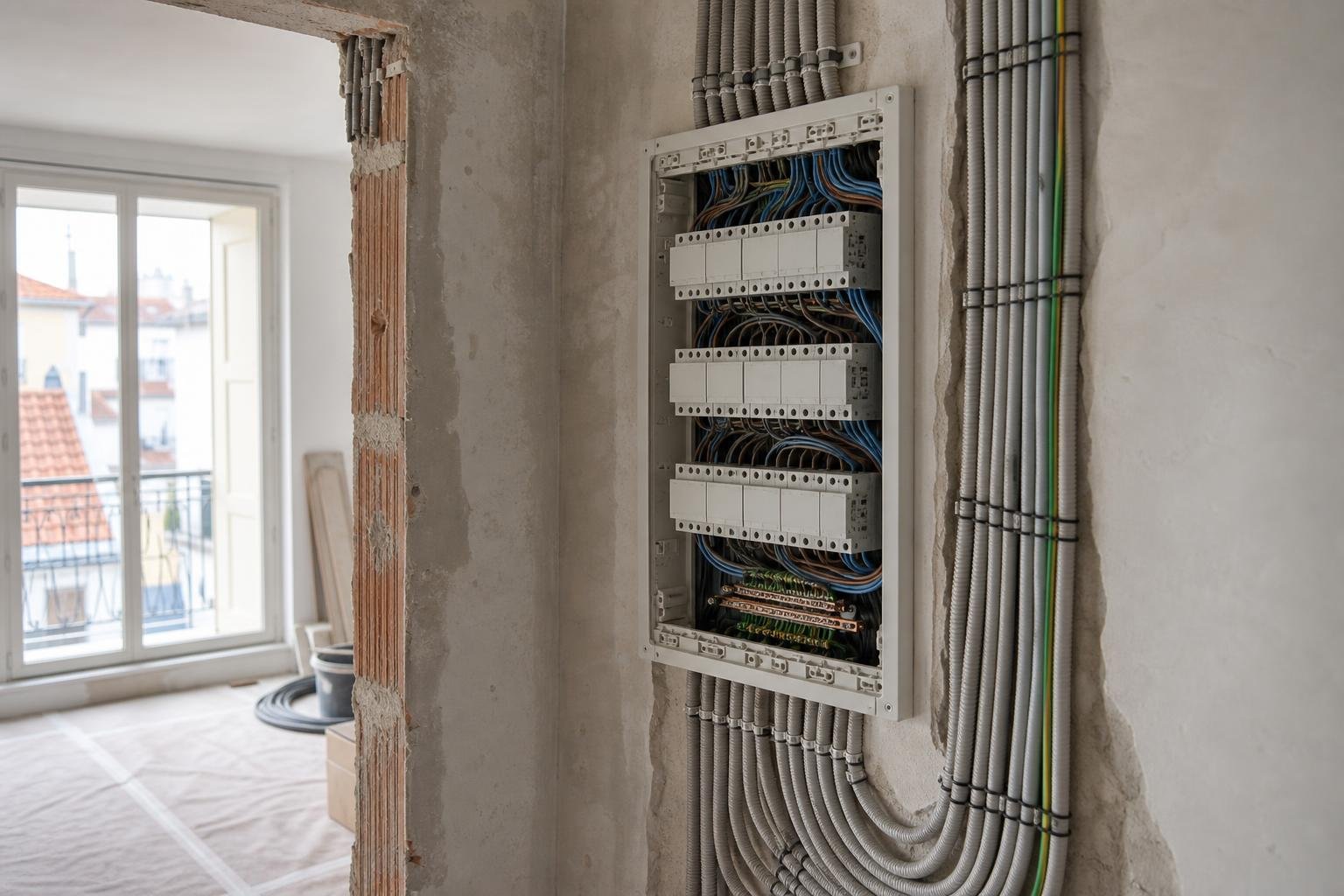
Replacing an electrical panel during a renovation is not merely about adding room for more breakers. It is the moment to organise circuits, identify important loads and plan surge protection before walls are closed, joinery is fitted or expensive equipment is connected.
In Lisbon apartments, older wiring can sit alongside routers, televisions, electronic appliances, heat pumps, motorised shutters and home-office equipment. A brief electrical disturbance may therefore mean far more than a simple power cut. Protection does not replace sound installation work or fix defective earthing, but it belongs in a sensible strategy: assess risk, select devices that suit the panel and leave the system clear enough to maintain later.
This guide sets out what to discuss with the electrical professional, where decisions should be made and which common shortcuts make an apparently complete solution far less useful.
Start by separating the different events called a “power surge”
A surge may arrive through the electricity supply, be induced by nearby lightning activity, or be created inside the home when particular loads switch on and off. During a renovation, the useful question is not “which device has the highest rating?” but: which routes can carry unwanted energy towards equipment, and what degree of continuity does the household need?
A computer connected to a socket, network cable and monitor has more than one possible entry path. The same is true of a television connected to an aerial, router or set-top box. Do not think only about the panel: consider power, communications, video systems, gates, automation, solar generation and permanently connected chargers as one system.
Portugal’s Technical Rules for Low-Voltage Electrical Installations provide the framework for the design of consumer installations. The final decision should reflect the actual building, supply arrangement and planned equipment—not a generic checklist copied from another project.
Plan protection at the panel before choosing individual devices
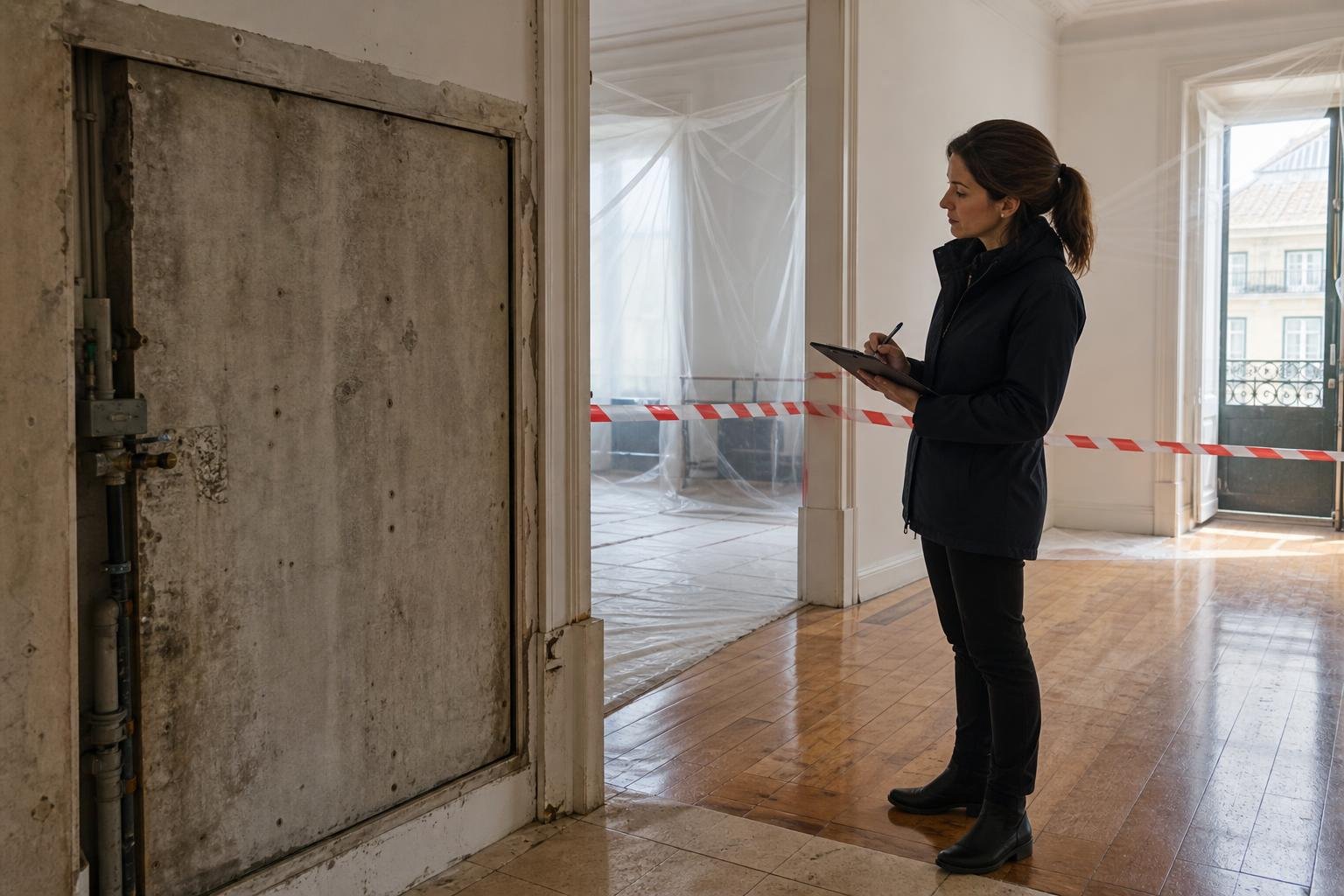
The panel is where the home’s electrical protection is coordinated. Before deciding on surge protective devices, request a full review of the existing panel: available capacity, conductor condition, usable space, busbars, earthing, circuit labelling and allowance for future additions. A crowded panel with no spare capacity and no updated diagram makes every later change more disruptive.
A well-planned arrangement keeps functions separate. A residual-current device protects people in certain earth-fault situations; breakers protect circuits against overcurrent; surge protective devices respond to a different kind of event. They should not be treated as interchangeable components.
In a house renovation, it is worth reserving modules and routes for circuits that may be added later: air conditioning, a heat pump, electric-vehicle charging, gates, irrigation or solar generation. For the wider logic of capacity and dedicated circuits, see electrical panel planning for a house renovation.
Select the protection approach from risk and installation design
Surge protective devices are normally selected and coordinated according to the installation’s exposure and their role in the system. Some solutions are intended to deal with high currents associated with lightning effects, others to limit supply or switching surges, and others to provide protection closer to sensitive equipment.
In practice, an apartment in a dense urban building does not automatically require the same approach as a detached house, a property with lightning protection, or a home with solar panels on its roof. An overhead or underground supply, the presence of a lightning-protection system, distances between panels and equipment, and telecommunications infrastructure all affect the assessment.
Avoid specifying a device solely from its packaging or a product photograph. The professional should check manufacturer data, mounting conditions, upstream protection, the earthing connection and coordination between devices. Decree-Law 226/2005 states that low-voltage installations are subject to specific technical rules and that materials and equipment must be used for their intended purpose and installed in line with the manufacturer’s instructions.

Earthing and short connections are part of the protection
A surge protective device does not simply absorb all the energy and make the issue disappear. To work properly, it needs an appropriate connection path within the panel and an earthing installation whose continuity and condition have been checked. Poor workmanship, unnecessarily long conductors, loose connections or improvised alterations can reduce the performance of the whole arrangement.
This is one reason not to leave the decision until the final stage of the build. If the electrician arrives only to fit sockets and switches, the panel may already be constrained by a tight recess, cabinet doors, inaccessible pipes or technical furniture. Decide the panel layout, location and ventilation during the services-design stage.
It is also useful to document what has been installed: an internal panel photograph with the cover open, a single-line diagram where appropriate, circuit labels and device references. This record is valuable when equipment is replaced, solar generation is added or a fault needs to be traced.
Include data, aerials, gates and equipment beyond the panel
A home may have protection on the electrical supply and still remain exposed through data cables or external connections. Routers, switches, video-entry systems, cameras, alarm systems and gate automation deserve a specific conversation, especially where cables run between the building, garage, outbuilding and gate.
Rather than buying several “protected” extension leads, create an inventory. Mark critical equipment, equipment that remains connected continuously and equipment that communicates externally. Then decide whether protection should be concentrated at the panel, distributed through sub-panels or supplemented close to particularly sensitive devices. An extension lead can be a useful extra layer, but it cannot correct a poor installation or replace assessment at the supply entry.
At the same time, plan sockets, controls and network points before finishes are closed. Our guide to sockets and switches in a renovation helps organise points of use so that the home does not rely on permanent adaptors and extension leads.
How to commission and check the work without turning the brief into a technical manual
Ask for a proposal that defines the scope: panel review or replacement, intended devices, adaptation of existing protection, earthing verification, circuit identification, testing and handover documentation. Rather than demanding a particular brand, request the relevant technical characteristics and compatibility with the installation. This makes solutions easier to compare without reducing the choice to a price per module.
Also confirm who will carry out the work. The IMPIC register lists categories that include low-voltage electrical user installations, which is useful when checking a company’s credentials for the scope involved. If the works include building alterations subject to a formal procedure, consult municipal information early; Lisbon City Council explains the requirements for building works under prior communication.
At handover, test what can be tested, check the labelling and retain the documentation with the property records. Effective protection is, above all, an installation that is coherent, verifiable and ready to evolve.
If your renovation includes panel alterations or new electrical equipment, Obra Lisboa can help structure the technical and contractual scope before work starts. See what should be set out in a Lisbon renovation contract.
AI-generated editorial image; it does not depict an Obra Lisboa project.

Obra Lisboa