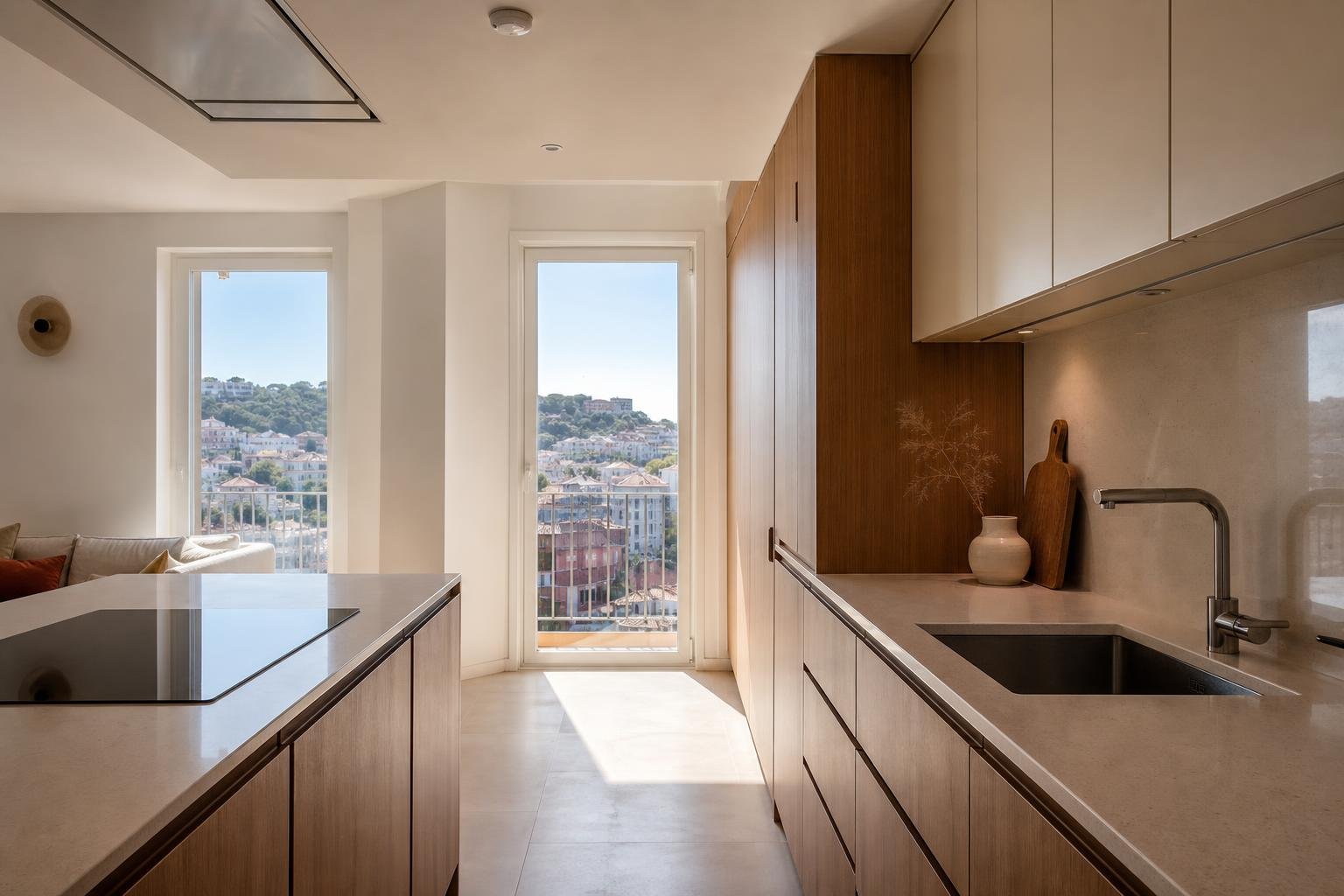
Replacing a gas cooker or an old electric hob with induction can look straightforward: remove one appliance, cut the worktop and connect the new one. In an older kitchen, however, the hob often exposes hidden constraints: a shared circuit, ageing cables, a consumer unit with little spare capacity, cabinets that sit too close, or extraction that no longer suits the way the kitchen is used.
Induction does not need gas to create heat, but it does need properly planned electrical work. It also does not remove steam, grease and humidity: a boiling pan still releases all of them into the room. Before ordering the appliance, work through a clear set of checks. You can then avoid buying a hob that the existing installation cannot support, cutting the worktop twice, or discovering too late that the extraction route dictates the upper cabinets.
This guide focuses on the practical decisions for an older Lisbon apartment or house, from inspecting the consumer unit to positioning drawers. For the wider room layout, see our practical guide to kitchen planning.
1. Start with the electrical installation, not the hob model
The first information to collect is the technical specification of the hob you are considering: its total rated power, the connection arrangement stated by the manufacturer and any configurable power limit. Give that information to an electrician; do not select a circuit breaker simply because the appliance fits the worktop cut-out.
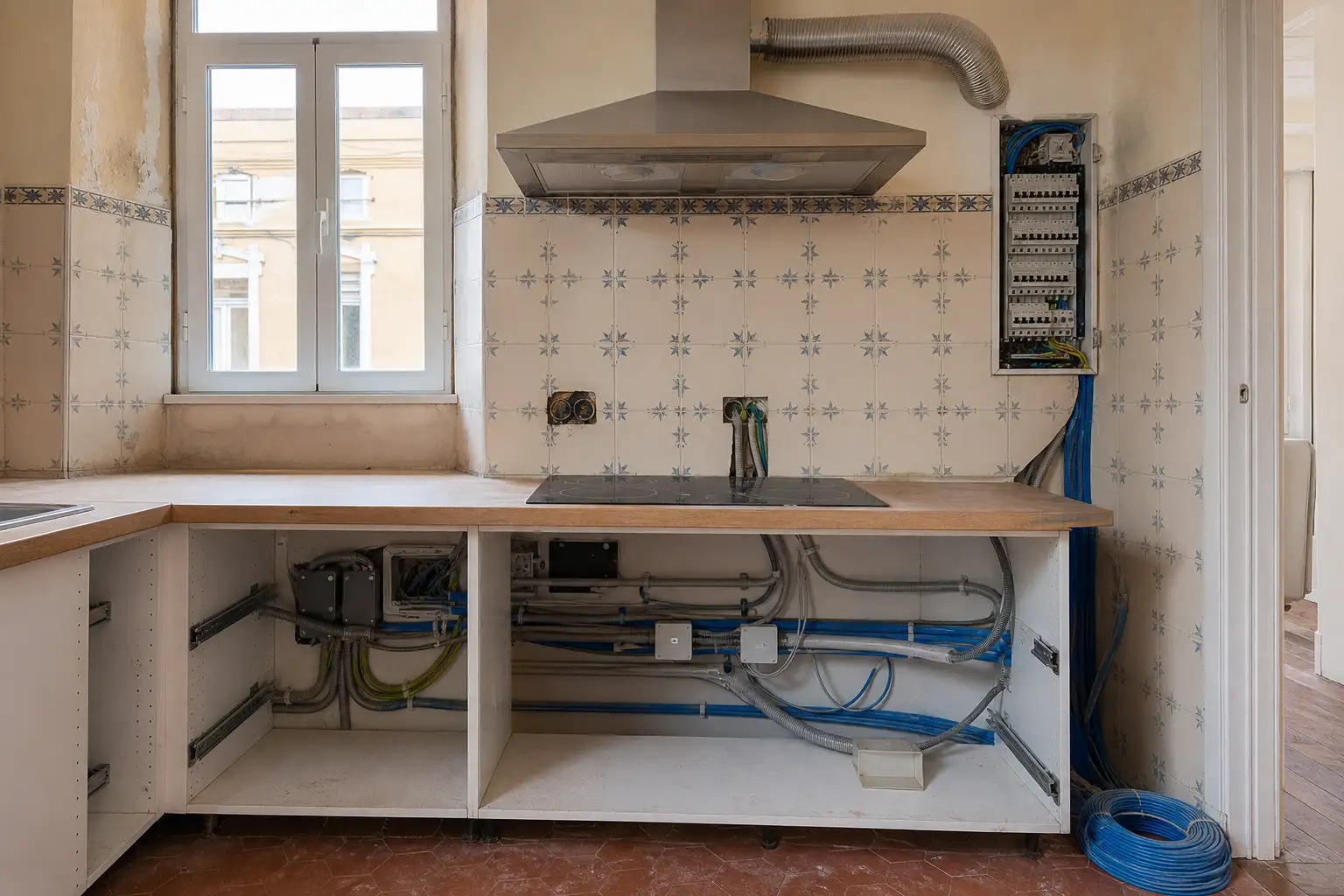
Older kitchens often have sockets, an oven, a water heater, dishwasher and small appliances relying on only a few circuits. An induction hob needs to be assessed as a significant dedicated load, including cable size and condition, cable route, protective devices at the consumer unit, earthing and the home’s available supply capacity. Portugal’s Technical Rules for Low-Voltage Electrical Installations provide the regulatory framework for this work; they are a reference for qualified professionals, not a checklist for improvised alterations.
Ask for a clear answer to three questions: is there a dedicated circuit, or must one be installed? Does the consumer unit have room and suitable conditions for the required protection? Is the intended simultaneous use — hob, oven, dishwasher and other loads — compatible with the available capacity? Compare models and prices only after that review.
If the consumer unit is far from the kitchen, the solution may require chasing walls, using accessible service routes or coordinating cable runs with new flooring and cabinetry. That is exactly why this decision should come before kitchen fitting begins.
2. Induction is not a substitute for ventilation
Induction avoids an open flame and combustion products from gas inside the home, but it does not remove the need for extraction or fresh-air renewal. Cooking produces steam, airborne grease, odours and heat. Portugal’s public health authority advises ventilating the home while cooking and keeping ventilation systems clean and operational; read the DGS recommendations on indoor air.
Before changing the appliance, establish which of these situations applies:
- Extraction to the outside: check the continuity, size and condition of the duct, as well as the location of the external outlet.
- Recirculating extractor: plan suitable filters, easy maintenance access and realistic expectations: it can filter some odours, but it does not remove cooking humidity from the room.
- No working extractor: treat ventilation as part of the renovation, not as an accessory bought at the end.
Avoid concealing a long duct with repeated bends inside a narrow cabinet without providing inspection access. A visually neat solution that does not allow filters, connections or components to be maintained will usually age badly. For a fuller comparison of options, see kitchen extraction without a direct outdoor vent.
3. Measure the cut-out — and the space underneath it
The external dimensions of a hob do not tell the whole story. Compare the manufacturer’s installation drawing with the existing opening in stone, compact laminate or timber; check side clearances, distance from the wall, lower ventilation requirements and the worktop’s minimum thickness. A new hob can have the same nominal width as the old one while requiring a different cut-out.
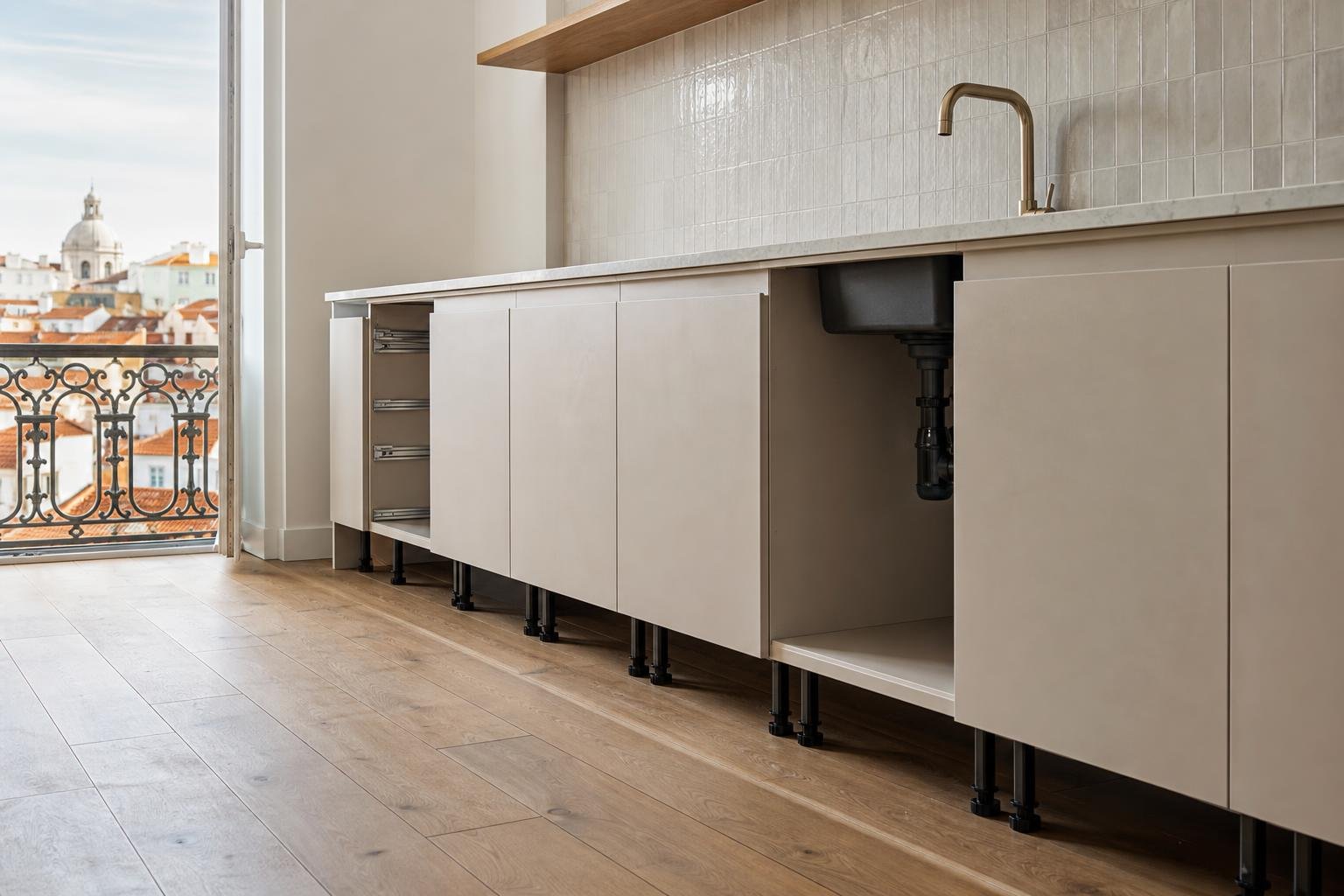
Open the base unit before making a decision. Deep drawers, rails, dividers, ovens, concealed sockets and pipework may occupy the volume the hob needs for heat dissipation and its electrical connection. Altering a drawer after the kitchen is installed can be done, but it is rarely the best way to solve the issue.
In kitchens with stone worktops, confirm who is responsible for cutting and how dust will be contained. With laminate or timber worktops, exposed edges need protection according to the selected system. Do not treat silicone as a universal answer: follow the sealing and fixing method required by both the hob and worktop manufacturers.
It is also worth reviewing the oven position. When both appliances sit within the same cabinet module, the installation instructions for each must be respected rather than assuming that two standard-sized products will work together automatically.
4. Reassess the layout around everyday use
A hob should not be chosen separately from the sink, preparation area and circulation route. In a small single-wall kitchen, an extra-wide induction hob can take away the worktop where pans are set down or food is prepared. In an L-shaped kitchen, a cooking zone pushed into a corner can make one of the heating areas awkward to use.
Draw the available worktop to scale and mark the swing of doors, drawers and dishwasher. Check where a hot pan will be placed, where the lead of a hand blender can reach, and whether two people can pass each other while someone is cooking. These are simple checks that prevent a layout from looking good on a plan but becoming tiring in daily use.
If the renovation includes electrical alterations, use the opportunity to review outlet heights and distribution. Our article on sockets and switches in a renovation can help structure that conversation before walls or finishes are closed.
Do not place sockets immediately behind the hot zone simply because it is convenient. Plan useful outlets in preparation areas for small appliances, and make sure they remain accessible once panels, trims and appliances are in place.
5. Check what changes for the building and condominium
Replacing a hob within the same kitchen is not equivalent to changing a façade, creating a new extraction outlet, moving shared ducts or altering structural elements. Even so, in an apartment building, apparently domestic work can affect common parts or require coordination with condominium rules.
If the proposal involves a new external grille, a visible façade duct, significant changes to ventilation or work extending beyond the apartment interior, check the municipal framework and any required consents first. Lisbon City Council explains that alteration works may be subject to prior communication, with the applicable documents submitted together; consult its page on building works under prior communication.
Keep photographs of the initial condition, technical sheets and records of the electrical work. They make future maintenance easier, help identify circuits and are useful when equipment is replaced years later.
6. Give the installer a fully resolved brief
A good installation starts with enough information on site. Before the final visit, have the hob reference, installation drawing, oven location, extractor type, worktop finish and kitchen readiness date agreed. This avoids an electrician arriving without access to the consumer unit, or a kitchen fitter finding a cut worktop with no cable prepared.
For electrical work, use suitably qualified professionals. The professional framework for interventions in electrical installations is linked to specific qualifications; the IMPIC guidance on qualified electrical professionals makes clear that this work should not be treated as DIY.
Use a short handover list:
- hob reference and manual;
- check of circuit, protective device and earthing;
- confirmation of ventilation and maintenance access;
- final measurement of cut-out and cabinet clearances;
- test of every hob zone and the oven, where applicable;
- clear circuit identification at the consumer unit.
Moving to induction can modernise an older kitchen without rebuilding it entirely. The outcome depends less on the hob’s glossy black finish than on the invisible preparation behind it: correctly planned electrics, renewed air, compatible cabinetry and a sequence of work that does not leave technical decisions until the final day.
Renovating a kitchen in Lisbon? Obra Lisboa can help coordinate layout, electrical, ventilation and fitting decisions before work moves ahead.
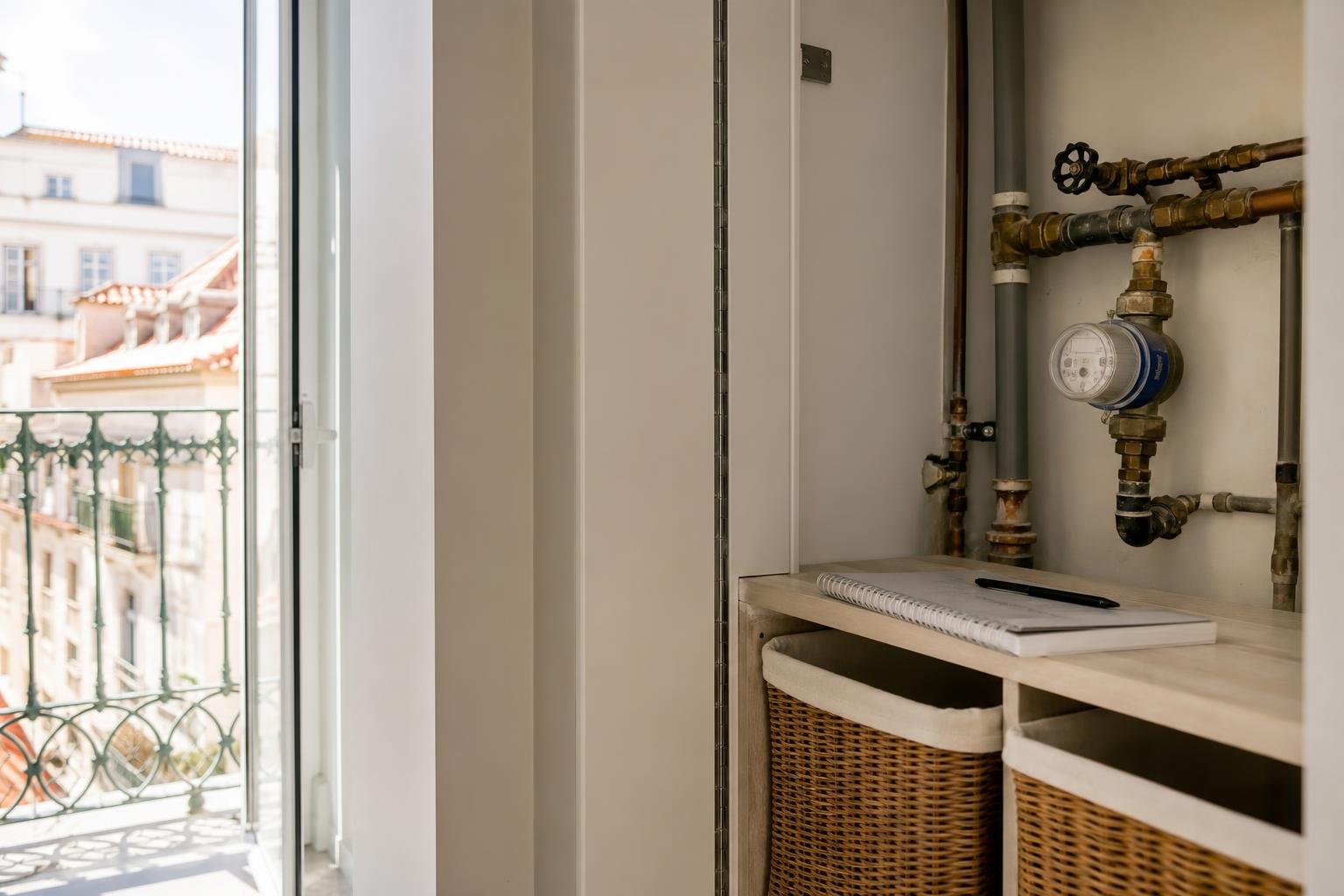
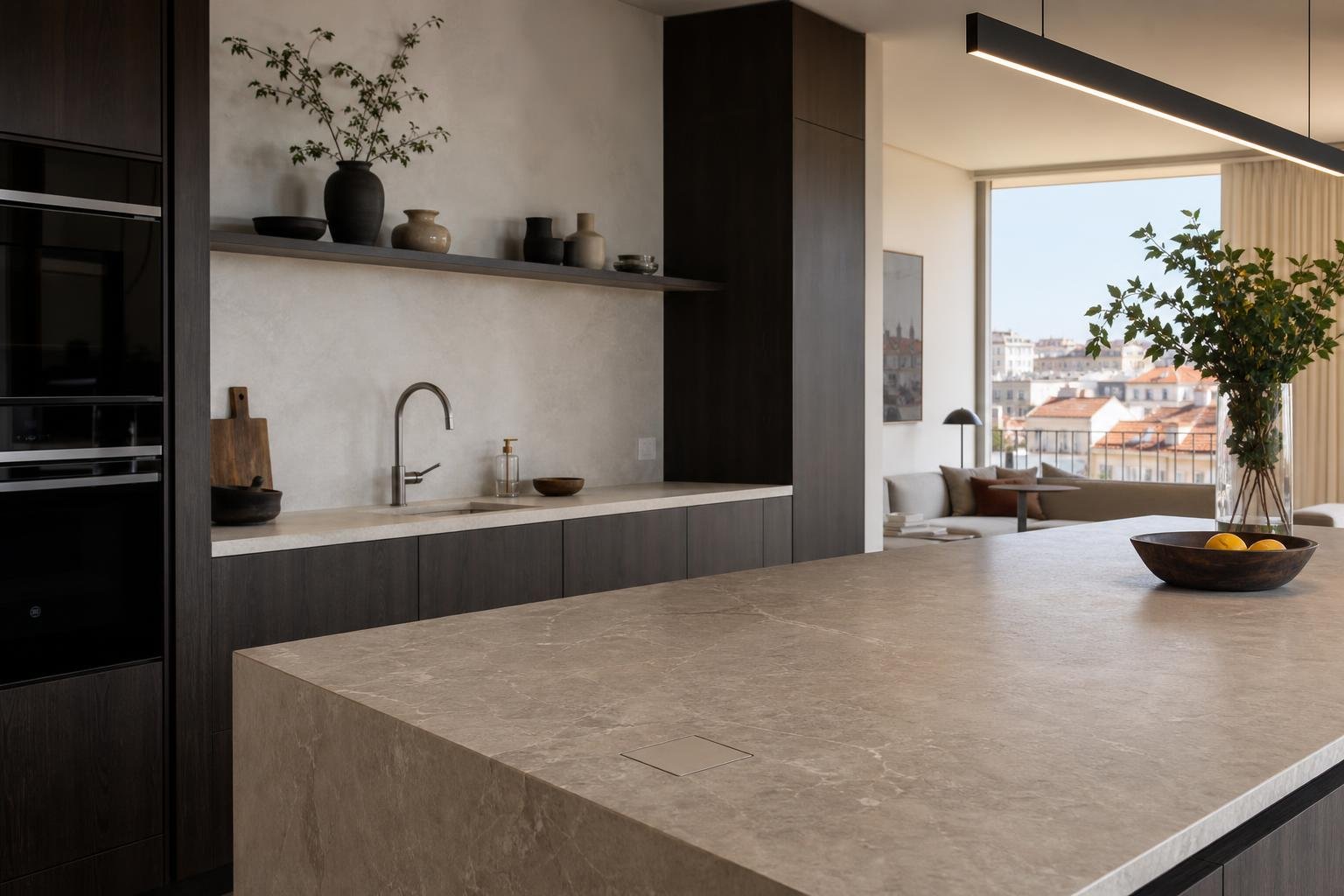
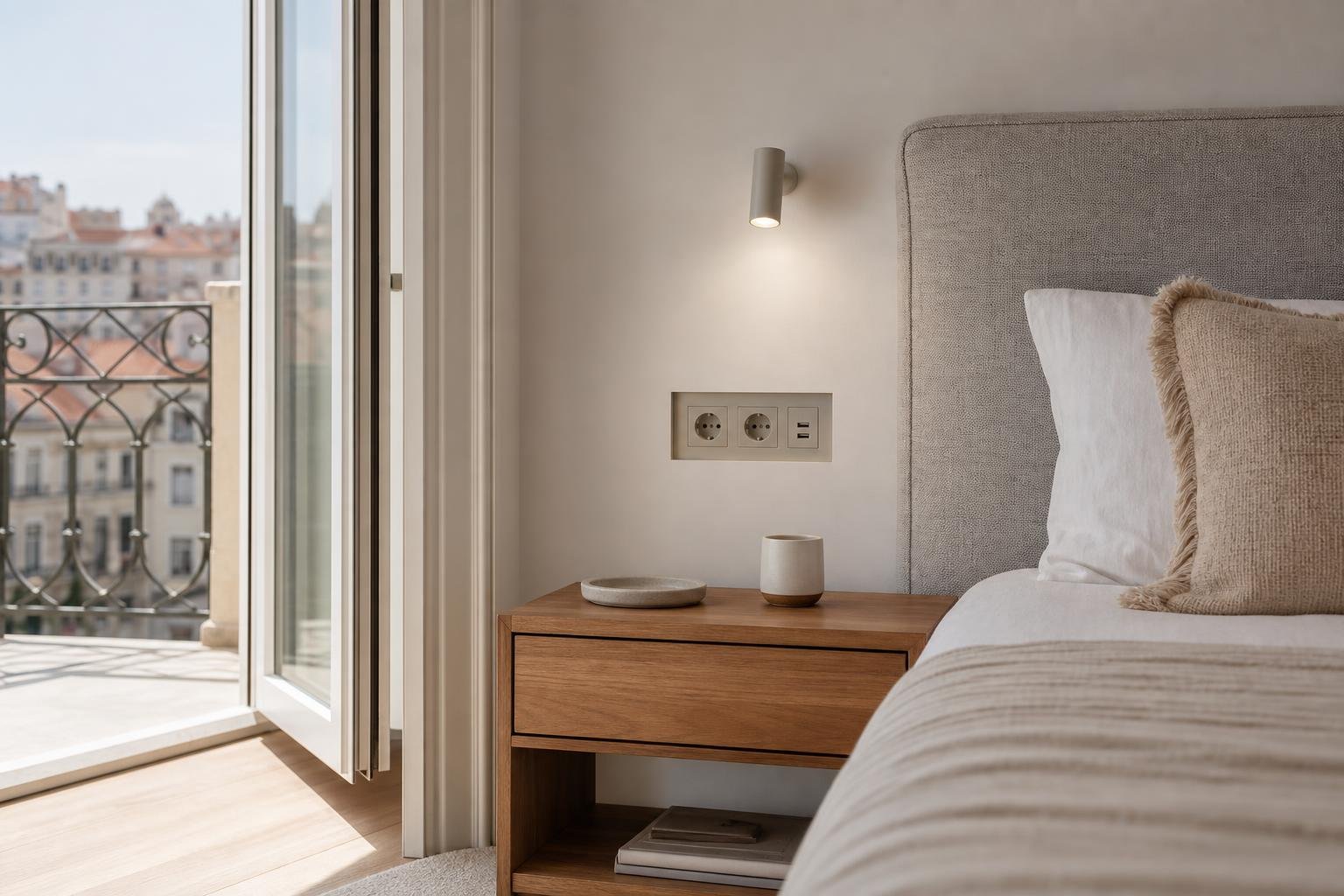
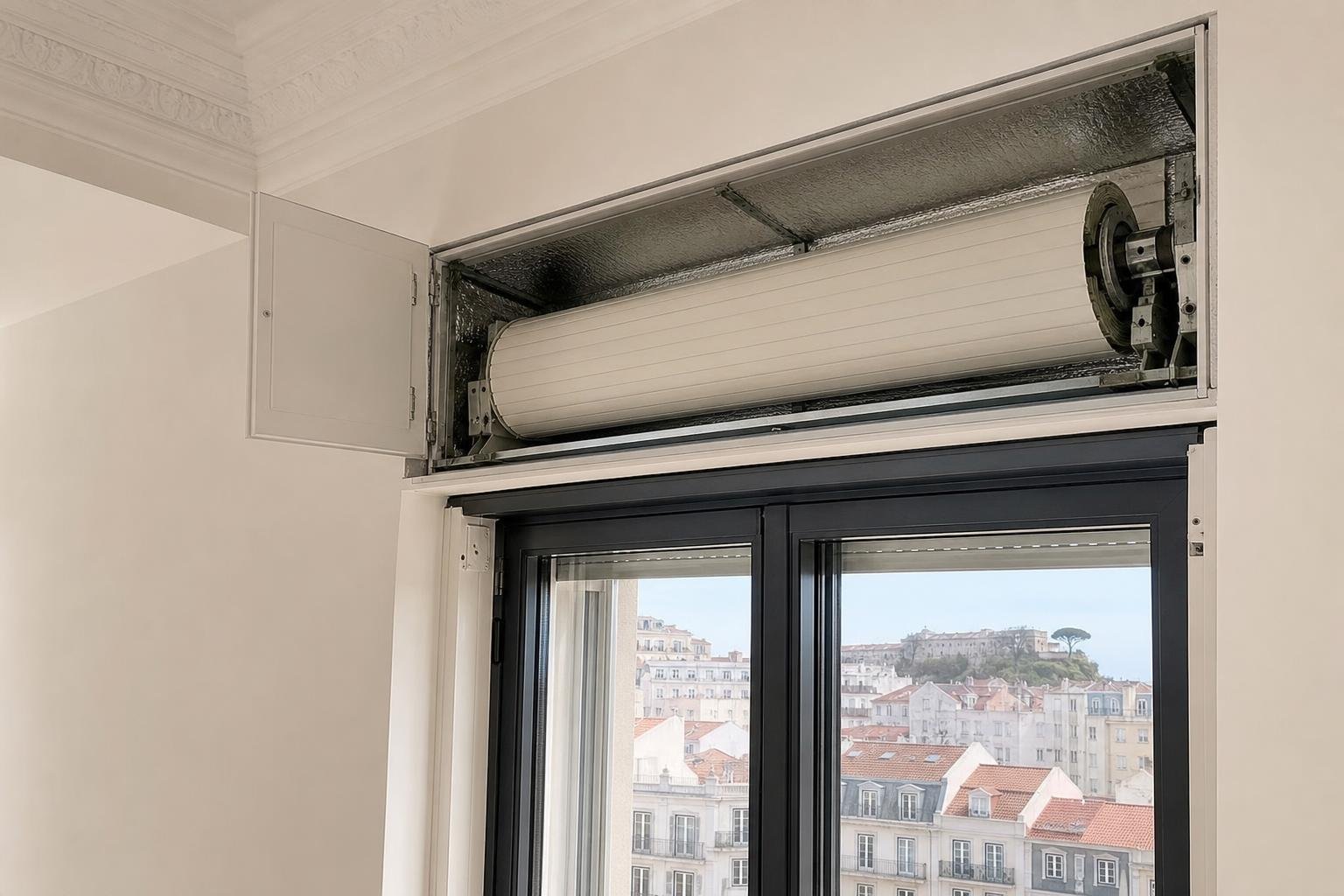
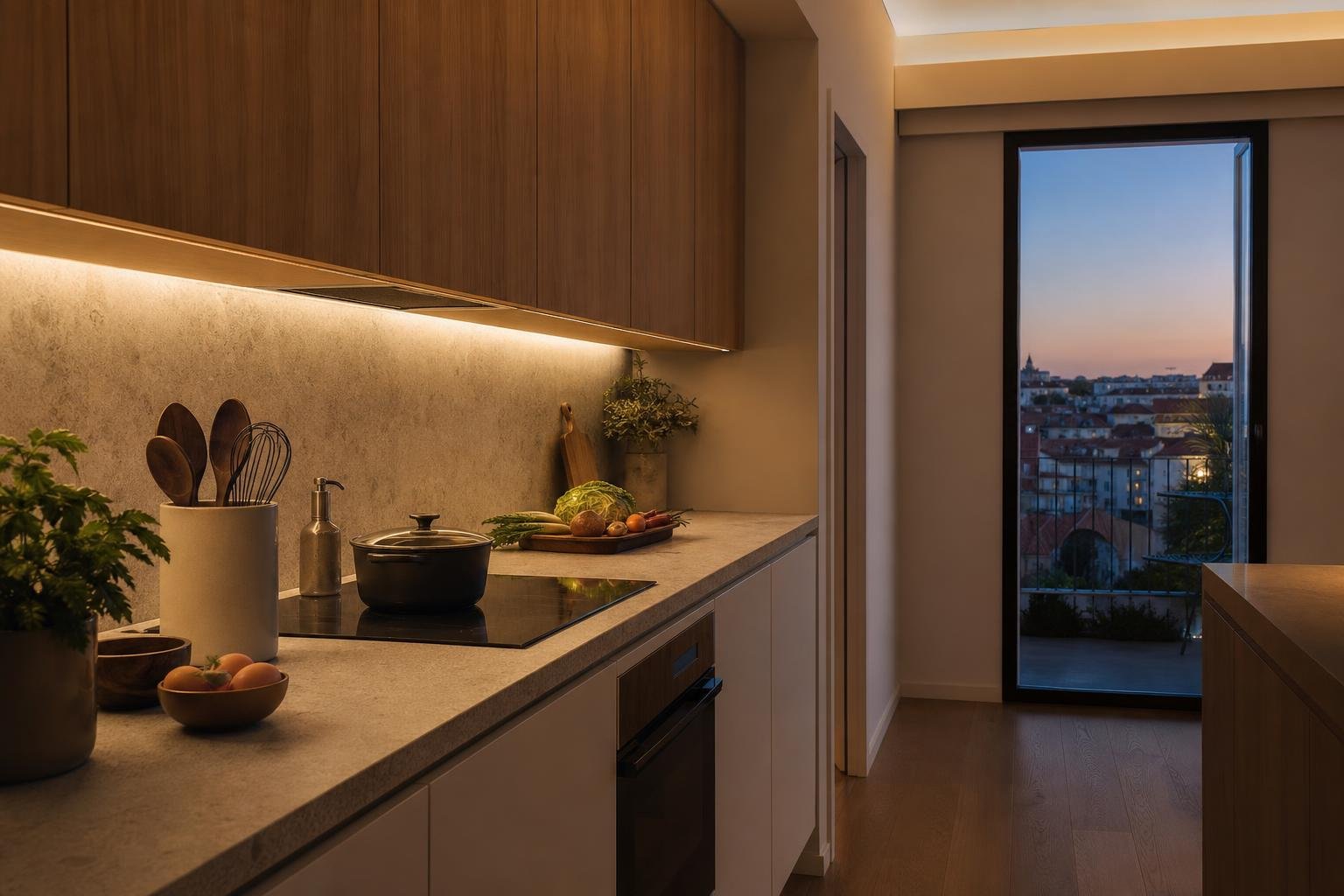
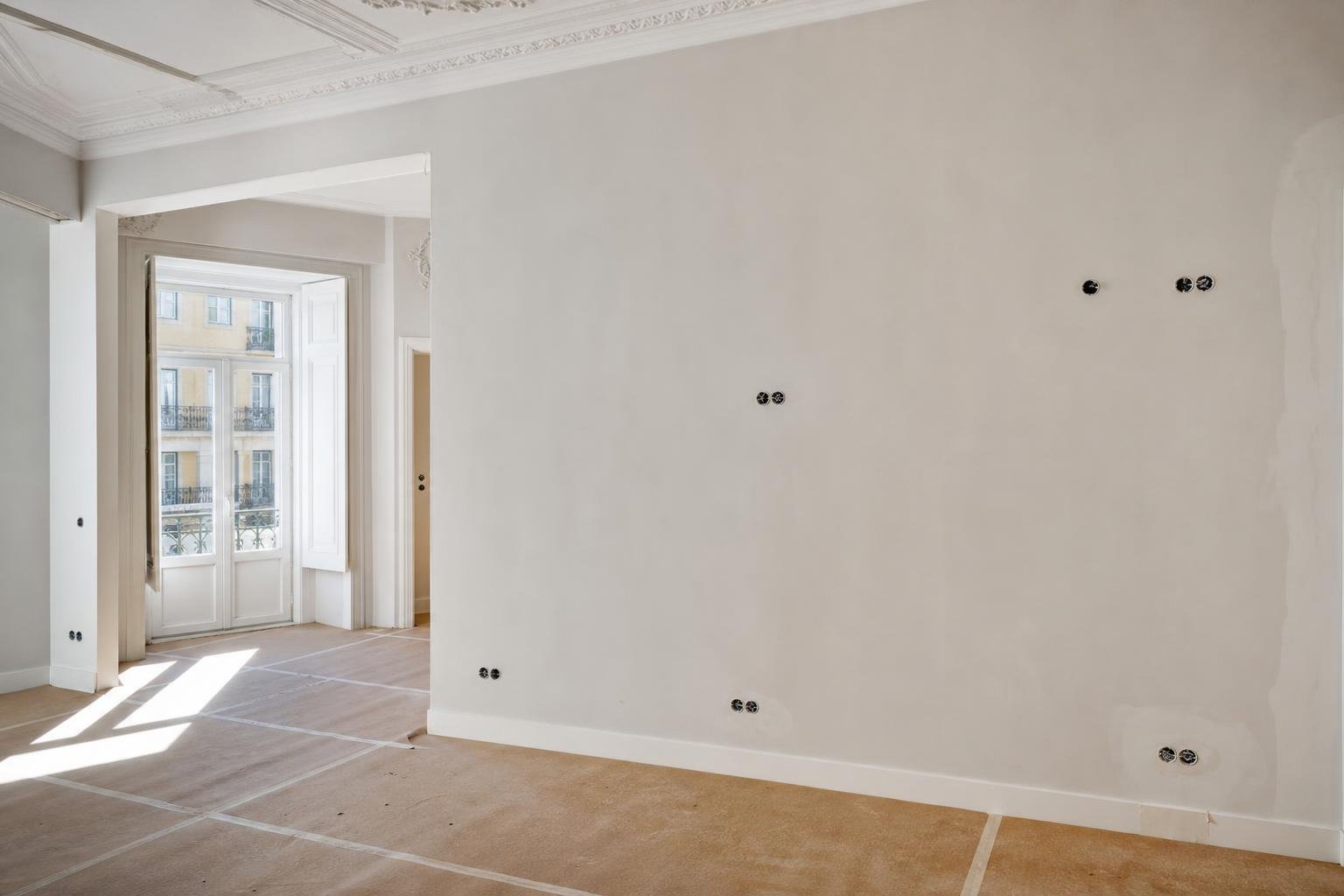
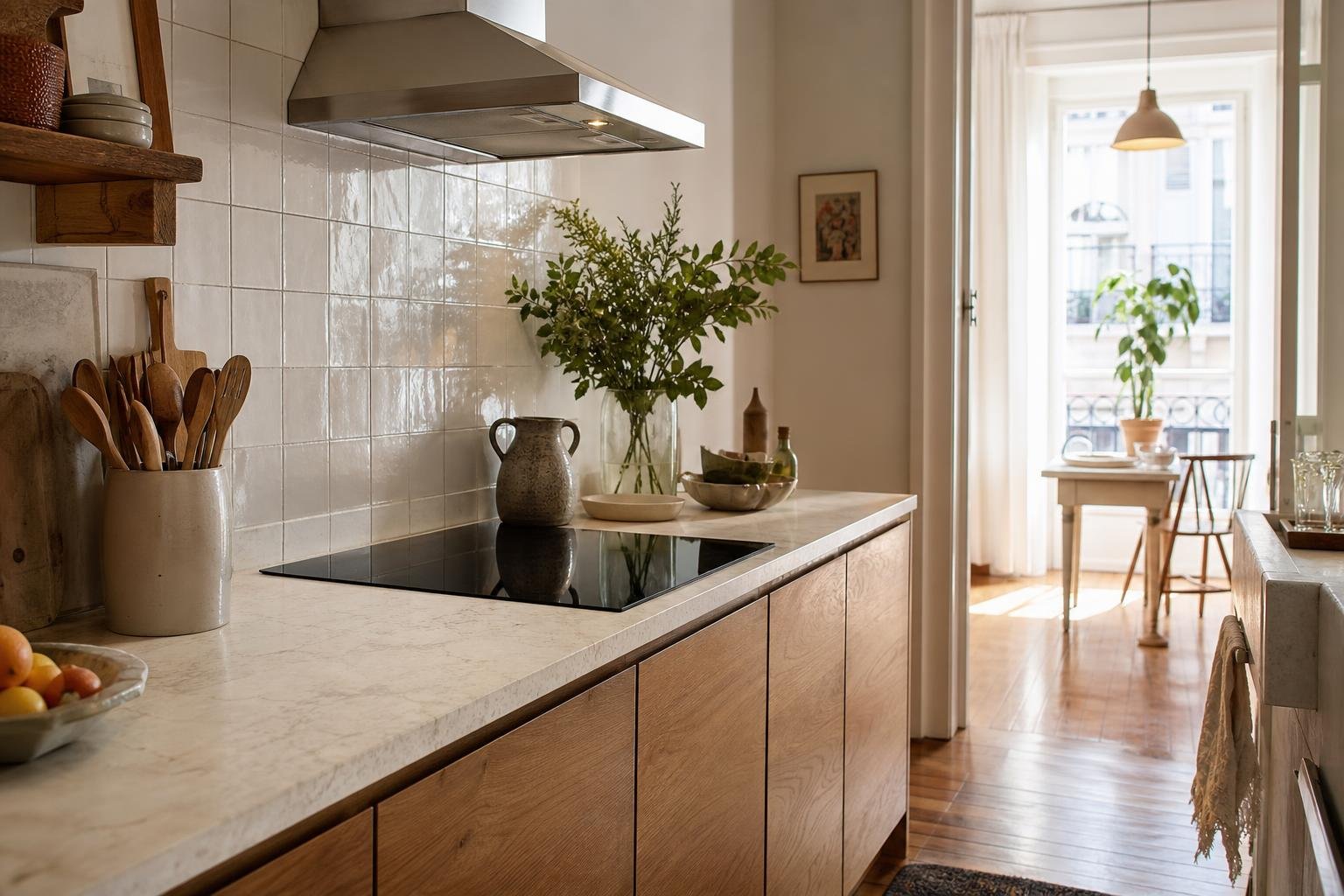
AI-generated editorial image; it does not depict an Obra Lisboa project.

Obra Lisboa