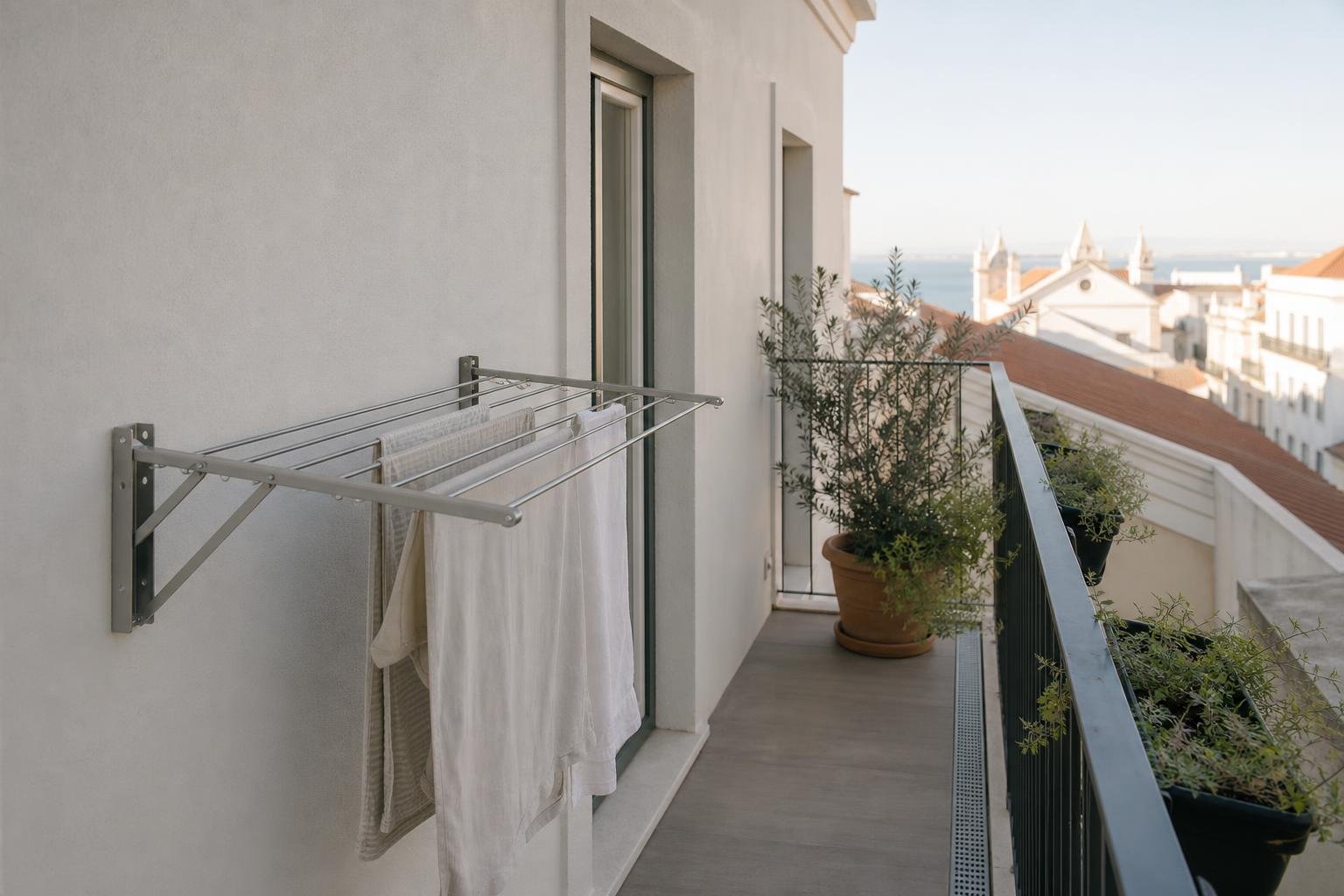

A new window can improve daylight, comfort and insulation, yet it does not by itself solve the most rain-exposed point of the opening: the junction between the frame, wall and sill. Leaks often appear months after a renovation not because the window is poor, but because water has no clear drainage route, enters through a badly made joint or is directed back towards the façade.
The external sill is a small component with a major protective role. It should receive water running down the glazing, carry it away from the opening, stop it tracking back beneath the sill and support the weather-tightness of the whole assembly. In Lisbon, where much work takes place in existing buildings with ageing façade details, this junction should be resolved before windows and finishes are ordered.
This guide sets out what to check during a renovation. It does not replace a design or an on-site technical assessment. Where work changes openings, façades or shared building elements, the applicable permissions and a solution suited to the building should be confirmed early.
A sill is more than a finishing piece
In this context, a sill is the horizontal external component fitted below a window. It may be natural stone, ceramic, metal or another system designed for outdoor use. Its primary job is straightforward: to receive and shed water. To do that properly, however, it must work with the frame, waterproofing and façade finish.
A sill that looks attractive but is flat, too short or sealed in an improvised way can hold water close to the window. Moisture may then stain render, damage sealants, enter cracks and become visible indoors some distance from its point of entry. The Portuguese Directorate-General of Health notes that excess humidity can cause condensation and mould on cold surfaces. Preventing rainwater entry is therefore different from simply cleaning an existing stain.
When planning replacement frames, see our practical guide to replacing windows during a Lisbon renovation. The quality of the result depends as much on installation as on the window itself.
Start with a diagnosis of the existing opening
Before removing the old window, photograph both façade and interior in dry weather and, if possible, after rain. Look for dark areas below the sill, peeling paint at corners, open joints, cracked stone, salt deposits, loose render or water pooling on the ledge. Also check whether the sill projects beyond the wall and whether its underside includes a drip groove.
Not every damp mark beside a window is a leak. It may be condensation, a problem in a shutter box or inadequate ventilation. Even so, an external defect should be solved at its source rather than covered with sealant or paint. To understand warning signs and likely causes, read how to diagnose leaks and damp.
In older buildings, do not remove a component until you understand how the opening is assembled. There may be stonework worth restoring, vulnerable edge details or finishes that need compatible repair. Measuring full wall depth, frame position and the thickness of future finishes prevents ordering a sill that is too short from the outset.
Slope, projection and drip groove: giving rain a route
An external sill needs a continuous fall towards the outside. The point is not to create an exaggerated slope, but to ensure water neither ponds nor runs towards the frame. The exact fall should be defined by the designer or responsible technician in relation to the material, the sill length and the window system.
The projection beyond the façade plane also matters. If the sill ends too far back, runoff can touch the render and track back through capillary action. A drip groove on the underside interrupts that route, making the water drop before it reaches the wall. It is a discreet detail that limits staining and runoff marks, provided it is not blocked by mortar, paint or sealant.
Avoid trying to correct a flat sill with a thin surface layer of filler. Besides being short-lived, this can create an exposed joint, obstruct the frame’s drainage paths or alter the usable height of the opening. Where the geometry is wrong, it is generally safer to remove the piece, prepare the substrate and rebuild the detail as one coordinated system.

The frame joint must still allow drainage
Modern windows often have their own drainage channels and weep holes. These must not be blocked by the sill, expanding foam, mortar or indiscriminate sealant. Water entering the frame’s collection area needs a route outwards; if it cannot drain, it can overflow into the home.
The connection between frame, sill and wall should be designed with products suited to exposure, movement and compatibility between substrates. An elastic seal may be required, but it is not a substitute for properly connected waterproofing or gravity drainage. Ask for the junction to be checked before side returns are fully closed and before final finishes are applied.
Good work also considers the internal side of the opening. Efficient windows support thermal, acoustic and energy comfort, while ADENE highlights that the choice and installation of efficient windows are crucial to household comfort. A vulnerable outer joint can undermine the performance expected from an excellent frame.
Materials: compatibility before appearance
Natural stone, technical ceramic, powder-coated aluminium and prefabricated systems can all perform well when selected for outdoor use and integrated into the wider assembly. Stone needs appropriate finish, thickness and resistance; highly porous or cracked materials may require particular treatment and maintenance. On long, heavy or highly sun-exposed pieces, movement joints are not optional details.
Colour should not be the only criterion. A very dark sill may become hot in direct sun; a polished surface may show runoff marks more clearly; complex shapes may make cleaning and drainage harder. On older walls, it is especially important not to introduce rigid mortars or incompatible finishes that worsen cracking and moisture retention.
Portugal’s regulatory framework for building conservation refers to checking external walls and their integrated elements, including windows, sills and ledges. Use the official Diário da República document on inspections and maintenance as a starting point, while recognising that each property may have more specific requirements.
Façade, condominium and heritage: confirm before changing
Replacing a sill may seem minor, but it can change the visual character of the façade through its colour, thickness or material. In apartment buildings under condominium ownership, the façade is normally a shared element; restrictions may be stronger in protected areas or listed buildings. Do not assume that a solution seen in another flat is automatically permitted for yours.
Lisbon’s municipal service explains that external alteration work, as well as work on listed properties or within protection zones, may be subject to prior control. Review the Lisbon City Council building-work licensing information and confirm the specific situation with a qualified professional and, where relevant, the condominium.
This step is particularly useful before ordering made-to-measure stone. It avoids wasted expenditure and helps maintain consistency between sills, frames, railings, shutters and existing façade finishes.
A checklist to use before installation
Before installation, ask for a simple documented check of the following:
- a level, sound substrate prepared to receive the sill;
- a continuous outward fall with no areas that retain water;
- adequate projection and an unobstructed underside drip groove;
- frame drainage holes left free and directed outwards;
- waterproofing and joints compatible with adjoining materials;
- side and upper returns resolved without relying on sealant alone;
- a controlled water test before internal finishes are completed.
After the work, keep the sill clean and inspect it after the first heavy rain. If new streaking, water at the frame base or internal marks appear, act early. Daily ventilation still matters for controlling airborne moisture; see our guide to ventilation in renovated homes. But ventilation cannot correct a weather-tightness failure: a well-designed sill starts by stopping rain from getting in.
Planning replacement windows or a façade repair? Obra Lisboa can help turn these details into a clear work plan, coordinating materials, junctions and execution before the opening is closed.
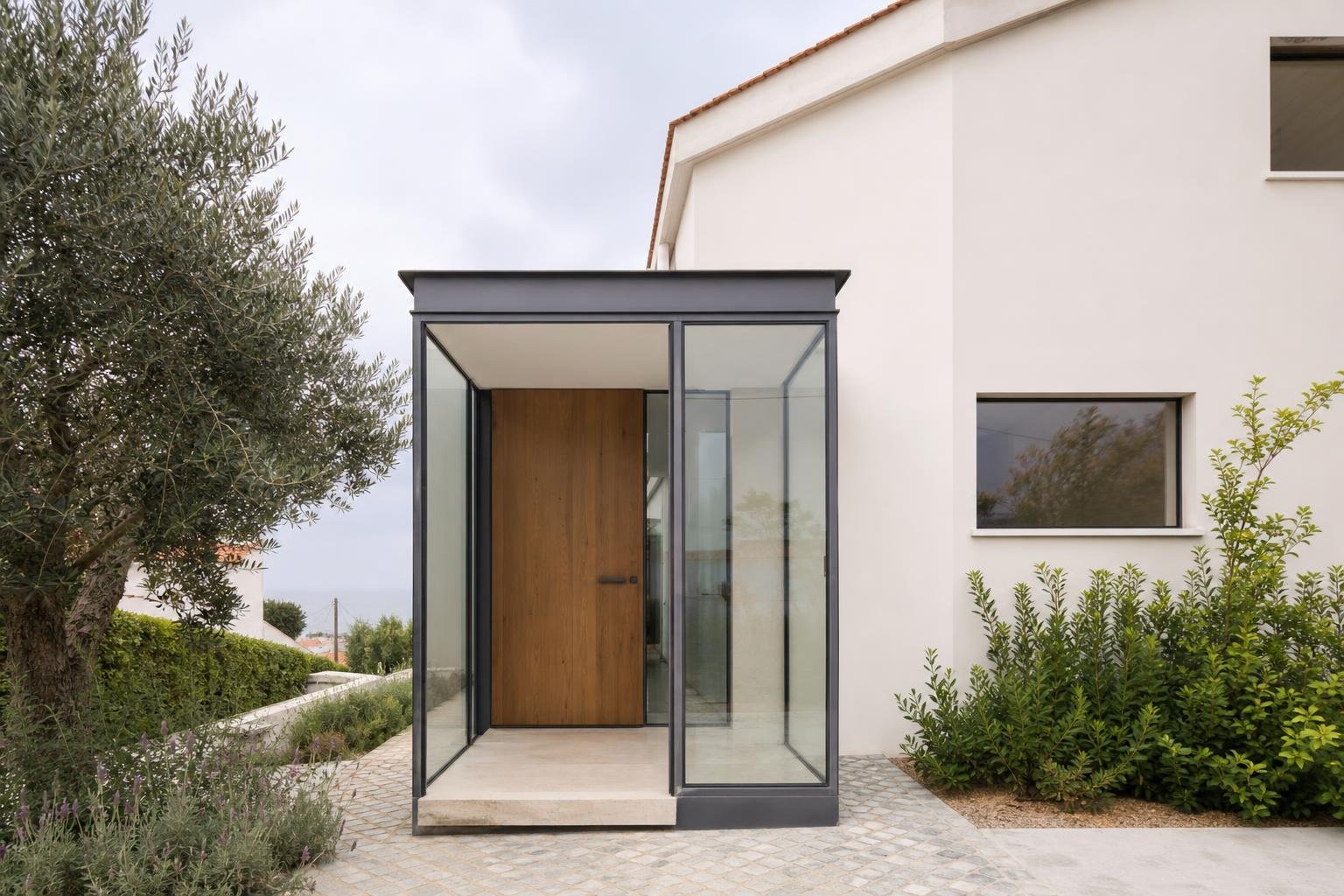
AI-generated editorial image; it does not depict an Obra Lisboa project.

Obra Lisboa